The Hidden Bottleneck in Estimation: Rate Matching
Every estimator knows this pain: flipping through pages of rate books or PDFs to find the right price for a specific task, material, or labor. Whether you're dealing with RSMeans in the U.S., CPWD DSR in India, or AECOM catalogs in the GCC, manual rate lookup can be a time-consuming process.
Why is it so slow? Because rate books aren’t built for speed. They’re comprehensive but not searchable. You’re stuck scrolling through thousands of pages, hoping to locate the right rate for “installing pre-stressed concrete girders” or “HVAC duct insulation.” And even if you do find it, there’s always the worry: Is this the right rate? Did I miss a better match?
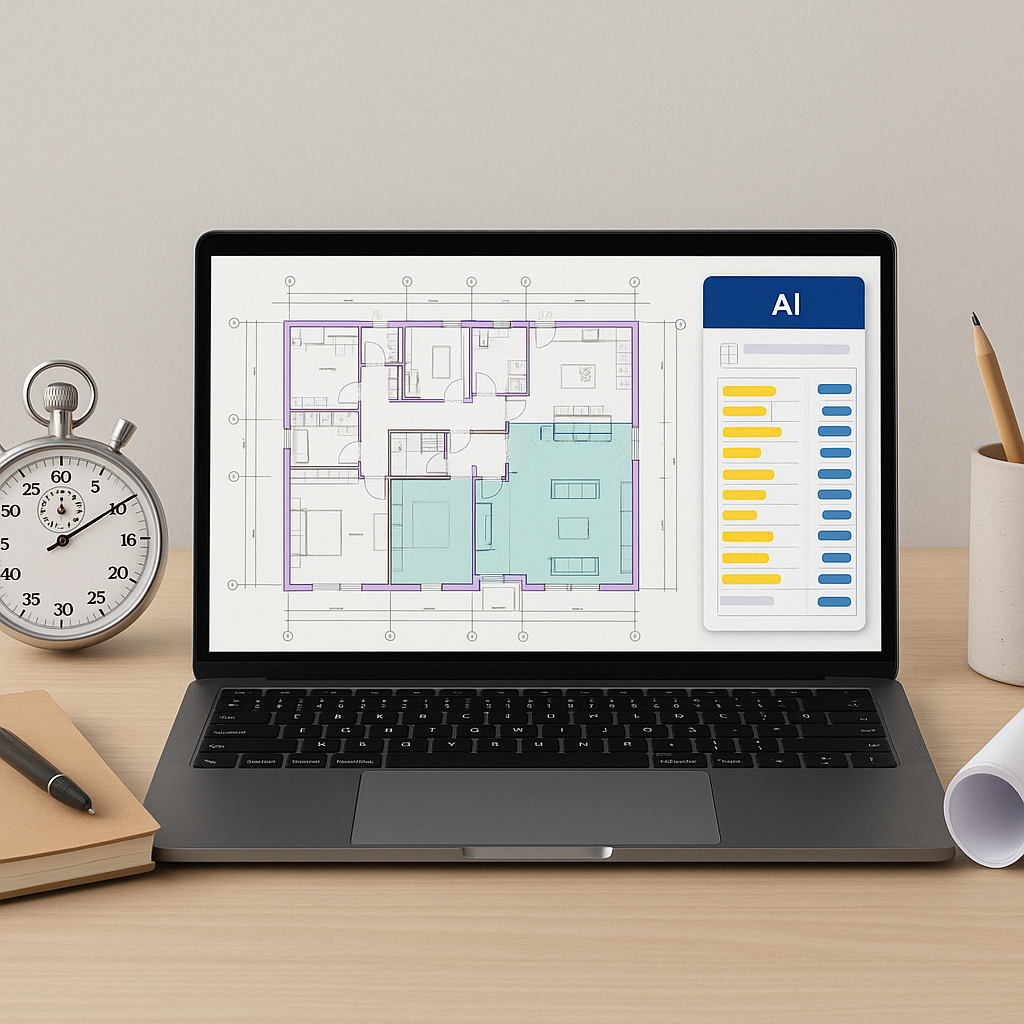
But here’s the good news: AI tools are changing the game. AI-powered platforms with semantic search capabilities can scan through thousands of items across multiple catalogs in seconds. No more flipping through PDFs or Excel sheets. You type in what you need, and the AI delivers the closest matches instantly.
How AI-Powered Rate Matching Works
Let’s break it down. At its core, AI rate matching is powered by semantic search. This means the system reads and understands the context of your query, rather than just matching keywords. For example, if you search “HVAC duct installation,” it won’t just pull results with those exact words—it’ll also surface related tasks, like duct sealing or hanger installation.
Here’s what happens step-by-step:
-
Input the BOQ (Bill of Quantities): You upload your BOQ in Excel, CSV, or even PDF format. The AI automatically parses the data, detecting hierarchies, merged cells, and section headers.
-
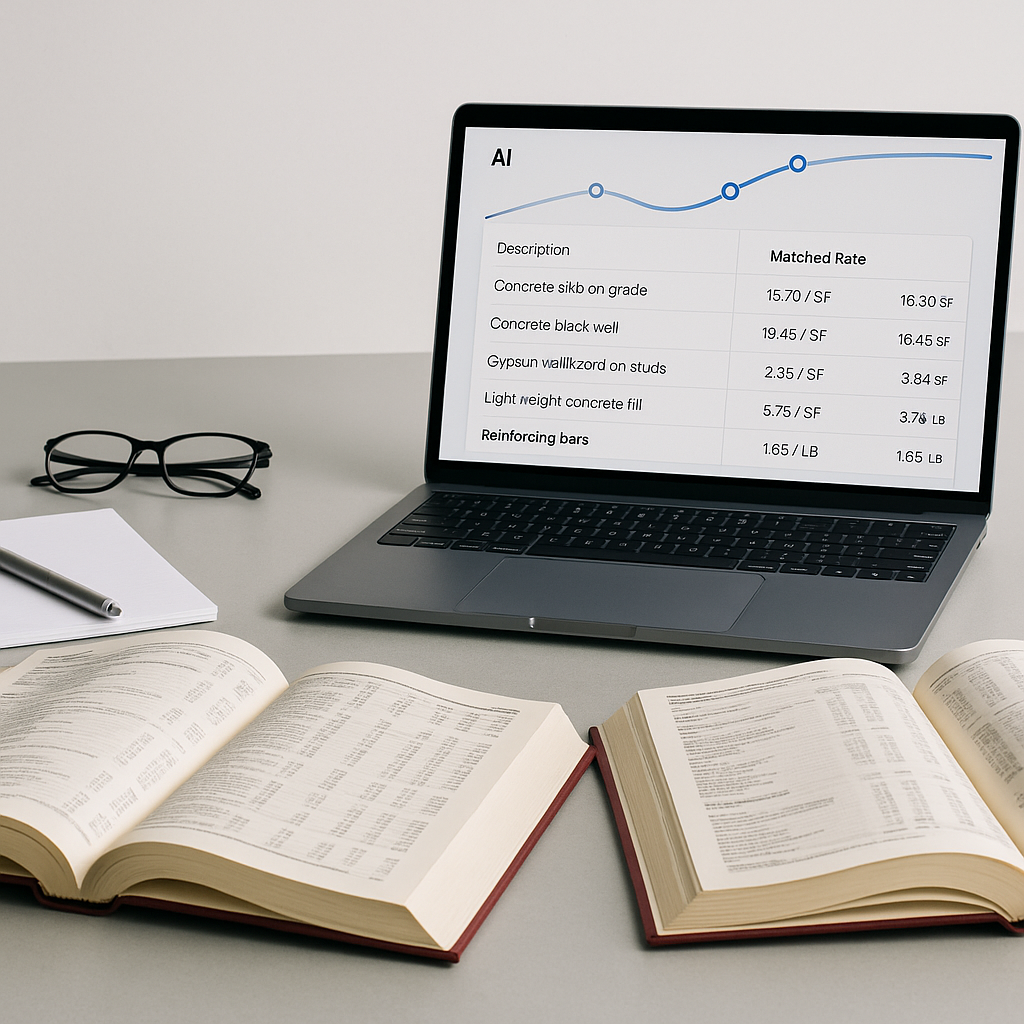
Search Across Catalogs: The system searches tenant history, user catalogs, country-level catalogs, and finally fallback options. It ensures you get the most relevant rates, whether you're pricing in USD, AED, or INR.
-
Rate Analysis: For every matched rate, the AI breaks it down into material, labor, and equipment components. You get full visibility into the assumptions behind the rate.
-
Custom Rates: Got unique project-specific rates? No problem. You can upload your own rates, and the AI integrates them seamlessly for future use.
Why It Matters
Manual rate matching can be a significant drain on time and resources. AI tools help streamline this process, reducing the likelihood of human error, enabling more competitive bids, and allowing for faster decision-making. By automating repetitive tasks, estimators can focus on higher-value activities like strategy and negotiation.
Common Pushback: Can AI Really Replace Manual Expertise?
You might be thinking, “Sure, AI is fast, but it doesn’t understand the nuances of construction.” That’s partially true—AI doesn’t replace your judgment. It’s a tool, not a substitute. You’re still the one making final decisions, negotiating with subs, and managing margins. What AI does is handle the grunt work, so you can focus on the strategic tasks.
In many ways, AI is like having a junior estimator who works at lightning speed and never sleeps. You guide it, review its output, and make the calls—but you don’t waste hours flipping through rate books.
What to Watch For
- Input Quality: Garbage in, garbage out. If your BOQ is poorly formatted, the AI can’t parse it correctly. Always clean up your data before uploading.
- Edge Cases: Custom materials or non-standard tasks might require manual intervention. That’s why many tools let you override AI matches and save them for future projects.
- Learning Curve: AI systems improve with use. The more feedback you give, the better the matches become. Users often see significant improvements after a few projects.
FAQ
Q: How accurate are AI-generated rate matches?
AI tools can provide highly relevant matches, but human review is still essential for edge cases and unique tasks.
Q: Can I upload my own rate catalog?
Yes. Many AI tools allow you to define custom rates and integrate them seamlessly into future estimates.
Q: Does AI work for smaller projects?
Absolutely. Whether it’s a small renovation or a large infrastructure project, the system scales to fit your needs.
Q: How long does it take to learn AI tools?
Most platforms are designed for ease of use, and training typically takes a short amount of time.
Conclusion
Manual rate matching is a time sink that no estimator can afford. AI-powered tools eliminate this bottleneck, enabling faster, smarter, and more accurate preconstruction workflows. If you’re tired of wasting hours on rate lookup, it’s time to explore how AI can transform your estimation process.