The Problem: Manual Takeoffs Waste Time and Talent
Preconstruction takeoffs are often slow and labor-intensive. Estimators spend significant time tracing PDFs, measuring wall lengths, and counting doors. This process is tedious, prone to errors, and keeps skilled staff occupied with repetitive tasks instead of focusing on refining bids or negotiating with subcontractors.
Additionally, when design changes occur midway through a project, the manual process often has to be repeated, further increasing the time and effort required. For contractors managing multiple bids, this inefficiency can become a costly bottleneck.
The AI Solution: Streamlining Takeoffs
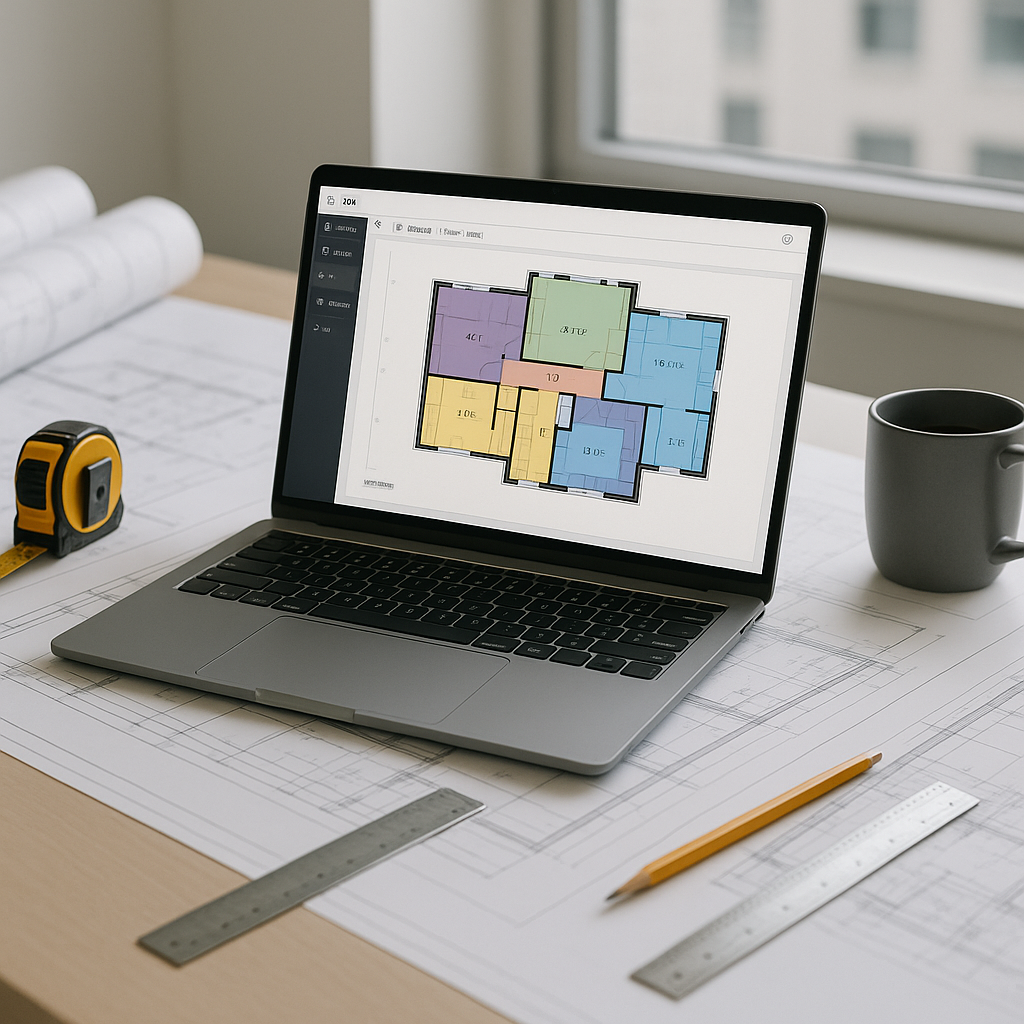
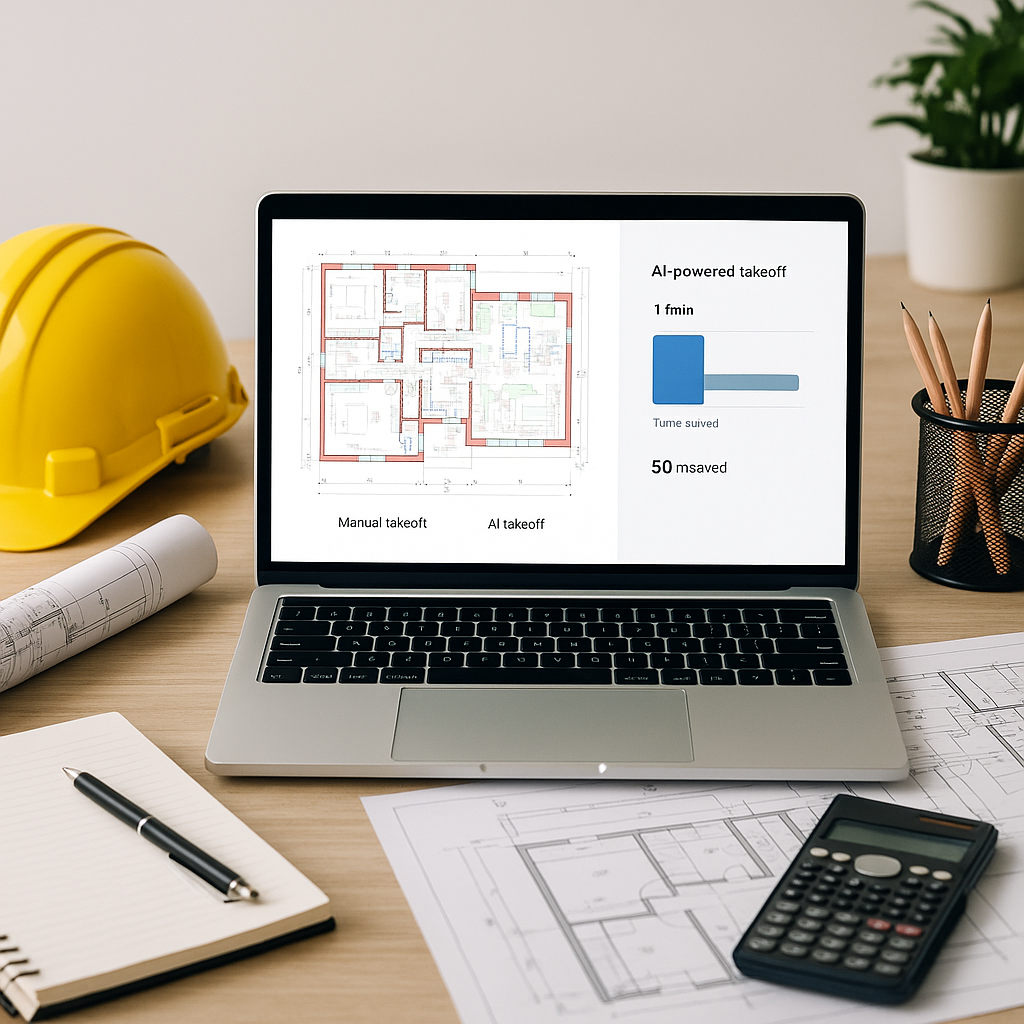
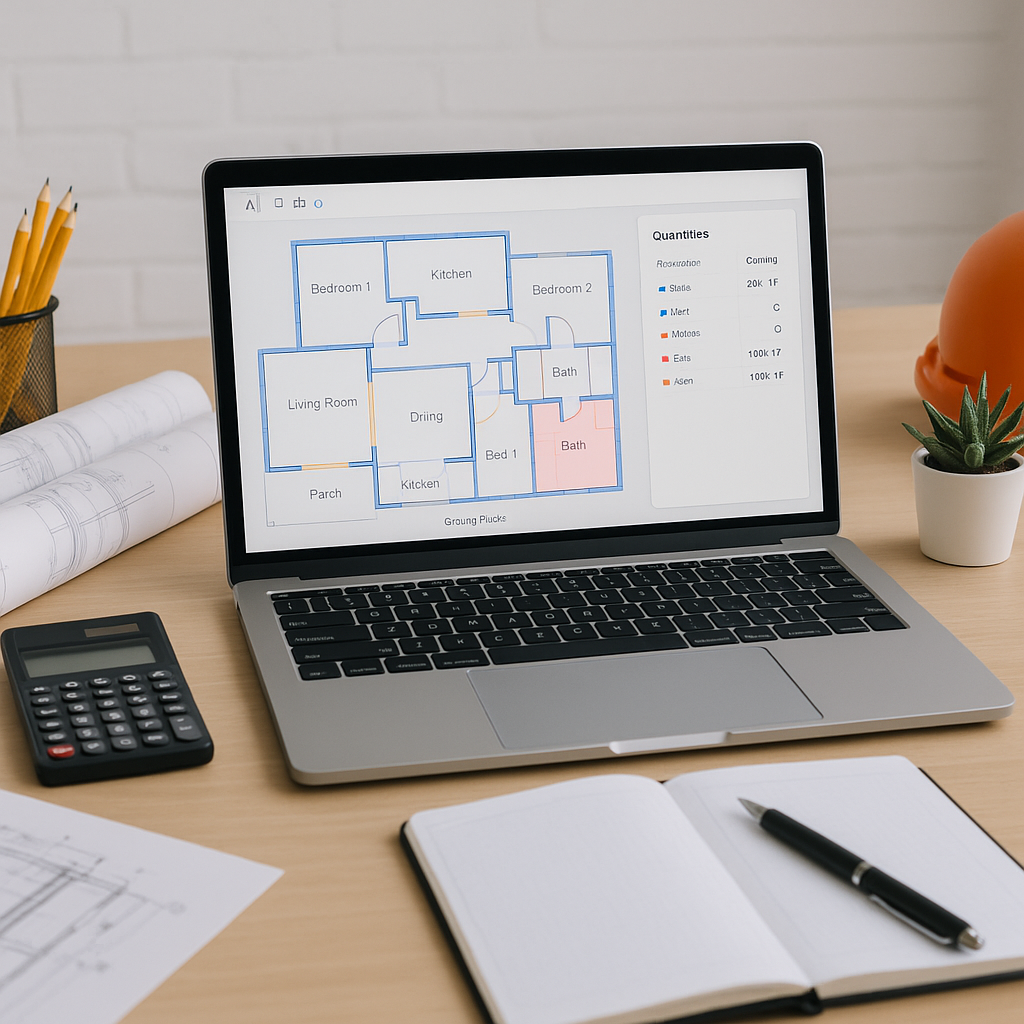
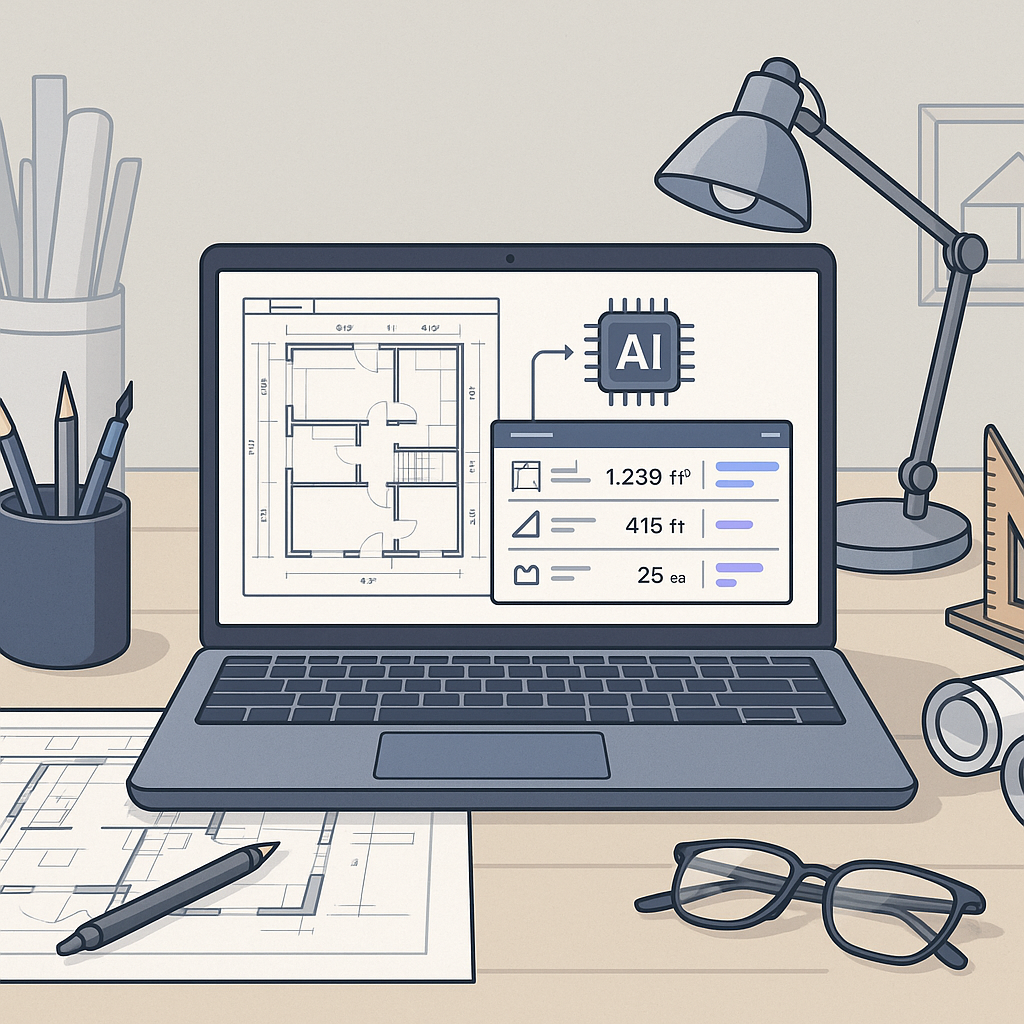
AI-powered tools are transforming the preconstruction process by automating takeoffs. Instead of manually tracing drawings, these tools can extract quantities directly from digital plans. Users upload their plans, calibrate scales, and the system quantifies areas, lengths, counts, and more.
Illustrative example — A contractor working on a large infrastructure project used AI to extract quantities for structural components. What would have taken dozens of hours manually was completed in a fraction of the time. The saved time allowed the team to focus on refining their bid strategy instead of performing repetitive tasks.
Why Faster Takeoffs Matter
-
Bid More Projects: Faster takeoffs enable contractors to handle more bids without increasing staff.
-
Reduce Errors: Manual measurements are prone to human error. AI tools help minimize these mistakes by automating calculations.
-
Focus on Strategy: Teams can allocate more time to improving bid accuracy and negotiating with subcontractors instead of performing manual data entry.
-
Handle Revisions Efficiently: AI tools can assist in identifying changes between revised and original drawings, reducing the need to start over from scratch.
Common Questions About AI Takeoffs
Q: How accurate are AI-generated takeoffs?
AI tools are designed to be highly accurate, but they are not infallible. Many systems include features for manual review and adjustment, ensuring that users maintain control over critical quantities.
Q: What about specialist trades like HVAC or electrical?
AI tools can be adapted for specialist trades, handling tasks such as HVAC duct sizing, electrical conduit layouts, and plumbing fixture counts. These systems are flexible enough to meet the unique requirements of various trades.
Q: Do I need to replace my existing tools?
No. AI takeoff tools often integrate with existing platforms like Bluebeam, Procore, and Excel, allowing users to export quantities directly into their preferred workflows.
What to Watch For
-
Garbage In, Garbage Out: The accuracy of AI tools depends on clean and correctly scaled input data. Poor-quality drawings can lead to inaccurate results.
-
Training the Team: While these tools are user-friendly, there is a learning curve. Teams may need some time to become proficient.
-
Overreliance on AI: AI is a tool to assist, not replace, human expertise. Critical quantities should always be validated before finalizing a bid.
The Bottom Line
AI-powered takeoff tools are not just about speed—they enable teams to focus on strategic tasks that add value. By automating repetitive processes, contractors can reinvest saved time into improving bid quality and winning more work.
If your team is still spending excessive time on manual takeoffs, it may be time to explore AI-powered solutions to streamline your workflow.