Your Biggest Time Sink: Manual Takeoffs
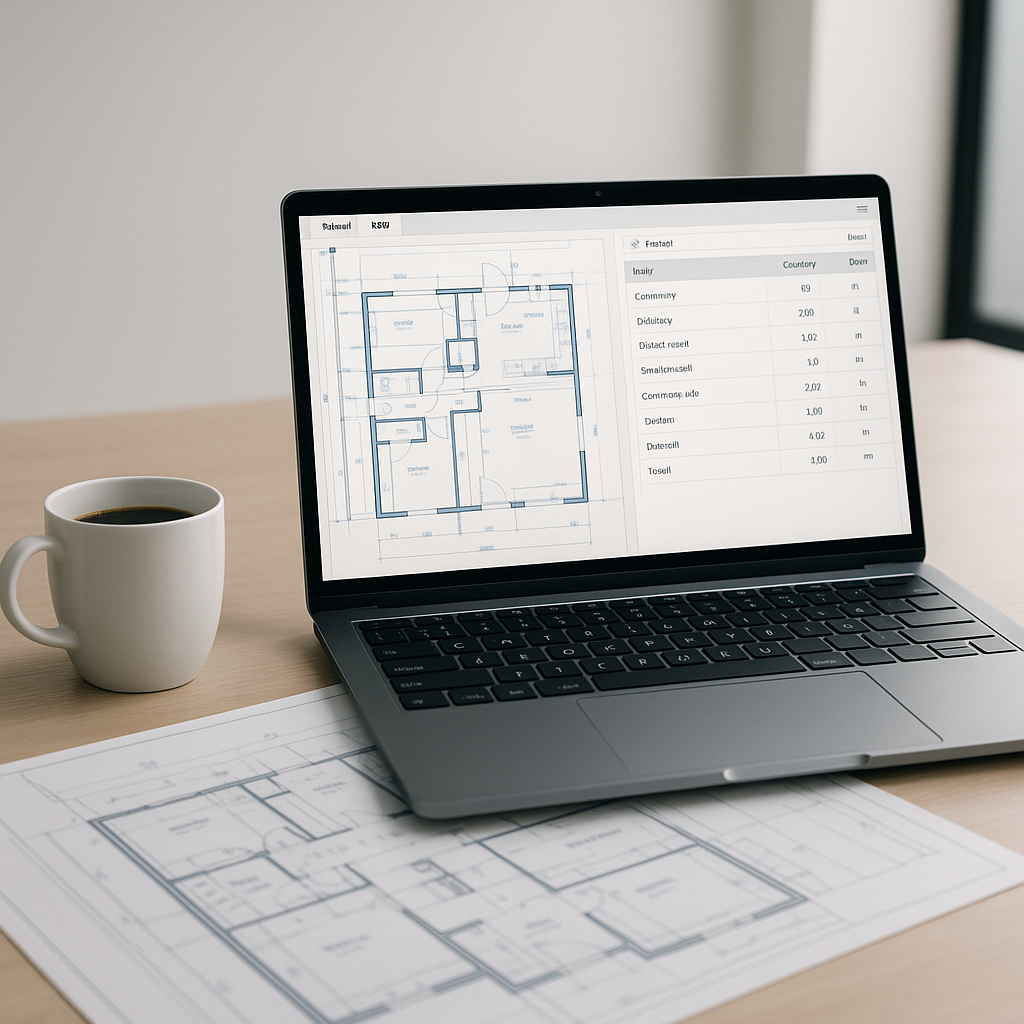
Estimators often spend significant time measuring quantities from drawings. This process involves tracing lines, counting fixtures, and recalibrating scales, which can be tedious and time-consuming. However, advancements in AI-powered takeoff tools are transforming this workflow, making it faster and more efficient.
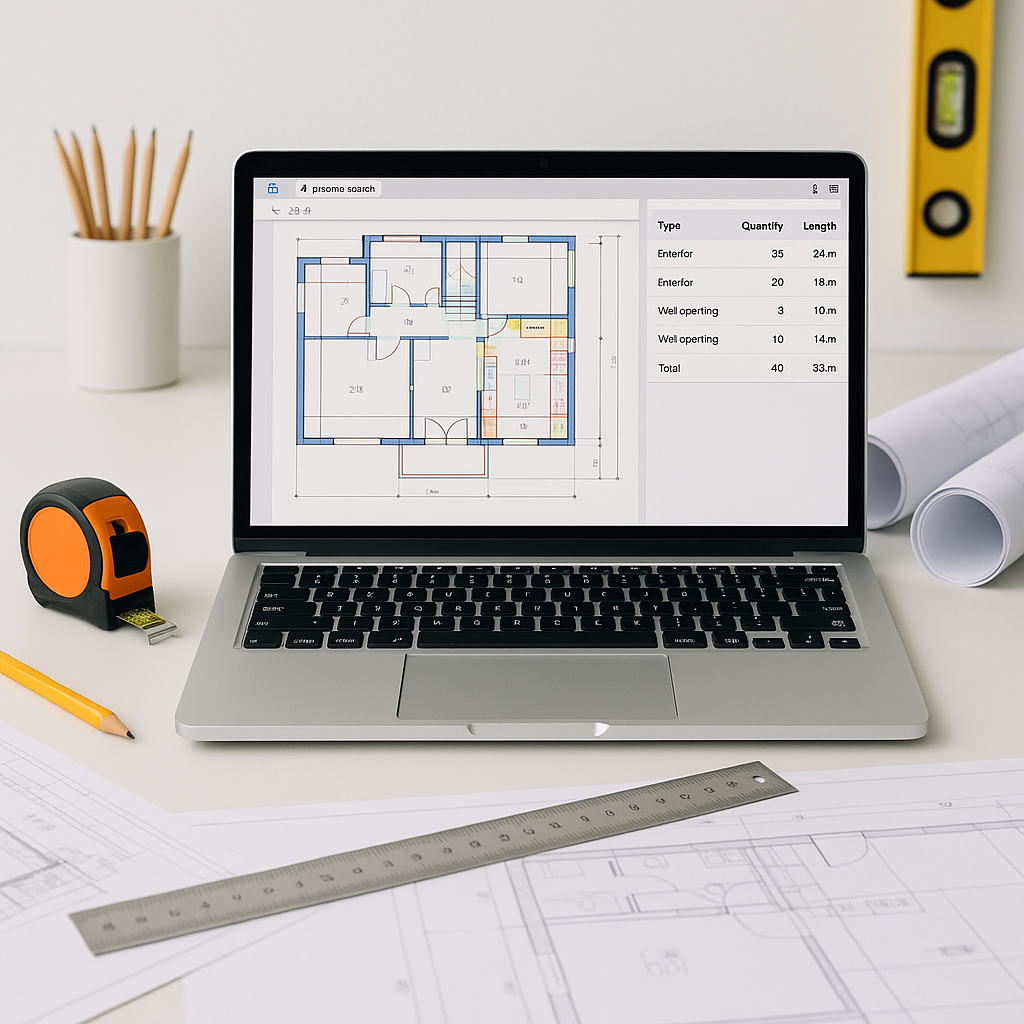
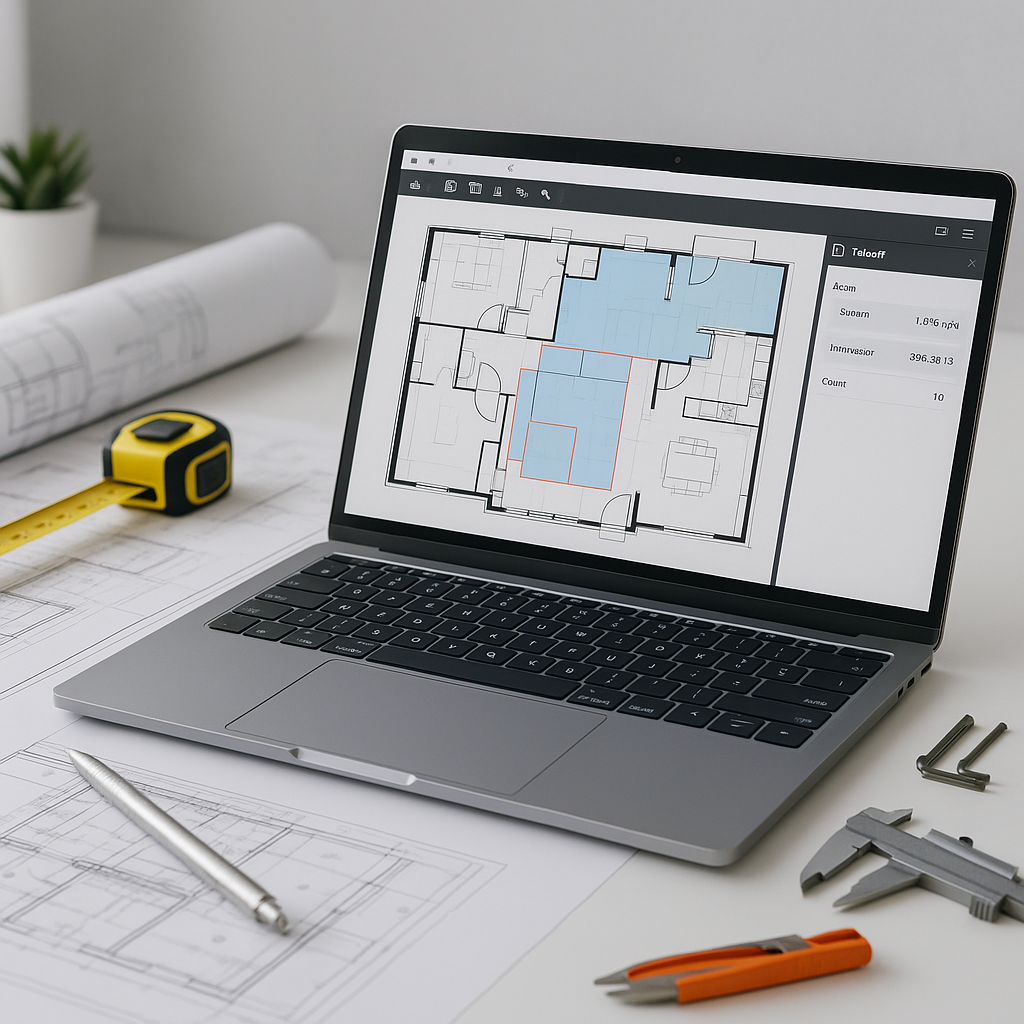
AI-powered takeoff tools, such as those offered by various platforms, automate the extraction of quantities for areas, lengths, counts, and even door/window schedules. By uploading a drawing set, the AI processes the data using algorithms trained on construction plans, delivering results faster and with fewer errors.
How AI Takeoff Tools Work
Here’s the general process:
-
Upload Your Drawings
Upload your PDF or CAD file into the platform. The AI reads the entire set, regardless of format. -
AI Detection
The system identifies walls, rooms, fixtures, and other elements based on the drawing’s lines and annotations. For example, it can count doors and windows or measure areas like floor slabs. -
Flagging for Review
The AI flags measurements that may require manual review, ensuring oversight where it matters most. -
Export to BOQ
Once the takeoff is complete, export the quantities directly into your preferred Bill of Quantities format, such as Excel or other standardized templates.
Why This Matters
Manual takeoffs can be resource-intensive, consuming valuable time that could be spent on higher-value tasks. By automating this process, AI tools allow teams to:
- Increase bidding capacity: With faster takeoffs, teams can handle more bids within the same timeframe.
- Improve accuracy: Automation reduces the likelihood of human error, leading to fewer RFIs and disputes.
- Focus on strategic tasks: Freed from repetitive tasks, teams can concentrate on optimizing rates or negotiating subcontractor deals.
The Obvious Objection: “AI Can’t Think Like Me”
AI tools are not designed to replace human judgment but to complement it. They handle repetitive tasks, allowing estimators to focus on decision-making, markups, and final bid reviews. The combination of AI efficiency and human expertise creates a more effective workflow.
Common Mistakes When Using AI Takeoff Tools
-
Skipping the Review Process
Always double-check flagged measurements. While AI is efficient, human oversight ensures accuracy. -
Ignoring Custom Settings
Calibrate the tool for unique project requirements, such as specific measurement standards or unit conversions. -
Underutilizing Data Exports
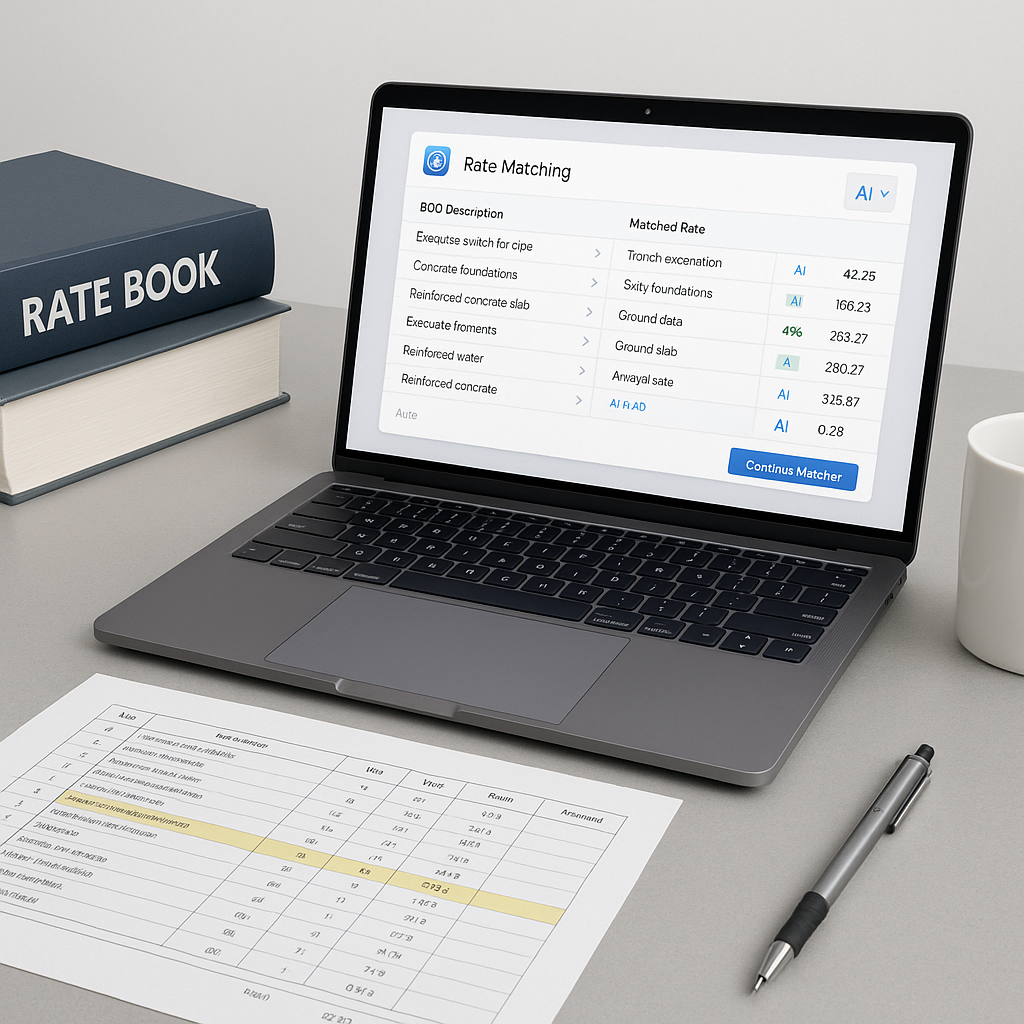
Leverage the exported data for smarter rate comparisons or scenario planning.
FAQ
Q: How accurate are AI-generated takeoffs?
A: AI tools reduce discrepancies significantly, but human oversight is essential for flagged items.
Q: Can AI tools handle custom drawings or standards?
A: Yes, many tools support user-defined settings for measurement standards.
Q: Will my team need extensive training?
A: Most tools are designed with user-friendly interfaces and include training resources to ensure a smooth onboarding process.
Call to Action
If you’re looking to streamline your preconstruction estimation process, consider exploring AI-powered takeoff tools. These solutions can save time and improve accuracy, allowing your team to focus on strategic tasks. Learn more →