The Problem No Estimator Likes to Talk About: Rate Matching
Ever spent an afternoon flipping through a 2,000-page rate book, searching for one specific line item? If you're an estimator, you probably have. It's frustrating, slow, and prone to errors. But here's the kicker: even when you find the right rate, there's no guarantee it's accurate for your project. Inflation adjustments, regional differences, and custom materials all add complexity.
Manual rate lookup is one of the most time-consuming and error-prone parts of preconstruction estimation. It often consumes significant time per estimate. Worse, mistakes in rate matching often ripple across the entire estimate, affecting your bid competitiveness and profit margins.
So, what's the solution? AI-powered rate matching.
How AI Fixes Rate Matching
AI tools are designed to eliminate the grind of manual rate lookup. Here's how they work:
-
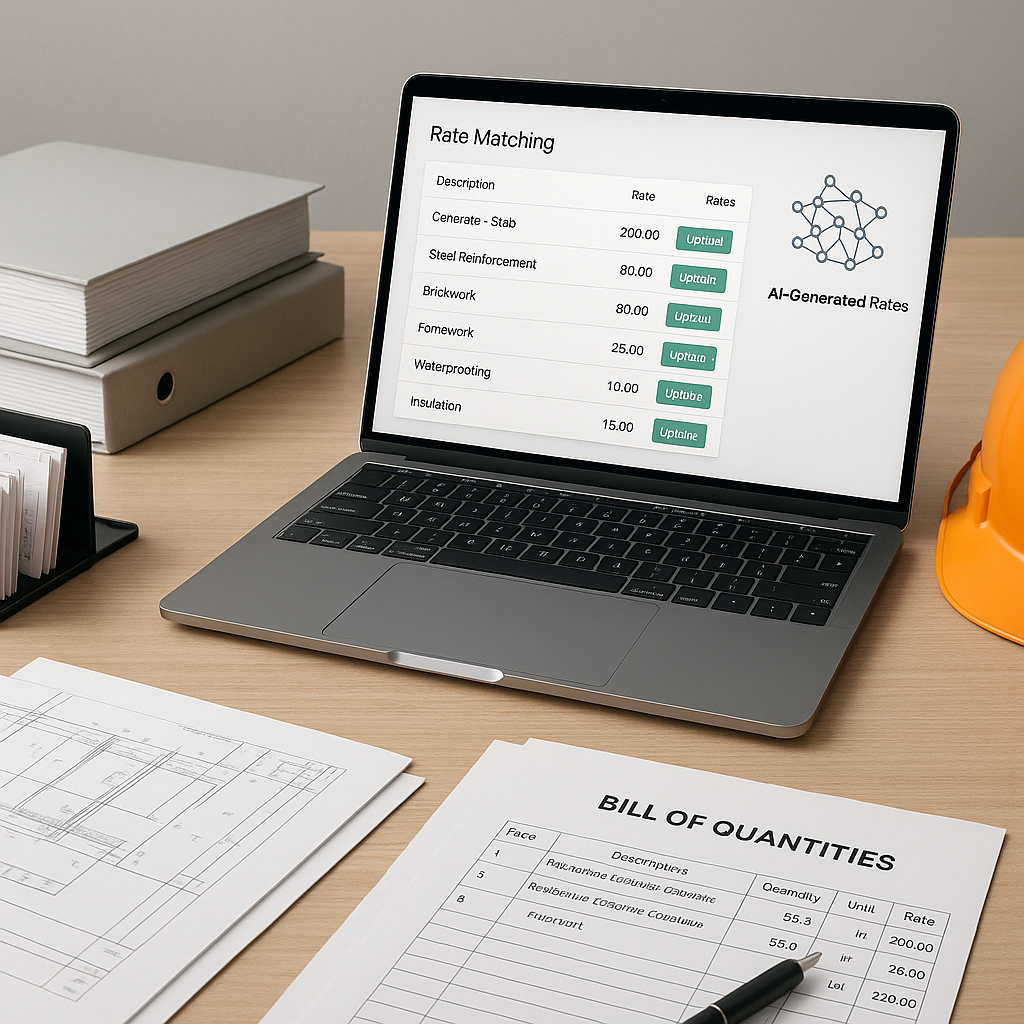
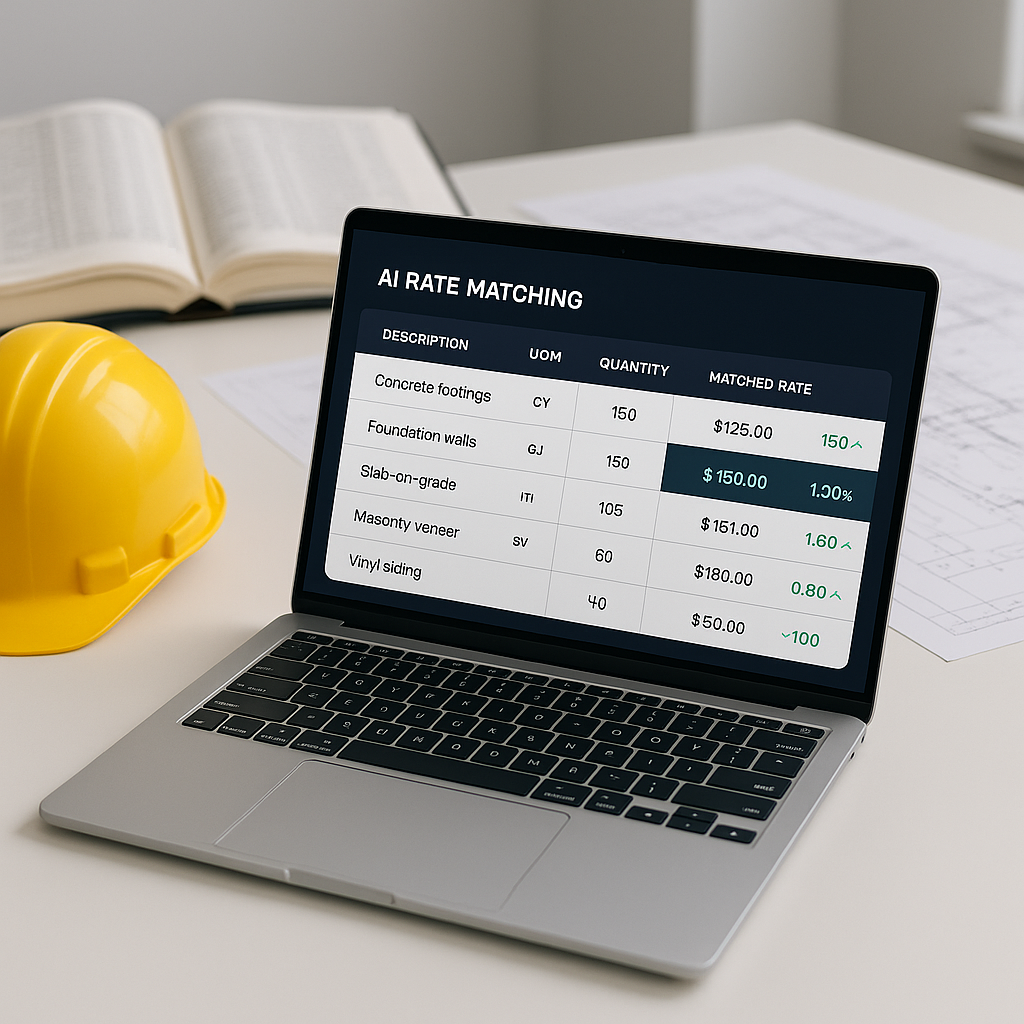
Semantic Search Across Thousands of Items Instead of flipping through PDFs, you type in what you need—e.g., "labor rate for installing pre-stressed concrete girders." The AI scans its database and delivers the best match in seconds. For example, if you're pricing a rail bridge, you can pull rates directly from approved catalogs without manual effort.
-
Custom Catalog Integration Got unique materials or finishes? AI tools let you upload your own rate catalogs. These get integrated seamlessly for future use, ensuring your estimates reflect real-world costs.
-
Inflation Adjustments Rates from last year might not apply today. AI tools can help account for inflation adjustments, saving you the headache of manual calculations.
-
Audit Trails for Transparency Every rate suggestion comes with a breakdown: material, labor, equipment costs, and any adjustments applied. This transparency builds trust—not just within your team but also with clients.
Why It Matters
Speed is one thing, but accuracy is another. AI-powered rate matching doesn't just save time—it prevents costly mistakes. Errors in material rates can significantly impact project margins.
For general contractors, this means more competitive bids with fewer surprises. For subcontractors, faster turnaround times mean responding to more bid packages—and increasing the likelihood of winning projects.
Common Questions About AI Rate Matching
Q: How accurate are AI-generated rates compared to manual ones? AI tools can be highly accurate, but accuracy depends on input quality, so human oversight is still essential.
Q: Can I upload custom rates for unique items? Yes, most AI tools allow custom catalog uploads. This ensures your estimates reflect actual costs, not generic averages.
Q: How long does it take to learn these tools? Most platforms are user-friendly. Training typically takes a short amount of time, even for teams new to AI.
Q: What if I need rates from multiple regions? Some AI tools can handle multi-market complexity by allowing for region-specific catalogs and adjustments.
The Mistakes Estimators Should Watch For
-
Over-reliance on Defaults Not every rate suggestion is perfect. Always review high-impact items manually.
-
Ignoring Inflation Factors Rates from last year might look cheaper but could cost you later.
-
Skipping Custom Catalogs If you're using generic rates for custom work, you're setting yourself up for errors.
-
Skipping Transparency Checks Ensure every rate has a clear audit trail. This makes it easier to justify costs to clients.
Actionable Step: Start Small
If you're skeptical about AI rate matching, test it on a smaller project. This way, you can compare results against your manual process without risking a major bid.
Call to Action
If you're tired of wasting hours on rate lookup, consider exploring AI-powered tools that streamline the process and improve accuracy. Start small and see how it can transform your estimation workflow.