The Hidden Time Sink in Estimation: Manual Rate Matching
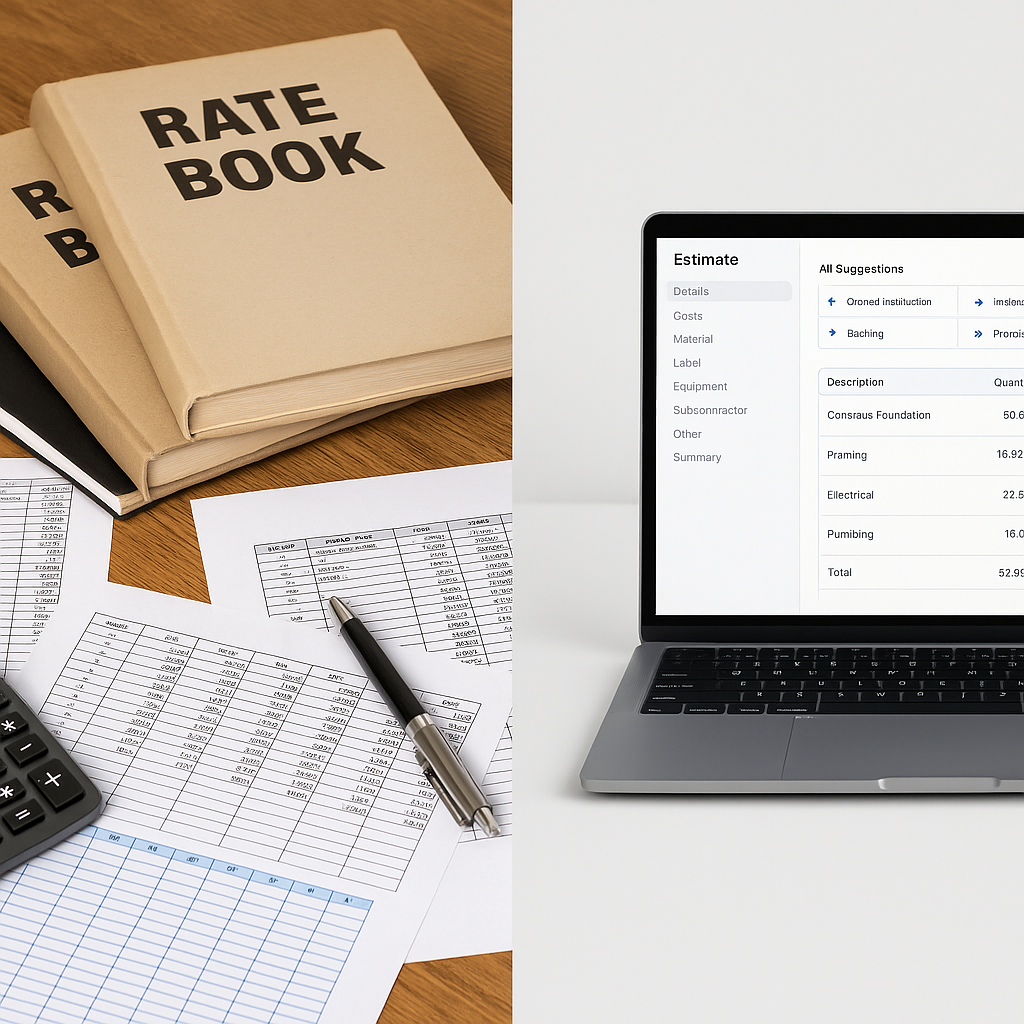
Let’s be honest. Rate matching is a grind. You’ve got a 2,000-line BOQ on one screen, a 1,500-page rate book on the other, and a deadline breathing down your neck. For most estimators, this process takes hours—sometimes days. And here’s the kicker: manual rate matching isn’t just slow, it’s risky. One missed rate or incorrect match can throw off your entire estimate.
But what’s the alternative? AI-powered rate matching. It’s not a buzzword anymore; it’s a practical solution that’s saving estimators real time and headaches. Let’s break down how it works and why it’s worth considering.
How AI-Powered Rate Matching Works
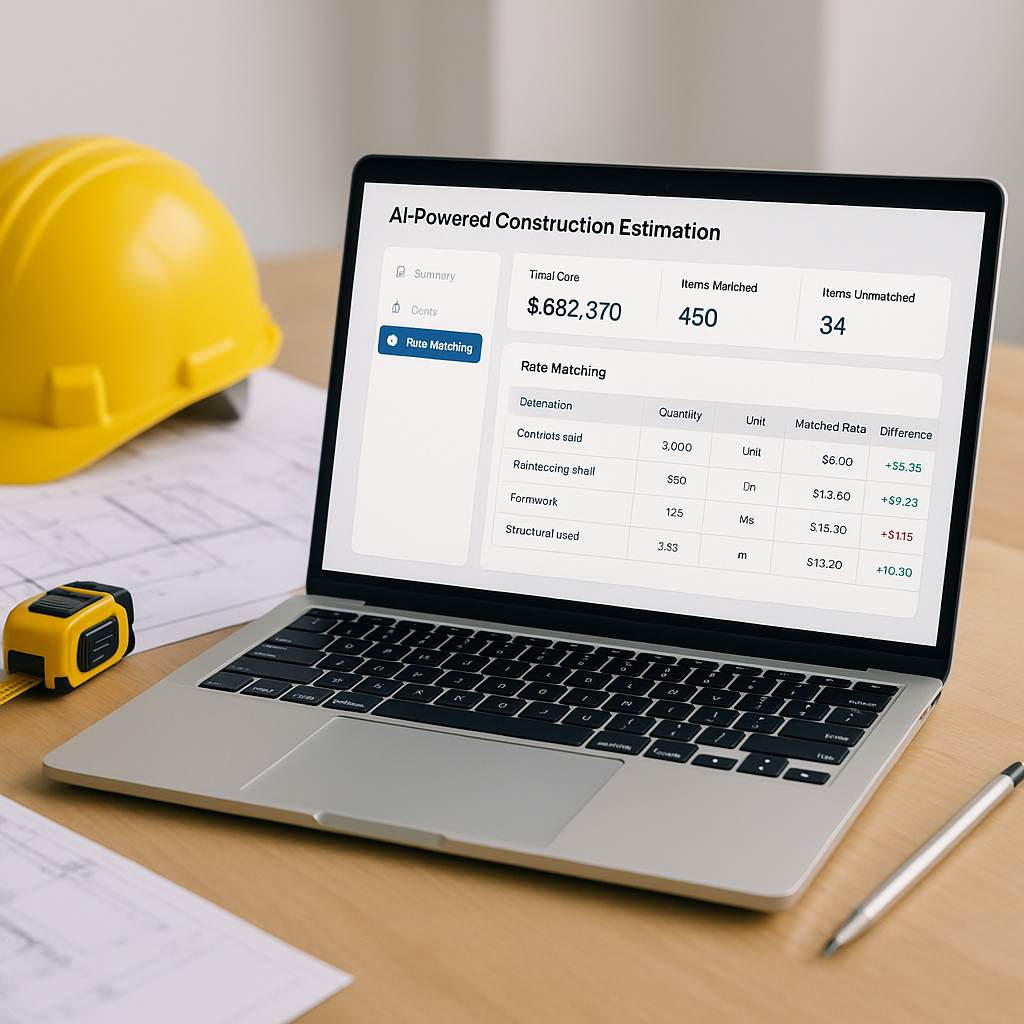
At its core, AI rate matching leverages semantic search to scan thousands of Standard Operating Rates (SOR) in seconds. Instead of flipping through PDFs or Excel sheets, you simply upload your BOQ, and the AI does the heavy lifting. Tools like EstimateNext are particularly effective, pulling from a database of thousands of SOR items across multiple catalogs.
Here’s a simple example:
- You need the labor rate for installing pre-stressed concrete girders.
- In a manual setup, you’d search through RSMeans or CPWD DSR, hoping to find the right section. Time spent? Significant.
- With AI, you type “pre-stressed concrete girders” into the search bar. In seconds, you’ve got a list of matches, ranked by relevance. Done.
It’s not just about speed. Semantic search ensures higher accuracy because it understands context. If your BOQ says “plastering (13mm thick),” the AI knows to exclude unrelated rates for 20mm or 25mm thickness.
Why This Matters for Estimators
-
Time Savings: AI tools significantly reduce the time spent on rate matching, freeing up estimators to focus on higher-value tasks.
-
Error Reduction: Manual rate matching invites human error—especially under tight deadlines. AI eliminates this by using algorithms that don’t miss details. Plus, tools like EstimateNext include manual override options, so you stay in control.
-
Standardization Across Teams: If you’ve ever had two estimators pull different rates for the same item, you know how frustrating it is to reconcile. AI ensures consistency by using a shared database, updated in real-time.
-
Multi-Market Complexity: Estimators working across regions know the pain of juggling different rate standards (CSI, CPWD, NRM2, etc.). AI platforms automatically map rates to the appropriate standard, saving even more time.
Common Concerns About AI Rate Matching
“AI can’t understand my custom rates.”
That’s a fair concern. But modern tools allow you to upload your own rate catalogs, which the AI integrates seamlessly. With each project, the system learns and improves, ensuring your custom rates are prioritized.
“What if the AI gets it wrong?”
No system is perfect, but AI tools don’t operate in a vacuum. Platforms like EstimateNext include manual override options, so you can review and adjust matches before finalizing. Think of it as a safety net.
“Is it worth the investment?”
The value of AI tools lies in the time saved and the reduction of errors. By automating repetitive tasks, these tools allow estimators to focus on strategic decision-making.
What to Watch For
- Input Data Quality: AI is only as good as the BOQ you upload. Ensure your data is clean and well-structured for the best results.
- Learning Curve: While most tools are user-friendly, there’s still a short ramp-up period. Allocate time for team training.
- Customization: Make sure the platform you choose supports your specific catalogs and standards. Not all tools are flexible enough to handle regional nuances.
FAQ
Q: How does AI handle multi-language catalogs?
A: Many platforms, including EstimateNext, support multiple languages and standards. This is particularly useful for contractors working across international markets.
Q: Can I use AI tools alongside Bluebeam or Procore?
A: Yes. Most AI platforms integrate seamlessly with popular construction software, allowing you to export estimates directly into your workflow.
Q: What happens if I need to update rates mid-project?
A: AI tools propagate changes in real-time, so you don’t have to rebuild your workbook from scratch. EstimateNext even provides an audit trail for transparency.
Final Thoughts
Manual rate matching is outdated. It’s slow, error-prone, and a drain on your team’s bandwidth. AI-powered tools like EstimateNext not only speed up the process but also improve accuracy and standardization. In a competitive bid environment, that’s an edge you can’t afford to ignore.
If you’re tired of wasting hours on manual rate matching, EstimateNext can help. Get started free →