The Takeoff Bottleneck: Why It’s Slowing Your Preconstruction Workflow
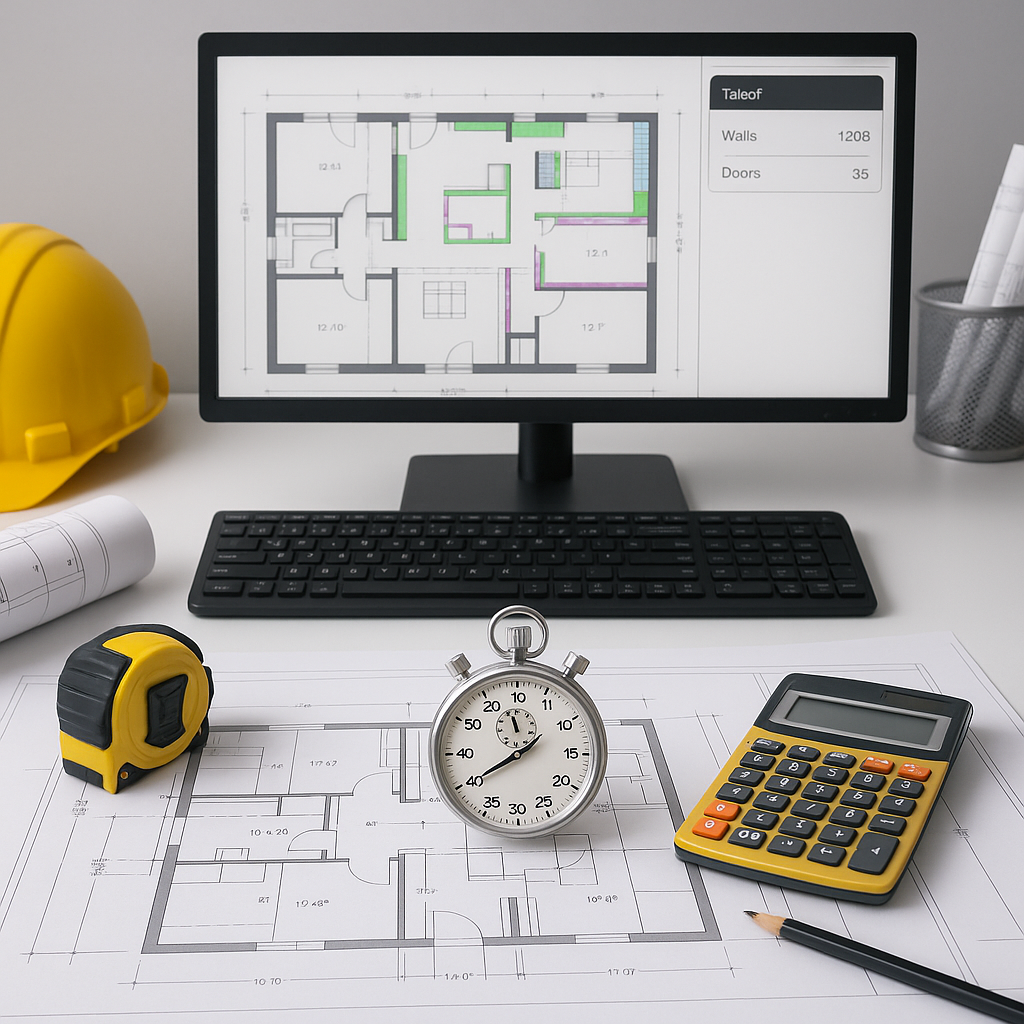
Every estimator knows the challenges of manual takeoffs. You spend hours tracing beams, calculating wall lengths, and counting windows on drawings, only to find discrepancies when the bid package goes out. When a client requests a what-if scenario, you often have to start over, rebuilding everything from scratch.
Manual takeoffs can consume significant time per project. This process is not only labor-intensive but also prone to human error, which can lead to mismatched scopes and delays during bid reviews.
What AI Takeoffs Change
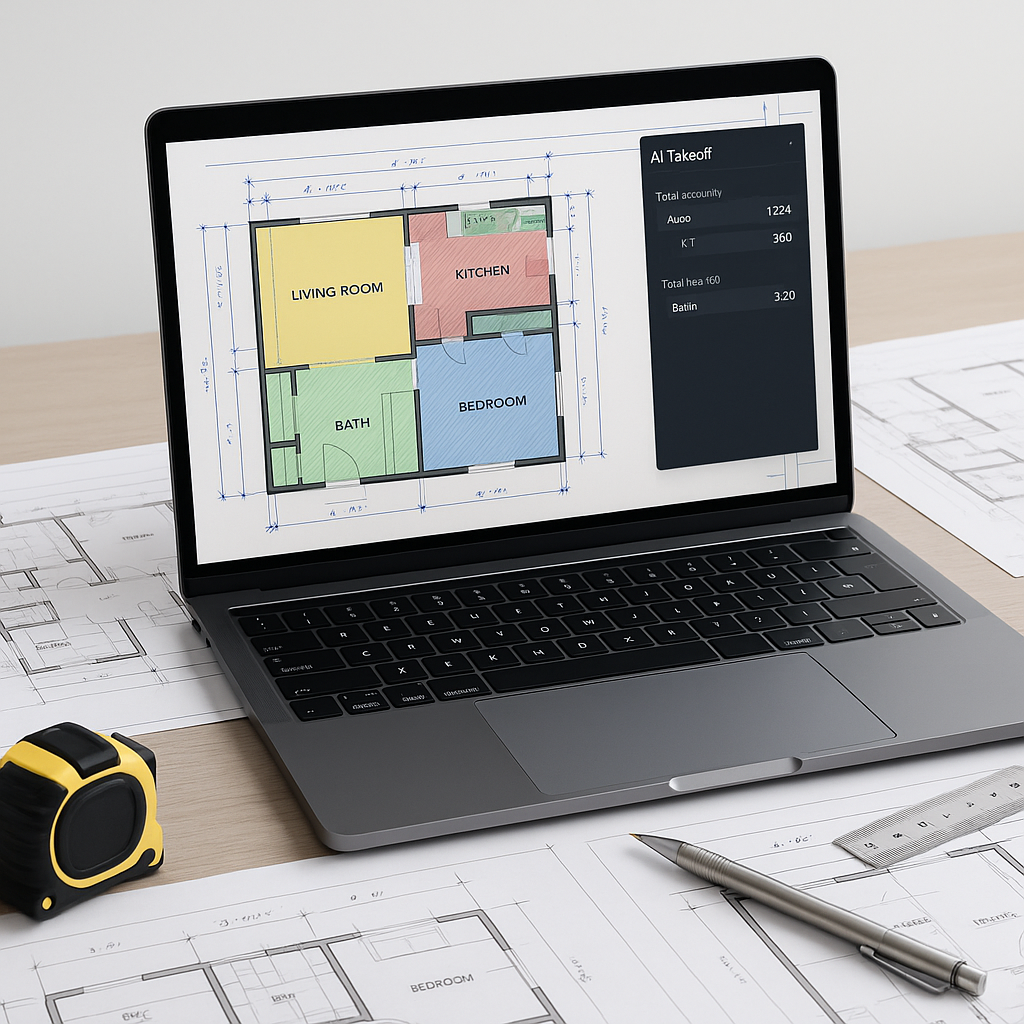
AI-powered tools are transforming the takeoff process. Instead of manually measuring and counting, you can upload a PDF or drawing set, and the AI extracts quantities for areas, linear measurements, and counts in a fraction of the time. This automation reduces the repetitive workload, allowing estimators to focus on higher-value tasks like strategy and accuracy.
How It Works
Here’s the general workflow for AI-powered takeoff tools:
- Upload Your Drawings: Upload your PDF set into the tool. Many tools can even handle scanned files, eliminating the need for vector formats.
- AI Extraction: The AI reads the drawings and extracts quantities such as areas for flooring, linear lengths for walls, and counts for fixtures like doors and windows.
- Flagging for Review: Items with low confidence are flagged for manual review, ensuring accuracy without requiring complete rework.
- Audit Trail: Changes are logged, providing a clear record of adjustments — a valuable feature during bid reviews.
Addressing Concerns: “AI Can’t Think Like an Estimator”
It’s true that AI doesn’t replace your expertise. Instead, it complements it by handling repetitive tasks. You’re still in charge of judgment calls, negotiations, and final decisions. Think of AI as an apprentice: it handles the tedious measuring, leaving you free to focus on strategic aspects of the project.
Most tools also include manual override features, so you remain in control of the final output.
Common Mistakes to Avoid
- Skipping the Review Process: AI takeoffs are fast, but they’re not perfect. Always review flagged items.
- Relying on Poor Input Data: Ensure your uploaded drawings are clear and complete to get accurate results.
- Ignoring Custom Scopes: For unique project requirements, input those manually into the Bill of Quantities (BOQ).
FAQ
Q: How accurate are AI-driven takeoffs?
AI tools can significantly reduce discrepancies compared to manual processes. However, accuracy depends on the quality of input data and thorough human review.
Q: Can AI handle complex projects?
Yes. AI tools are designed to scale and can be used on projects of varying sizes and complexities.
Q: Does it integrate with existing software?
Many AI takeoff tools allow you to export data to platforms like Procore or Excel, ensuring seamless integration into your existing workflows.
The ROI of AI Takeoffs
Illustrative example — Consider a scenario where a team saves significant hours per bid by automating takeoffs. Multiply that time savings across multiple bids annually, and the efficiency gains can be substantial. While the exact savings will vary, the reduction in manual effort and improved accuracy can justify the investment in AI-powered tools.
Call to Action
If manual takeoffs are consuming too much of your team’s time, consider exploring AI-powered tools to streamline your preconstruction estimation process. Learn more →