The Takeoff Problem in Preconstruction
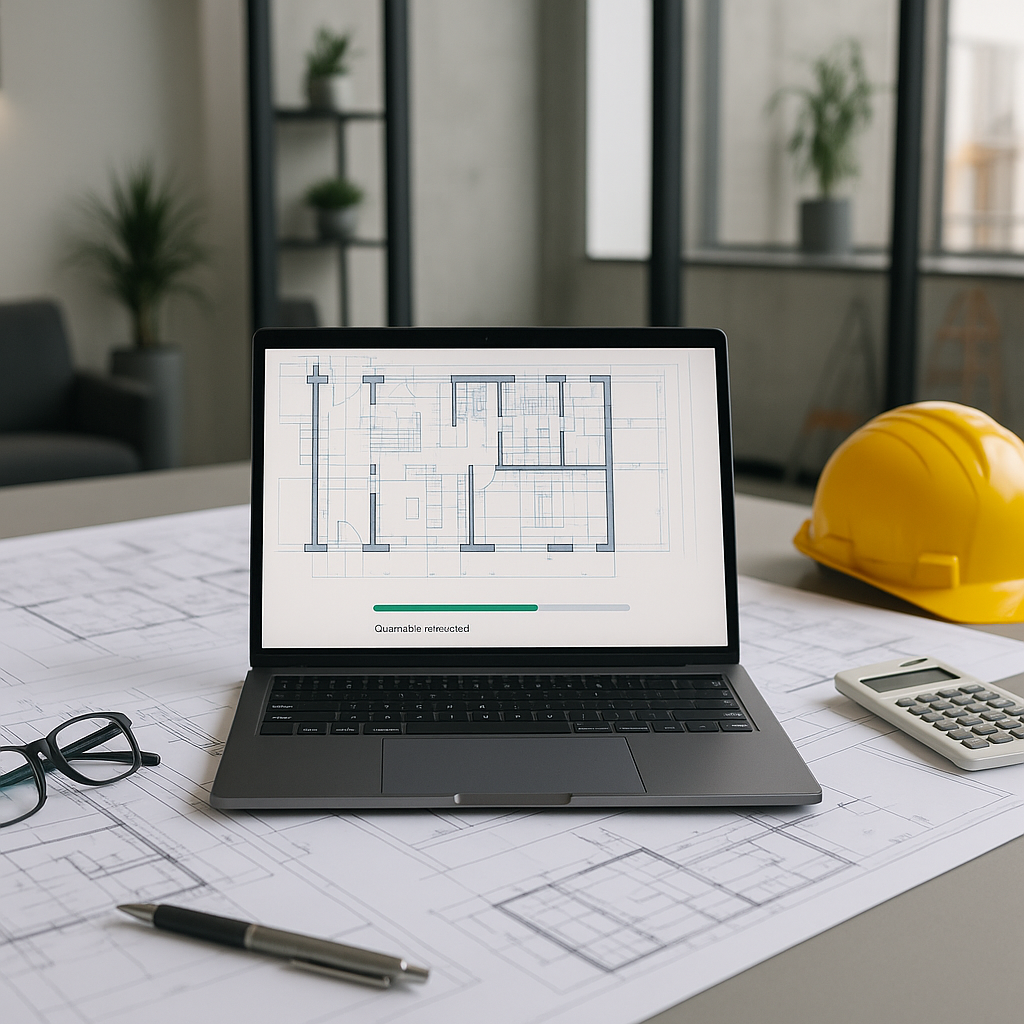
If you're an estimator, you've likely faced the challenge of manually performing takeoffs from large sets of drawings. Measuring linear feet for walls, calculating square footage for flooring, and counting doors and windows can be a time-consuming and error-prone process. This manual work often detracts from focusing on strategic tasks like cost insights and bid optimization.
Manual takeoffs remain common in the industry, but as projects grow more complex and timelines tighten, this traditional approach can hinder efficiency and competitiveness.
How AI Can Streamline Takeoffs
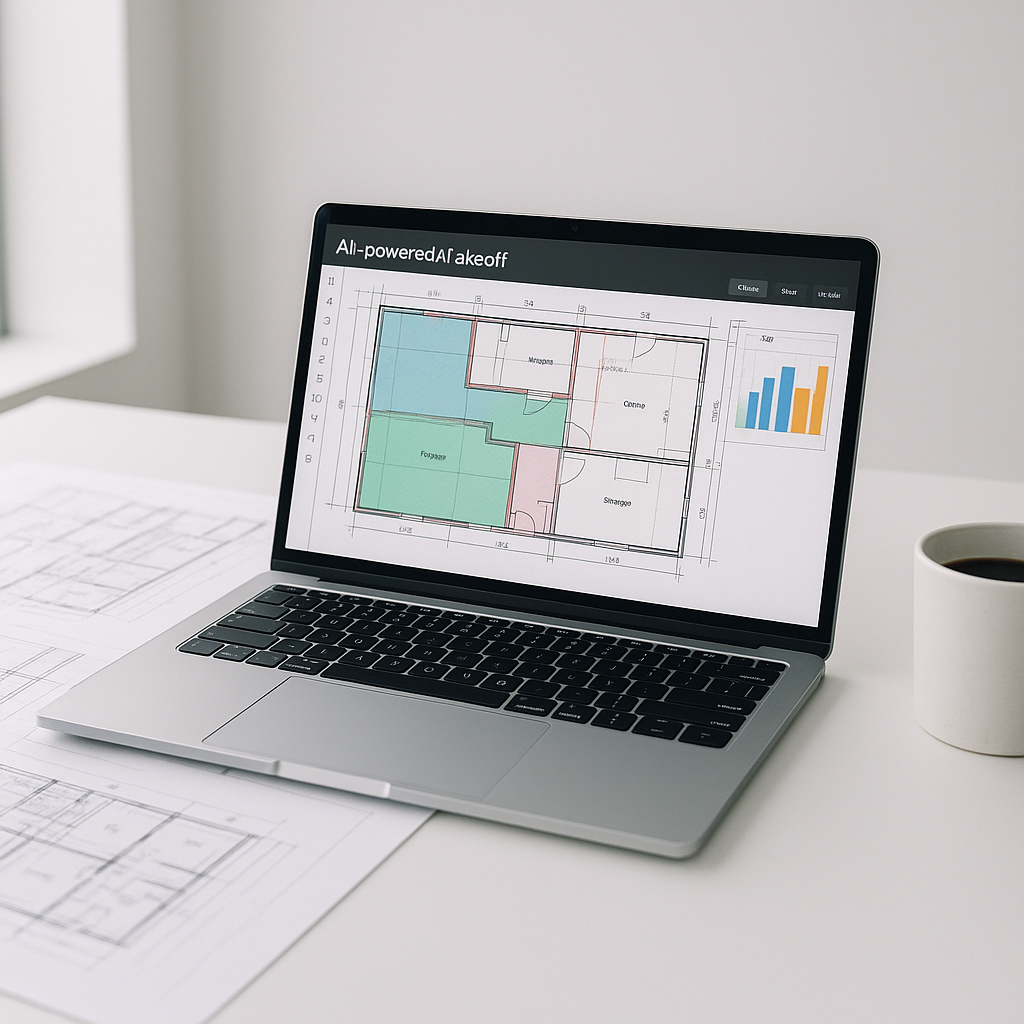
AI-powered takeoff tools are designed to automate the extraction of quantities from PDF drawings, significantly reducing the time required for this process. Here's a general overview of how these tools work:
- Upload the Drawings: Users upload their PDF plans into the software.
- AI Extraction: The tool scans the drawings to identify areas, lengths, and counts.
- Review and Adjust: The software flags items for review, allowing users to verify critical measurements.
- Export to BOQ: Quantities are formatted into a bill of quantities (BOQ) or integrated into existing workflows.
Illustrative example — A contractor using AI tools could potentially reduce the time spent on takeoffs from several days to just a few hours, depending on the project size and complexity. This allows more time for refining bids and other strategic activities.
Addressing Concerns About AI in Estimation
Some professionals worry that AI tools lack the nuanced understanding of construction projects. While it's true that AI cannot account for specific client preferences or unique site conditions, these tools are not meant to replace human expertise. Instead, they handle repetitive tasks, enabling estimators to focus on higher-value decisions.
Common Mistakes When Using AI Takeoffs
- Blind Trust: Always review flagged items to ensure accuracy.
- Poor Inputs: Ensure that drawings are clear and complete for optimal results.
- Skipping Training: Familiarizing yourself with the tool's features can improve efficiency and reduce errors.
FAQ
Q: How accurate are AI takeoffs compared to manual ones?
A: AI tools are generally highly accurate but benefit from human review of flagged items to ensure precision.
Q: Can AI tools be used for small projects?
A: Yes, AI tools are scalable and can be applied to projects of varying sizes.
Q: Do AI tools integrate with existing software?
A: Many AI tools offer integration with platforms like Excel, Procore, and other preconstruction software.
Final Thoughts
Manual takeoffs can be a bottleneck in the estimation process. AI-powered tools provide a way to streamline this task, freeing up time for strategic decision-making. By automating repetitive tasks, these tools enable estimators to focus on what truly matters: creating competitive and accurate bids.