The Hidden Time Sink in Preconstruction Estimation
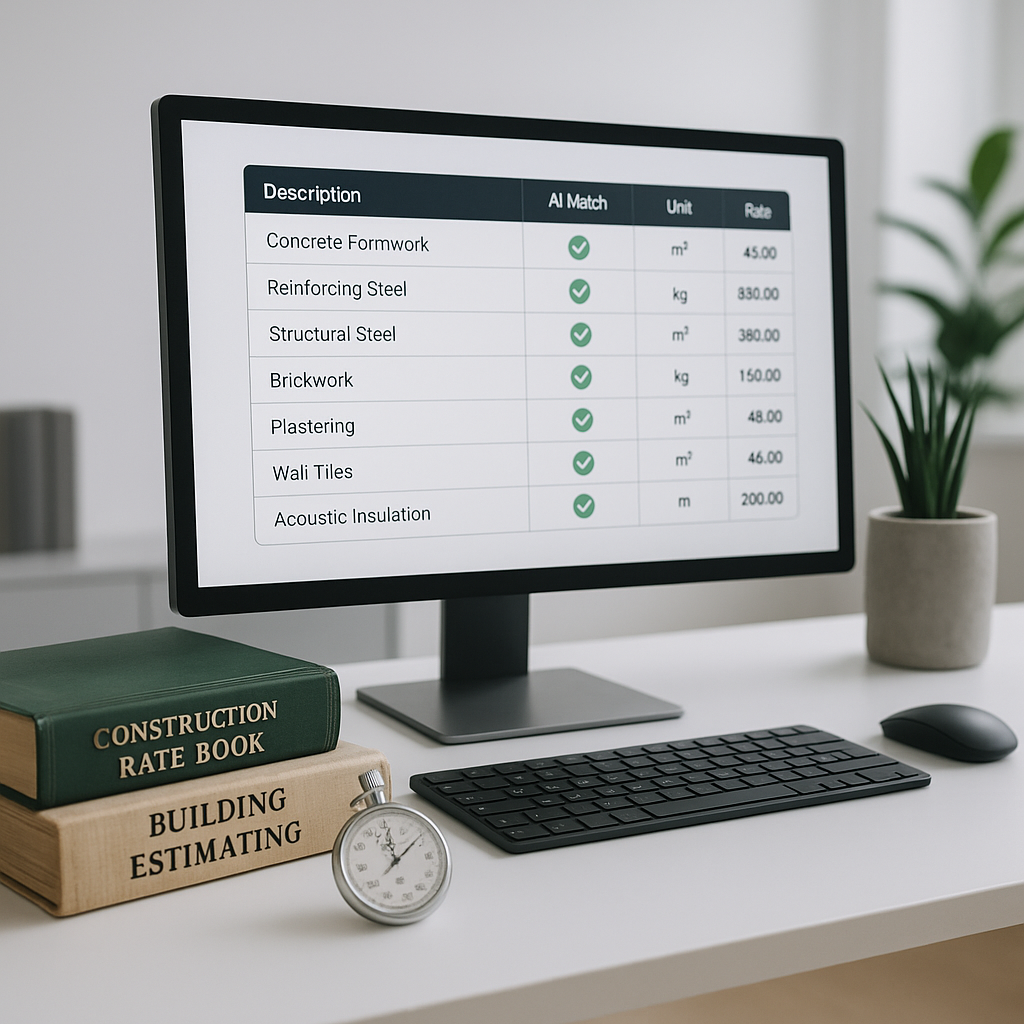
If you've spent hours flipping through RSMeans or CPWD DSR catalogs, you know the pain. For complex projects, the process can involve multiple catalogs, region-specific adjustments, and custom rates, making it time-consuming and error-prone.
Why does this take so long? Manual rate lookup is inherently slow. You need to find the right section in the rate book, ensure the item matches your scope, and then double-check labour, material, and equipment breakdowns. And if the client's requirements include custom finishes or localized materials? Most teams resort to spreadsheets or handwritten notes that aren't reusable for the next project. It's frustrating, inefficient, and prone to errors.
The AI Solution: Smarter Rate Matching
AI-powered preconstruction tools are changing the game. Instead of manually digging through catalogs, you upload your BOQ, and the system does the heavy lifting. Here's how it works:
- Semantic Search Across Catalogs: The AI scans thousands of Schedule of Rates (SOR) items, pulling matches in seconds. Unlike a PDF search, this system understands context. For example, if you're looking for "brick masonry with plaster finish," it won't just return "brick masonry"—it finds the exact match with material and labour included.
- Custom Catalogs Integration: Got your own rates? Upload them. The AI learns your preferences and prioritizes them for future estimates. This is particularly useful for contractors with region-specific labour rates or unique material costs.
- Audit Trail for Transparency: Every rate match includes an audit trail. You see the source, the assumptions, and the breakdown—so you can trust the numbers. No more second-guessing whether a junior estimator picked the wrong rate.
Benefits of AI Rate Matching
AI rate matching can significantly reduce the time spent on manual rate lookups while improving accuracy. By automating repetitive tasks, teams can focus on higher-value activities like risk assessment and strategy. Additionally, the transparency provided by audit trails ensures confidence in the estimates.
Common Objections (and Why They’re Wrong)
“AI can’t handle custom rates.”
Actually, it can. Tools allow you to upload your own rate sheets. Over time, the system learns your preferences and adjusts suggestions accordingly.
“What about edge cases?”
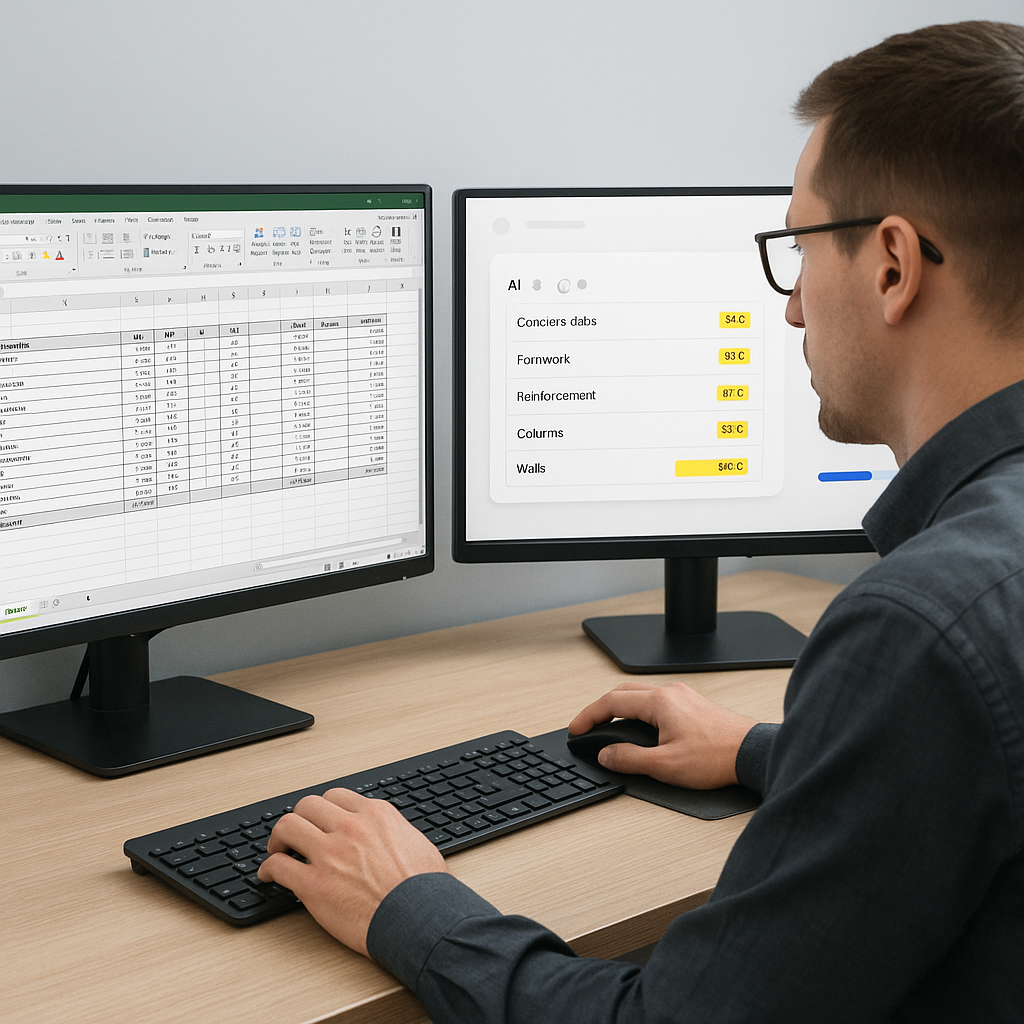
AI systems include mechanisms to flag uncertain matches for manual review. This hybrid approach ensures no critical details slip through the cracks.
“It’s too complicated to set up.”
Most platforms are designed to be user-friendly. Setup is typically straightforward, and if your team knows how to use Excel, they can adapt to these tools quickly.
Practical Steps to Get Started with AI Rate Matching
- Audit Your Current Process: Track how much time your team spends on rate lookup per estimate. This will help you calculate potential ROI.
- Test on a Smaller Project: Upload a BOQ for a past project and compare the AI-generated matches to your manual estimates.
- Integrate with Existing Tools: Look for platforms that support your current stack (e.g., Procore, Bluebeam). Many AI tools integrate seamlessly, so you don't need to overhaul your workflow.
- Refine Over Time: Use custom catalogs and feedback loops to train the AI. The more you use it, the smarter it gets.
FAQ
Q: How accurate are AI-generated matches?
A: AI tools are highly accurate, especially after a few projects. Accuracy improves further as the system learns from user feedback.
Q: What if my BOQ includes custom or project-specific items?
A: You can add custom items to your catalog, and the AI will prioritize them. For new items, the system uses fallback algorithms to suggest rates based on similar entries.
Q: Can this replace manual estimation entirely?
A: No. AI handles the repetitive tasks, but human judgment is still crucial for nuanced decisions like risk assessment and markup strategies. Think of it as a supercharged assistant.
The Bottom Line
AI rate matching isn’t just a productivity tool—it’s a competitive advantage. By reducing the time spent on manual rate lookups, minimizing errors, and ensuring consistency, you free up your team to focus on high-value tasks like negotiation and strategy. If you’re still relying on rate books and manual lookups, it’s time to rethink your approach.
If you're struggling with rate lookup inefficiencies, AI-powered tools can help streamline your process and improve accuracy.