The Time-Sink of Manual Rate Matching
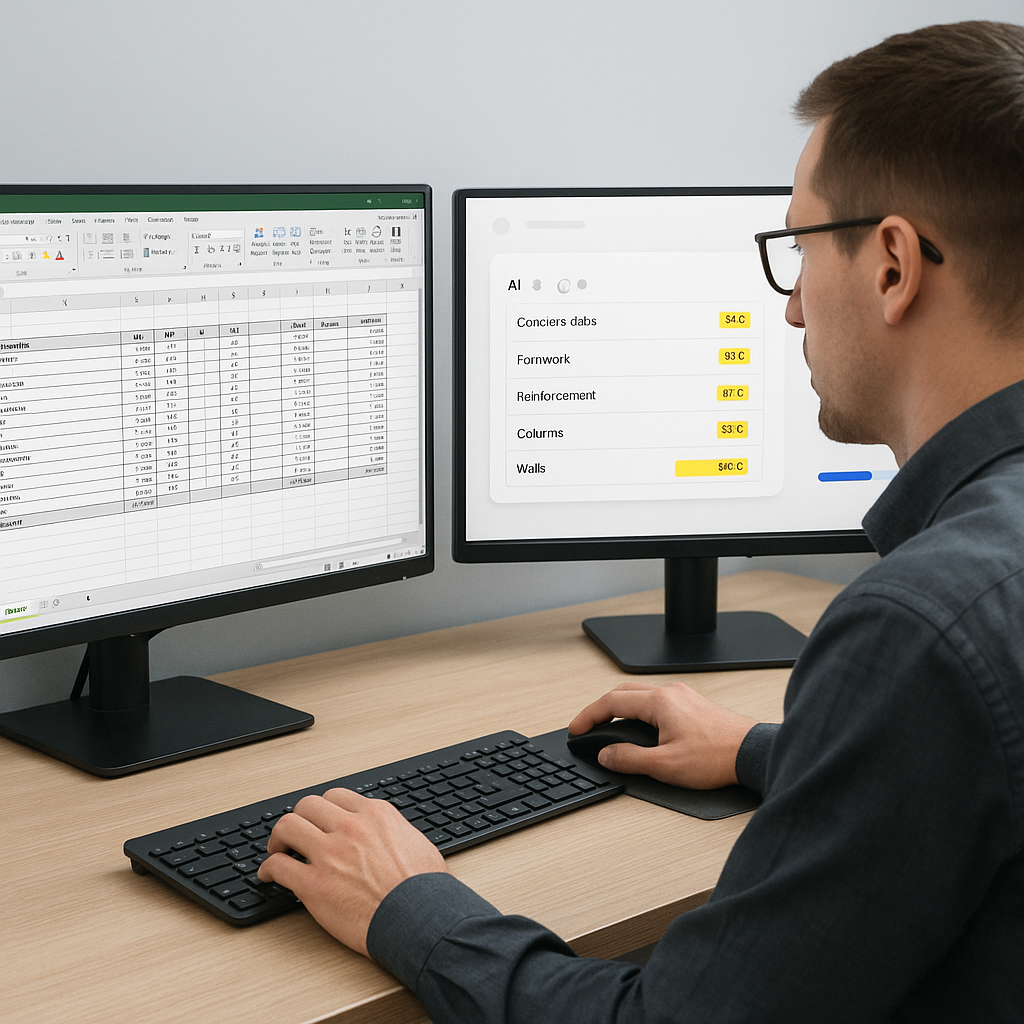
Estimators know the pain of rate matching all too well. You’re trying to find the perfect line item for a specific scope of work. What do you do? Open your 2,000-page rate book or PDF, search for the right Standard Operating Rate (SOR), and hope it’s still relevant to the project at hand. Then, you rinse and repeat—for every single line in the Bill of Quantities (BOQ).
It’s a tedious, time-consuming process. Many estimators spend significant time flipping through rate books and cross-referencing rates. This process can delay project timelines and increase the risk of errors.
Now, imagine if you could do all that in seconds. That’s what AI-powered rate matching aims to achieve. Let’s break it down.
How AI-Powered Rate Matching Works
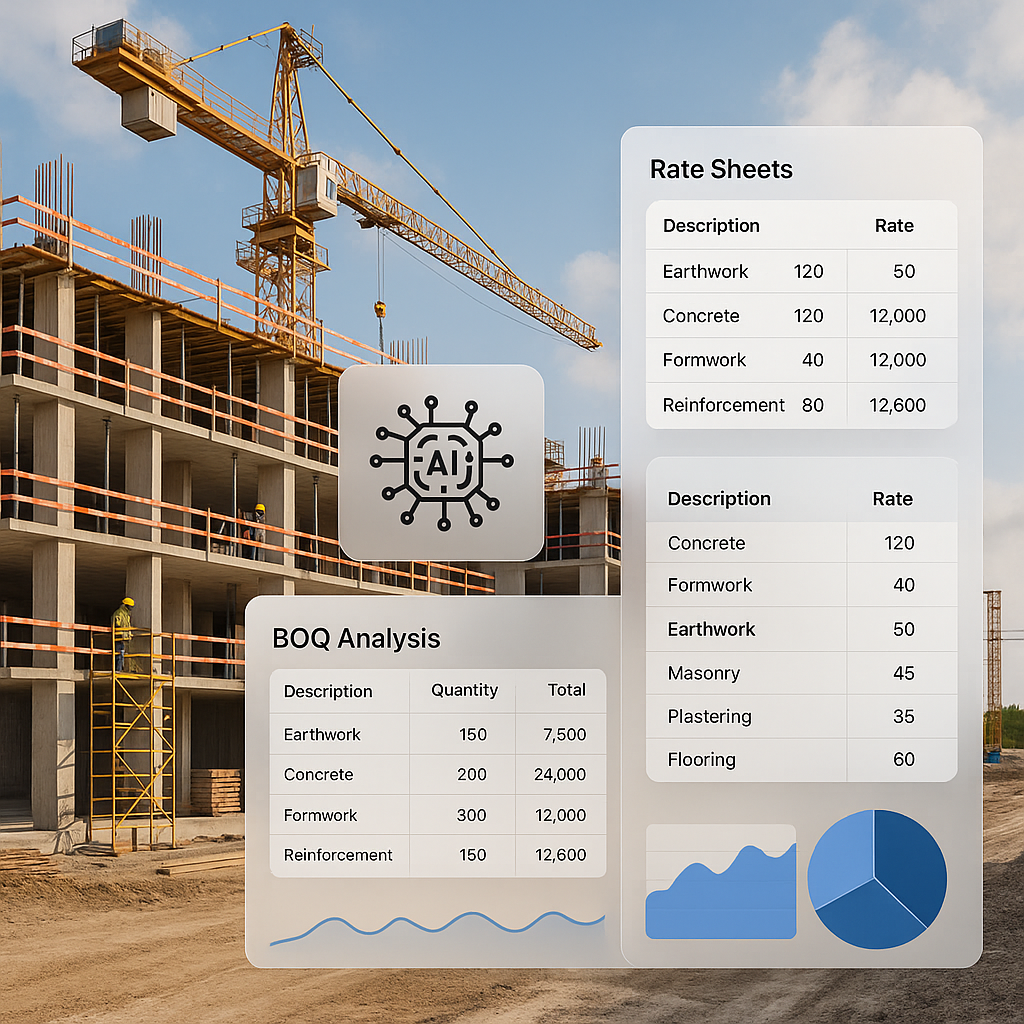
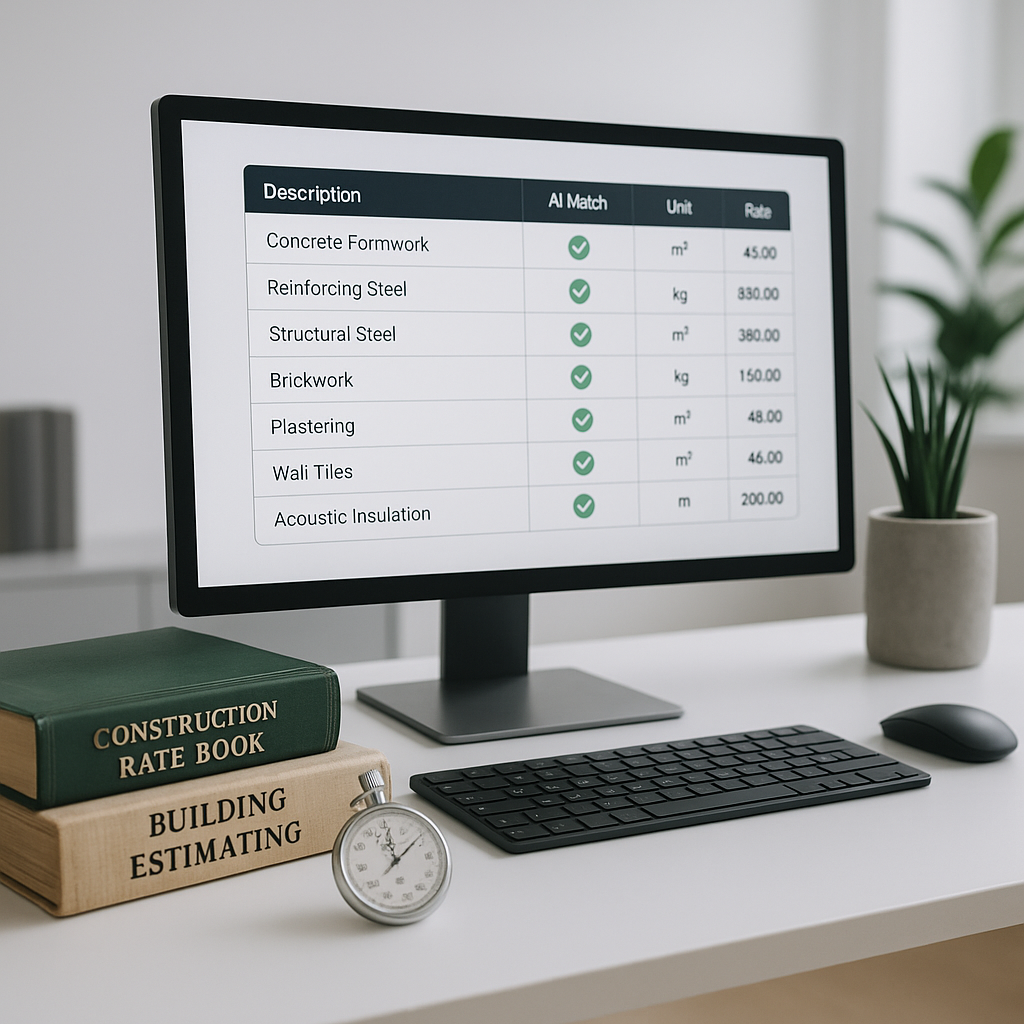
Instead of manually searching for rates, AI-powered tools use semantic search to do the heavy lifting for you. When you upload your BOQ, the AI scans each line item and matches it against a database of SOR entries. It doesn’t just look for keywords—it understands the context of each line item.
For example, let’s say you’re pricing “installation of pre-stressed concrete girders.” Instead of flipping through every page of an RSMeans or CPWD DSR book, you simply type the description into the AI. Within seconds, it pulls up the most relevant rates, whether they’re from national standards or your own custom catalog.
This isn’t just faster—it’s smarter. The AI learns from your inputs. If you adjust a rate or reject a suggestion, the system remembers for next time. Over time, this iterative learning improves the tool’s relevance and accuracy.
Why Manual Rate Matching Is a Problem
You might think, “We’ve been doing manual rate matching for years. Why change now?” Here’s why it’s a problem:
- Human Error: When you’re dealing with thousands of line items, mistakes are inevitable. Miss one key rate, and your entire bid could be off.
- Outdated Rates: Rate books don’t update themselves. If you’re not using the latest version, you’re already behind.
- Opportunity Cost: Every hour you spend on manual rate matching is an hour you’re not spending on higher-value tasks, like negotiating with subs or refining your bid strategy.
AI doesn’t just speed up the process—it eliminates these pain points.
Common Objections to AI Rate Matching
“AI can’t think like an estimator.”
True, AI doesn’t replace your expertise. But it doesn’t have to. Think of it as your assistant. It handles the grunt work—searching, matching, and organizing—so you can focus on what you do best: making judgment calls.
“What if the AI gets it wrong?”
Good question. That’s why most platforms include manual override options. If the AI suggests a rate that doesn’t fit, you can adjust it. The system learns from your feedback, getting smarter with every project.
“We already have a system that works.”
Fair. But does your current system save you significant time per estimate? Does it adapt to your specific needs? If not, it might be time to rethink how you approach rate matching.
FAQ
1. How accurate are AI-powered rate matches?
They can be highly accurate, especially after the system learns from your inputs. That said, human oversight is always recommended to catch edge cases.
2. Can I upload my own rate catalogs?
Yes. Most AI tools allow you to integrate custom catalogs, ensuring your estimates reflect actual costs.
3. What if my projects span multiple markets?
AI platforms often handle multi-market complexity by supporting different measurement standards, currencies, and tax regimes.
4. How long does it take to train my team?
Most platforms are designed for ease of use, with training typically taking a short amount of time.
The Bottom Line
Manual rate matching is outdated. It’s slow, prone to error, and eats up valuable time. AI-powered rate matching changes the game, saving you time per estimate while improving accuracy and adaptability.
If you’re tired of wasting time on rate matching, consider exploring AI-powered tools to streamline your estimation process.