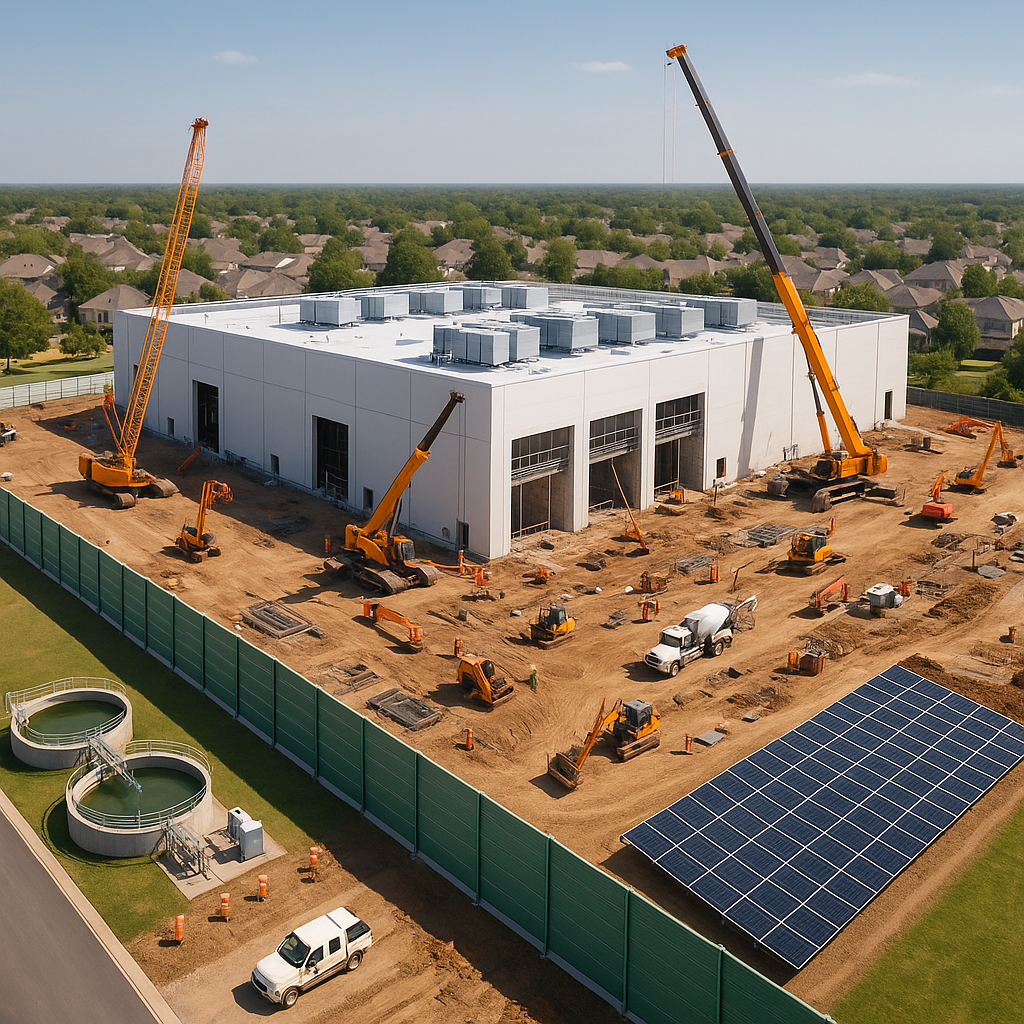
Data Centers: Big Projects, Bigger Pushback
Data centers are booming. By 2027, their construction is expected to hit $62 billion globally, according to Research and Markets. But with every hyperscale facility that breaks ground, contractors face a growing wave of community pushback. Noise, water use, and environmental impact are the usual suspects. And ignoring these concerns? That’s a recipe for delays, lawsuits, and bad press.
So how can contractors get ahead of this? It starts with better preconstruction planning. Let’s break it down.
The Top 3 Community Concerns (and How to Address Them)
1. Noise Pollution
Data centers might not sound noisy, but tell that to residents living 500 feet from a generator test. Backup systems, cooling fans, and 24/7 operations can turn a quiet area into an industrial hum. Noise pollution isn’t just an annoyance—it can lead to legal challenges, community protests, and even regulatory hurdles.
Actionable Steps to Address Noise:
- Acoustic Mitigation Planning: This starts with understanding the local sound ordinances. Partner with acoustic engineers to identify trouble spots, such as backup generators or cooling units, and design barriers or enclosures that minimize sound leakage.
- Equipment Selection: Modern equipment like quieter HVAC systems or noise-reducing generators can drastically reduce sound levels. While these models may cost more upfront, the long-term benefits—fewer complaints and legal issues—justify the investment.
- Strategic Placement: Place noise-heavy equipment like generators or cooling towers as far as possible from residential areas. Use natural barriers like hills or vegetation to further diffuse sound.
Pro Tip: Use tools like EstimateNext to calculate the cost of soundproof walls, quieter equipment, or other mitigation measures directly into your Bill of Quantities (BOQ). This ensures these costs are accounted for before construction begins.
2. Water Usage
Cooling systems in data centers can consume millions of gallons of water annually. In drought-prone regions, this can become a major flashpoint. Communities often view excessive water usage as irresponsible, especially in areas already facing water scarcity issues.
Solutions to Reduce Water Dependency:
- Air-Cooled Systems: These systems use air instead of water for cooling, significantly reducing water consumption. However, they tend to have higher energy usage, so consider the trade-offs.
- Hybrid Cooling Models: Combining air and water cooling can strike a balance between efficiency and sustainability. These systems use water only during peak cooling periods, reducing overall consumption.
- Water Recycling: Install systems that recycle and reuse water, such as closed-loop cooling systems. This approach not only minimizes the environmental impact but also improves public perception.
Actionable Comparison:
| Cooling Method | Water Usage | Energy Consumption | Upfront Cost | Best For |
|---|---|---|---|---|
| Traditional Water-Cooled | High | Moderate | Low | Areas with abundant water |
| Air-Cooled | None | High | Moderate | Drought-prone regions |
| Hybrid Cooling | Low | Moderate | High | Balancing water and efficiency |
EstimateNext’s Material Alternatives feature can help contractors weigh these options by comparing lifecycle costs, enabling data-driven decisions that align with both budget and sustainability goals.
3. Environmental Impact
From land use to energy consumption, data centers carry a heavy environmental footprint. Communities and governments alike are demanding more sustainable practices, and developers who fail to meet these expectations risk both reputational damage and regulatory penalties.
Steps to Minimize Environmental Impact:
- LEED Certification: Aim for Leadership in Energy and Environmental Design (LEED) standards, which focus on sustainable building practices. Incorporating energy-efficient designs and materials can elevate your project’s green credentials.
- Renewable Energy Integration: Use solar panels, wind turbines, or other renewable energy sources to power operations. Many clients are willing to pay a premium for sustainable energy solutions.
- Low-Impact Materials: Choose materials like recycled steel, low-carbon concrete, and sustainably sourced timber. These choices reduce your carbon footprint and appeal to environmentally conscious stakeholders.
Pro Tip: Use EstimateNext’s Sustainability Costing tools to calculate the financial and environmental benefits of using greener materials. Its AI-powered Quantity Takeoff (QTO) feature can also factor in specific materials like recycled steel, streamlining the process.
Handling Scope Changes Without Losing Time
Here’s the reality: community concerns often lead to mid-project scope changes. Maybe the client decides to add water recycling systems after a public outcry. Or they want eco-friendly materials halfway through. Scope changes can derail timelines and budgets if your estimation process isn’t flexible.
Strategies to Manage Scope Changes Effectively:
- AI-Driven Estimation Tools: With platforms like EstimateNext, you can update BOQs in real time. For instance, swapping traditional materials with sustainable alternatives becomes a quick adjustment rather than a multi-day task.
- Preemptive Buffering: Plan for potential scope changes by building contingency costs into your initial proposal. This ensures that unexpected adjustments don’t completely derail the budget.
- Stakeholder Communication: Engage with clients and communities regularly to anticipate changes before they escalate into urgent demands.
By automating BOQ updates and linking them to real-time cost data, tools like EstimateNext can save you hours of manual rework, ensuring you stay on track even when the scope shifts.
How Subcontractor Coordination Plays a Role
Data centers demand intense coordination across multiple disciplines: mechanical, electrical, and plumbing (MEP) systems must align seamlessly. Community-driven changes can further complicate this process, requiring adjustments to layouts, materials, or workflows.
Steps for Streamlined Subcontractor Coordination:
- Centralized Communication: Use digital platforms to keep all subcontractors aligned on changes and updates. Miscommunication is one of the leading causes of delays.
- Bid Normalization: When assessing subcontractor bids, ensure they account for community-driven requirements like noise barriers or water-efficient systems. This avoids costly surprises later.
- Automated Bid Leveling: Tools like EstimateNext’s Sub Bid Leveling feature allow you to compare bids, flag mismatches, and align scopes efficiently.
By leveraging automation, contractors can reduce the time spent on bid evaluation, freeing up resources to focus on project execution.
Common Mistakes to Avoid
- Skipping Community Consultations: Engaging with local stakeholders early saves headaches later. Many contractors treat this as an afterthought—it’s not.
- Underestimating Sustainability Demands: LEED compliance isn’t a “nice-to-have” anymore. It’s table stakes.
- Ignoring Scope Change Risks: If your estimation process can’t handle mid-project changes, you’re setting yourself up for failure.
Final Thoughts
Community pushback on data centers isn’t going away. But with the right planning, tools, and approach, contractors can turn these challenges into opportunities. Addressing concerns upfront not only smooths relationships with local stakeholders but also strengthens your bids.
If you’re struggling with scope changes, sustainability pressures, or MEP coordination, EstimateNext can help. Get started free →


