The Real Cost of Estimation Errors
Every preconstruction director has been there. You’re reviewing a bid, and something feels off—a rate mismatch, inflated labor costs, or material pricing that doesn’t reflect market conditions. You double-check the spreadsheet, flip through rate books, and call suppliers to clarify. Hours wasted, and you’re still not sure if the numbers will hold up during negotiations.
It’s not just frustrating; it’s expensive. According to McKinsey’s 2023 Construction Report, estimation errors contribute to significant margin erosion across global construction projects. And in a competitive bid scenario, even minor inaccuracies can cost you the contract entirely.
We used to think these errors were inevitable—part of the job. But AI is proving that assumption wrong, especially when it comes to rate matching.
Why Manual Rate Lookup Survived So Long
Let’s be fair to the old way. Manual lookup gives you control. You see the rates, validate them, and adjust for project-specific nuances. It’s a process grounded in trust—you trust your team’s expertise, your suppliers’ quotes, and the published rate books.
But manual methods have limitations:
- Time: Manual rate lookup can take significant time, especially for large projects.
- Human Error: Mistyped rates, skipped line items, or incorrect inflation adjustments happen more often than we admit.
- Scalability: When you’re pricing multiple GMP pursuits a year, manual lookup creates bottlenecks that impact your ability to bid competitively.
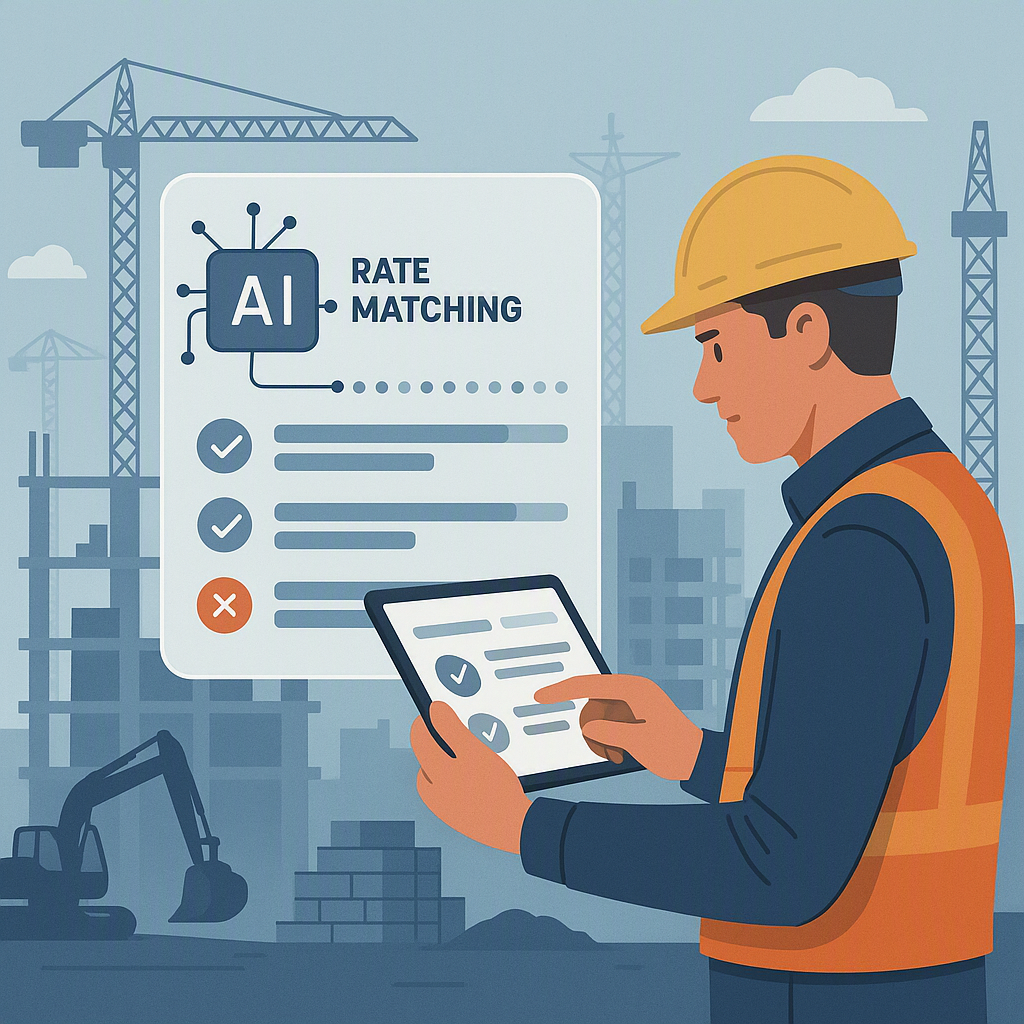
AI-powered rate matching flips this equation. You don’t sacrifice control—you gain efficiency. The platform integrates your custom catalogs, applies inflation adjustments automatically, and learns from your past projects. Every adjustment feeds a self-learning loop, improving accuracy with each bid.
How AI Rate Matching Works
Here’s the practical breakdown:
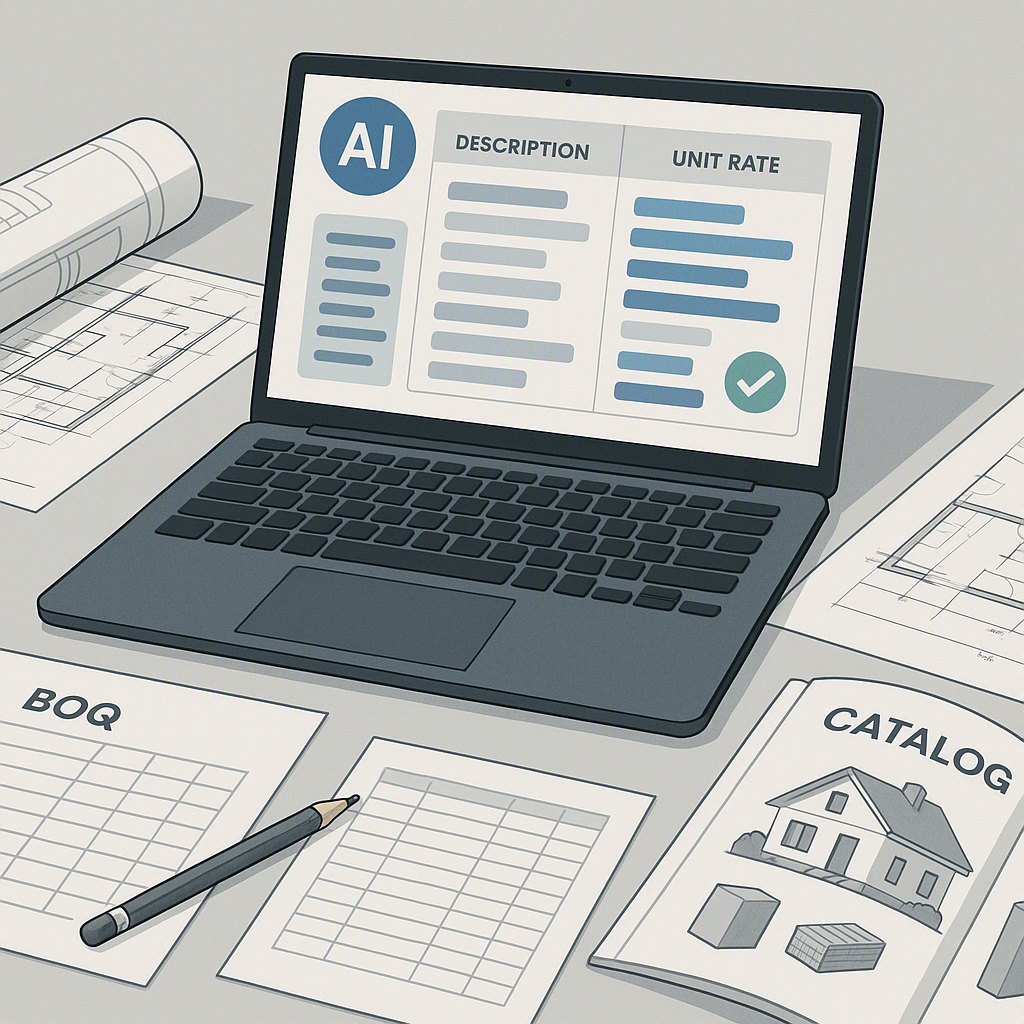
- BOQ Upload: Start by uploading your Bill of Quantities (BOQ) into the platform—Excel, CSV, or even scanned PDFs work.
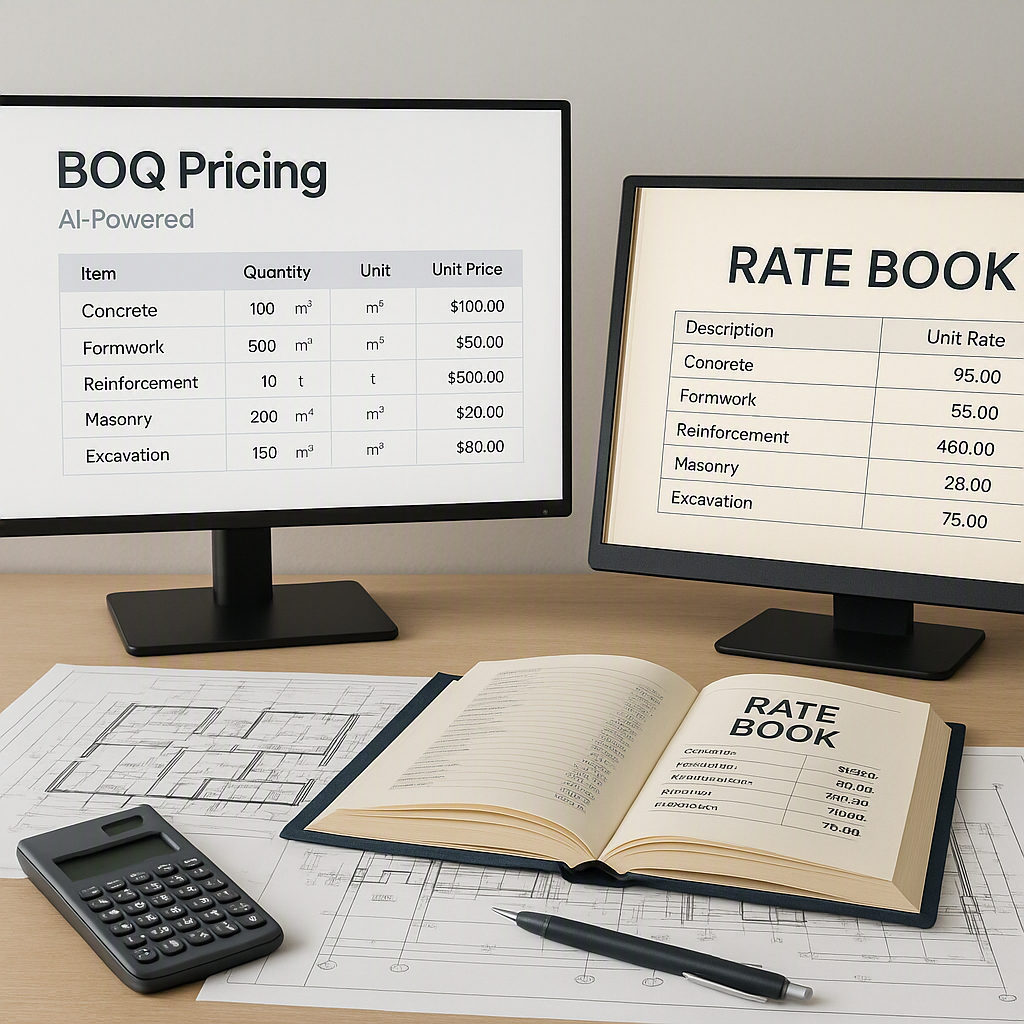
- Semantic Search: The AI parses thousands of SOR items using natural language processing (NLP). It doesn’t just match keywords; it understands context. For example, if you’re pricing "reinforced concrete," the AI distinguishes between slab rates and column rates.
- Custom Catalogs: Add your own material or labor rates. The AI integrates these seamlessly for future use.
- Inflation Uplift: The platform auto-suggests inflation adjustments based on compound per-catalog-year percentages. You can override these suggestions as needed.
- Output Reports: Export the matched rates into formats like CSI MasterFormat, CPWD DSR, or NRM2. The system generates a full audit trail, so every rate adjustment is traceable.
Illustrative example — A contractor used this feature to match hundreds of electrical components to local and national rate standards. Their pricing time dropped significantly, and they avoided common issues like overpricing imported materials, which often leads to bid rejection.
What We Do Differently Now
After adopting AI-powered rate matching, teams can:
- Start Small: Test AI on smaller projects first to validate accuracy before scaling up.
- Layer Human Oversight: Assign a senior estimator to review AI-suggested rates for high-value line items.
- Track Feedback: Every accept/reject feeds the AI’s learning loop, improving its performance over time.
The Cost of Being Wrong
Sticking to manual methods can cost more than just time. Teams may miss opportunities due to:
- Bid Deadlines: Lengthy quote cycles can make it difficult to compete with firms delivering bids faster.
- Lost Revenue: Missing bids means losing potential revenue.
- Burnout: Senior estimators spend excessive time on repetitive tasks instead of focusing on strategy.
Even with AI, there’s still uncertainty. Will the system reliably handle custom catalogs? Can it account for extreme inflation scenarios? These are questions teams continue to evaluate.
FAQ
1. How accurate is AI rate matching compared to manual methods?
AI accuracy depends on the quality of the data and the system’s learning capabilities. Manual methods are prone to human error, while AI can reduce these errors significantly over time.
2. Can I use my own rates in the system?
Yes, you can upload custom rates, and the AI integrates them seamlessly.
3. Does AI account for inflation?
Yes, the platform applies compound inflation adjustments per catalog year. You can override these suggestions if needed.
4. How long does onboarding take?
Onboarding time varies but is generally quick, depending on the platform and team readiness.
5. What happens if the AI suggests an incorrect rate?
You can reject the match and provide feedback. The system learns from every adjustment.
Conclusion
If estimation errors are costing your team time and money, AI-powered rate matching can help streamline the process and improve accuracy. Consider exploring these tools to enhance your preconstruction workflows.