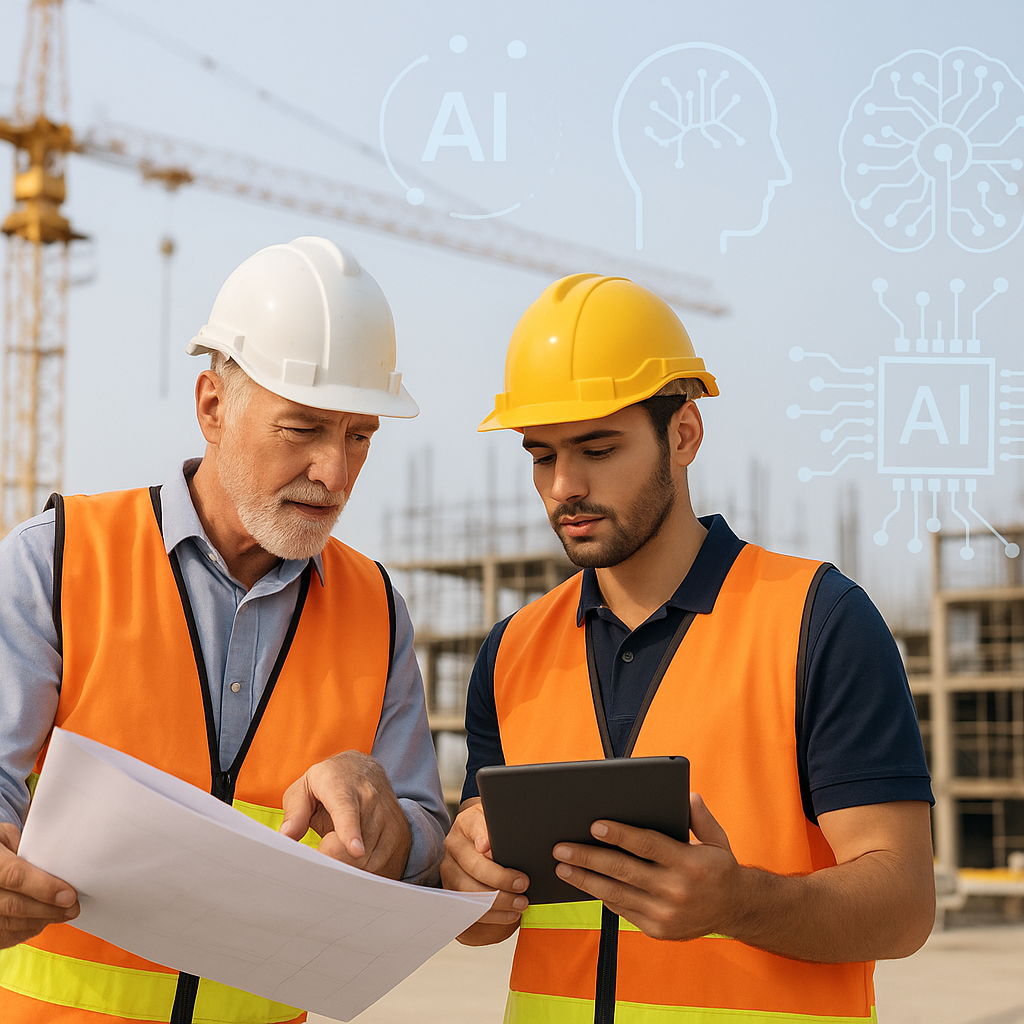
Mentorship in Construction: Lessons From 'Every Good Mentor Was Once a Mentee'
Why Mentorship Matters in Construction
Construction is one of the most demanding industries out there. It’s fast-paced, deadline-driven, and leaves little room for error. Leadership doesn’t happen overnight, especially in such an environment. Every successful construction CEO, project manager, or estimator started as a mentee—learning from someone with the experience to guide them through the chaos.
Mentorship isn’t just about transferring technical knowledge; it’s about equipping the next generation to handle the complexity of modern projects. This is especially critical now, as the construction workforce faces major challenges. According to the Construction Labor Market Analyzer, the industry is projected to lose 6% of its skilled professionals over the next five years. This includes not just field workers but also estimators, schedulers, and project managers. Without active mentorship programs, the skills gap will widen, leaving companies scrambling to fill roles and maintain project timelines.
Actionable Steps to Promote Mentorship in Construction
- Start Early: Create formal mentorship programs that pair junior employees with experienced professionals as soon as they join the organization.
- Define Goals: Set clear expectations for the mentorship relationship. Define what knowledge and skills the mentee should gain over time.
- Incorporate Technology: Use tools like AI-powered scheduling and estimating software to free up senior leaders for mentorship.
- Measure Success: Track mentee progress with structured feedback sessions and goal-based evaluations.
The Bottleneck: Teaching Without Burning Out
One major challenge for mentorship in construction is time. Senior leaders, while eager to mentor, are often stretched thin with their own responsibilities. For example, estimating for a single GMP (Guaranteed Maximum Price) pursuit can consume hundreds of hours. Teams spend days flipping through rate books, tracing drawings manually, and rebuilding spreadsheets. Multiply that across multiple GMP pursuits per year, and you’ve got a massive time sink.
This is where automation steps in. Tools like EstimateNext can handle tasks like rate matching, quantity takeoffs, and sub bid leveling, allowing senior leaders to focus on teaching strategic skills. For instance, EstimateNext’s Vision AI extracts quantities from PDFs in just 10 minutes—10 times faster than manual processes. By automating tedious work, mentors can redirect their energy to coaching mentees on high-value tasks, such as evaluating bids or managing client expectations.
Actionable Steps to Avoid Burnout While Mentoring
- Automate Repetitive Tasks: Use tools like EstimateNext to handle administrative tasks, freeing up time for mentorship.
- Prioritize Strategic Coaching: Dedicate time to teach mentees decision-making and critical thinking, rather than just process execution.
- Set Boundaries: Avoid overcommitting to mentorship tasks. Balance your own workload and mentorship efforts to prevent burnout.
Learning By Doing: The Importance of Hands-On Training
Hands-on training is a cornerstone of effective mentorship. Bechtel’s apprenticeship model is one of the industry’s best examples. According to EstimateNext’s blog, Bechtel uses simulation-based training to prepare workers for real-world challenges. Apprentices learn to weld, operate cranes, and perform complex assembly tasks in controlled environments before stepping onto live construction sites. This method reduces costly mistakes and accelerates learning.
The same principle applies to preconstruction roles like estimating and scheduling. Junior team members need exposure to real projects to learn effectively, but throwing them into high-stakes tasks without support can backfire. Tools like EstimateNext’s AI Co-pilot provide a safety net, offering real-time guidance and context-specific answers. For example, the AI Co-pilot can help mentees explore scenarios like switching to precast materials or analyzing revisions in project drawings.
Actionable Steps for Effective Hands-On Training
- Start Small: Assign mentees manageable tasks within larger projects to build confidence.
- Provide Safety Nets: Use AI tools to support mentees as they navigate unfamiliar tasks.
- Create Controlled Environments: Simulate real-world scenarios where mentees can experiment and learn without the risk of costly mistakes.
The Mentor-Mentee Relationship: What Works and What Doesn’t
Successful mentorship hinges on trust and balance. Good mentors don’t micromanage—they guide. Mentees should be empowered to make decisions and learn from their mistakes. However, some tasks, like sub bid leveling, are too complex for beginners to tackle independently.
Here, technology can bridge the gap. EstimateNext simplifies bid leveling by normalizing sub bids and ranking them by scope and cost. Instead of spending hours explaining the process from scratch, mentors can use AI-generated outputs as teaching tools, helping mentees interpret and refine the results.
Actionable Steps to Foster Strong Mentor-Mentee Relationships
- Build Trust: Give mentees autonomy but stay accessible for guidance.
- Balance Freedom and Oversight: Assign tasks that challenge mentees but provide support for highly complex ones.
- Leverage Technology: Use AI tools to simplify processes and focus on teaching interpretation and decision-making.
Common Mistakes in Construction Mentorship
- Overloading Mentees With Admin Work: Assigning repetitive tasks doesn’t teach critical thinking. Automate admin processes to let mentees focus on strategic learning.
- Skipping the Big Picture: Mentees need context to understand why decisions are made. Use tools that track cost deltas and project changes to show the impact of each choice.
- Neglecting Structured Feedback: Mentorship is more than observation. Schedule regular check-ins to assess progress and provide actionable advice.
Comparison Table: Traditional Mentorship vs Mentorship Enhanced by Technology
| Aspect | Traditional Mentorship | Tech-Enhanced Mentorship |
|---|---|---|
| Time Investment | High due to manual processes | Lower with automated tools |
| Learning Speed | Gradual, reliant on mentor’s schedule | Accelerated with AI assistance |
| Complexity of Tasks | Limited for mentees | Expanded with AI guidance |
| Feedback | Based on mentor’s observations | Data-driven with AI insights |
| Scalability | Difficult to scale | Easier to scale with automation |
Final Thoughts
Mentorship in construction isn’t optional—it’s essential. Every good mentor was once a mentee, and every mentee needs the right tools to thrive. By leveraging technology like EstimateNext, you can balance mentorship with day-to-day demands, preparing the next generation of construction leaders without burning out. If you’re looking to streamline your workflow and prioritize mentorship, start with EstimateNext today →.


