From Manual Rate Matching to AI-Powered Estimation: A Deep Dive
It’s embarrassing to admit now, but there was a time when I thought flipping through a 2,000-page rate book was just part of the job. Whether it was CPWD’s DSR catalog for public works in India or RSMeans for U.S. contractors, manually hunting for the right rates felt like a rite of passage. I’d spend hours with a highlighter in one hand and a calculator in the other, matching line items to specification details in the Bill of Quantities (BOQ). If you’re an estimator, you know what I’m talking about. It felt normal, almost necessary, to do things this way. After all, how else could you ensure accuracy?
But here’s the kicker: I was wrong. Dead wrong.
The Turning Point
Then came a moment I’ll never forget. A colleague introduced me to AI-powered rate matching. I was skeptical. I mean, how could a piece of software possibly understand the intricacies of construction estimation? Rate matching isn’t just about finding numbers; it’s about context. Labour costs vary by region, material specifications can change from one project to another, and there’s always the challenge of custom requirements. How could AI possibly account for all that?
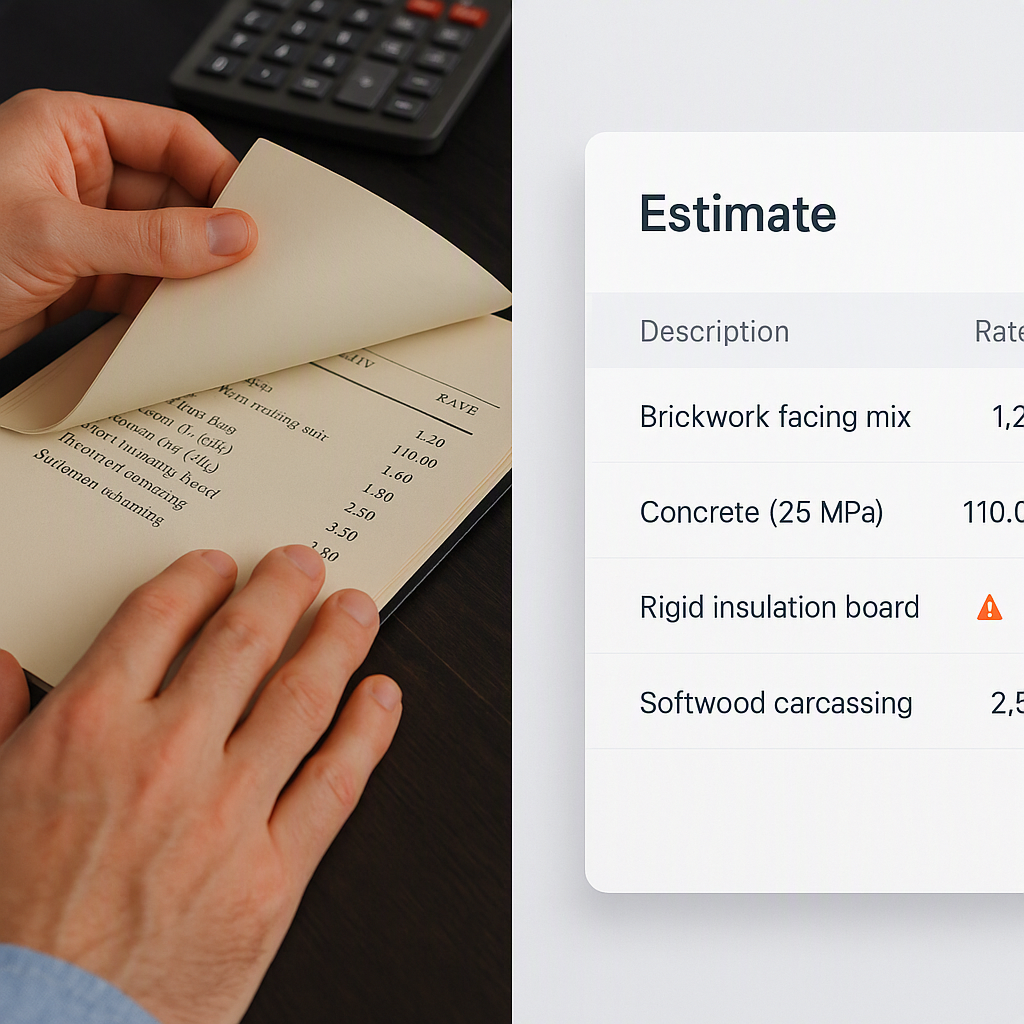
To prove his point, my colleague handed me a BOQ with 200 line items—a mix of standard and custom specifications. "Try it," he said. So I uploaded the file into the AI-powered platform, and within minutes, the system returned a fully matched set of rates pulled from a library of Schedule of Rates (SOR) items. For the custom items? The AI flagged them for manual review and even offered a few close matches based on historical data.
I was floored. Not only had the system saved me hours of work, but it had also avoided the common pitfalls of manual rate matching: fatigue, oversights, and errors.
Why My Old Belief Held On So Long
Looking back, I can see why I resisted change. Manual rate matching felt like a core part of the estimator’s craft. It was tedious, sure, but it also felt like the only way to fully control the process. There was a certain pride in knowing that if a cost was wrong, the mistake was mine—not some machine’s.
But the problem with manual processes is that they’re slow and error-prone. Reports from industry experts confirm what I already knew in my gut: flipping through rate books can eat up hours per estimate. According to a study by McKinsey & Company, inefficiencies in construction workflows—including tasks like manual rate matching—can lead to productivity losses of up to 30% in preconstruction phases. And let’s be honest—no matter how careful you are, fatigue sets in. That’s when mistakes happen. I’ve had to explain my share of errors in front of a room full of execs, and I can tell you, it’s not fun.
The real issue, though, is that this mindset of “manual is better” doesn’t scale. When you’re managing multiple bids, each with its own set of unique challenges, the sheer volume of work becomes unmanageable. Something had to give.
What I Do Differently Now
These days, I don’t touch a rate book unless I absolutely have to. Instead, I rely on AI-powered rate matching for most of my work. Here’s a step-by-step breakdown of how I approach it now:
1. Upload the BOQ
Whether it’s an Excel file or a scanned PDF, I upload the BOQ into the system. Modern AI tools with Smart BOQ Parsers automatically organize the data, identify line item hierarchies, and flag any potential issues. This eliminates the need for manual data entry entirely, a step that previously took me hours.
2. Let AI Match Rates
The system uses semantic search to scan its library of SOR items. Unlike keyword-based searches, semantic search understands the context of the BOQ descriptions and matches them to the most relevant rate. For example, if the BOQ mentions “high-strength concrete for load-bearing walls,” the AI doesn’t just look for the word “concrete.” It factors in specifications like grade and application.
3. Review and Adjust
For items that are unique, complex, or otherwise outside the scope of standard SOR items, the AI flags them for review. This is where my expertise still comes into play. I can either:
- Accept the AI’s suggestion.
- Modify the rate based on additional context.
- Input a completely custom rate if needed.
The more I engage with the system, the smarter it gets. It learns from my choices and improves its recommendations over time.
4. Export and Share
Once the rates are matched, I can export the estimate in the required format—whether it’s CSI MasterFormat, NRM2, or a client-specific template. This step used to involve hours of copy-pasting and formatting in Excel. Now, it’s done in minutes.
What Being Wrong Cost Me
The most obvious cost was time. By sticking to manual rate matching for so long, I wasted countless hours that could’ve been better spent on higher-value tasks like strategy, client relationships, or refining estimates. And let’s not forget the toll it took on my mental health. There’s nothing quite like staring at a spreadsheet at 2 AM, knowing you’ll be back at your desk in six hours for a bid review.
But the real cost was missed opportunities. Early adopters of AI in construction often report significant benefits, including better efficiency and reduced errors. For example, a report by Autodesk found that firms leveraging AI tools saw a 51% improvement in project delivery times. That’s not just time saved; it’s resources reinvested into winning more bids, hiring better talent, and growing the business. By clinging to outdated methods, I was leaving opportunities on the table.
What I’m Still Not Sure About
Of course, AI isn’t perfect. Even the best systems occasionally return incorrect or incomplete matches, especially for niche or highly specialized items. That’s why human oversight is still crucial. The key is finding the right balance—trusting the AI to handle the grunt work while staying engaged enough to catch any errors.
I’m also still figuring out how to get buy-in from everyone on my team. Some are as skeptical as I once was, and convincing them to adopt AI tools has been an uphill battle. Change is hard, especially when it challenges the way things have always been done.
Comparison Table: Manual vs AI-Powered Rate Matching
| Aspect | Manual Rate Matching | AI-Powered Rate Matching |
|---|---|---|
| Time Spent | Hours or days per BOQ | Minutes to hours |
| Error Rate | High due to fatigue and manual entry | Low, with AI-assisted oversight |
| Scalability | Poor; slows down with multiple bids | High; handles large-scale projects efficiently |
| Learning Curve | None; already familiar | Moderate; requires initial setup |
| Cost for Tools | None (but time-heavy) | Subscription or license fees |
Final Thoughts
If you’re an estimator who’s tired of wasting time and energy on manual rate matching, it’s time to reconsider. AI-powered tools don’t just save you time; they free you up to focus on what really matters—winning more work and delivering better projects.
By understanding the capabilities and limitations of AI in preconstruction estimation, you can make informed decisions about how to integrate these tools into your workflow. The key is to leverage AI for efficiency while maintaining the human expertise that ensures quality and accuracy. The future of construction estimation is here, and it’s time to embrace it.