The Challenges of Manual Rate Matching
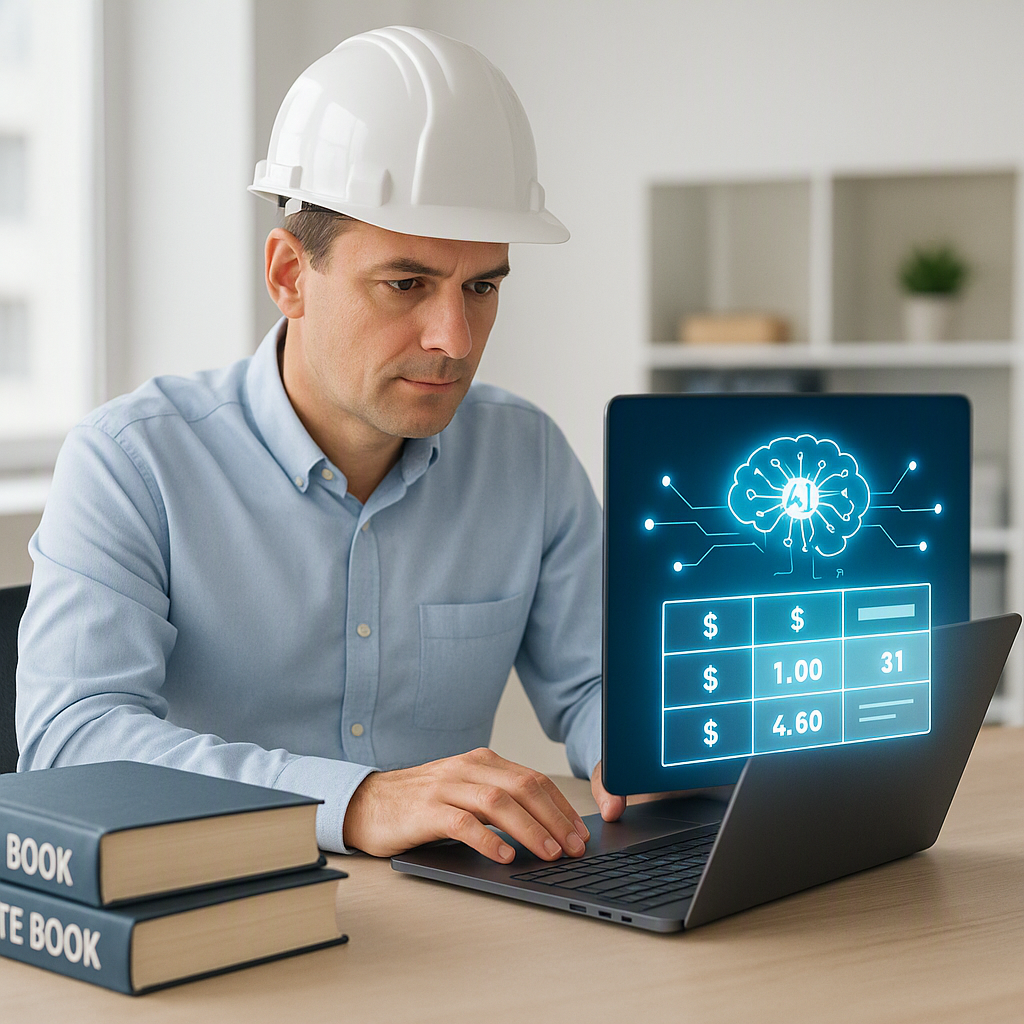
When working in preconstruction, manual rate matching has traditionally been a time-consuming and error-prone process. It involves flipping through extensive rate books like RSMeans or CPWD DSR, trying to align unit rates with the scope of work, and manually inputting those prices into spreadsheets. This process, while standard, is prone to human error and can lead to costly mistakes.
Why Manual Rate Matching Persisted
Manual rate matching has remained the norm for several reasons:
- Trusted Sources: Industry-standard rate books are comprehensive but cumbersome. Professionals relied on their own judgment to interpret and apply the data.
- Complexity of Terminology: Construction terminology can be nuanced, and a single word can significantly alter the cost structure of a line item. This complexity made many hesitant to trust automated systems.
- Comfort in Familiarity: The manual process gave professionals a sense of control, even though it was inefficient.
The Role of AI in Rate Matching
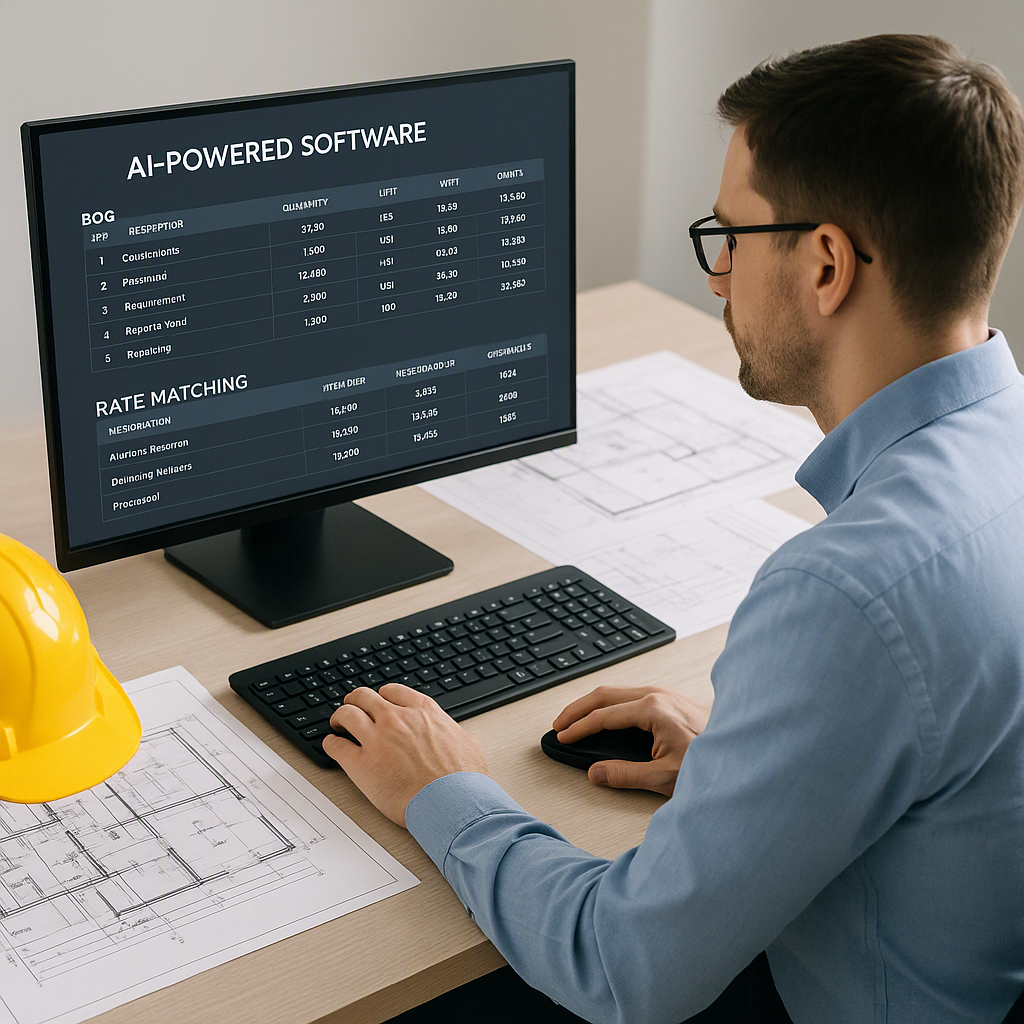
AI-powered tools are now transforming the way rate matching is done. These tools leverage advanced algorithms to automate the process, offering several advantages:
- Speed: AI can process large BOQs and search through extensive catalogs in a fraction of the time it takes manually.
- Contextual Understanding: Using Natural Language Processing (NLP), AI can interpret construction-specific terms and nuances, improving the accuracy of rate matching.
- Learning Capabilities: AI systems improve over time by learning from user inputs, such as accepted or rejected rate suggestions.
- Error Reduction: Unlike humans, AI systems are not prone to fatigue or distractions, reducing the likelihood of costly errors.
How to Use AI for Rate Matching
To leverage AI for rate matching, follow these steps:
- Upload the BOQ: Input your Bill of Quantities into the AI tool.
- Review Suggested Rates: The tool will match line items to rates from relevant catalogs and flag any uncertain matches for review.
- Override When Necessary: Use your expertise to adjust or confirm rates as needed.
- Finalize and Export: Once satisfied, export the completed BOQ for further use.
Benefits of AI-Powered Estimation
By automating rate matching, AI tools can help:
- Save significant time compared to manual methods.
- Reduce errors caused by misinterpretation or oversight.
- Improve consistency and accuracy in cost estimation.
Limitations to Consider
While AI tools are highly effective, they are not infallible. Their performance depends on the quality and completeness of the data they are trained on. Additionally, they are not a substitute for professional judgment, especially for project-specific nuances.
Conclusion
AI-powered tools are revolutionizing preconstruction estimation by automating the tedious and error-prone process of rate matching. While not perfect, these tools offer significant advantages in terms of speed, accuracy, and efficiency, making them a valuable asset for construction professionals looking to streamline their workflows.