The Real Cost of Manual Takeoffs
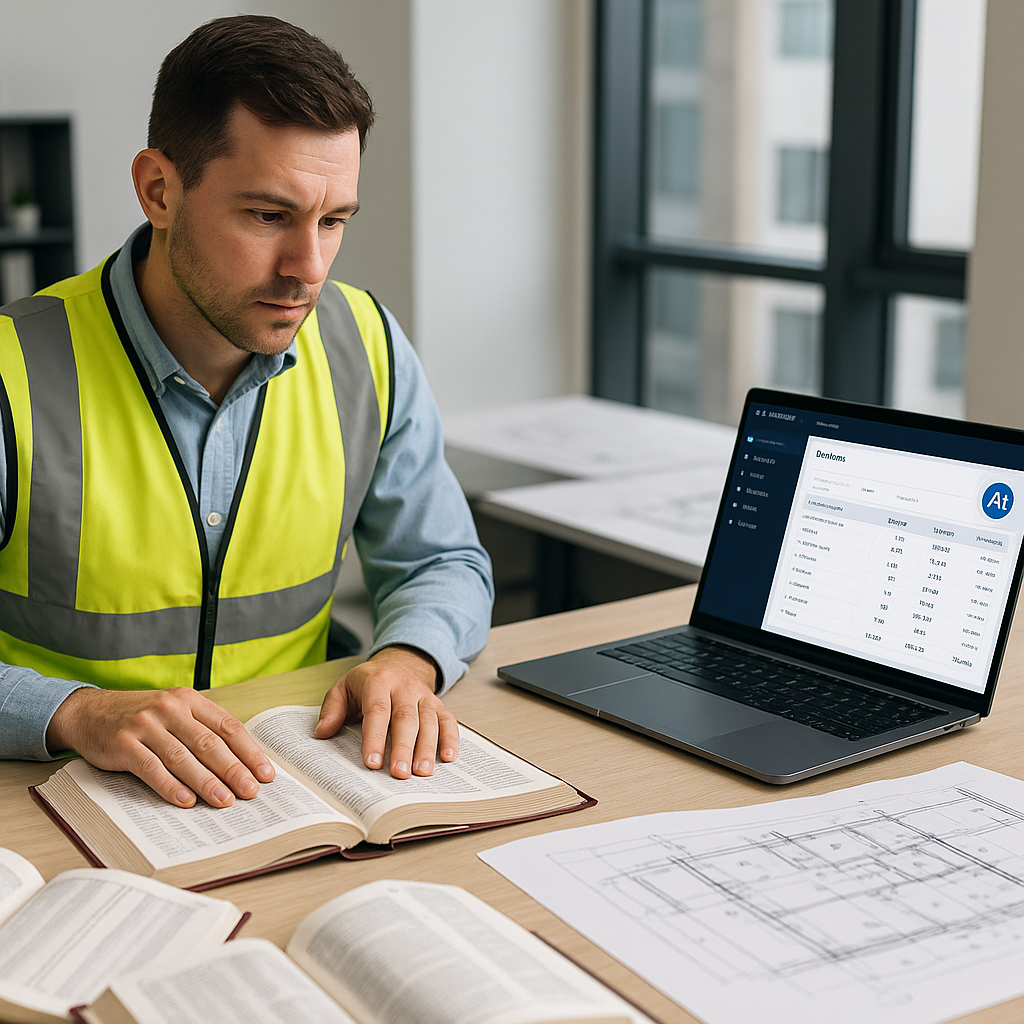
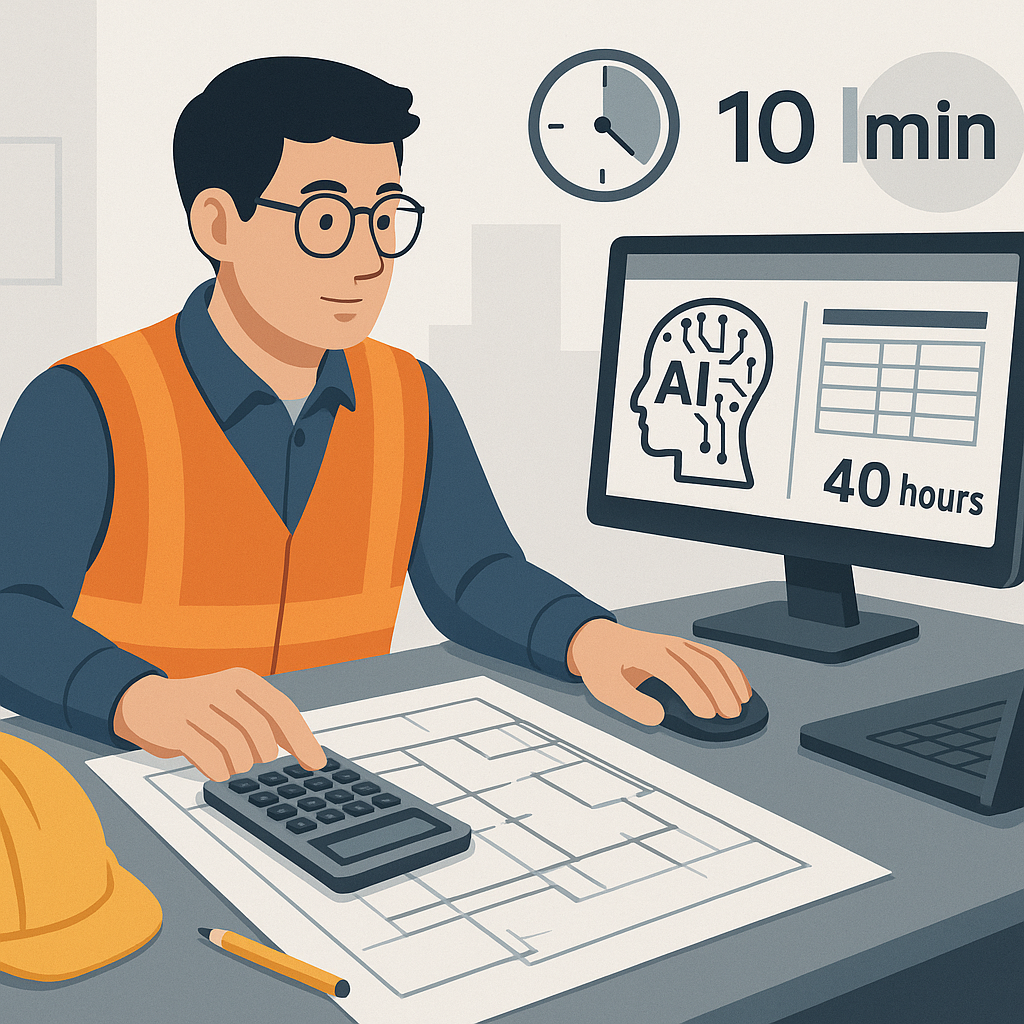
Estimators know the drill: 40 hours of tracing PDFs, measuring room areas, and manually counting doors and windows. For larger projects, it’s even worse. Multiply that by five or six GMP pursuits a year, and you’re looking at hundreds of wasted hours per team. The irony? Most of that work doesn’t even move the needle—it’s grunt work, not decision-making.
In my view, manual takeoffs are the biggest bottleneck in preconstruction. They slow down bids, leave room for errors, and tie up senior estimators who should be focusing on strategy. Worst of all, they’re unnecessary. AI has solved this problem.
How AI Transforms Takeoffs
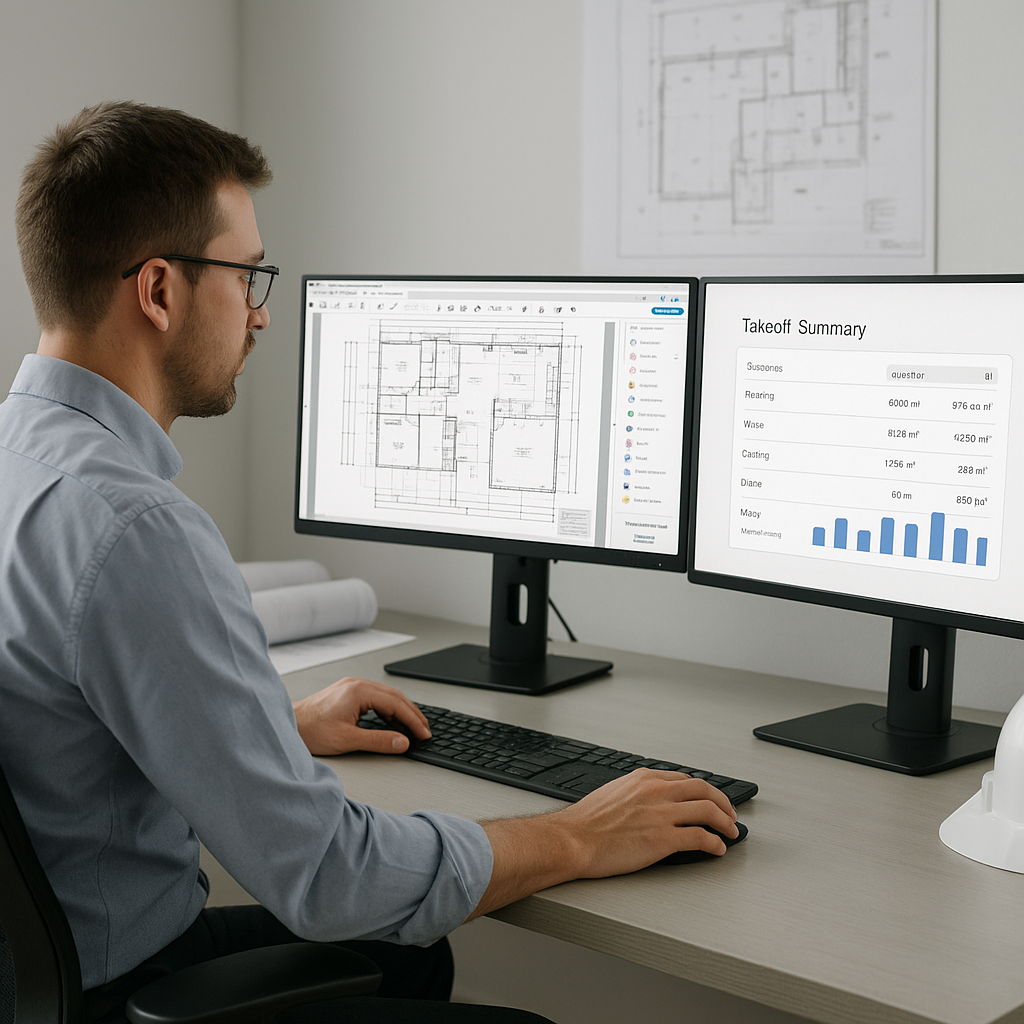
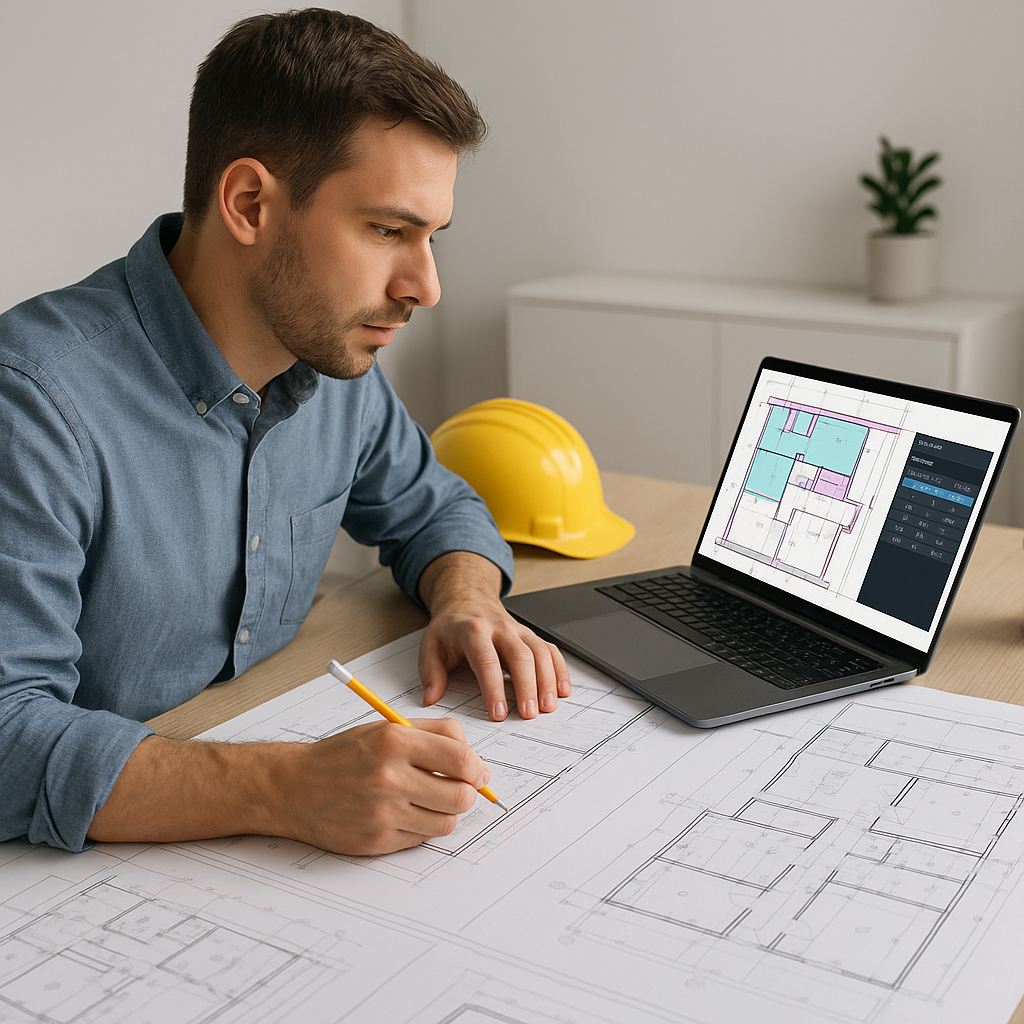
AI-powered tools are revolutionizing how estimators handle takeoffs. EstimateNext’s Vision AI, for example, processes PDF drawings in minutes. You upload a drawing set, and within 10 minutes, it extracts quantities for walls, doors, windows, and even complex elements like beams or ducts. Compare that to the 40 hours it takes to manually measure and count everything.
Here’s a real-world example: A mid-sized general contractor (GC) bidding on a $25 million high-rise project saved 120 hours by using Vision AI for takeoffs. That’s two full weeks of labor—gone. Those saved hours were reallocated to fine-tuning the bid, improving subcontractor coordination, and analyzing risk factors, ultimately leading to a more competitive and profitable proposal.
AI tools don’t just save time; they also reduce errors. For instance, Vision AI flags low-confidence measurements (e.g., ambiguous dimensions or missing annotations) so users can double-check them. This transparent process ensures that critical details aren’t overlooked, even when working at lightning speed.
Case Study: A Commercial Subcontractor’s Experience
One commercial drywall subcontractor reported a 30% increase in bid volume after adopting AI-powered takeoff tools. Previously, the estimating team could only handle 10 bids per month due to manual constraints. With AI, that number jumped to 13 bids per month, translating into an additional $1.2 million in annual revenue.
What About Accuracy?
Skeptical? You should be. The obvious objection is, “Can AI really measure as well as an experienced estimator?” The short answer: almost. AI tools like EstimateNext are highly accurate, often reducing discrepancies by up to 80% compared to manual methods. The key lies in combining AI with human oversight.
Think of AI as a junior estimator that works tirelessly but occasionally needs supervision. For instance, if a poorly scanned PDF contains faint or inconsistent lines, the AI might flag these as uncertain. A senior estimator can quickly review and override these flags, ensuring precision.
Actionable Tips for Ensuring Accuracy
- Review Low-Confidence Areas: Always check areas flagged by the AI tool. These are often where human expertise adds the most value.
- Standardize Input Files: Provide clean, high-quality PDFs to minimize errors caused by poor scans or inconsistent annotations.
- Audit Regularly: Compare AI results to manual takeoffs periodically to confirm accuracy and refine workflows.
Comparative Accuracy: Manual vs. AI Takeoffs
| Aspect | Manual Takeoffs | AI-Powered Takeoffs |
|---|---|---|
| Time to Complete | Up to 40 hours/bid | 10-20 minutes/bid |
| Error Rate | 5-10% | 1-3% |
| Ability to Scale | Limited by manpower | Scales with software |
| Human Oversight Required | Full | Partial |
Why Speed Isn’t the Only Benefit
Faster takeoffs are great, but the real win is what they enable. When your team isn’t buried in PDF measurements, they can focus on high-value tasks:
-
More Bids: With takeoffs done in minutes, you can respond to more RFPs. For MEP subs, this could mean 50% more bids submitted per year. A mechanical contractor in Texas used EstimateNext to submit 18 bids in a single quarter, up from their previous average of 12. This increased their win rate by 15%.
-
Better Decisions: AI-powered tools free up time for bid/no-bid analysis, subcontractor negotiations, and margin optimization. For example, one GC used the extra time to negotiate better terms with their drywall subcontractor, saving $50,000 on a single project.
-
Fewer Mistakes: Manual takeoffs are error-prone. AI eliminates most of these by automating repetitive tasks and flagging anomalies, leading to fewer project delays and rework costs.
-
Employee Retention: Estimators often leave due to burnout from repetitive tasks. By automating grunt work, you can improve job satisfaction and retain top talent.
Is It Hard to Learn?
Not at all. Most AI platforms are designed with intuitive interfaces and integrations. For example, EstimateNext integrates seamlessly with tools like Bluebeam and Excel, so your team doesn’t need to overhaul their existing workflows. Training typically takes about two weeks—less if your team is tech-savvy.
Actionable Steps for Adoption
- Start Small: Begin with one project to test the tool’s capabilities and build confidence within your team.
- Assign a Champion: Designate a team member to become the in-house expert and lead the adoption process.
- Leverage Vendor Support: Most AI providers offer onboarding, training, and ongoing support. Use these resources to shorten the learning curve.
By the third project, most users report significant time savings and improved confidence in their estimates.
Edge Cases: When AI Needs Help
No system is perfect. AI struggles with poorly scanned PDFs, drawings with inconsistent annotations, or highly custom design elements. This is where human expertise still plays a critical role.
Common Challenges and Solutions
- Poorly Scanned PDFs: Use software like Adobe Acrobat to enhance scan quality before uploading.
- Custom Elements: For unique features (e.g., a bespoke façade system), manual measurements may still be necessary. AI tools like EstimateNext allow you to overlay manual measurements on AI-generated results.
- Inconsistent Annotations: Establish standards for how drawings are labeled to reduce confusion for both AI and estimators.
Despite these edge cases, the time savings and accuracy improvements far outweigh the occasional hiccups.
The ROI Math
AI tools don’t just save time—they deliver measurable financial returns. Let’s break it down:
ROI for General Contractors
- Hourly Rate for Senior Estimator: $130/hour
- Hours Saved Per Bid: 40 hours
- Annual GMP Pursuits: 6 projects
- Annual Labor Savings: $31,200
- AI Tool Cost: $99/month per seat ($1,188/year)
- ROI: 52X
ROI for Subcontractors
- Incremental Bids Submitted: 50% increase (e.g., from 24 to 36 bids/year)
- Win Rate: 25%
- Average Project Value: $1.5M
- Additional Revenue: $4.5M annually
- AI Tool Cost: $1,188/year
- ROI: 3,788X
These numbers make it clear: AI-powered takeoff tools aren’t just a time-saver—they’re a competitive advantage.
The Bottom Line
Manual takeoffs are a relic. AI-powered tools like EstimateNext don’t just save time—they transform how preconstruction teams work. Faster bids, fewer errors, and more strategic focus. Isn’t that the point?
If you're still spending 40 hours on takeoffs, it’s time to rethink your process. Get started with EstimateNext for free →
FAQs About AI-Powered Takeoffs
1. Can AI tools handle complex projects?
Yes, most AI tools are designed to handle complex projects, including high-rises, infrastructure, and MEP-heavy designs. However, for highly custom elements, manual verification may still be required.
2. How does AI integrate with existing tools?
Platforms like EstimateNext integrate with popular software such as Bluebeam, Procore, and Excel. This ensures a smooth transition without disrupting your current workflows.
3. What happens if the AI makes a mistake?
AI tools flag low-confidence areas for human review. You can manually adjust measurements and maintain an audit trail for transparency.
4. Is AI cost-effective for small firms?
Absolutely. Even small firms benefit from the time savings and increased bid capacity. The low subscription cost makes it accessible to companies of all sizes.
5. How secure is my data?
Most AI platforms use cloud-based storage with encryption to protect your data. Always verify that your provider complies with industry standards like SOC 2 or ISO 27001.