The Problem No One Talks About: Rate Books
If you're an estimator, you've been there. The BOQ lands in your inbox Friday at 5 PM. It’s got 1,200 line items. You crack open RSMeans, your local DSR catalog, or another rate book and start flipping. Labor rates, material costs, equipment breakdowns—every single item needs matching.
Twelve hours later, you’ve got maybe 60% of it done. Exhausted, you send it off, hoping you didn’t miss anything critical. Sound familiar?
Here's the brutal truth: manual rate lookup isn’t just slow—it’s error-prone. One bad match, and you’re eating into margins or risking underbidding. Worse, no one’s paying you for those extra hours or the stress it adds to your weekend.
This isn’t just anecdotal. A 2022 survey by the Construction Management Association of America (CMAA) found that 68% of estimators cited manual processes as a major contributor to project delays and budget overruns. Yet, for decades, flipping through rate books has been the norm.
AI Rate Matching: A Real Fix for a Real Problem
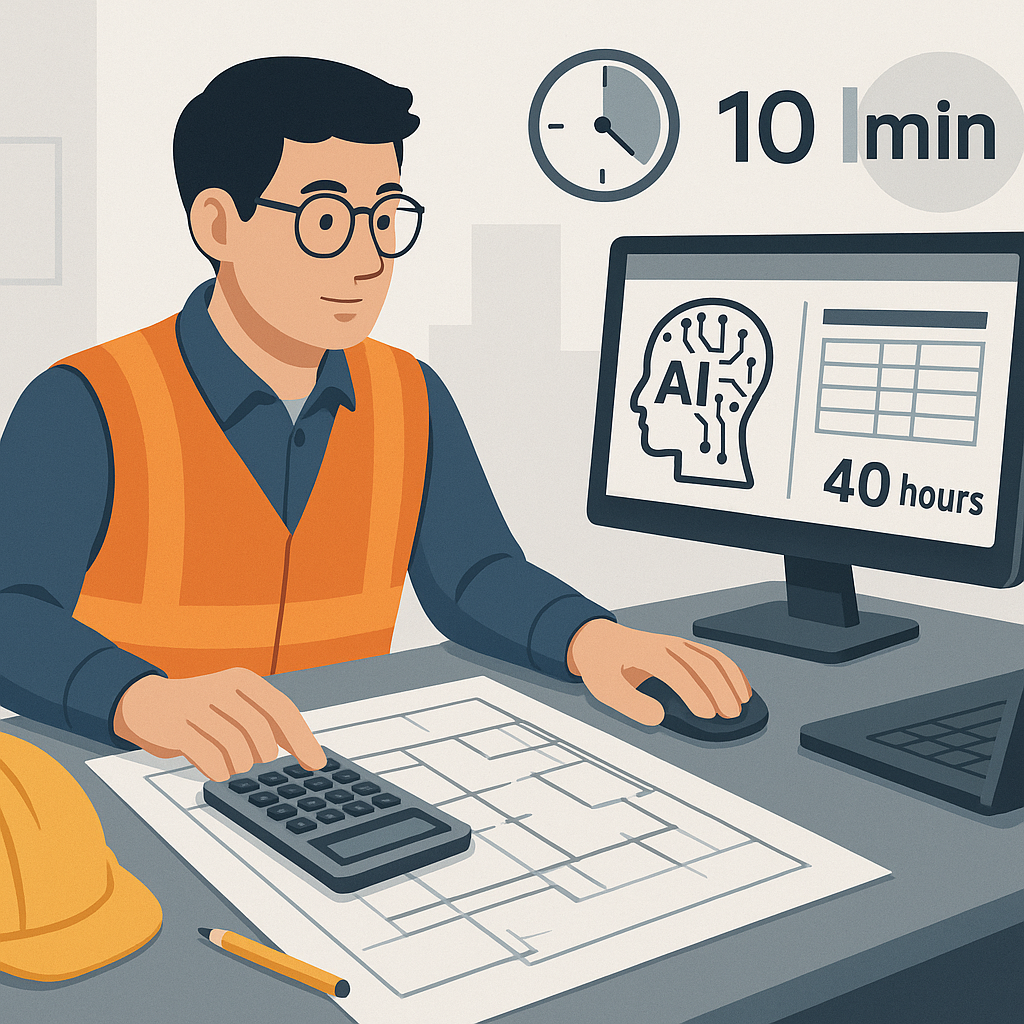
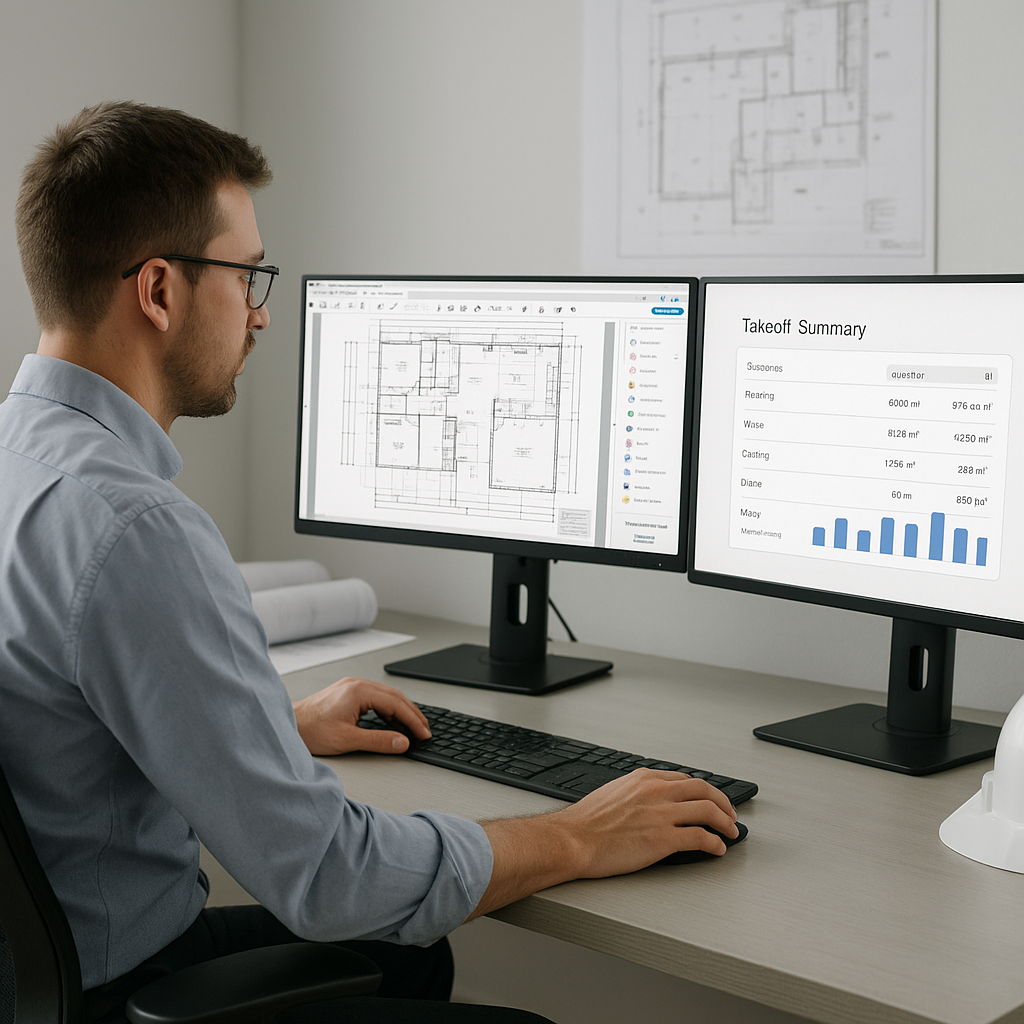
This is where AI tools like EstimateNext come in. Instead of flipping through catalogs, you upload your BOQ, and the system uses semantic search to match rates instantly. It’s not magic; it’s just smarter engineering.
Let’s say you’re pricing a commercial HVAC system. You’re looking for duct installation rates. With manual methods, you’d scour SMACNA or MCAA tables for hours. With AI, you type “duct installation” into the platform. It pulls the exact rate from over 78,000 catalog items—and it does it in seconds.
How Does It Work?
The technology behind tools like EstimateNext relies on semantic search algorithms. Instead of matching exact keywords (like a CTRL+F search), it understands the context of what you’re asking. For instance, if your BOQ lists "galvanized steel duct installation," the AI doesn’t just look for that exact phrase. It retrieves related entries, like "HVAC ductwork installation" or "sheet metal duct fabrication," allowing you to select the most relevant rate.
How Accurate Is It?
Pretty damn accurate. According to EstimateNext’s case studies, users report 99% precision by their third project. The system improves over time because it learns from your adjustments. For example, if you tweak a rate for "epoxy flooring installation," the AI remembers that preference and applies it to future estimates.
More Than Just Speed: The ROI You Can’t Ignore
Let’s break down the financial impact. Suppose you’re spending 12 hours on rate matching per estimate, and you complete 20 estimates annually. That’s 240 hours spent flipping through rate books and spreadsheets. At $130/hour (the average cost of a senior estimator), you’re looking at $31,200 in labor costs just for rate lookup.
With an AI tool like EstimateNext, you can reduce that time to about an hour per estimate. That’s 20 hours annually, costing roughly $2,600. The potential savings? $28,600 every year, just on rate matching.
Hidden ROI: Winning More Bids
Time saved isn’t just about cutting costs—it’s about reinvestment. Those 220 hours you get back? That’s time you can use to:
- Refine your bids for higher accuracy.
- Negotiate better rates with subcontractors or suppliers.
- Pursue additional projects, increasing your revenue pipeline.
In a competitive bidding environment, even a 1% edge in accuracy or response time can be the difference between winning and losing a project.
What About Custom Rates?
You might be thinking, “But my rates are custom. AI can’t handle that.” Actually, it can. Tools like EstimateNext allow users to upload their own rate catalogs. Whether it’s project-specific pricing, vendor-specific items, or regional adjustments, the system integrates them seamlessly.
Example: Custom Concrete Rates
Imagine you’re working on a $10 million infrastructure project that requires pre-stressed concrete girders. Your vendor quoted a custom rate for this material based on volume and transportation costs. Instead of manually entering this rate every time, you upload it once into the AI tool. The next time you need to price pre-stressed girders, the rate is already there, saving you hours of manual input.
The Obvious Objection: “AI Can’t Replace My Expertise”
You’re right—it can’t. And it shouldn’t. AI isn’t about replacing you; it’s about amplifying what you do best. You’re the one making judgment calls, negotiating with subs, and deciding on markups. The AI just handles the grunt work.
Think of It Like an Excavator
You wouldn’t dig a foundation with a shovel when you’ve got an excavator sitting there. It’s the same principle here. Why spend hours flipping through rate books when technology can handle that for you? Your expertise is too valuable to be wasted on repetitive, low-value tasks.
Real-World Results
Let’s look at a real example. A mid-sized general contractor (GC) working on a high-rise bid used EstimateNext to automate their rate matching. They saved 20 hours on that single estimate. That’s two and a half workdays they got back—time they used to refine their bid and secure better pricing from subcontractors.
In their words, “It’s like hiring another estimator without the overhead.”
Another case study involved a specialty contractor bidding on a $2 million mechanical project. By automating their rate lookup, they reduced errors by 15%, which translated into a more competitive bid that won them the job.
How to Get Started
If you’re tired of wasting hours on manual rate lookups, here’s how to make the switch:
- Choose the Right AI Tool: Look for a platform that supports custom rate catalogs and offers a user-friendly interface. EstimateNext is a great starting point.
- Upload Your BOQ: Most AI tools allow you to upload your BOQ as a CSV or Excel file.
- Review and Adjust: The system will generate rate matches. Spend a few minutes reviewing and fine-tuning the results.
- Save for Future Use: Once adjusted, your custom rates are stored for future projects.
FAQ
1. How does AI handle complex or vague BOQ descriptions?
AI tools use natural language processing (NLP) to interpret vague or complex descriptions. For example, if your BOQ says “install polished concrete flooring,” the AI searches for related rates like “concrete pouring” and “polishing.” You can then refine the match.
2. What if the AI matches the wrong rate?
You have full control. If the AI suggests an incorrect rate, you can override it. The system learns from these corrections, so it gets better over time.
3. Is it worth the investment for small firms?
Absolutely. Even if you only handle a handful of estimates each year, the time savings and error reduction can significantly impact your bottom line. Many tools offer scalable pricing, so you’re not paying enterprise-level fees for a small operation.
4. How secure is my data?
Most modern AI platforms prioritize data security. Look for providers that use encryption and comply with industry standards like GDPR.
5. Can it integrate with my existing software?
Yes, many AI tools are designed to integrate with popular construction management platforms like Procore, Sage, and Primavera.
Comparison Table: Manual Rate Lookup vs. AI Rate Matching
| Feature | Manual Rate Lookup | AI Rate Matching |
|---|---|---|
| Time per Estimate | 10–12 hours | 1–2 hours |
| Error Rate | High (human oversight) | Low (99% accuracy) |
| Learning Curve | N/A | Minimal |
| Custom Rate Support | Manual input required | Seamless integration |
| Scalability | Limited | High |
| Cost Efficiency | Low | High |
The Takeaway
Manual rate lookup is a time sink. It’s outdated, inefficient, and risky. AI-powered rate matching isn’t just faster; it’s smarter. It saves time, reduces errors, and lets you focus on what actually matters—winning bids.
If you’re still flipping through rate books, it’s time to rethink your process. AI isn’t the future; it’s now.
Call to Action
Tired of wasting hours on manual rate lookups? EstimateNext can help. Upload your first BOQ and get a priced estimate in minutes. Get started free →