The Problem Every Estimator Knows Too Well
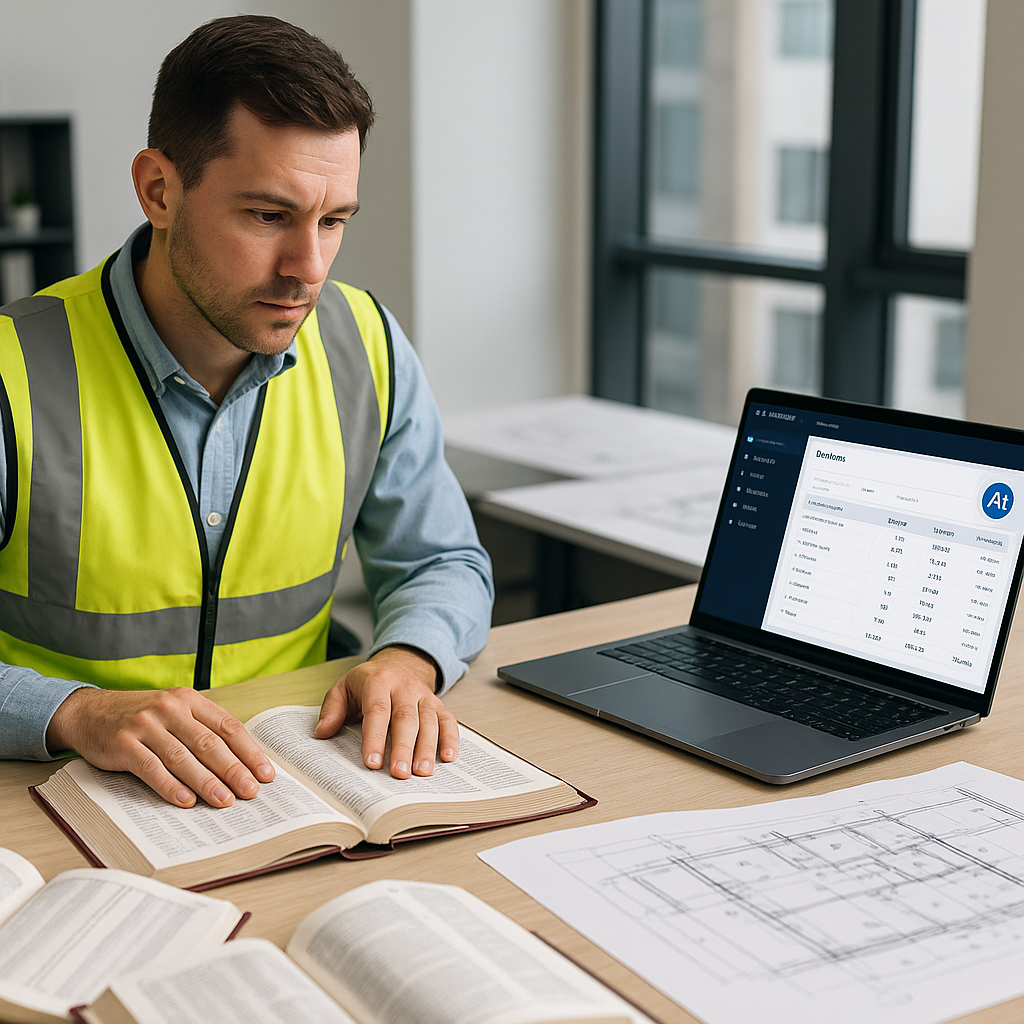
Manual takeoffs. They’re the bottleneck of preconstruction. You’ve got a tight deadline, a 200-page drawing set, and a BOQ that’s barely readable. What happens next? Two estimators spend 40 hours—each—tracing walls, counting fixtures, and double-checking measurements. It’s tedious, error-prone, and frankly, a waste of skilled labor.
Here’s the kicker: those 40 hours don’t include revisions when the architect inevitably sends a new drawing set. Remeasure everything again? Not ideal. And let’s not forget the cost of mistakes. A missed line item or an incorrect quantity can jeopardize your entire bid.
A Real-Life Scenario
Imagine a regional general contractor bidding on a new $15 million community center. The team is under pressure, with only a week to submit a competitive bid. They spend three grueling days on manual takeoffs, only to realize the architect issued an updated set of drawings on Day 4. The result? They scramble to redo hundreds of measurements, inevitably rushing through revisions. The bid gets submitted on time but with lingering doubts about accuracy. Now, compare this to a competitor who used AI-powered takeoff software and had their quantities ready within hours. Who do you think had the better chance of winning that bid?
Why It Still Happens
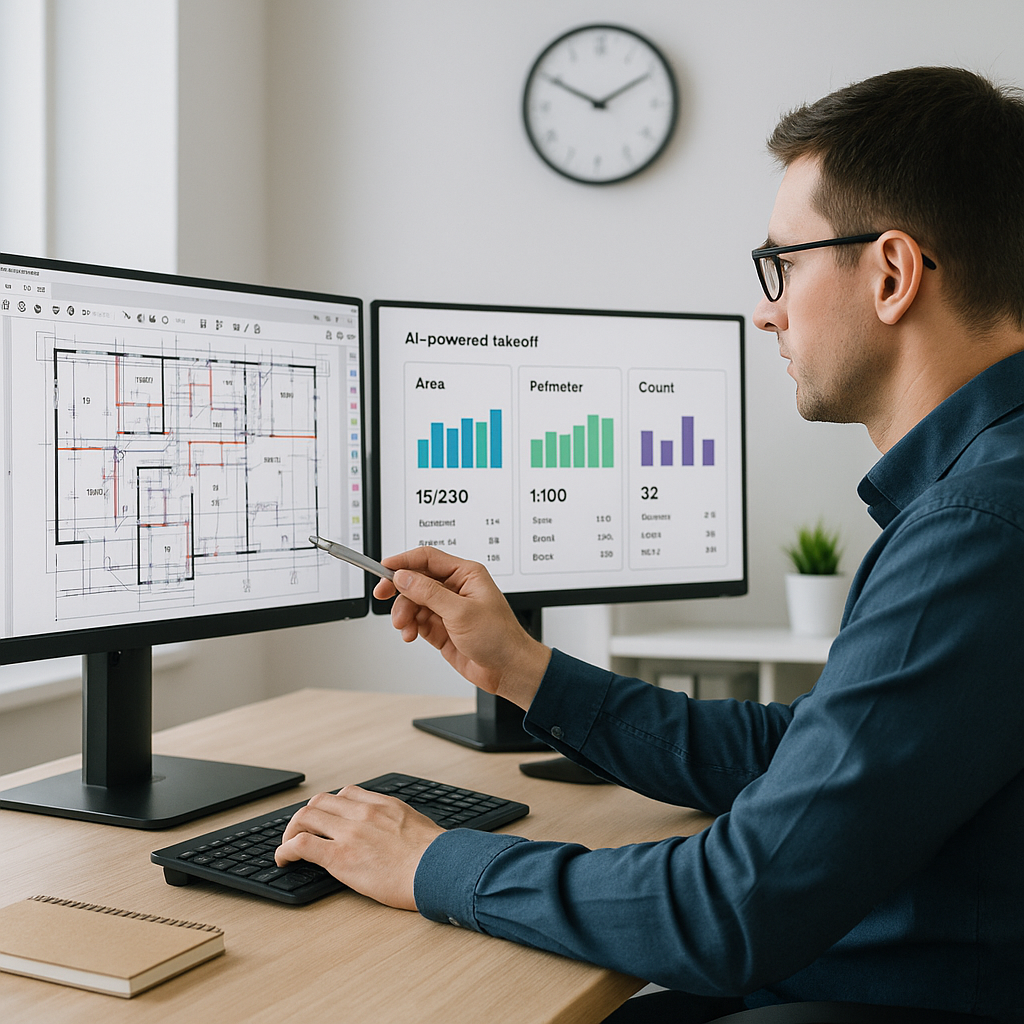
Let’s be honest—most teams stick with what they know. Bluebeam, Excel, maybe some printed PDFs and highlighters. It works, sort of. But it’s slow, and speed matters. Competitors using AI-powered tools like EstimateNext are turning around bids in a fraction of the time. And they’re not just faster—they’re more accurate.
Why Teams Resist Change
- Comfort Zone: Many estimators have decades of experience with traditional methods. Learning a new tool feels daunting.
- Budget Concerns: AI tools often come with upfront costs that might seem hard to justify, even though the long-term ROI is substantial.
- Skepticism: Some estimators believe no software can match the nuance and judgment of human expertise.
The Cost of Staying Traditional
Let’s break it down. If your team spends 80 hours on manual takeoffs per bid (40 hours per estimator), and you chase 10 projects annually, that’s 800 hours a year. At an average labor cost of $130/hour, you’re spending $104,000 annually on just takeoffs. And that doesn’t account for the missed opportunities and errors that could cost you the bid.
How AI Changes the Game
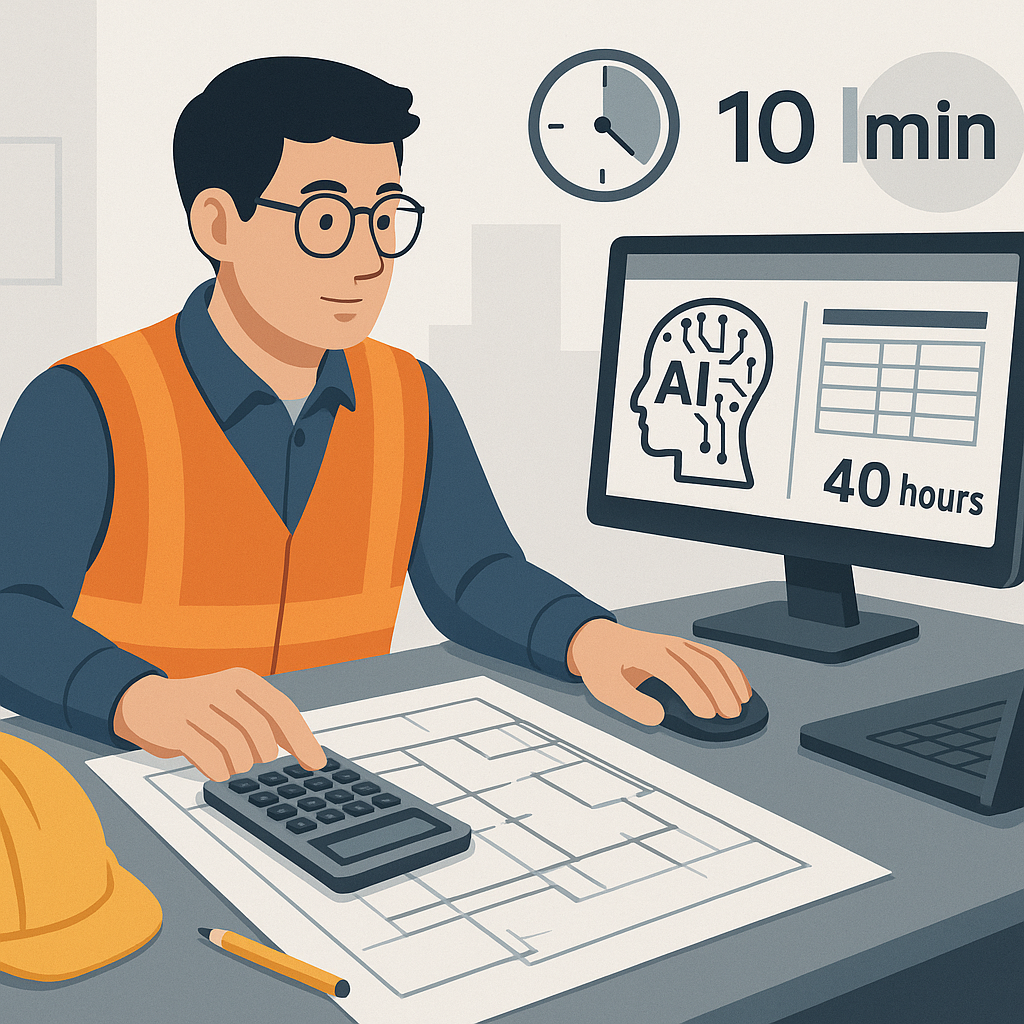
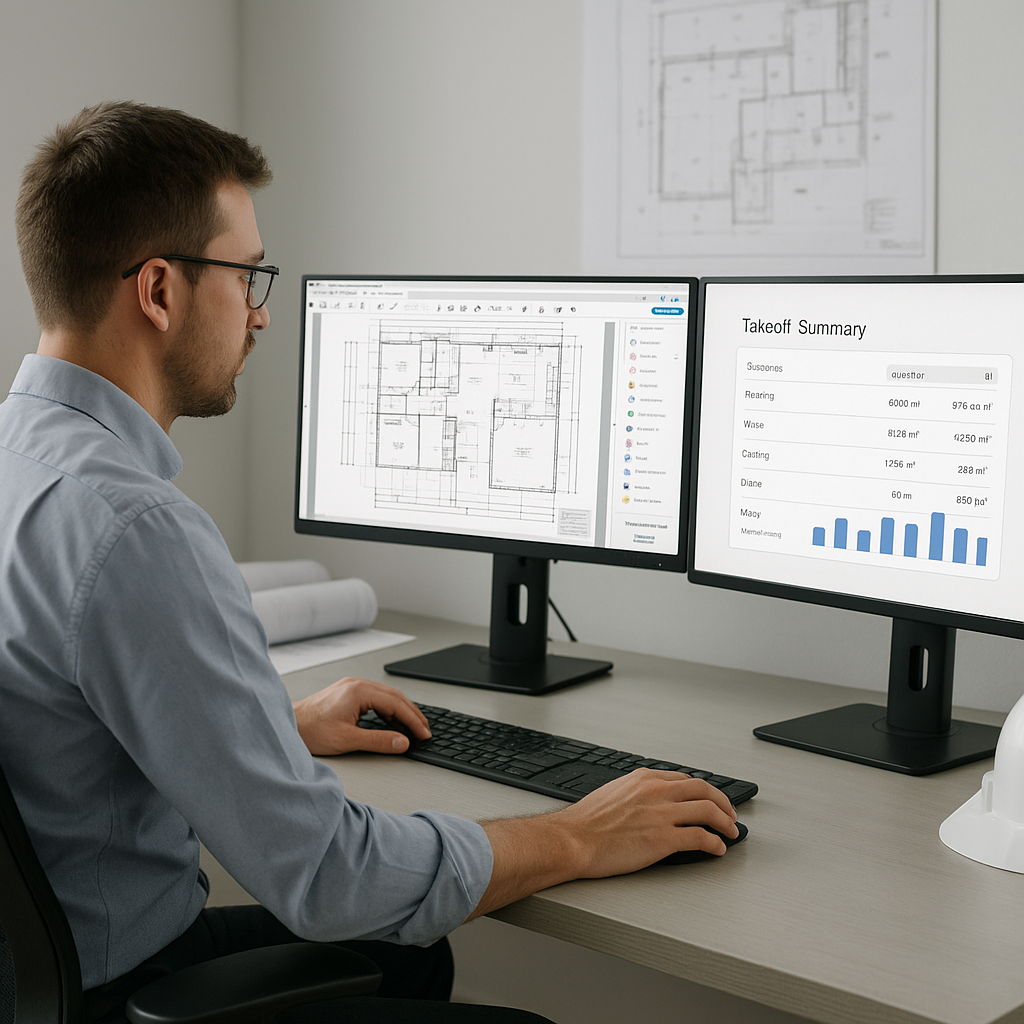
AI takeoff tools aren’t just automation—they’re augmentation. Take Vision AI from EstimateNext, for example. Upload a PDF drawing set, and within 10 minutes, you’ve got quantities for walls, windows, doors, areas—everything. No tracing, no manual counting. Just results.
Actionable Steps to Adopt AI Takeoffs
- Start Small: Choose a pilot project to test an AI takeoff tool. This allows your team to get comfortable without disrupting your current workflow.
- Set Benchmarks: Measure the time and accuracy of your manual process versus the AI tool on the same project.
- Invest in Training: Most AI tools are designed to be user-friendly, but a short training session can significantly boost your team’s confidence and efficiency.
- Integrate with Existing Tools: Look for AI platforms that integrate with your current software, such as Procore, Autodesk Build, or Excel. This ensures a seamless transition.
Real-World Example: A High-Rise Bid
A mid-sized GC recently used Vision AI on a $120M high-rise project. Manual takeoffs for the structural package alone would’ve taken 56 hours. With AI? 10 minutes. That’s a 99% time savings. They repurposed those hours to fine-tune their pricing strategy, ultimately winning the bid.
Expanded Case Study: A Road Infrastructure Project
Another example comes from a civil contractor bidding on a $50M road infrastructure project. The traditional takeoff process involved measuring road sections, drainage systems, and landscaping. The team estimated it would take 120 hours. Using AI, they completed the takeoff in under 2 hours, including adjustments for custom specifications. The saved time allowed their team to focus on optimizing their subcontractor pricing, which led to a 5% cost advantage over their competitors.
Why Accuracy Isn’t a Trade-Off
Skeptical? That’s fair. You might be thinking, "Sure, AI is fast, but can it match the accuracy of manual takeoffs?" The short answer: yes, with oversight. Vision AI includes confidence scoring and allows manual overrides for low-confidence measurements. Think of it as an estimator’s apprentice—not a replacement.
How AI Ensures Accuracy
- Confidence Scoring: The system flags low-confidence measurements, so you know exactly where to focus your review.
- Custom Calibration: Input your company’s measurement standards, ensuring the AI aligns with your specific requirements.
- Human Oversight: AI doesn’t eliminate human expertise—it enhances it. Estimators can review and adjust results as needed.
The ROI Is Too Big to Ignore
Let’s do the math. If your team saves 40 hours per estimate, and your average labor cost is $130/hour, that’s $5,200 saved—per bid. For a GC chasing 5-8 GMP projects annually, the savings add up fast. And that’s before considering the competitive edge of faster bid submissions.
Total Cost of Ownership vs. Value
| Factor | Manual Takeoffs | AI-Powered Takeoffs |
|---|---|---|
| Time per Estimate | 40 hours | 10 minutes |
| Annual Labor Cost (10 bids) | $104,000 | ~$5,000 (software cost) |
| Accuracy | Prone to human error | Highly accurate |
| Revision Handling | Time-intensive | Automated |
Common Pushbacks (And Why They Don’t Hold Up)
1. "We’re Not Tech-Savvy"
Most AI tools are designed for ease of use. Training takes under two weeks, and platforms like EstimateNext integrate with tools you already use, like Procore and Bluebeam. Plus, most vendors offer ongoing support to help ease the transition.
2. "AI Can’t Handle Complex Projects"
Actually, it thrives on them. AI is particularly effective on large-scale projects with repetitive elements—think high-rises, hospitals, or infrastructure. Plus, it gets smarter with every project, using machine learning to improve accuracy over time.
3. "What About Revisions?"
AI tools handle drawing revisions with ease. Upload the new set, and the system highlights changes automatically. No need to start from scratch. This feature alone can save your team dozens of hours on larger projects.
4. "Will It Replace Estimators?"
Not at all. AI is a tool, not a replacement. Estimators still play a crucial role in interpreting data, making adjustments, and applying real-world knowledge to bids.
Ready to Save 40 Hours per Bid?
If you’re still relying on manual takeoffs, you’re leaving time—and money—on the table. AI-powered tools like EstimateNext can cut your takeoff time from 40 hours to 10 minutes, freeing your team for higher-value tasks. Get started free →
FAQ
Q: How accurate are AI takeoffs?
AI tools like Vision AI are highly accurate, with confidence scoring and manual override features to ensure precision. Many users report over 95% accuracy on their first use, with even better results after minor adjustments.
Q: Can AI tools integrate with existing workflows?
Yes. EstimateNext integrates with Procore, Autodesk Build, and Excel, so you don’t have to overhaul your entire workflow.
Q: Is AI suitable for small projects?
Absolutely. AI scales to any project size, whether it’s a $1M renovation or a $1B infrastructure bid. Smaller projects benefit from the speed and accuracy just as much as larger ones.
Q: How does AI handle custom rates?
You can upload your own rate catalogs or define custom rates for specific items, ensuring estimates reflect your actual costs.
Q: What’s the learning curve like?
Most users report feeling confident after two weeks of training, thanks to intuitive interfaces and robust customer support.
Q: Can AI identify drawing discrepancies?
Yes. Many AI tools highlight inconsistencies between drawing sets, such as mismatched dimensions or missing details, helping to catch errors early.