A $16B Hyperscale Data Center: A Monster Project
When a major national general contractor broke ground on a $16B hyperscale data center, it wasn’t just another mega-project. This is the kind of job that redefines what estimators—and their tools—are capable of. At this scale, a single misstep in preconstruction can cost millions. And let’s face it, most teams are still stuck with Excel, 2,000-page rate books, and a prayer.
Data centers aren’t like office towers or retail spaces. The complexity is off the charts: layered redundancy for electrical systems, fire suppression that complies with multiple codes, and HVAC systems that can handle massive cooling loads. Oh, and the timelines? Brutal. Cloud providers like AWS and Microsoft don’t wait. Research and Markets estimates the global data center construction market will hit $62 billion by 2027. That’s not just growth—it’s a tidal wave.
The question is: How can estimators keep up without burning out?
Why Data Centers Break Traditional Estimation
If you’ve worked on a data center bid, you already know the pain points. Let’s break it down:
1. Massive BOQs
A data center’s Bill of Quantities (BOQ) isn’t your typical document. It’s 20,000+ lines deep. Plumbing, electrical, HVAC, civil—every trade gets stretched to the limit. For comparison, a mid-sized office building BOQ might have 2,000-4,000 line items. Data centers magnify complexity tenfold.
For example, take the electrical systems. A Tier IV data center (the highest level of redundancy) requires dual power lines, backup generators, and multiple UPS (uninterruptible power supply) systems. Estimating just this component requires breaking down every piece of equipment, labor hours, and material costs.
2. Tight Turnarounds
Bids for these projects often come with 2-3 week deadlines. That means you’re working 12-hour days just to meet deliverables. Missing a deadline isn’t just embarrassing—it can mean losing out on a multi-million-dollar opportunity.
For instance, a 2022 survey by Dodge Construction Network found that 79% of general contractors cited tight deadlines as their biggest preconstruction challenge. When you’re rushing to submit, errors creep in. A forgotten line item or miscalculated rate can derail your entire bid.
3. Specialist Knowledge
You’re not just estimating costs; you’re factoring in redundancy layers, precise cooling requirements, and fire suppression standards. Each mistake is a liability. For example, a miscalculation in HVAC sizing can lead to underperforming systems, which in turn could cause data loss for the client. The stakes are enormous.
4. Constant Scope Changes
It’s not uncommon for the client to request design tweaks mid-bid. If your tools can’t handle rapid what-if scenarios, you’re toast. Say the client suddenly decides to upgrade from Tier III to Tier IV redundancy. That single change impacts electrical, mechanical, and structural systems—and your job is to recalculate everything on the fly.
And yet, most teams are still stuck flipping through rate books or rebuilding Excel sheets every time something changes. It’s not sustainable.
AI Is the Estimator’s Secret Weapon
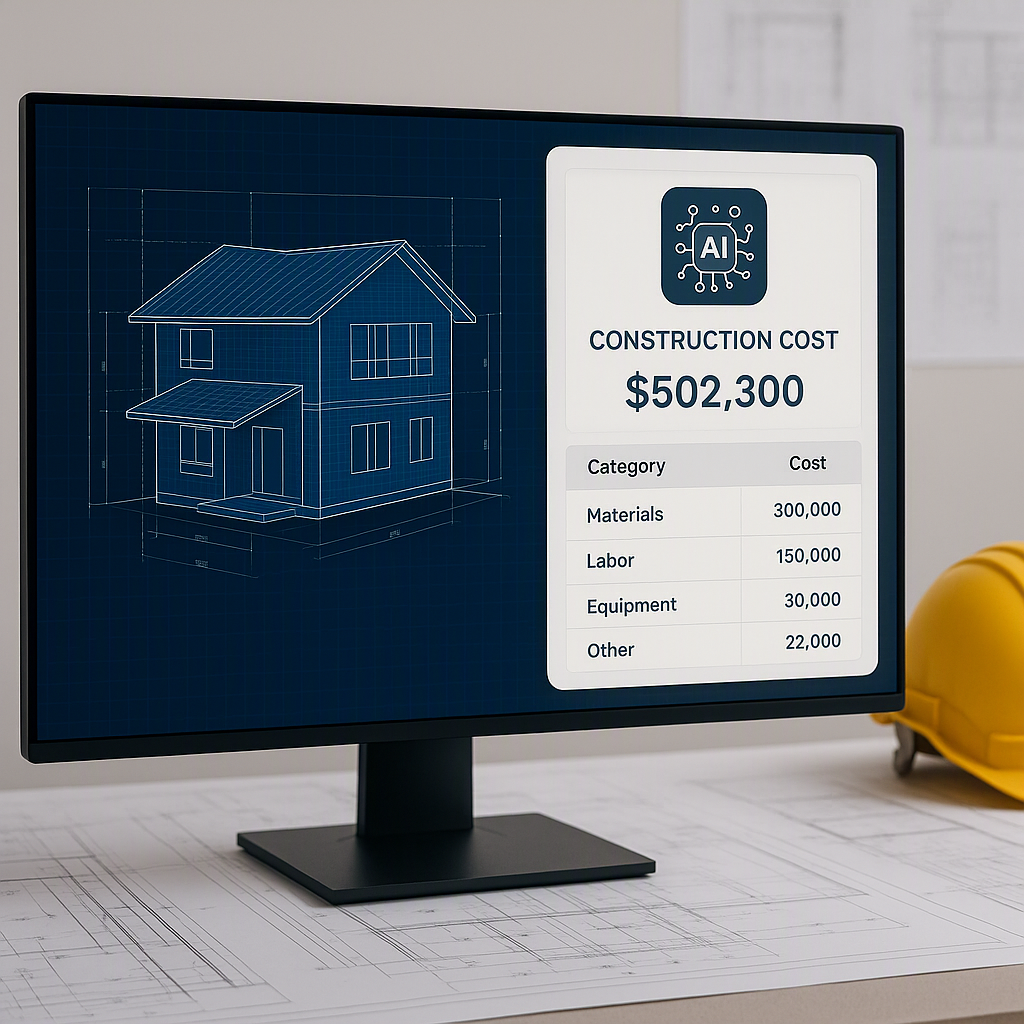
This is where AI-powered tools like EstimateNext come in. Let’s take one specific pain point: rate lookup and matching.
Traditional vs. AI Workflows
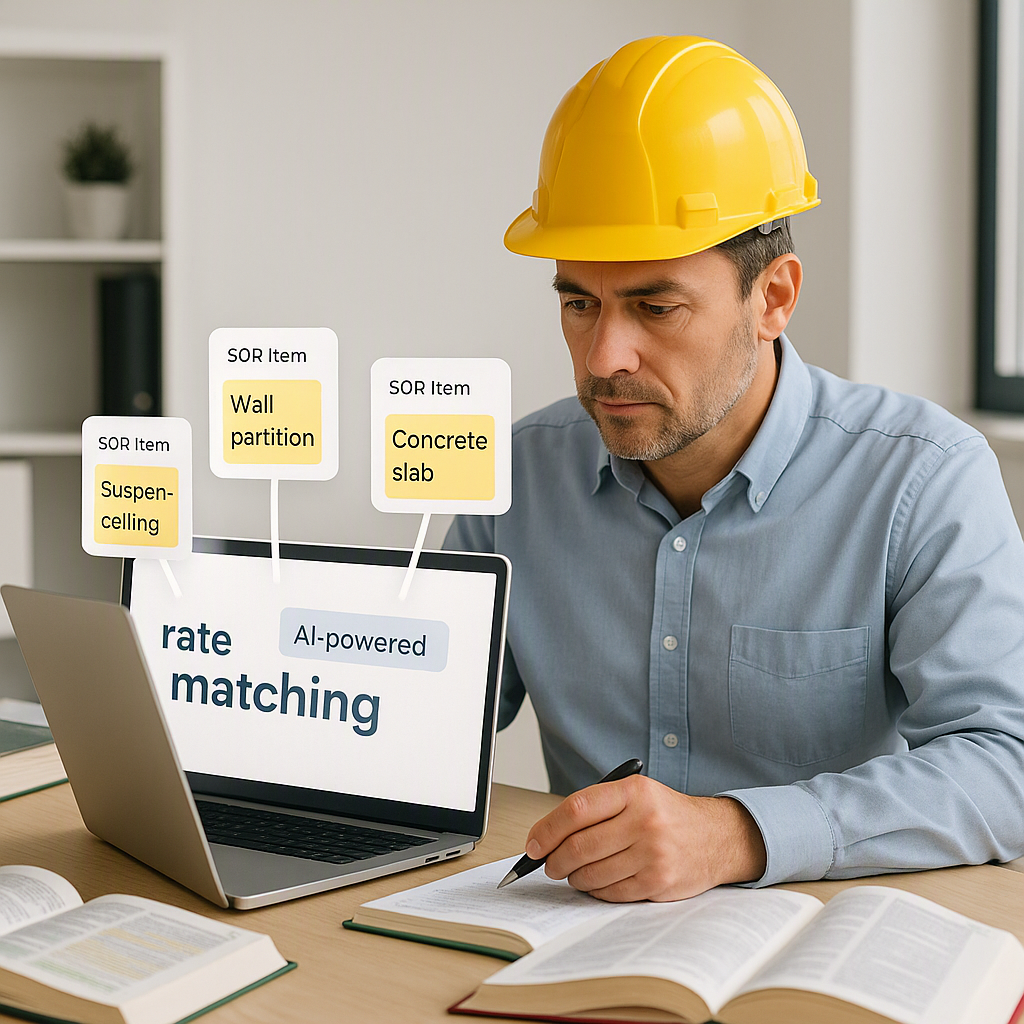
For a project of this scale, imagine you’re pricing the HVAC system. You need to find rates for chillers, ductwork, and controls—quickly. In traditional workflows, you’d:
- Flip through RSMeans or a similar guide.
- Manually match specs to rates.
- Enter everything into Excel (hoping you didn’t miss a decimal).
This process takes hours. Worse, if the client adjusts the cooling capacity mid-bid, you’re back at square one.
AI slashes this process to seconds. Here’s how it works:
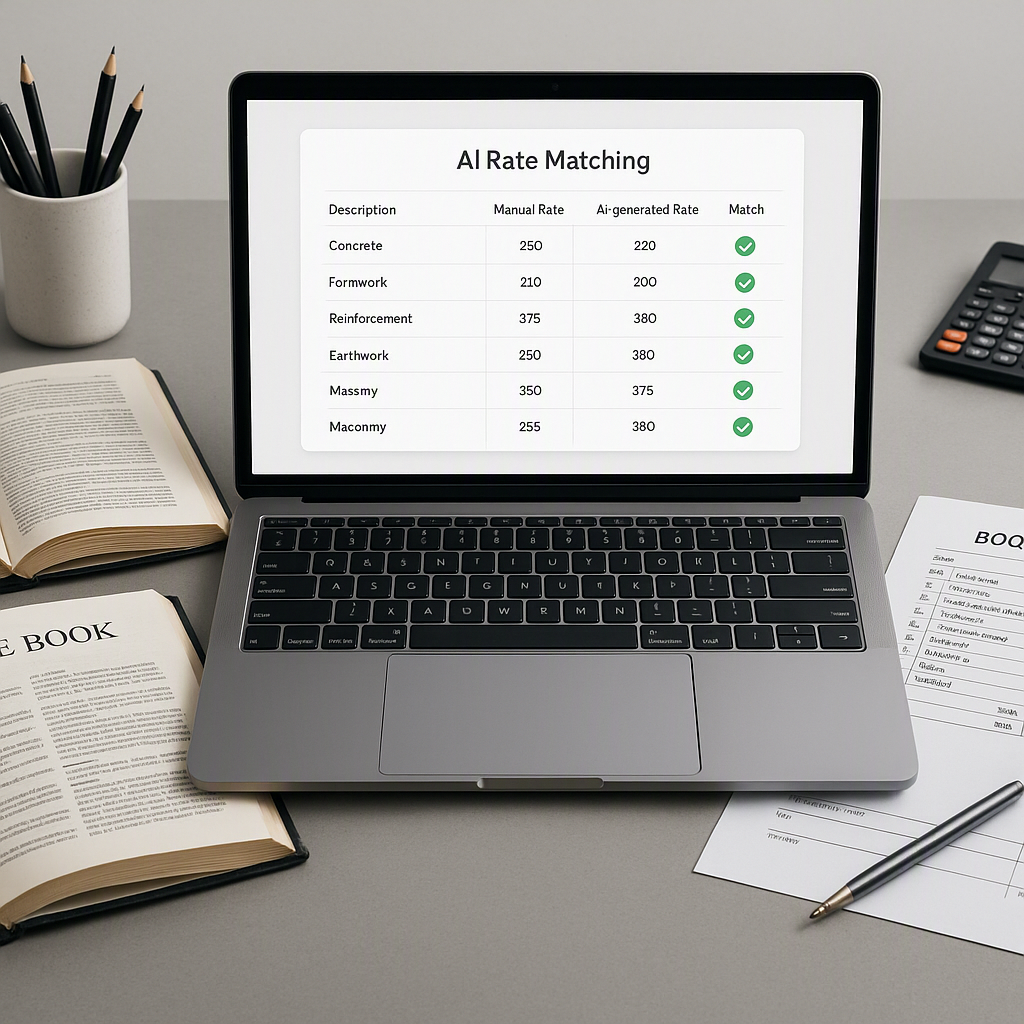
- 78K+ Rate Items: EstimateNext’s database includes rates from CPWD DSR, RSMeans, AECOM, and more. You type in “chiller 500kW,” and it pulls exact matches.
- Semantic Search: Don’t know the exact spec? AI interprets your input and suggests the closest matches—material, labor, and equipment breakdowns included.
- Real-Time Updates: If the client changes the cooling capacity, you adjust one input. The system recalculates everything instantly, with a full audit trail.
Concrete Example: Electrical Scope Changes
Let’s say your BOQ includes 10 emergency generators at 1MW each. Mid-bid, the client decides to downsize to 800kW generators but increase the count to 12. In Excel, you’d spend hours recalculating costs, labor, and installation timelines. With AI, you update two inputs, and the system recalculates everything—including downstream impacts on wiring, conduit, and switchgear specs.
Real-World ROI: Speed Wins Big Projects
Let’s do the math. According to EstimateNext’s own case studies:
- A typical data center bid requires 80 hours of preconstruction labor.
- AI tools cut that by 50%. That’s 40 hours saved.
- At $130/hour (standard estimator rates), that’s $5,200 in savings per bid. Multiply by 5-8 bids/year, and you’re looking at $26K-$41K saved annually per estimator.
Now consider the cost of the tool: $99/month per seat. That’s $1,188/year. The ROI? 52X. Speed isn’t just a nice-to-have—it’s how you win.
Competitive Edge
Mid-tier general contractors are already losing bids to those who adopt AI tools. In 2021, a regional GC in Texas won a $250M data center contract largely because they could turn around an accurate bid in 10 days—half the time of their competitors.
The Risk of Doing Nothing
You might be thinking, “We’ve always done it this way. Why change now?” Fair question. But here’s the risk: falling behind. AWS, Google, and Meta don’t care how great your bid is if it’s late. Mid-tier GCs are already losing ground to competitors who can turn around bids in days, not weeks.
And it’s not just about speed. AI tools reduce human error—something that’s inevitable when you’re pricing projects this big. A miscalculation on a single system could sink your margins.
Comparison Table: Traditional vs. AI Estimation
| Feature | Traditional Tools | AI-Powered Tools |
|---|---|---|
| Rate Lookup Time | Hours | Seconds |
| Handling Scope Changes | Manual Rework | Automated Updates |
| Error Rate | High | Low |
| ROI | Marginal | 50X or Higher |
| Competitive Edge | Limited | Significant |
Final Thoughts: What Mega-Projects Teach Us
A $16B hyperscale data center is a wake-up call for every estimator. Mega-projects like these demand tools that are as advanced as the projects themselves. AI isn’t a luxury anymore—it’s a necessity.
If you’re still relying on Excel and rate books, you’re not just wasting time—you’re leaving money on the table.
Ready to Level Up?
If you’re dealing with the challenges of mega-project estimation, EstimateNext can help. Get started free →