Top 5 Challenges in Preconstruction Estimation and How AI Can Help
Preconstruction estimation is a critical yet time-intensive process. Manual tasks like drawing takeoffs, rate lookups, and bid leveling can consume significant time and resources, leaving less room for strategic planning and margin protection. Many teams still rely on outdated tools and processes, which struggle to meet the demands of modern construction projects.
Let’s explore the five biggest challenges in preconstruction estimation—and how AI tools can provide solutions.
1. Manual Drawing Takeoffs
Tracing drawings by hand is one of the most time-consuming tasks for estimators. This process often involves measuring areas, lengths, and counts manually, which can lead to inefficiencies and errors.
How AI Helps:
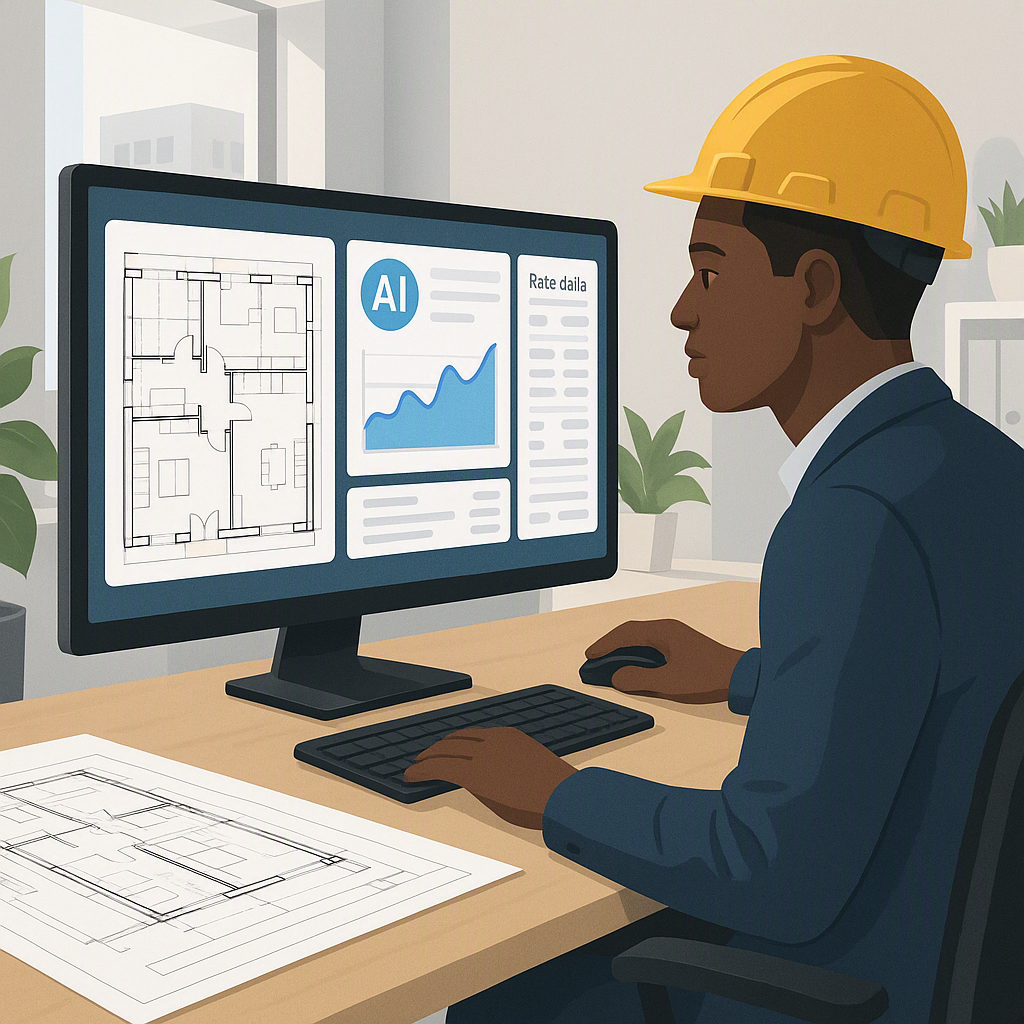
AI-powered tools can automate quantity takeoffs by extracting measurements directly from digital drawings. This significantly reduces the time required for manual takeoffs while maintaining accuracy. These tools can also flag areas where human review is needed, ensuring precision without sacrificing speed.
2. Rate Lookup
Searching for rates in large catalogs or PDFs is another labor-intensive task. This process can be error-prone, especially when deadlines are tight, leading to mismatched rates and inaccuracies in estimates.
How AI Helps:
AI tools equipped with semantic search capabilities allow users to quickly find rates across extensive catalogs or databases. By integrating custom materials and user-specific catalogs, these tools make rate lookup faster and more reliable. Over time, they can learn from past projects to improve efficiency further.
3. Sub Bid Leveling
Comparing vendor quotes is often a complex and time-consuming process due to varying templates, exclusions, and scope assumptions. Missing key deviations can result in inaccurate bid submissions and financial risks.
How AI Helps:
AI-powered bid leveling tools can analyze and normalize vendor quotes, flagging deviations and ranking options based on scope alignment. This streamlines the process, enabling teams to make more informed decisions quickly and accurately.
4. Bid/No-Bid Decisions
Deciding whether to pursue a project often relies on subjective judgment, which can lead to missed opportunities or wasted efforts on unsuitable bids. Structured criteria are essential for making informed decisions.
How AI Helps:
AI tools can evaluate tender documents using predefined criteria, such as scope complexity and potential margins. By turning subjective decisions into structured analyses, these tools help teams focus on the most promising opportunities.
5. Spreadsheet Rebuilds for What-If Scenarios
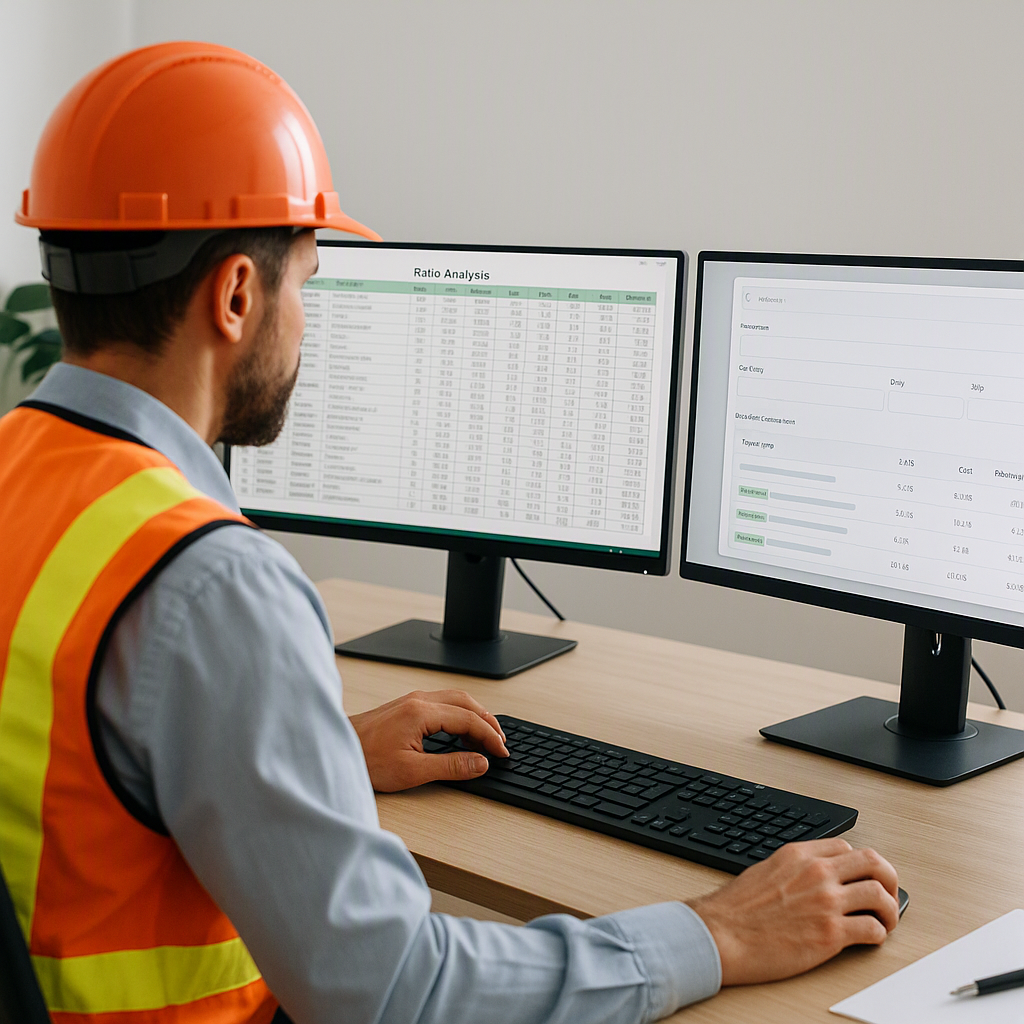
Adjusting rates or testing different scenarios in spreadsheets can be a cumbersome process, often requiring significant manual effort to update formulas and ensure consistency across the workbook.
How AI Helps:
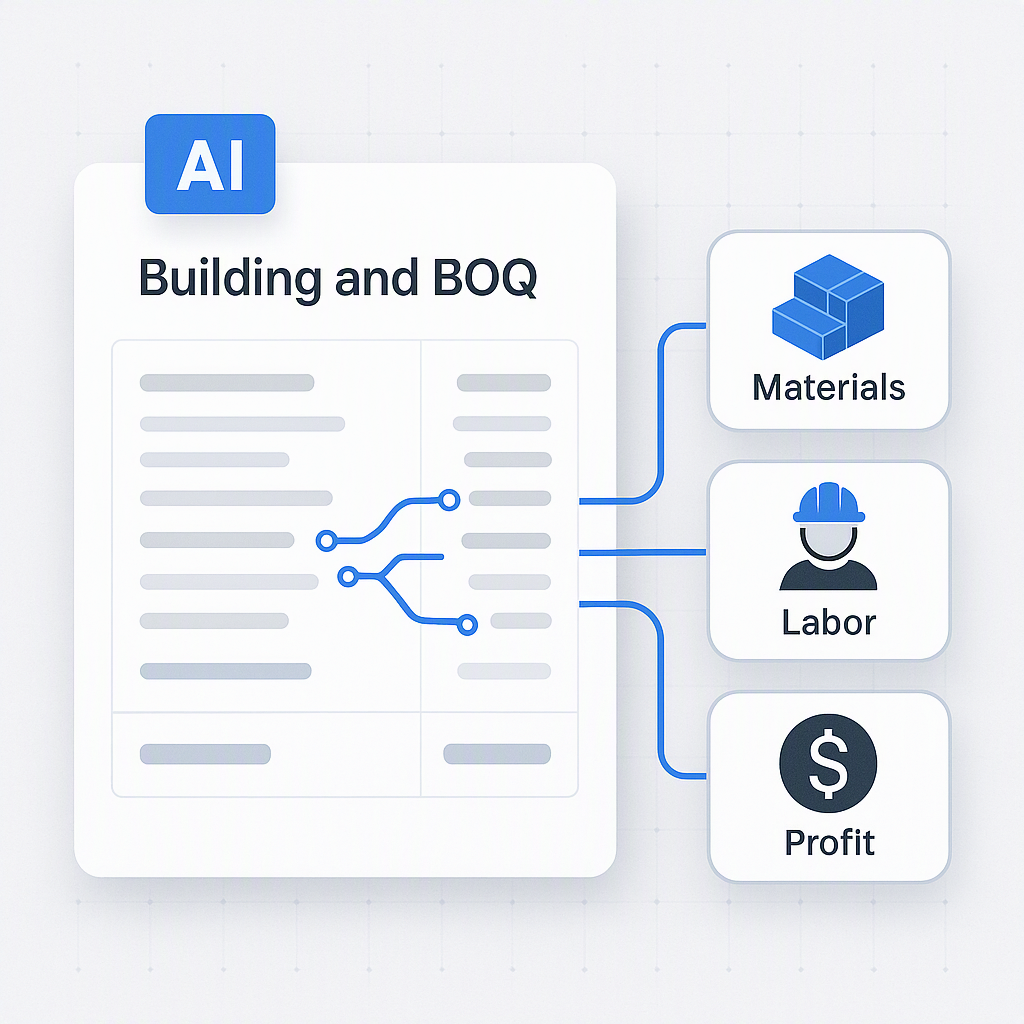
AI tools can automate the propagation of changes across the entire Bill of Quantities (BOQ) in real-time. This allows teams to test different scenarios quickly and efficiently, saving time and reducing the risk of errors.
Common Questions
Q1: How accurate are AI-powered estimates compared to manual methods?
AI tools are designed to improve accuracy by reducing human error and learning from past projects. However, human oversight remains essential to ensure quality and reliability.
Q2: What’s the onboarding time for AI tools?
Most AI tools are user-friendly and can be integrated into existing workflows with minimal training. Teams can start with a single project and scale usage as they become more comfortable with the technology.
Q3: Can AI replace estimators?
AI is a tool to enhance efficiency, not a replacement for human expertise. Estimators are still crucial for making judgment calls, negotiating, and developing strategies.
What To Watch For
- Over-reliance on AI: Always review flagged items and ensure human oversight for critical decisions.
- Custom catalog setup: Invest time in setting up your materials and rates for optimal results.
- Team buy-in: Provide training and support to ensure effective use of AI tools. Pair junior staff with AI to free up senior talent for strategic tasks.
If you're facing challenges in preconstruction estimation, consider exploring AI tools to streamline your processes and improve efficiency.