The Problem: Hours Lost on Rate Matching
Imagine this: You’re pricing a mid-size commercial project with a Bill of Quantities (BOQ) containing 150 line items. You need rates for everything—materials, labor, equipment. Where do you turn? RSMeans? CPWD DSR? Your company’s custom catalog? The process is always the same: hours of manual lookup, cross-referencing PDFs, and double-checking Excel formulas.
It’s slow, error-prone, and downright frustrating. Worse, if you miss even one rate or miscalculate, your bid could be off by tens of thousands of dollars. That’s not just an estimation problem—it’s a trust problem. Clients expect precision, and subcontractors expect fairness. If your rates aren’t spot-on, it creates a domino effect of confusion and erodes confidence in your work.
The AI Solution: Rate Matching in Seconds
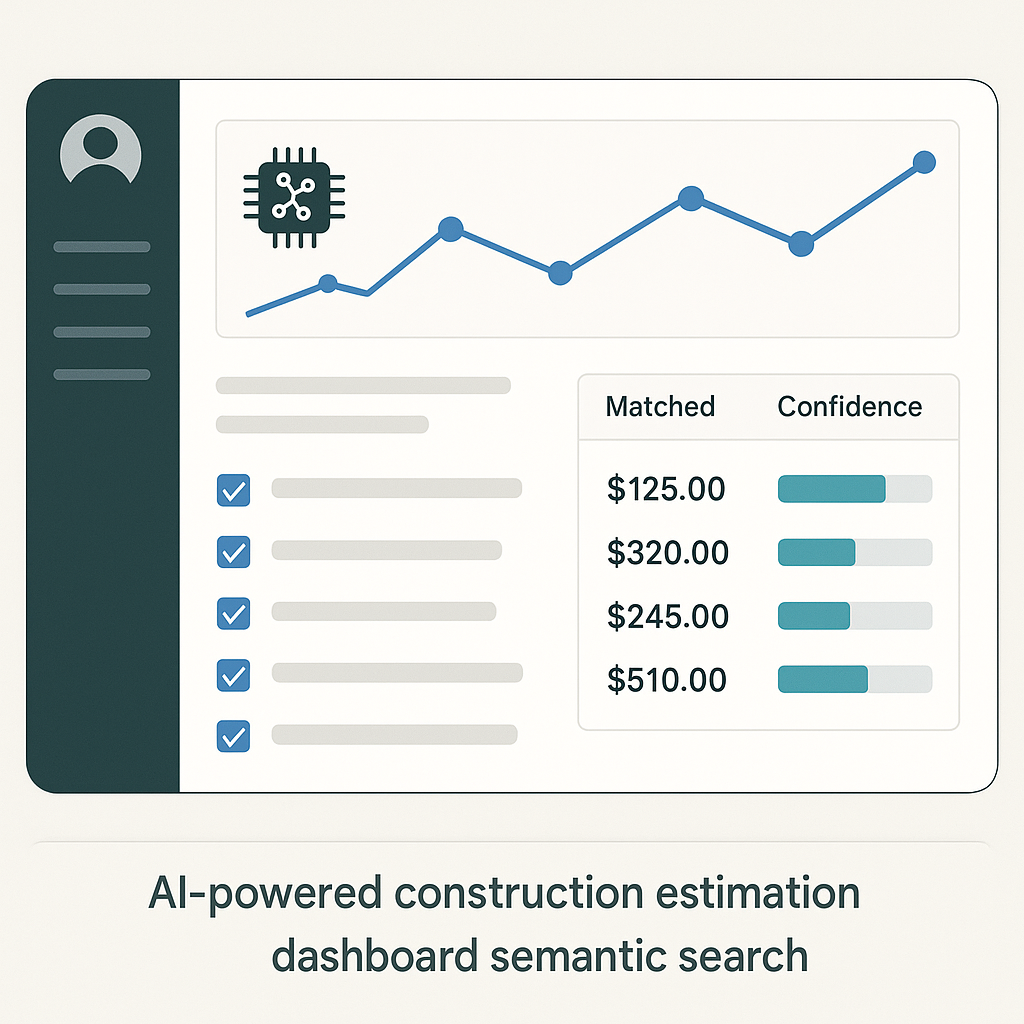
AI tools like EstimateNext are flipping this process on its head. Instead of wasting hours flipping through rate books, AI can match BOQ items to the right rates in seconds. How? Through semantic search capabilities. You type in the description—say, "concrete slab reinforcement"—and the system pulls rates from its database of 78,000+ items.
Here’s where it gets clever: AI doesn’t just pull the first match it finds. It analyzes your historical data, catalog preferences, and country-specific standards to deliver the most accurate rate. If there’s ambiguity (like multiple matches), it flags the item for manual review.
Case Study: Efficiency Gains
One case study from EstimateNext highlights a GC director who saved 12 hours per estimate using this feature. That’s 1.5 workdays back in their pocket—time they reinvested into subcontractor negotiations and bid strategy instead of tedious rate matching. Read the full case study here.
Actionable Steps
- Upload your BOQ: Start by uploading your project’s BOQ into the AI platform.
- Define your preferences: Set up your preferred rate catalogs, standards, and historical data.
- Review flagged items: While AI will match most items automatically, flagged items can be reviewed manually to ensure accuracy.
- Export results: Once finalized, export the estimate to Excel or your project management tool.
Does AI Understand Custom Rates?
You might be thinking, “But my rates are custom. AI can’t handle that.” Actually, it can. Tools like EstimateNext allow you to upload your own rate catalogs—materials, finishes, labor coefficients, and more. Once uploaded, the system integrates these seamlessly into future estimates. Over time, the platform gets smarter, learning your preferences and improving its accuracy.
Example: MEP Subcontractors
This isn’t just useful for general contractors. MEP subcontractors with highly specialized rates—like HVAC load calculations or electrical panel sizing—can benefit too. For instance, AI can analyze composite rates by breaking down material quantities, labor costs, and equipment usage. Instead of manually calculating these items, the system automates the process, saving hours of work.
Actionable Steps
- Digitize your custom catalog: Upload your rate list to the AI platform.
- Categorize rates: Assign tags or categories (e.g., labor-intensive, material-heavy) to streamline future matches.
- Train the system: Review and correct mismatches on initial projects to improve AI accuracy.
Real Numbers: ROI on AI Rate Matching
Let’s talk about the bottom line. According to McKinsey, early adopters of AI tools in construction save 10-20% on project costs annually. For a GC director managing $100M in annual placements, that’s $10-20M in savings. Even for smaller firms, the math adds up:
Example: Estimator Salaries and Rate Books
- RSMeans licenses: $5,000/year
- Estimator salaries: $130/hour
- AI time saved: 40 hours per project
If AI saves 40 hours per project, that’s $5,200 saved per estimate—and $0 spent on rate books. For firms handling dozens of projects annually, these savings compound quickly.
Comparison Table: Manual Rate Matching vs AI Rate Matching
| Factor | Manual Rate Matching | AI Rate Matching |
|---|---|---|
| Time per estimate | 12-15 hours | 1-2 hours |
| Error rate | High (human error) | Low (flagged items for review) |
| Cost | High (labor + licenses) | Moderate (subscription fees) |
| Scalability | Limited | Unlimited |
| Learning curve | Minimal but repetitive effort | Moderate but improves over time |
The Obvious Objection: “AI Can’t Think Like an Estimator”
I hear this all the time: “AI is fast, but it doesn’t understand the nuances of construction.” True, but it doesn’t need to. AI isn’t here to replace your expertise; it’s here to amplify it. You’re still the one making judgment calls—negotiating with subs, deciding on markup, and finalizing the bid. The AI just handles the grunt work.
Actionable Perspective
Think of AI as your assistant, not your replacement. Would you rather spend 12 hours flipping through rate books or 1 hour reviewing AI-matched rates? The difference is where your time goes—toward high-value tasks that actually move the needle.
Edge Cases: What If the System Gets It Wrong?
No system is perfect. AI tools include features like confidence scoring and manual override for precisely this reason. If the system isn’t sure about a match, it flags it for review. You can adjust rates, add notes, and save corrections for future use. Over time, the platform learns from your edits, reducing errors.
Example: Confidence Scoring
Say the AI matches “concrete slab reinforcement” to three possible rates. Instead of picking randomly, the system assigns a confidence score (e.g., 85%) to its top match. If you disagree, you can override it and provide context for future estimates.
Call to Action
If you’re tired of wasting hours on manual rate matching, AI tools like EstimateNext can help. They don’t just save you time—they help you focus on what really matters: winning bids, building client trust, and scaling your business. Get started free →


