For the longest time, I thought AI in construction estimation was mostly hype
Sure, it sounded cool in theory—machines crunching numbers, spitting out estimates, and promising to save you hours of work. But as someone who’s spent over a decade in preconstruction, I couldn’t see AI tackling the messy realities of the job. Rate lookups? Sure, but what about custom material adjustments? Drawing takeoffs? Maybe, but could it really account for the human element of judgment? My instinct was to think, “AI might be fast, but it’s not smart enough for this industry.”
Then something happened that forced me to rethink everything.
The Turning Point
It was late last year when one of the contractors I work closely with—a mid-sized general contractor based out of Navi Mumbai—was bidding on a high-rise project. They had two estimators who spent a full week doing manual takeoffs from PDFs. This wasn’t unusual, by the way; 40 hours per estimate is pretty standard for most mid-sized GCs (general contractors). According to SoftNext Solutions Pvt. Ltd., this is typical in India’s construction industry, where rates are often tied to Central Public Works Department (CPWD) DSR or state-specific Schedule of Rates (SOR) catalogs.
The problem was, they were already stretched thin with other bids. They were turning down opportunities because they just didn’t have the bandwidth.
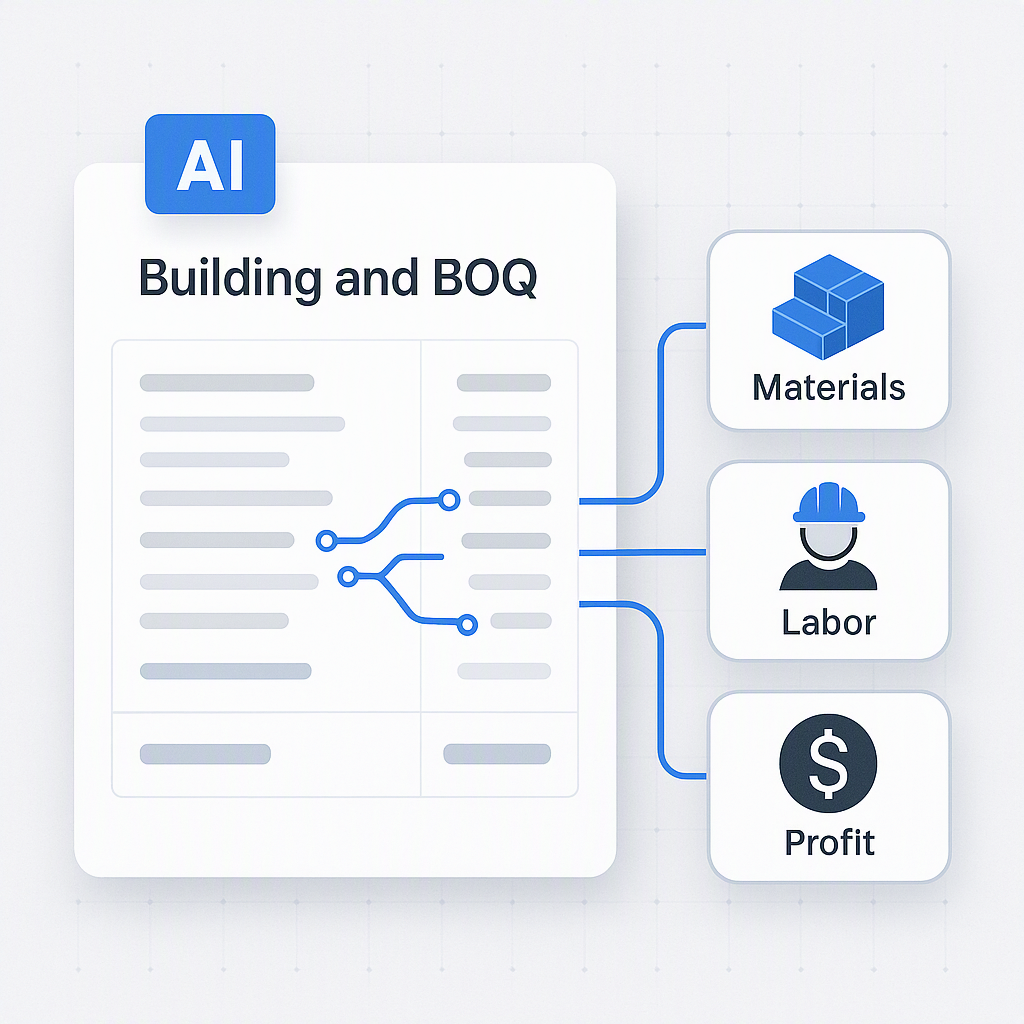
That’s when I suggested they try one of those AI-powered tools I’d been skeptical about—EstimateNext. I wasn’t sold on the idea, but I figured it couldn’t hurt to test it out. They uploaded their BOQ (Bill of Quantities) and drawings into the platform and let the Vision AI do its thing.
Ten minutes later, they had a complete quantity takeoff. Ten minutes. For context, that’s 1,000 times faster than the manual process they were used to. That was the moment I realized I’d been wrong. This wasn’t just faster—it was transformative. And the real kicker? The estimators didn’t just stop there. They used the 36 hours they saved to refine their bid strategy, negotiate better with subcontractors, and put together a more competitive package. They won the project.
What Made the AI Different This Time?
Unlike the half-baked tools of years past, modern AI-driven platforms like EstimateNext have matured significantly:
- Advanced Object Recognition in Drawings: The AI could accurately identify and categorize materials directly from design files, reducing human error. EstimateNext, for example, offers modules that can process everything from initial takeoffs to Guaranteed Maximum Price (GMP) proposals without requiring a credit card to start a trial.
- Contextual Understanding: The software distinguished between different material specifications based on context, such as a reinforced concrete beam for a high-rise versus one for a parking lot. This is a significant leap forward compared to older platforms.
- Speed and Scalability: Processing thousands of BOQ line items across more than 78,000 CPWD DSR and state SOR catalog items in minutes gave the estimators precious time for higher-value tasks.
Why My Old Belief Lasted So Long
Looking back, it’s easy to see why I held onto the belief that AI wasn’t ready for construction estimation. For one, the tools available five or ten years ago were clunky at best. They’d promise the moon but deliver half-baked features that still required hours of manual tweaking. The frustration of trying to make those early systems work made me wary of anything that claimed to “revolutionize” the process.
And then there’s the complexity of construction itself. This isn’t a clean, tidy industry. Every project has unique requirements, unforeseen challenges, and a massive amount of variability. I assumed AI couldn’t handle that level of nuance. After all, how could a machine understand the difference between a reinforced concrete beam on a high-rise versus one in a parking structure? Surely, only a seasoned estimator could make those calls.
The Reality: AI Isn’t Here to Replace Judgment
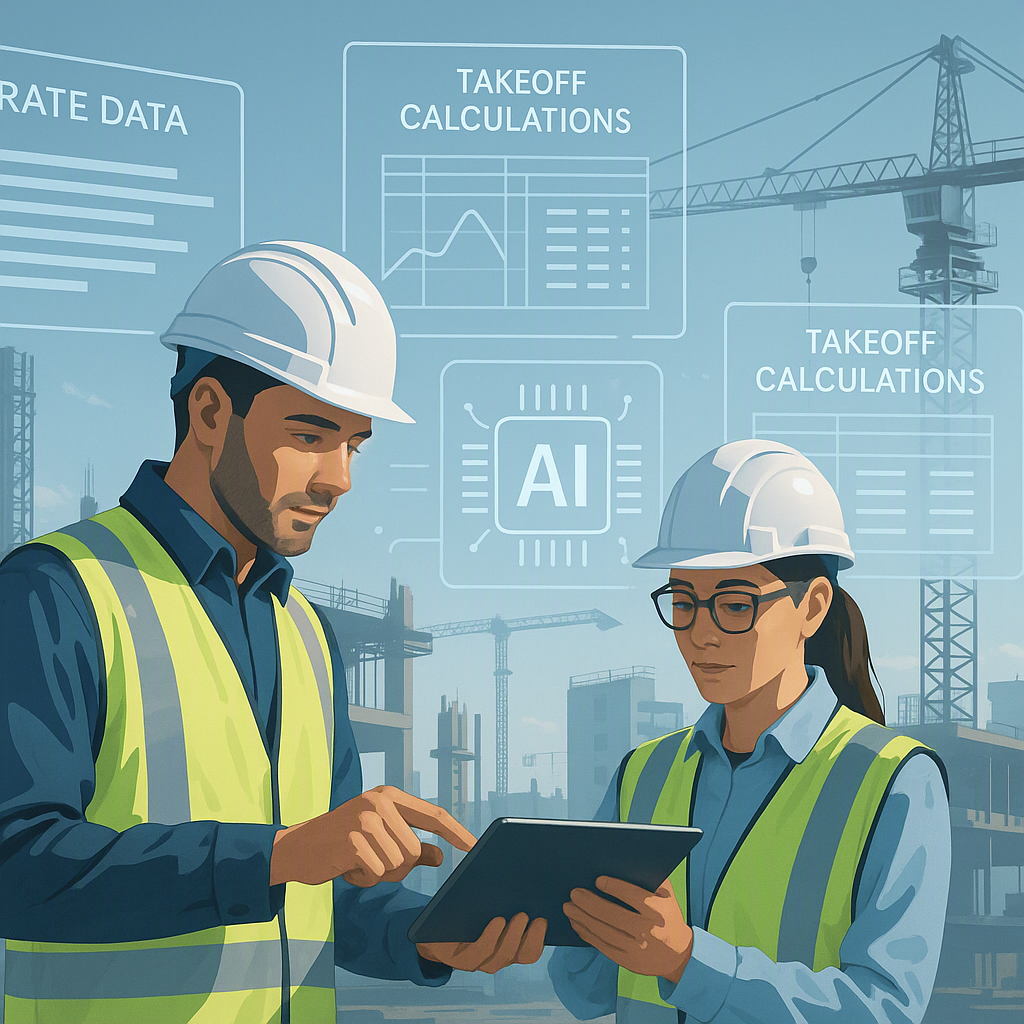
What I didn’t consider was that AI doesn’t need to replace expertise. It needs to free up experts to do what they’re best at—making judgment calls, managing relationships, and focusing on parts of the process that actually require a human touch. The grunt work? That’s where AI shines.
What I Do Differently Now
These days, I approach estimation with a completely different mindset. I start by asking, “What’s the least amount of manual effort we can get away with here?” That usually means turning to tools like EstimateNext for the heavy lifting.
1. Rate Matching and Catalog Accuracy
For example, the platform’s rate matching feature has been a game-changer for me. Instead of flipping through a 2,000-page rate book, I can type in something like “install pre-stressed concrete girders” and get a match in seconds. If the rate isn’t exactly what I need, I can tweak it or upload my own custom catalog.
Here’s a quick “before and after” comparison based on my experience:
| Task | Manual Effort | AI-Assisted Effort |
|---|---|---|
| Rate Lookup | 30 minutes | 5 seconds |
| Adjusting Inputs | 10 minutes | 5 minutes |
| Total Time Saved | - | ~25 minutes/task |
2. Real-Time What-If Scenarios
Another thing I’ve started doing is using AI tools for what-if scenarios. Let’s say a client wants to know how much they’d save by swapping out a premium finish for a standard one. That used to mean hours of spreadsheet gymnastics. Now? It’s a couple of clicks. The platform recalculates everything in real-time and even shows an audit trail of the changes. This allows me to:
- Quickly respond to client queries.
- Build trust by showing transparent cost breakdowns.
- Close deals faster by removing unnecessary delays.
3. Collaboration and Integration
I’ve also started leveraging API integrations to streamline workflows. Many companies still rely on legacy systems like Bluebeam and Excel. While transitioning to a fully AI-driven pipeline isn’t always feasible, tools like EstimateNext can bridge the gap by:
- Importing/exporting data seamlessly.
- Reducing double data entry.
- Providing compatibility with industry-standard software.
What I’m Still Figuring Out
1. Data Quality
AI is only as good as the data you feed it. If your BOQ is a mess or your rate catalogs are outdated, the results won’t be accurate. To mitigate this, I’ve started:
- Standardizing BOQ formats.
- Regularly updating rate catalogs.
2. Building Trust
I’ve seen some older estimators bristle at the idea of relying on AI. They feel like it undermines their expertise. My approach? I frame AI as a tool, not a replacement. For example:
- Show how AI reduces repetitive tasks so they can focus on strategy.
- Highlight successful use cases to demonstrate value.
3. Workflow Integration
Getting AI tools to play nicely with existing systems is an ongoing challenge. Although platforms like EstimateNext offer APIs, full integration often requires customization. This is something I’m actively working on with IT teams.
The Cost of Being Wrong
If I had embraced AI tools sooner, I think I could have saved myself—and my colleagues—a lot of time and stress. We’ve probably lost out on more bids than I care to admit simply because we couldn’t turn around estimates fast enough. And the hours we’ve spent on manual takeoffs and rate lookups? Let’s just say that’s time we’ll never get back.
But the biggest cost of being wrong was the missed opportunity to innovate. By clinging to outdated methods, I held my team back from exploring new ways to work smarter, not harder. That’s not a mistake I’m willing to make again.
If you’re tired of spending hours on manual takeoffs and rate lookups, EstimateNext can help. Upload your BOQ and get a priced estimate in minutes. Get started free →