Why Manual Takeoffs Are Holding You Back
Let’s talk about the elephant in the room: drawing takeoffs. If you’ve ever spent hours tracing PDFs to measure wall lengths or count fixtures, you know how tedious this process can be. And it’s not just time-consuming—it’s also prone to errors. Mistakes in manual measurements can compound into blown budgets or missed margins.
Enter AI-Powered Takeoffs
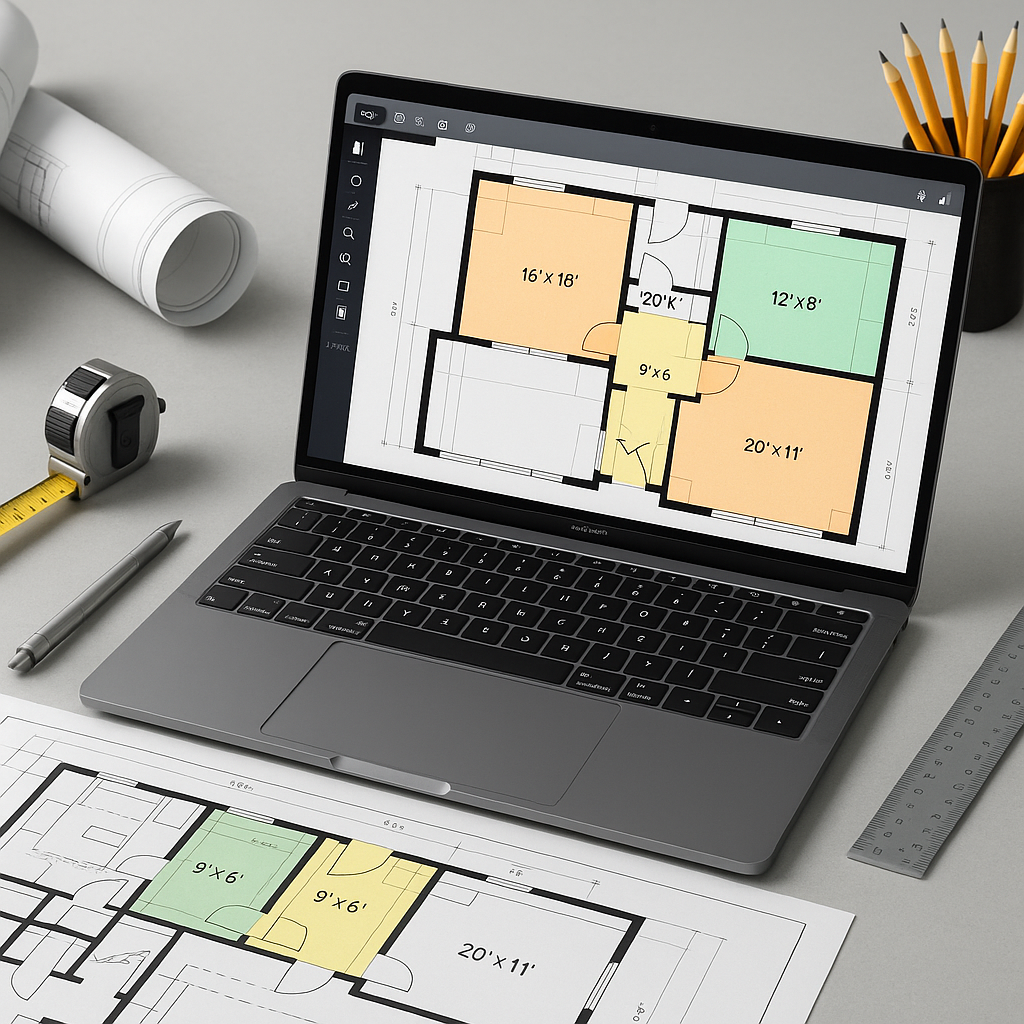
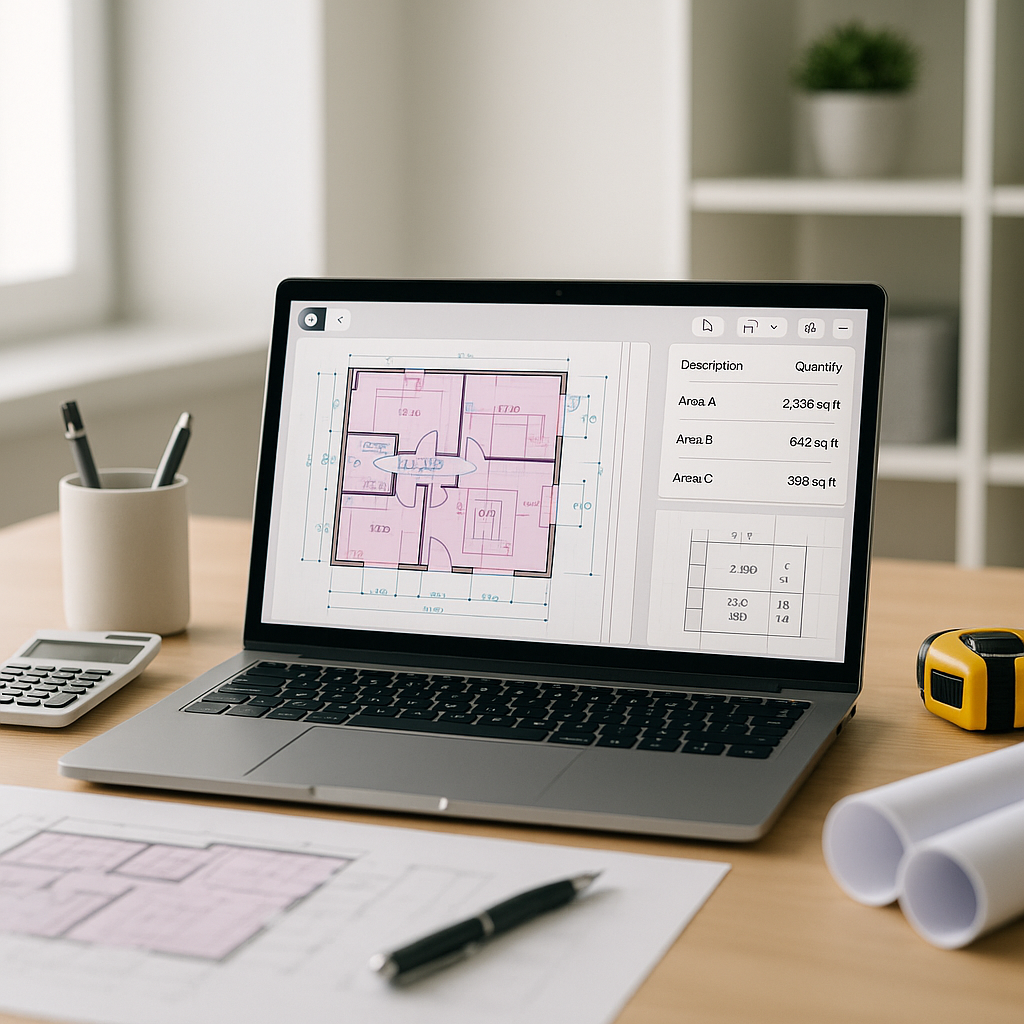
AI tools are transforming the way takeoffs are done. Instead of spending hours manually measuring drawings, AI-powered solutions allow you to upload a PDF and extract quantities in a fraction of the time. These tools are designed to be user-friendly: upload the file, calibrate dimensions, and let the software handle the heavy lifting. This can save significant time and effort, especially on larger projects with tight deadlines.
How It Works
Here’s the step-by-step breakdown:
- Upload Your Drawings: AI tools support formats like PDFs, DWGs, and scanned images.
- Calibrate Dimensions: Use a known measurement (like a door width) to set the scale.
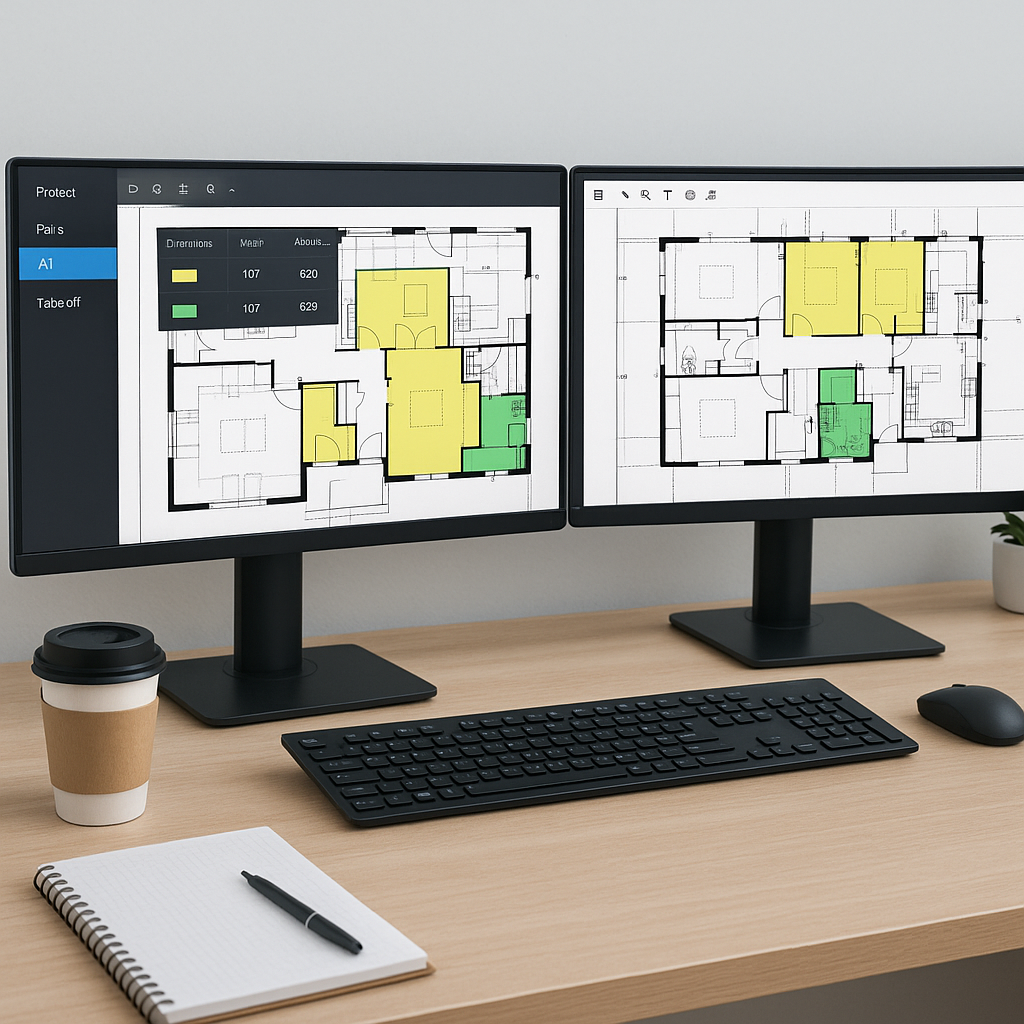
- Automatic Data Extraction: The AI identifies rooms, walls, fixtures, and other elements automatically.
- Flagging for Review: Low-confidence measurements are flagged for manual verification.
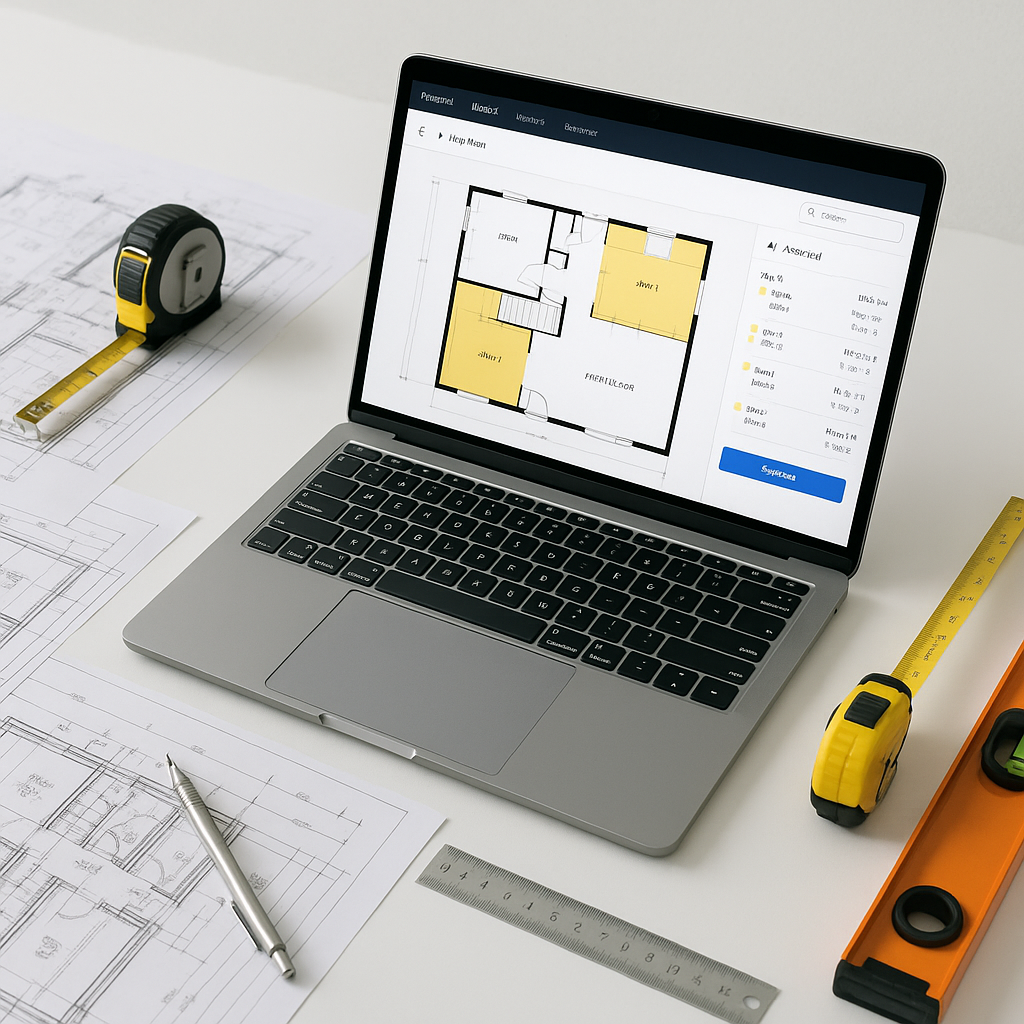
- Revision Tracking: Upload updated drawings, and the system highlights changes instantly.
The Obvious Objection: “AI Can’t Think Like an Estimator”
You’re right—AI isn’t replacing your expertise. It’s amplifying it. AI handles the repetitive tasks, but you’re still the one making judgment calls and verifying critical measurements. Think of it as a tool that enhances your efficiency without replacing your role.
Common Mistakes (and How to Avoid Them)
- Skipping Calibration: If you don’t set the scale correctly, you’ll end up with inaccurate quantities.
- Not Reviewing Flagged Areas: AI isn’t perfect. Always double-check sections flagged for review.
- Ignoring Revision Updates: Changes in drawings can disrupt your estimate if they’re not tracked.
Practical Applications
On large projects, manual takeoffs can be overwhelming. AI-powered tools are particularly useful for projects requiring detailed quantity estimates, such as infrastructure developments or high-rise buildings. By automating the takeoff process, these tools save time and reduce the risk of errors, enabling teams to focus on higher-value tasks.
FAQ
Q: How accurate are AI-powered takeoffs?
A: AI tools are designed to be highly accurate, but human oversight is still essential to ensure precision.
Q: Can AI handle complex projects?
A: Yes. AI tools are scalable and can handle projects of varying sizes and complexities.
Q: What software does it integrate with?
A: Many tools integrate with platforms like Bluebeam, Procore, and Excel for seamless workflows.
Q: Do I need training to use it?
A: Most tools are user-friendly, and users can typically get started with minimal training.
Call to Action
If you're ready to streamline your preconstruction estimation process, explore how AI-powered tools can help. Learn more →