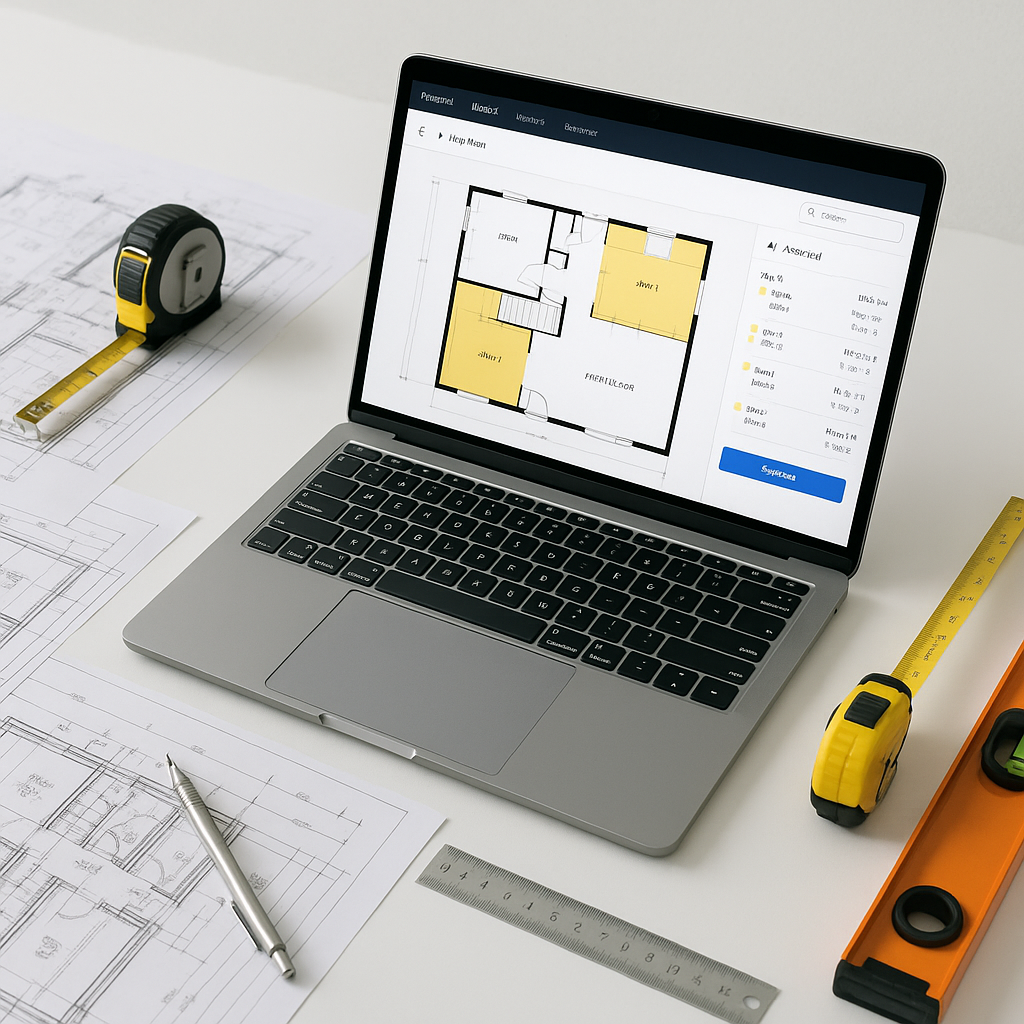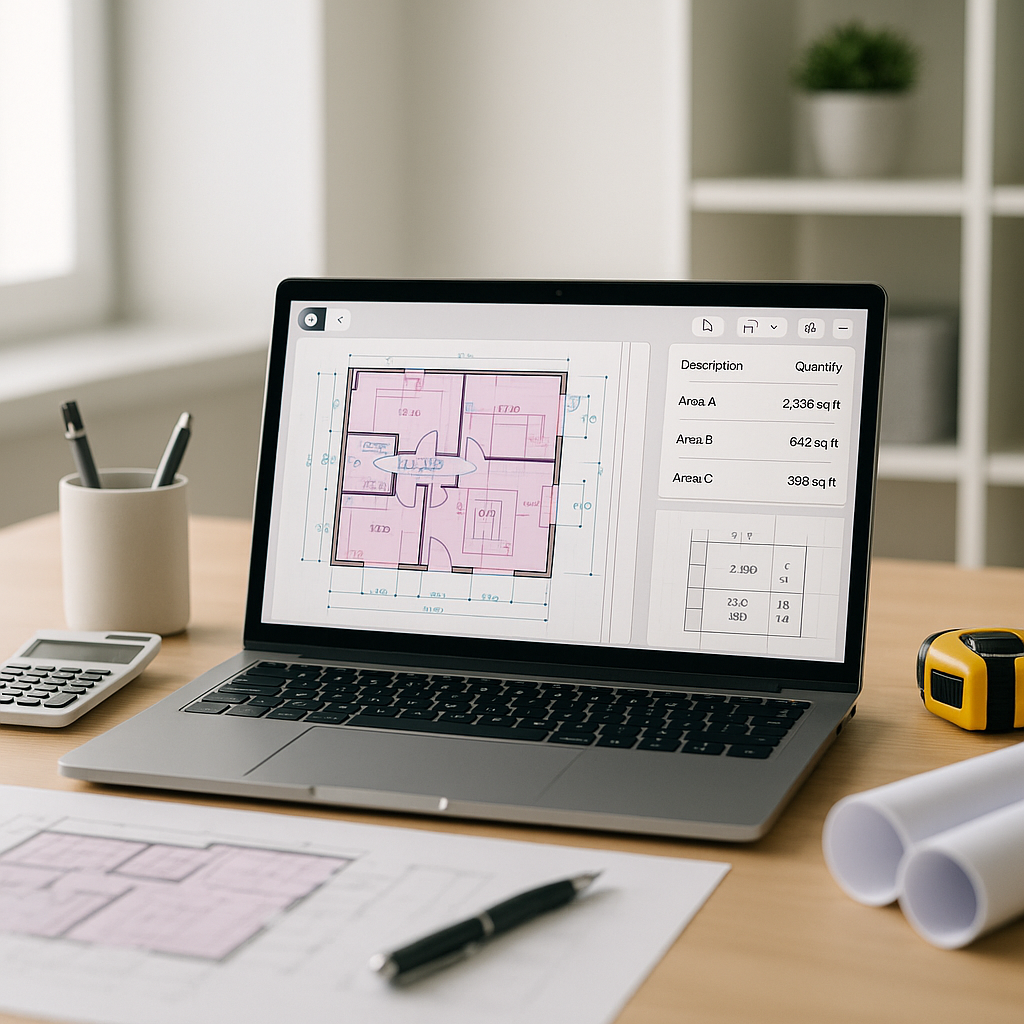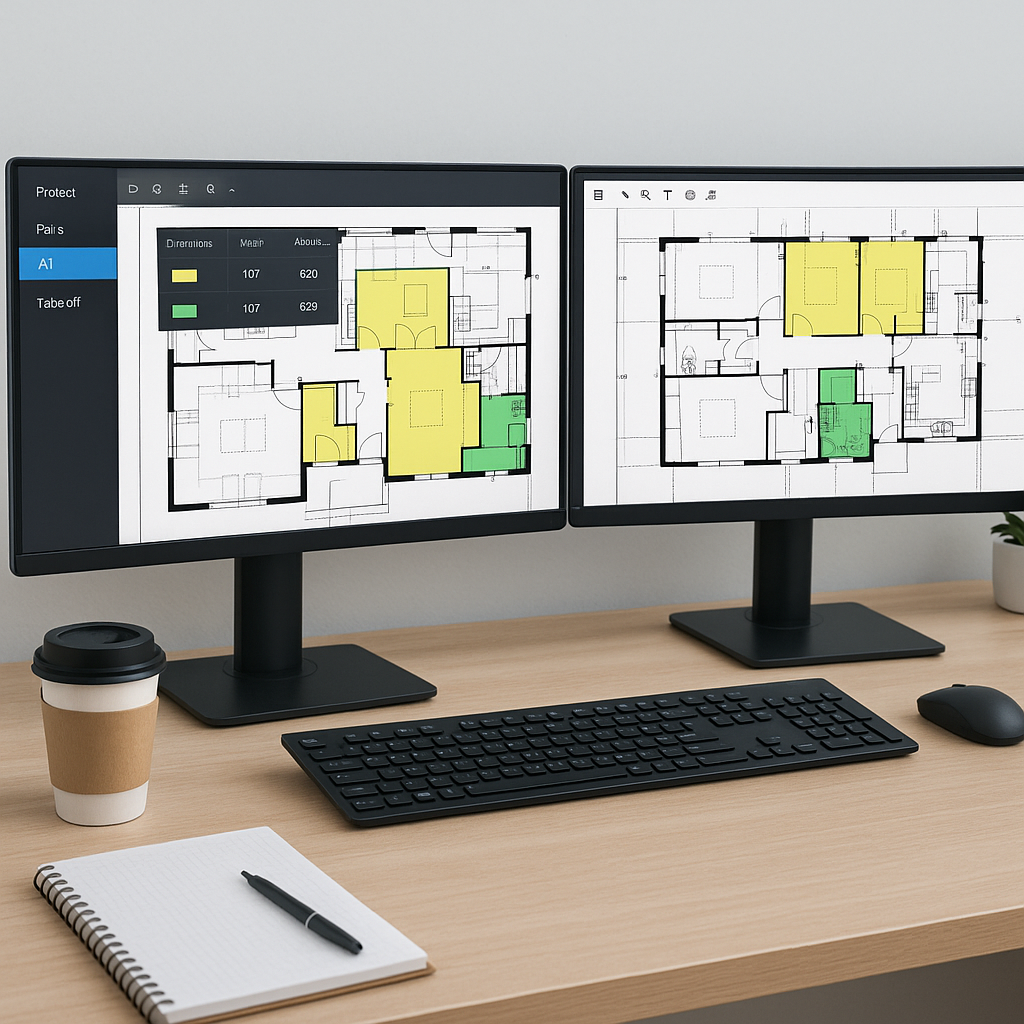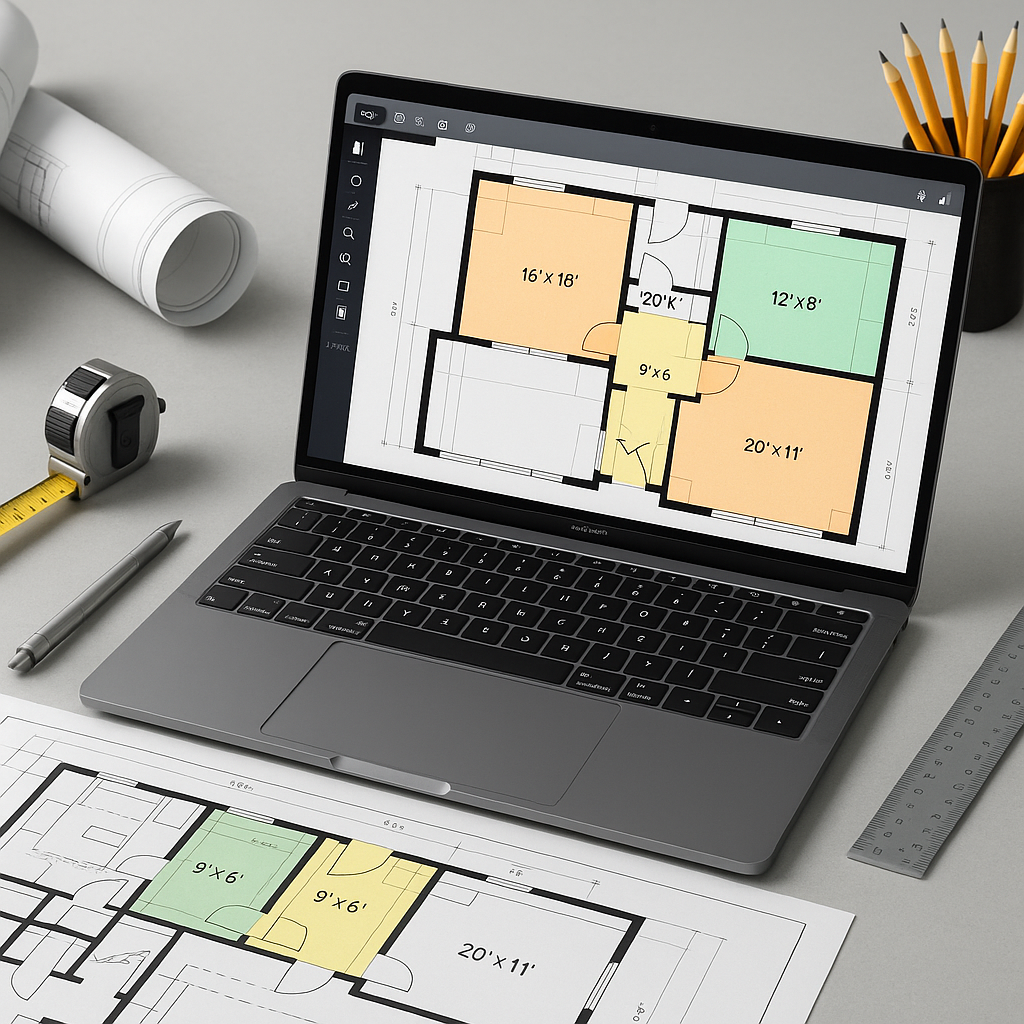
The Frustration: Manual Takeoffs Are a Bottleneck
If you’ve ever spent hours tracing PDFs in Bluebeam or manually measuring drawings, you know the pain. It’s not just tedious—it’s expensive. For contractors, manual takeoffs can consume significant time per estimate, limiting the ability to pursue new bids.
What’s worse? Human error. Missed measurements, misaligned scales, outdated drawings—any of these can throw off your quantities and, by extension, your entire bid. The margin for error isn’t just small; it’s razor-thin.
The AI Solution: Vision AI
AI-powered tools like Vision AI are transforming the preconstruction process. They automate drawing takeoff, extracting quantities in a fraction of the time compared to manual methods. And it’s not just faster—it’s smarter.
Here’s how it works:
- Upload the drawing set: PDFs, DWGs, or even scans of physical plans.
- Automatic calibration: The AI detects scales, units, and measurement standards.
- Quantity extraction: Room areas, wall lengths, beam counts—you name it.
- Confidence scoring: Flags low-certainty measurements for manual review.
Illustrative example — A contractor using AI tools on a large project could significantly reduce the hours spent on takeoffs, freeing up resources for other tasks.
What About Accuracy?
You might be thinking, “AI can’t understand construction nuances.” That’s partially true. AI isn’t perfect, but it doesn’t need to be. It’s a tool to amplify your expertise—not replace it.
Take confidence scoring, for example. If the AI isn’t sure about a measurement (maybe the linework is fuzzy or the drawing is missing a scale), it flags it for manual review. You still get the final say, but now you’re spending minutes, not days, on corrections.
The Obvious ROI
AI-powered tools can save significant time and labor costs by automating repetitive tasks like takeoffs. Faster takeoffs also mean faster quotes, which can lead to more bids submitted and improved project opportunities.
Common Questions
Q: Can AI handle complex projects like infrastructure or high-rises?
A: Yes. AI scales to any project size, whether it’s a small renovation or a large infrastructure project.
Q: What if the drawings are incomplete or poorly scanned?
A: Vision AI includes manual override features and confidence scoring, so you can address edge cases without losing time.
Q: How hard is it to learn?
A: Most AI platforms are designed to be intuitive, with training typically taking a short amount of time.
Watch Out For These Mistakes
- Skipping the review process: AI speeds up takeoffs, but human oversight is still critical. Trust the tool, but verify.
- Using outdated drawings: AI can’t fix bad inputs. Always upload the latest revision sets.
- Ignoring scale calibration: If the drawing scale is off, your quantities will be too. Double-check calibration settings.
The Bottom Line
Manual takeoffs are slow, error-prone, and costly. AI-powered tools like Vision AI are faster, smarter, and more reliable—saving time and improving accuracy.
If you're dealing with preconstruction bottlenecks, EstimateNext can help. Get started free →