Why Manual Rate Lookup Is Inefficient
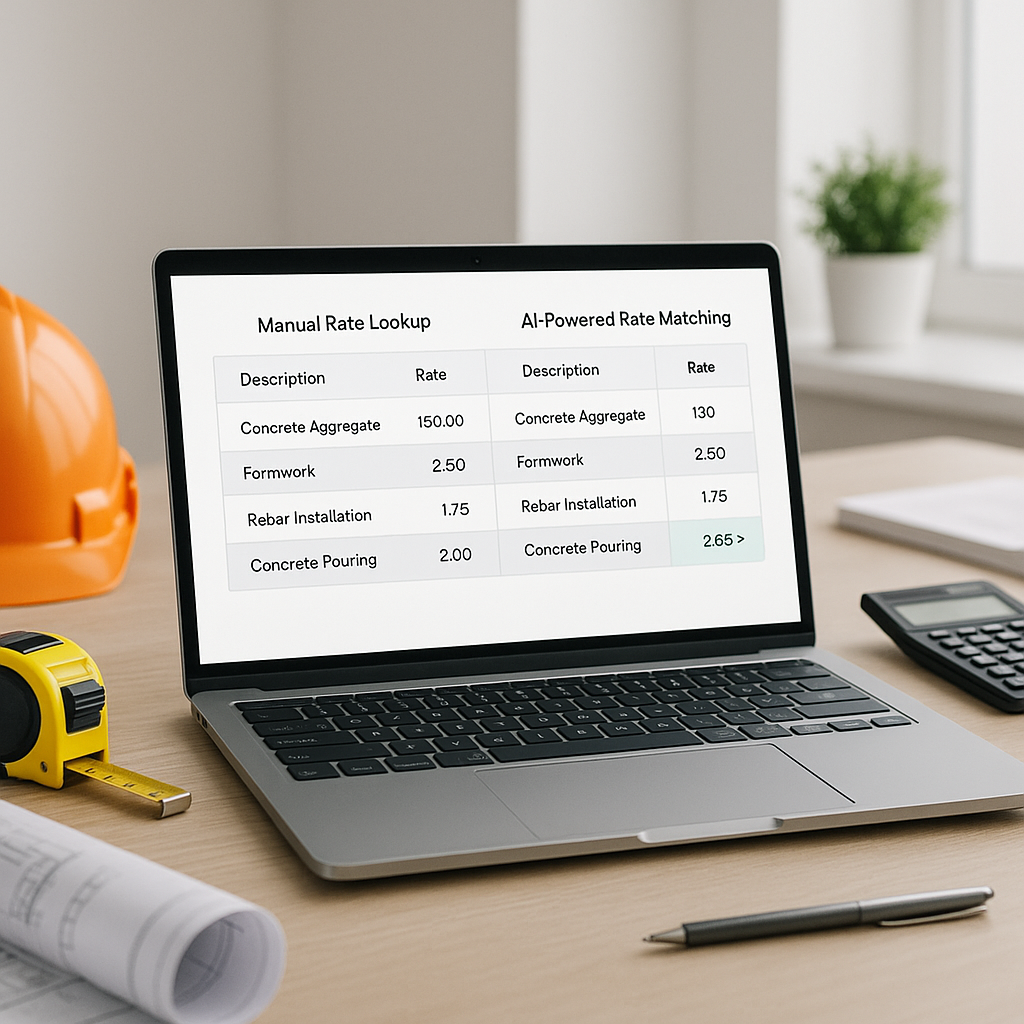
Rate matching is one of the most time-consuming aspects of preconstruction estimation. Flipping through extensive catalogs like RSMeans books or DSR PDFs to find the right labor or material rate for each line item can be a tedious process. This manual approach is not only time-intensive but also prone to errors. Missing a rate or selecting an outdated one can lead to inaccurate estimates, disputes with subcontractors, or questions from clients about cost alignment with local indexes.
The AI Solution: Semantic Rate Matching
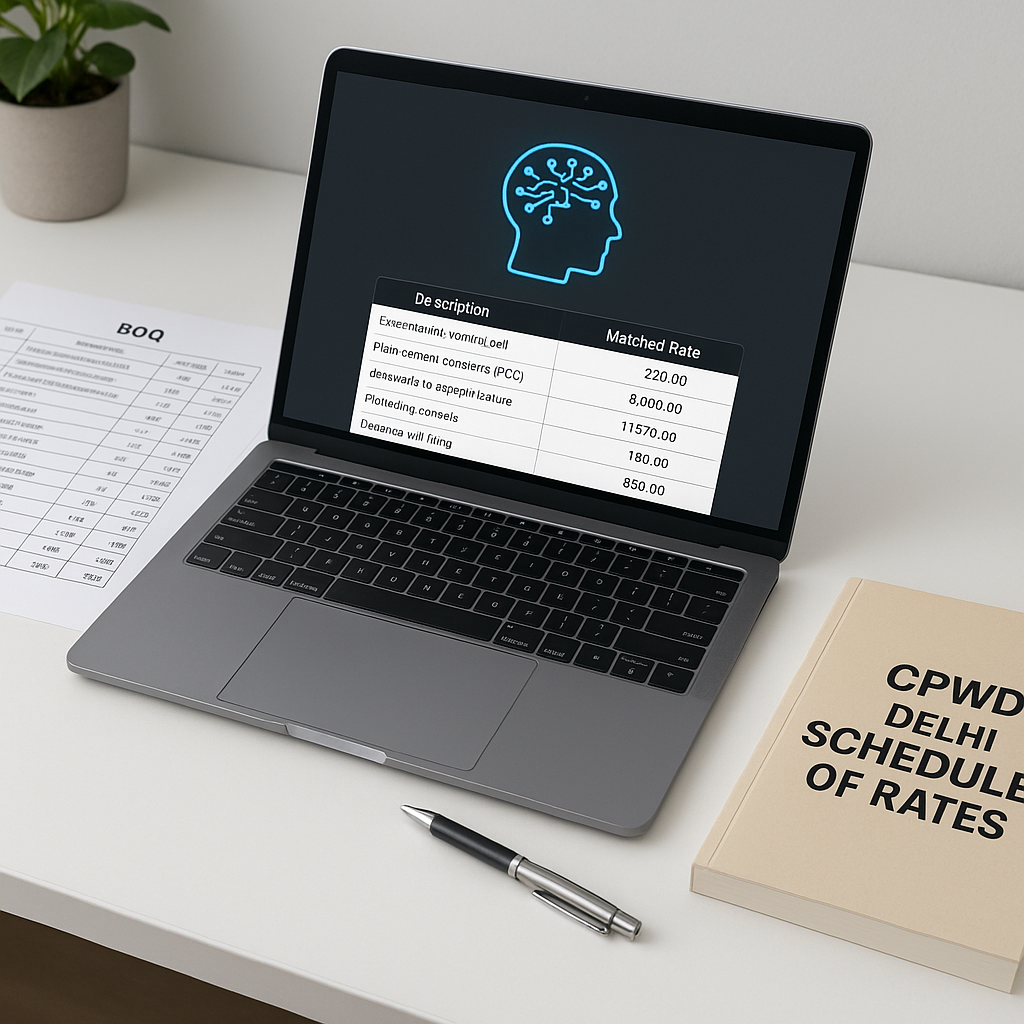
AI-powered rate matching offers a more efficient alternative. These tools use semantic search to scan large catalogs and identify the most relevant rates instantly. For example, if you need a labor rate for a specific material or task, you can type it into the system, and it will provide a match in seconds. This eliminates the need for manual searches and reduces the likelihood of errors.
Semantic search is particularly powerful because it understands context. For instance, if you’re pricing a project in a specific region and need to incorporate custom materials, AI tools can integrate custom catalogs to ensure that the rates reflect actual project costs. Additionally, these systems often improve over time by learning from user feedback and past adjustments.
Benefits of AI-Powered Rate Matching
AI-powered rate matching can save significant time and reduce errors in the estimation process. By automating the repetitive task of rate lookup, estimators can focus on higher-value activities such as refining bid strategies or negotiating with subcontractors. Improved accuracy also minimizes the risk of disputes and enhances the credibility of your estimates.
Common Objections
Some professionals may worry that AI tools could replace their expertise. However, AI is designed to complement human judgment, not replace it. Estimators still make critical decisions, such as applying markups and ensuring compliance. The AI simply handles the repetitive tasks, allowing estimators to work more efficiently.
Reliability is another concern. Most AI tools allow for manual overrides and provide audit trails, so users can review and adjust recommendations as needed. This ensures that the final estimates are both accurate and aligned with the estimator’s professional judgment.
Practical Steps to Start Using AI Rate Matching
- Upload Your BOQ: Begin by uploading your bill of quantities (BOQ) into the platform. Most tools support formats like Excel or CSV.
- Customize Catalogs: Add any custom rates or materials that are not covered by standard sources.
- Run Semantic Search: Use the AI to match rates for each line item. Review the results and make adjustments as necessary.
- Export Results: Once finalized, export the estimate into your preferred format, such as Excel, Procore, or PDF.
FAQ
Q: How accurate are AI-generated rates?
AI tools are designed to provide highly accurate results, but human oversight is essential for ensuring precision in edge cases.
Q: Can I use AI rate matching for small projects?
Yes, AI-powered rate matching is scalable and can be used for projects of varying sizes.
Q: What if I have custom rates?
You can upload custom catalogs into the platform, and the AI will integrate them seamlessly for future use.
Q: Is AI hard to learn?
Most tools are user-friendly and require minimal training to get started.
What to Watch For
- Input Quality: Ensure that your BOQ is clean and complete before uploading it into the system.
- Regional Variations: Rates can vary by location, so make sure your catalog reflects local indexes.
- Human Oversight: Always review AI recommendations, especially for high-stakes bids.
Conclusion
Manual rate lookup is an outdated and inefficient process. AI-powered rate matching tools simplify this task, saving time and reducing errors. By adopting these tools, estimators can focus on more strategic aspects of their work while ensuring accurate and reliable estimates.