Why Rate Matching is Every Estimator's Challenge
If you've ever flipped through a large rate book like RSMeans or CPWD DSR, you know the difficulty. Searching for the right labor or material rate can feel overwhelming. Even when you find it, you still need to cross-check for inflation adjustments, location factors, and project-specific conditions. A single mistake can significantly impact your bid or profit margin.
Rate matching isn’t just tedious—it’s risky. Manual lookups are prone to human error, and under tight deadlines, it’s easy to miss critical details. Oversights, such as using outdated rates or missing key adjustments, can ripple across the entire estimate, inflating costs or eroding profits.
How AI-Powered Rate Matching Works
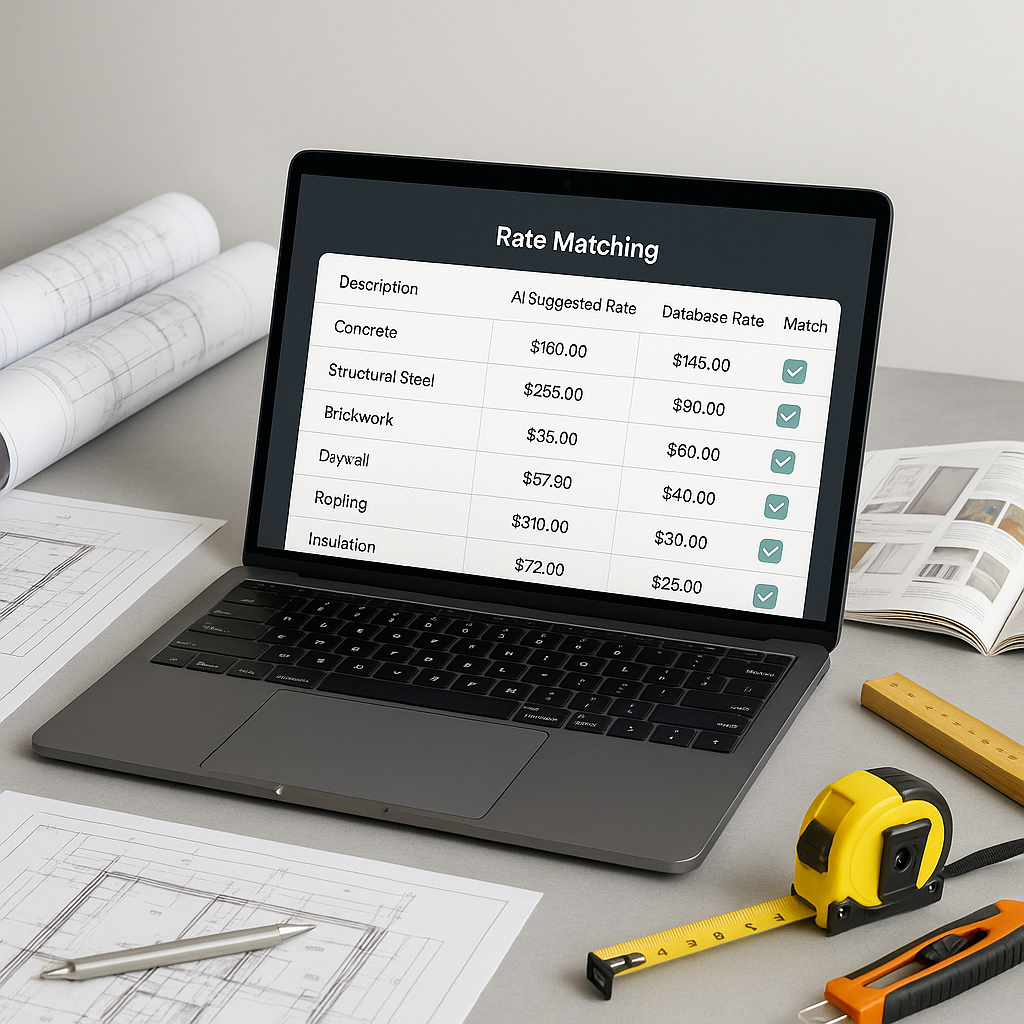
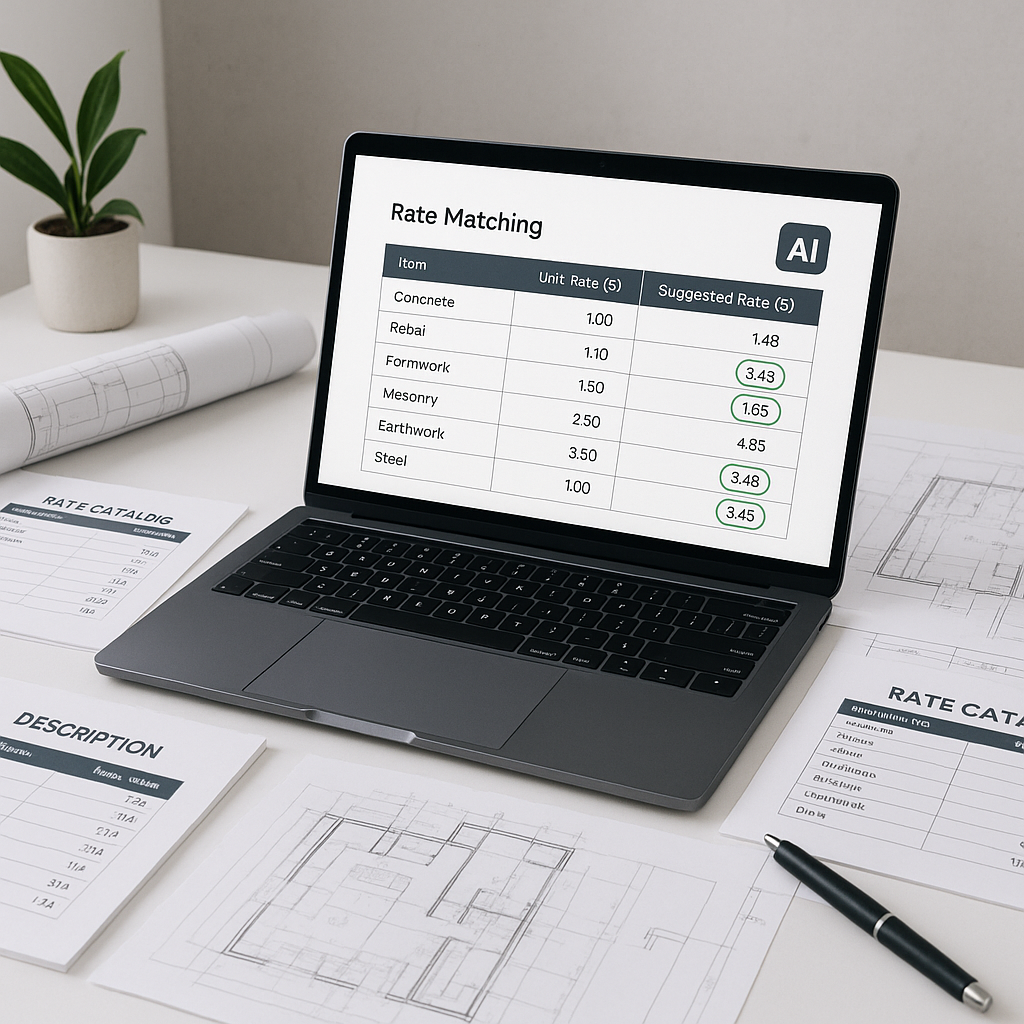
AI-powered tools use advanced techniques like semantic search to match Bill of Quantities (BOQ) items with rates from extensive, preloaded catalogs. Think of it as a smarter search engine for construction rates. You upload a description or BOQ, and the AI identifies the closest matches, adjusting for:
- Location-specific costs: Factoring in local labor rates, material costs, and regional multipliers.
- Inflation adjustments: Automatically updating rates from catalogs like CPWD DSR or RSMeans to reflect current values.
- Custom rates: Allowing you to upload unique materials or non-standard finishes, which the AI learns to match for future projects.
Illustrative example — Suppose you’re pricing a mid-rise office building. You upload your BOQ, and the AI identifies that a line item for "painting walls" corresponds to a rate in your catalog. If no direct match exists, the AI suggests the closest alternative and allows you to override if needed. This process reduces manual effort and enhances accuracy.
Benefits of AI-Powered Rate Matching
AI-powered rate matching offers several advantages:
- Time savings: Automating repetitive tasks like rate lookups allows estimators to focus on strategic activities.
- Improved accuracy: AI reduces the likelihood of errors by providing clear audit trails for every rate.
- Customizability: The ability to integrate custom catalogs ensures the tool adapts to your specific needs.
Common Objections (and Their Context)
Some common concerns about AI-powered tools include:
- “AI doesn’t understand construction.” While AI doesn’t replace your expertise, it handles repetitive tasks, freeing you to focus on strategic decisions.
- “What if the AI makes a bad match?” No system is perfect, but tools often include features like manual overrides, ensuring you remain in control.
What to Watch Out For
When using AI-powered tools, keep these considerations in mind:
- Input quality: Poorly formatted BOQs or vague descriptions can lead to less accurate matches.
- Over-reliance: Use AI suggestions as a starting point and refine them with your expertise.
- Learning curve: Invest time in training your team to maximize the tool’s potential.
FAQ
Q: Can AI handle custom rate catalogs?
Yes. Most AI tools allow you to upload your own catalogs and integrate them into the system. Over time, the AI learns your preferences and improves its matching accuracy.
Q: How does AI account for inflation?
AI tools often include inflation adjustment features, applying location- and year-specific multipliers to catalog rates.
Q: Does this replace estimators?
No. AI handles repetitive tasks like rate lookup, freeing up estimators to focus on high-value activities like strategy, negotiation, and risk analysis.
Conclusion
Rate matching is a critical but time-consuming part of preconstruction estimation. AI-powered tools simplify this process, saving time, reducing errors, and improving confidence in your numbers. By automating repetitive tasks, these tools allow estimators to focus on strategic decisions that drive project success.