Streamlining Manual Takeoffs with AI
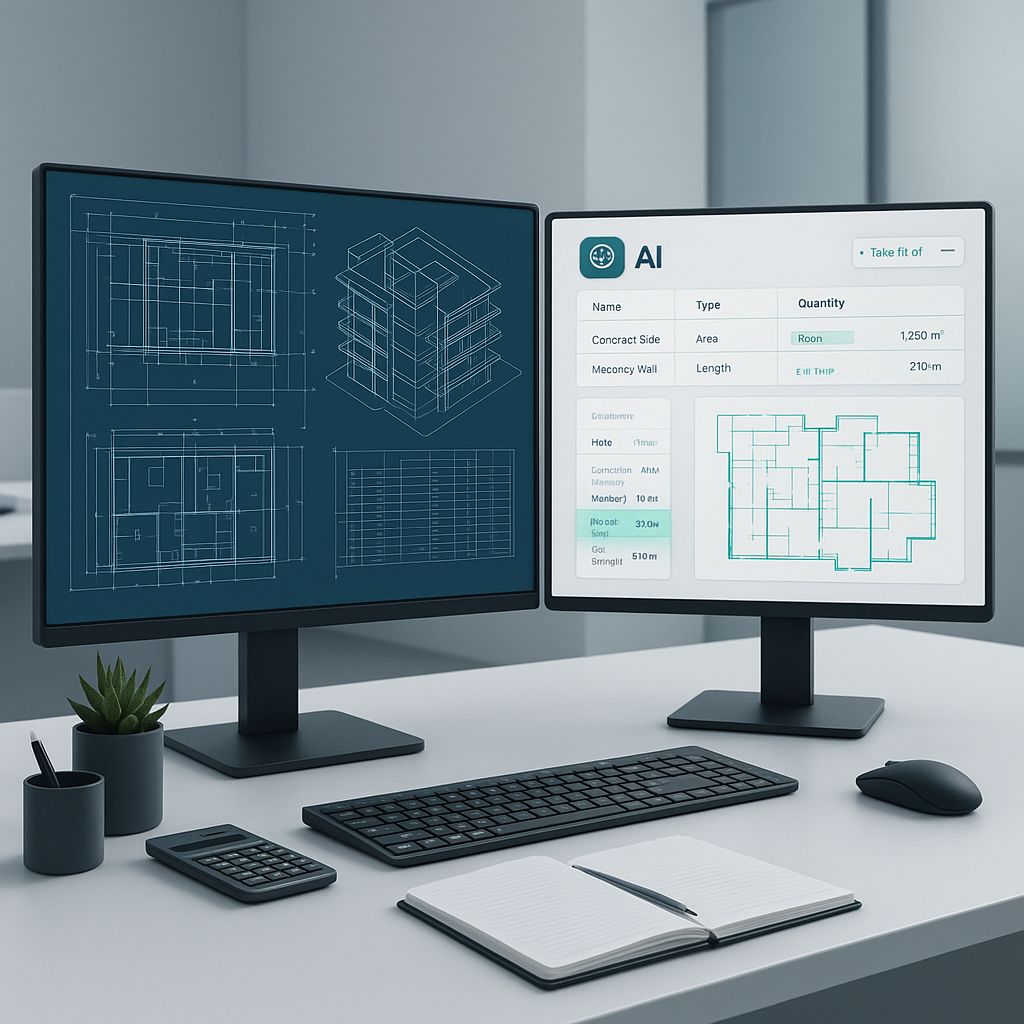
Every estimator knows the challenge: PDFs and drawings spread across two monitors, software like Bluebeam open on one, and Excel on the other. You trace walls, count fixtures, and measure areas manually. This process can be time-consuming and tedious, often delaying other critical tasks.
Manual takeoffs require significant time and effort, especially for mid-sized contractors handling multiple bids each month. This is where AI-powered tools can make a significant difference by automating repetitive tasks and allowing teams to focus on higher-value activities.
How AI-Powered Takeoff Tools Work
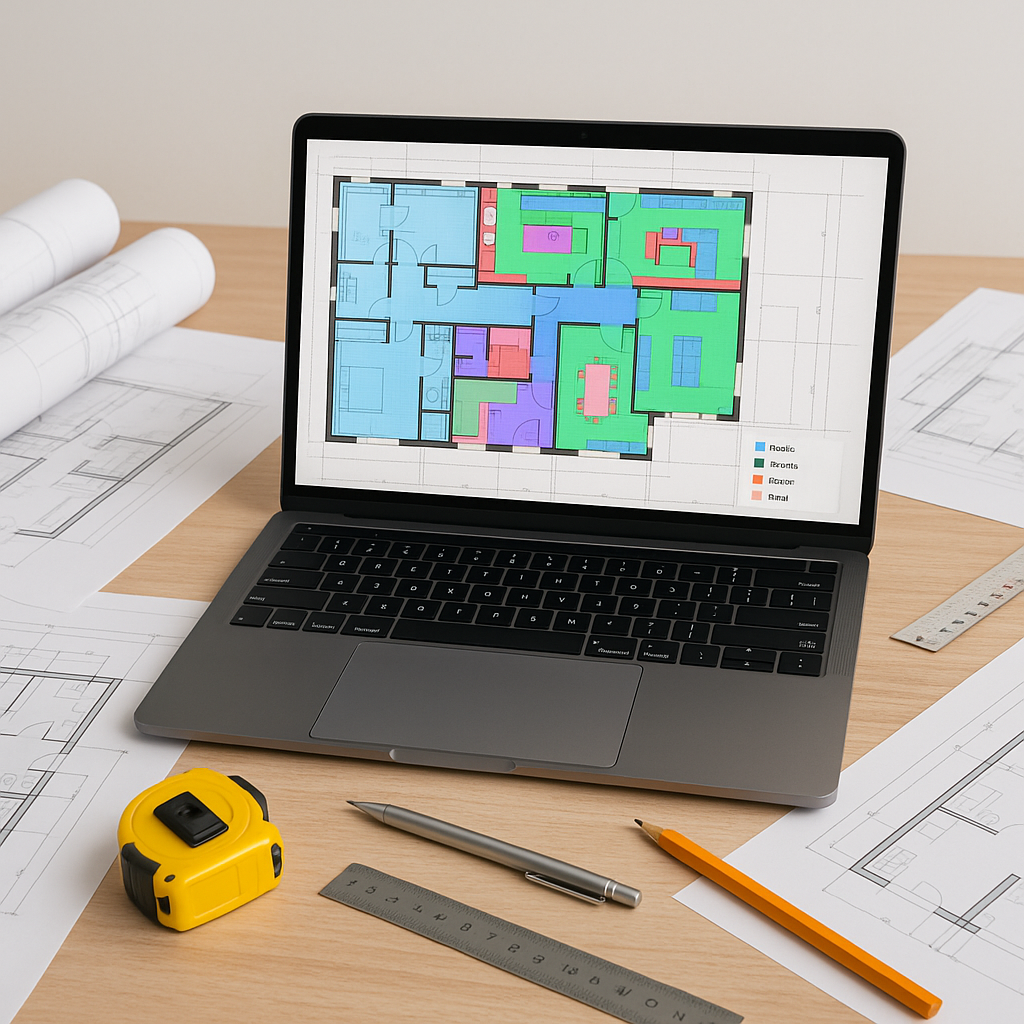
AI-powered takeoff tools automate the process of extracting quantities from construction drawings. Instead of manually tracing every line, you upload the drawing set, and the software identifies and extracts quantities automatically. For example, it can calculate the square footage of a retail space or the perimeter of a parking lot in a fraction of the time it would take manually.
These tools use machine learning models trained on a wide variety of construction plans. They can identify walls, doors, windows, and other elements with high accuracy. The result is a complete quantity takeoff (QTO) that reduces manual effort while maintaining precision.
Key Benefits of AI Takeoffs
- Speed: Automate repetitive tasks, significantly reducing the time required for takeoffs.
- Accuracy: Minimize human errors in measurements and counts.
- Scalability: Handle more bids without increasing staff.
- Cost Efficiency: Free up senior estimators to focus on strategic tasks like refining bids and negotiating terms.
What’s the Role of Human Expertise?
AI tools are designed to complement, not replace, human expertise. While the software handles the repetitive aspects of takeoffs, estimators still play a crucial role in reviewing outputs, making adjustments, and ensuring the quantities align with the project scope. Think of AI as a tool that enhances productivity and accuracy, allowing you to focus on strategic decision-making.
Common Questions About AI-Powered Takeoffs
Q: How accurate are AI takeoffs compared to manual ones?
AI tools are designed to be highly accurate, but human oversight remains essential to ensure the final QTO aligns with project requirements.
Q: What if my project involves custom or unusual elements?
Most AI tools allow manual overrides. If the software misses a custom feature, you can remeasure it and add it to the QTO.
Q: Can AI handle complex projects like hospitals or airports?
Yes. AI tools are particularly useful for large-scale, multi-layered projects, as they can break down areas by function and scope efficiently.
Best Practices for Using AI in Takeoffs
- Review Outputs: Always verify the software’s results for accuracy.
- Ensure Clear Input Data: High-quality, legible drawings are essential for accurate takeoffs.
- Leverage Training: While many tools are intuitive, a brief training session can help unlock their full potential.
Conclusion
AI-powered takeoff tools offer a smarter, faster way to handle preconstruction estimation. By automating repetitive tasks, they free up your team to focus on strategic priorities like winning more bids and delivering projects profitably. If you’re still relying on manual takeoffs, it may be time to explore how AI can transform your workflow.