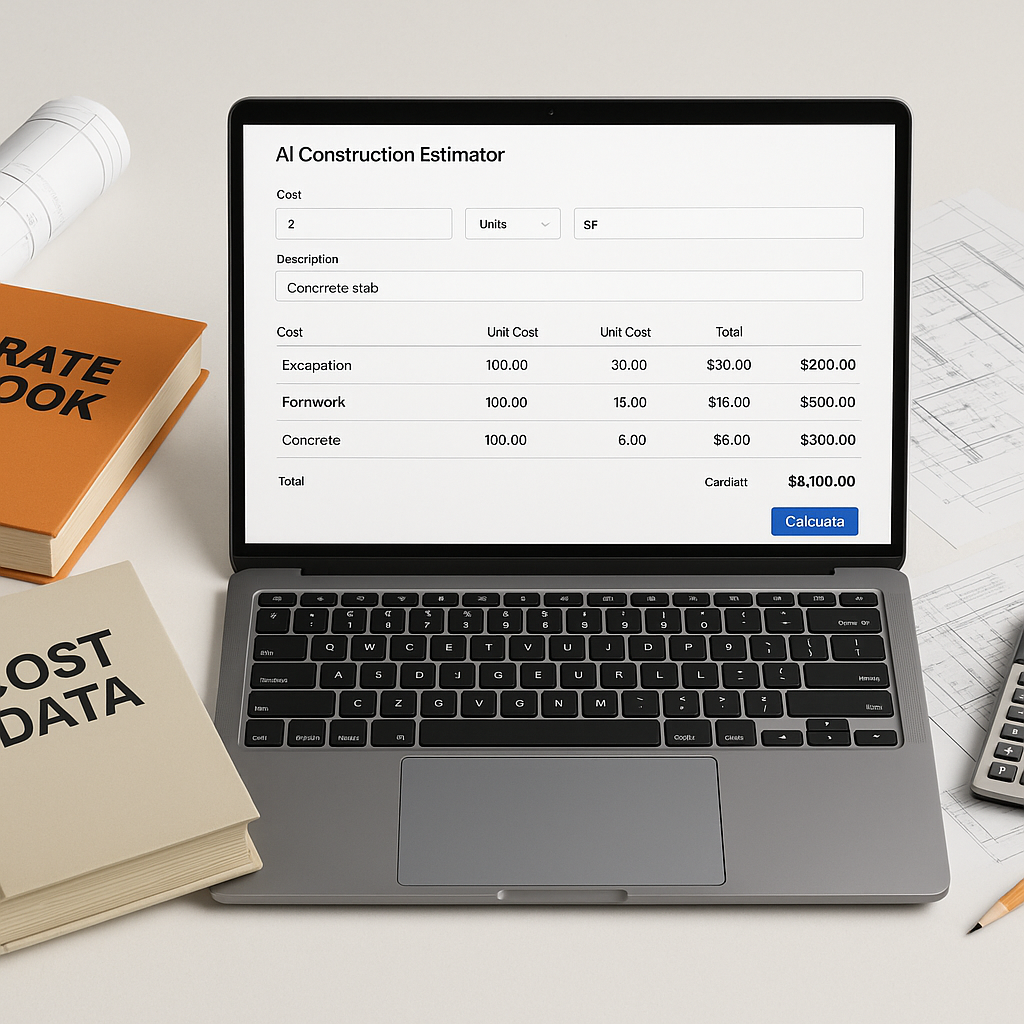
The Problem: Manual Rate Lookups Are a Pain
Rate lookups are one of the most tedious parts of preconstruction estimation. You’re flipping through hundreds (sometimes thousands) of pages in rate books like RSMeans or CPWD DSR, hoping the number you pick isn’t outdated or incorrect. This process is time-consuming and prone to human error—misreading a line item, missing inflation adjustments, or pulling the wrong rate altogether.
When rates are off, your estimate is off. That means tighter profit margins, missed bids, or even difficult conversations with clients about unexpected cost increases mid-project.
The AI Solution: Smarter Rate Matching
AI-powered tools can significantly improve rate matching by automating the process. Instead of manually searching through PDFs or Excel spreadsheets, semantic search allows you to find the right rate quickly. For example, typing “labor rate for installing pre-stressed concrete girders” into an AI tool can pull the match instantly—accurate, inflation-adjusted, and sourced directly from your preferred catalog.
These tools often integrate data from multiple catalogs, such as CPWD DSR, RSMeans, and DOT-approved rates. They also learn from past projects, user feedback, and edge cases involving custom materials or finishes, improving accuracy over time.
Illustrative example — How AI Saves Time
Imagine a scenario where a team of estimators needs to price multiple items for a large infrastructure project. Manually, this could take dozens of hours across multiple team members. With AI, the same task could be completed in a fraction of the time, with fewer errors. This demonstrates how automation can streamline workflows and improve efficiency.
What About Custom Rates?
For those using project-specific rates, AI tools often allow you to upload custom rate catalogs or define unique rates for specific items. Once added, these custom rates are integrated seamlessly into future estimates, eliminating the need to start from scratch each time.
Common Mistakes in Rate Matching
Even with AI, there are pitfalls to watch for:
- Bad Input Data: If your rate catalogs are outdated or inaccurate, the AI cannot provide reliable results.
- Overreliance on Automation: AI makes suggestions but doesn’t replace human judgment. Always double-check results, especially for high-cost items.
- Skipping Feedback Loops: AI systems improve with user feedback. If you don’t provide corrections, the system’s accuracy may plateau.
The Bottom Line
Manual rate matching is slow, error-prone, and frustrating. AI-powered tools can automate this process, saving time and improving accuracy. If you’re looking to streamline your preconstruction estimation process, exploring AI solutions might be a worthwhile investment.


