Why Rate Lookup Is a Preconstruction Bottleneck
If you've ever flipped through a massive construction rate book to price a single line item, you know the pain. Rate lookup is tedious, error-prone, and slow. For most estimators, it’s not just flipping pages—it’s cross-referencing regional labor rates, accounting for inflation, and ensuring compliance with local standards. This process consumes significant time and increases the margin for error with every manual entry.
How AI Fixes This Problem
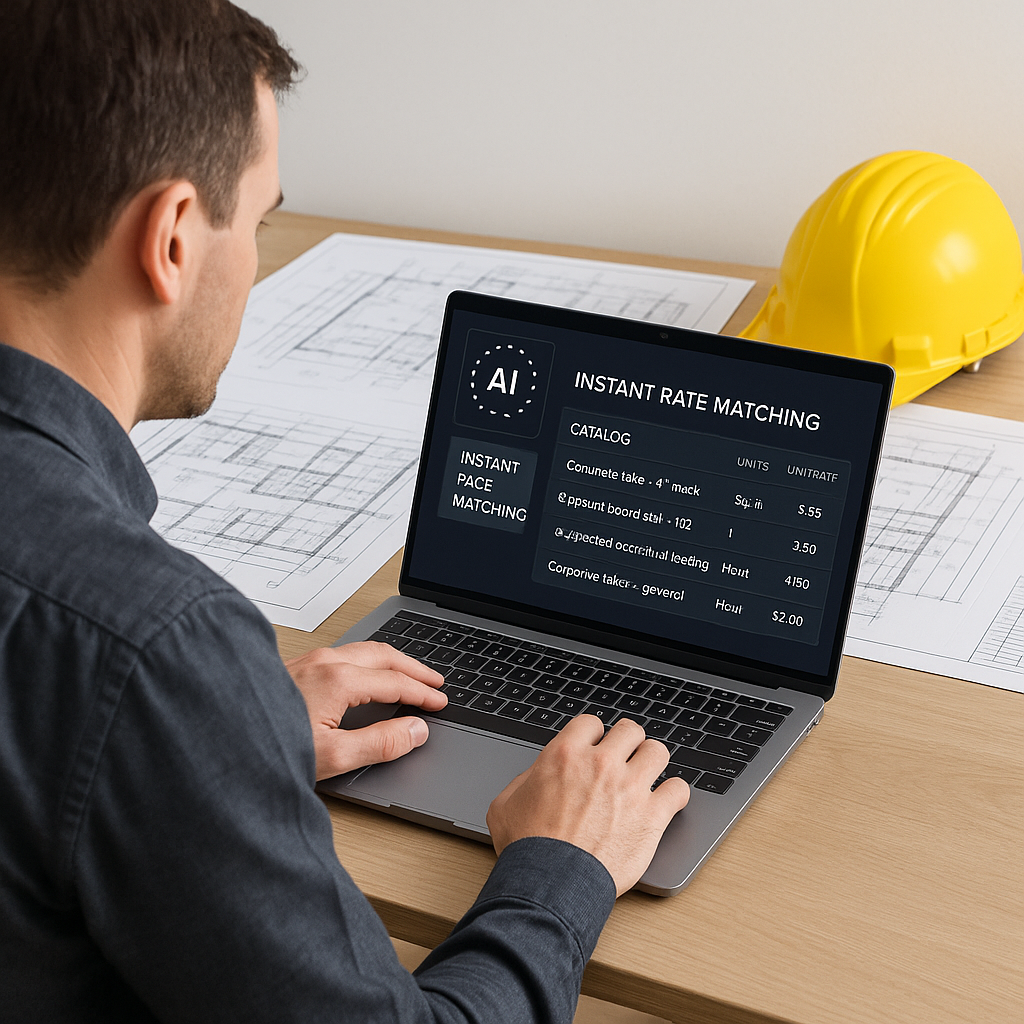
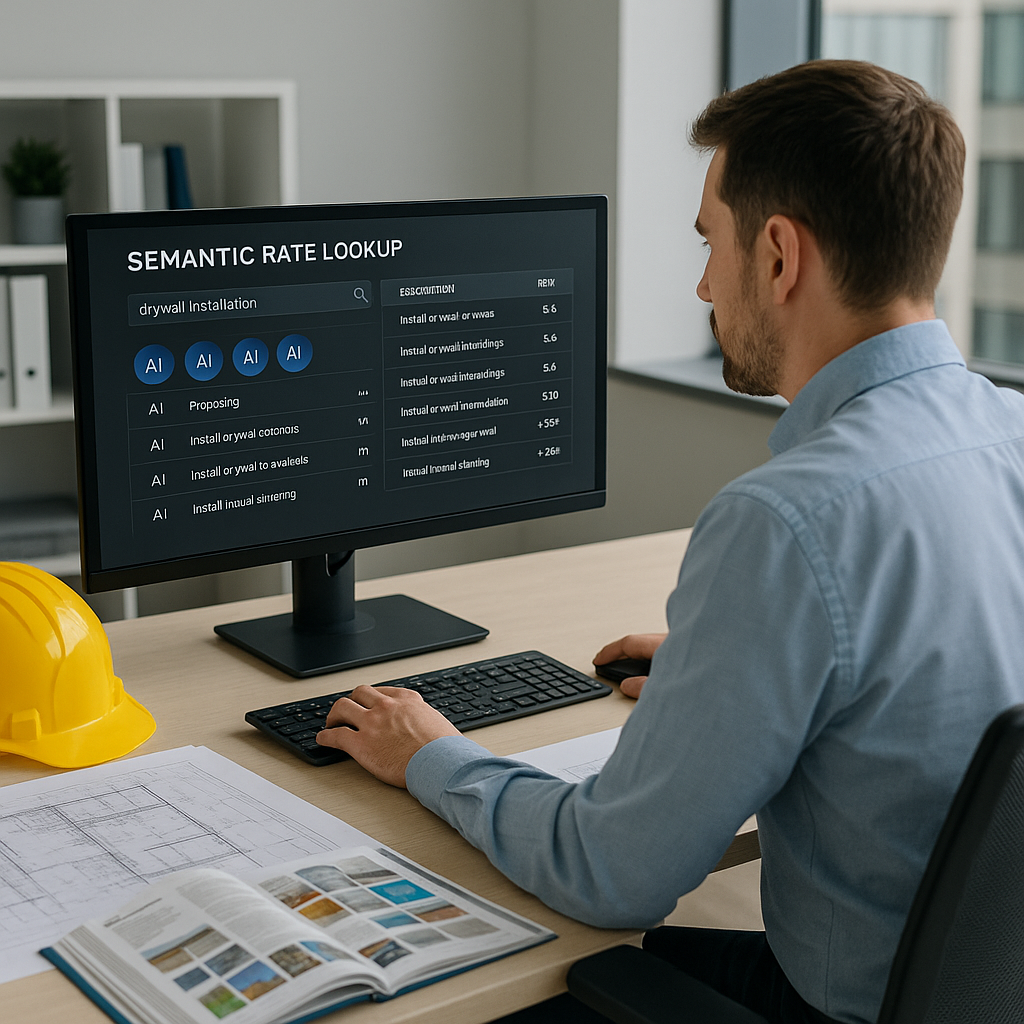
AI-powered tools tackle this bottleneck head-on. Instead of manually searching for rates in large PDFs or outdated spreadsheets, AI uses semantic search. What does that mean? You type in what you need—say, “labor rate for installing pre-stressed concrete girders”—and the AI scans through thousands of SOR (Schedule of Rates) items across catalogs, returning a match in seconds.
Illustrative example — Imagine you’re pricing a rail bridge project requiring approved rates for rail ties, structural steel, and concrete girders. What would normally take hours flipping through rate books can be completed in minutes with AI. Semantic search ensures you get relevant results quickly and efficiently.
The ROI of AI Rate Matching
AI tools can significantly reduce the time spent on rate lookup and improve accuracy. By automating repetitive tasks, teams can focus on higher-value activities like refining estimates and strategizing bids. Additionally, AI systems often improve with use, becoming more efficient and reliable over time.
Common Skepticism: “Can AI Think Like an Estimator?”
A common objection is that AI can’t understand the nuances of construction. And it’s true—AI isn’t replacing your expertise. It’s amplifying it. Estimators are still the ones making judgment calls, negotiating with subcontractors, and deciding on markup. AI handles the repetitive tasks: rate matching, takeoffs, and what-if recalculations. Think of it as a tool, not a replacement.
AI can also help junior staff grow faster. Pairing a junior estimator with an AI platform allows senior staff to focus on high-value tasks while ensuring the junior team member learns the ropes on smaller projects.
What to Watch Out For
No system is perfect, and AI is no exception. Here’s what to keep in mind:
- Input Quality Matters: AI tools rely on the data you feed them. If your rates are outdated or incomplete, the AI can’t provide accurate results.
- Manual Review: Some AI tools include features like confidence scoring for matches, allowing you to identify which rates may require manual review.
- Training Time: While many AI tools are designed to be intuitive, there’s often a learning curve. Teams should plan for a short ramp-up period to get fully comfortable with the system.
FAQ: AI Rate Matching in Construction
Q: How accurate are AI-powered rate matches?
AI tools are designed to be highly accurate, but the quality of results depends on the input data. Features like manual overrides and review options ensure you can adjust as needed.
Q: Does AI work for custom rates?
Yes. Many AI tools allow you to upload your own rate catalogs or define project-specific rates, which can then be integrated for future use.
Q: How does AI improve collaboration?
AI tools often integrate with existing platforms like Procore or Bluebeam, enabling seamless export of estimates and keeping teams aligned without disrupting workflows.
Q: Is AI suitable for small projects?
Yes. AI scales to any project size, making it useful for everything from small residential renovations to large infrastructure bids.
Q: How fast is AI rate lookup?
AI can process rate lookups in seconds per BOQ (Bill of Quantities) item, significantly reducing the time compared to manual methods.
Conclusion
If manual rate lookup is slowing your team down, AI-powered tools can help streamline the process, save time, and improve accuracy. By automating repetitive tasks, these tools allow estimators to focus on strategic decision-making and delivering competitive bids.