I Thought AI Was Overhyped for Preconstruction
If you’d asked me a year ago, I would’ve said AI in construction estimation was a flashy gimmick. Sure, it could crunch numbers quickly, but preconstruction isn’t just about speed. It’s about accuracy, judgment, and knowing when something doesn’t add up. Estimators need context—specific project details, local rates, and trade knowledge. I figured AI couldn’t replicate that.
The Thing That Changed My Mind
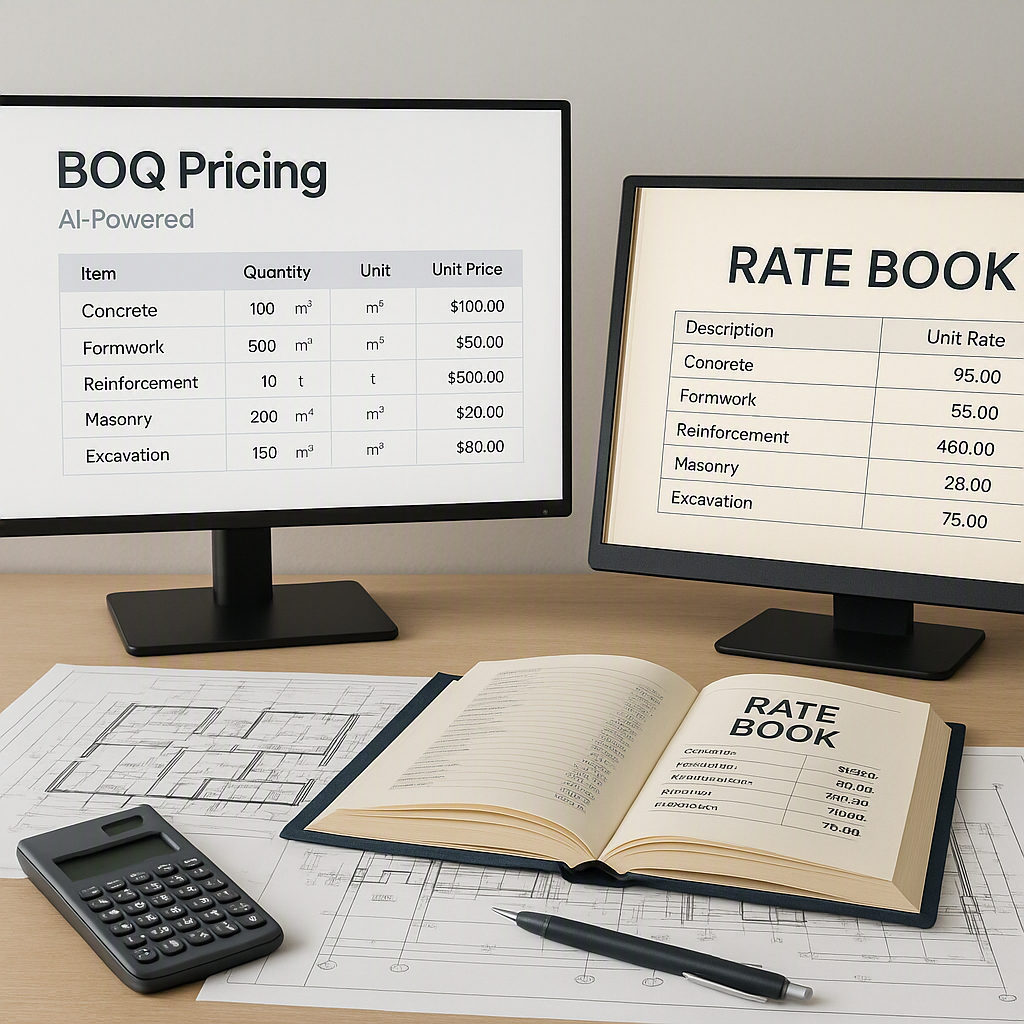
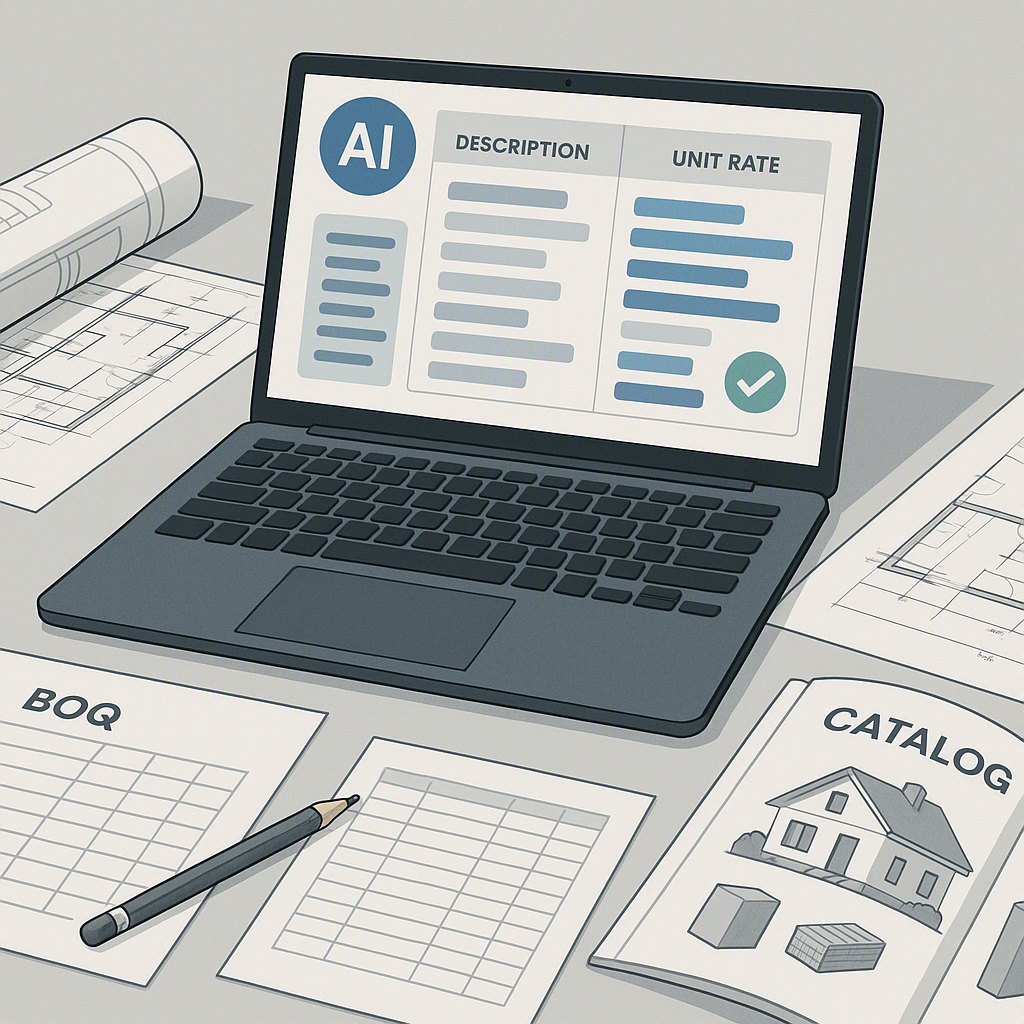
What caught my attention about AI tools like EstimateNext was their ability to process large datasets, such as a Bill of Quantities (BOQ), and match rates efficiently. These tools can flag ambiguous entries for manual review and allow users to upload custom catalogs for future use. Over time, they adapt and improve based on user inputs.
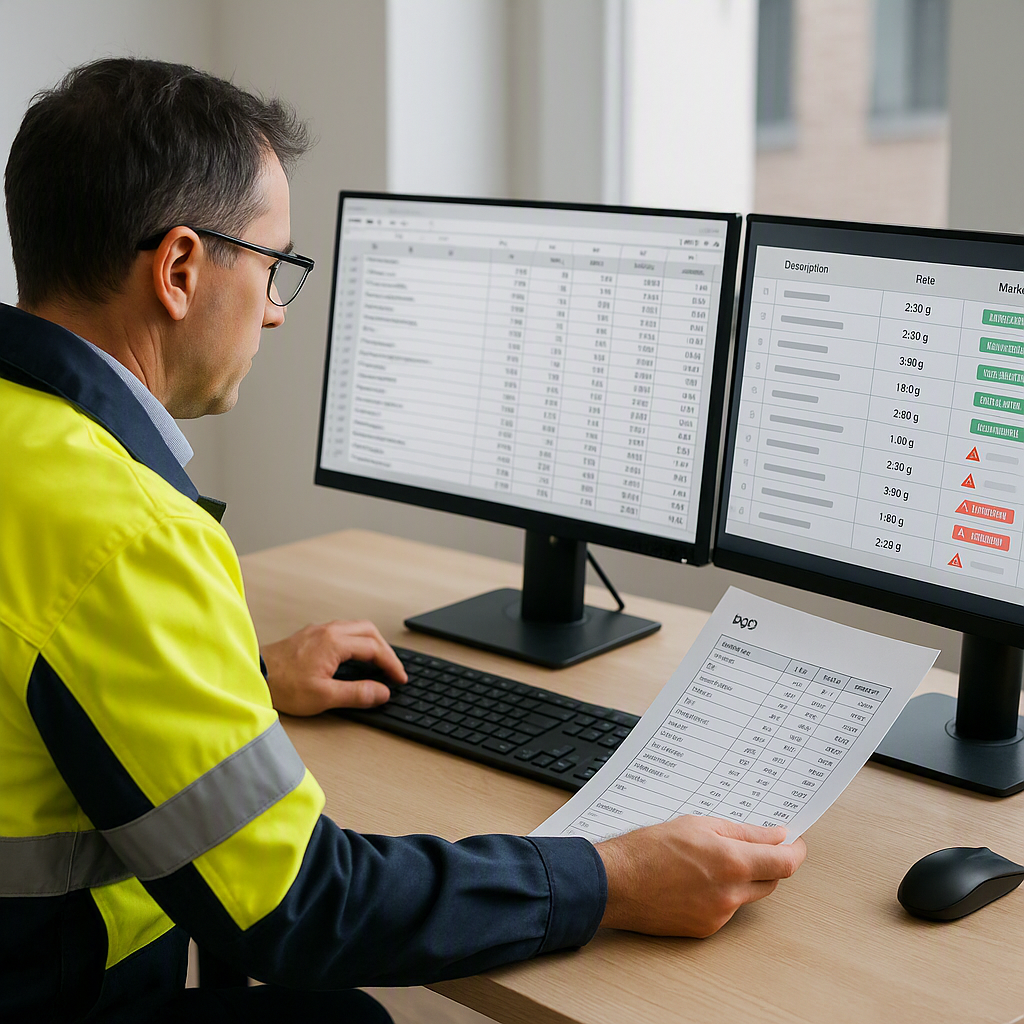
Illustrative example — Consider a scenario where a contractor uploads a BOQ for a government tender. The AI matches the majority of the lines using a predefined rate database. For the remaining lines, it flags ambiguities, such as vague material descriptions, and suggests options for review. This process can save significant time compared to manual rate lookup.
Why I Held Onto My Old Belief
To be fair, my skepticism wasn’t unfounded. AI tools in construction often promise the moon but deliver clunky interfaces or generic results. I’ve seen platforms misinterpret drawings, apply incorrect rates, or fail to account for local regulations. And most estimators I know are hands-on. They trust their spreadsheets more than algorithms.
What kept my belief alive was the human element. We know the quirks of our projects—how a specific material performs in local weather or why one subcontractor’s bid should be flagged despite the low price. I didn’t think AI could handle that nuance.
What I Do Differently Now
Here’s the shift that AI tools have enabled: I don’t use AI to replace judgment. I use it to remove the grunt work. Rate matching? Done in seconds, with an audit trail. Takeoffs? Vision AI extracts quantities from drawings quickly. What-if scenarios? Adjust one rate, and the entire estimate recalculates instantly.
Illustrative example — If steel prices suddenly increase, instead of manually updating Excel formulas, the AI propagates changes across the BOQ and recalculates the total cost. This allows estimators to focus on higher-value tasks, like negotiating supplier contracts or refining the bid strategy.
The Balance Between AI and Human Oversight
AI tools are excellent for routine tasks, but when it comes to edge cases—like unusual materials or niche construction methods—you still need human oversight. The challenge is knowing where to draw the line. AI should be seen as a complement to human expertise, not a replacement.
FAQ
Q: How accurate are AI-generated estimates?
AI tools aim to provide high accuracy but allow manual overrides for flagged items. Transparency is key—the audit trail lets you track every adjustment.
Q: Can AI handle custom rates or project-specific details?
Yes. You can upload custom catalogs or define rates for specific items. The system learns from your inputs over time.
Q: What’s the learning curve for using AI tools?
Minimal. Most users report being able to use the tool effectively within a short period. The tool improves with every project.
Q: What happens if rates change mid-project?
AI tools can propagate changes instantly across the entire estimate, saving time and reducing errors.
Q: Are AI tools accessible for smaller contractors?
Many AI tools are designed to be cost-effective and scalable, making them accessible to contractors of various sizes.
Final Thoughts
Integrating AI tools into preconstruction workflows can streamline processes, reduce manual effort, and improve accuracy. While AI is not a one-size-fits-all solution, it can be a valuable asset when used strategically. If you’re considering adopting AI in your workflow, start by identifying repetitive tasks that consume the most time and explore tools that align with your specific needs.