Estimating Costs for Complex Projects: Moving Beyond Traditional Methods
If you’ve ever estimated costs for a Michels Corporation project—or any large-scale energy or infrastructure project—you know how complex it can be. The intricacies of pipelines, powerlines, and horizontal directional drilling make guessing an unreliable strategy. Yet, many teams still rely on outdated methods that struggle to keep up with modern demands.
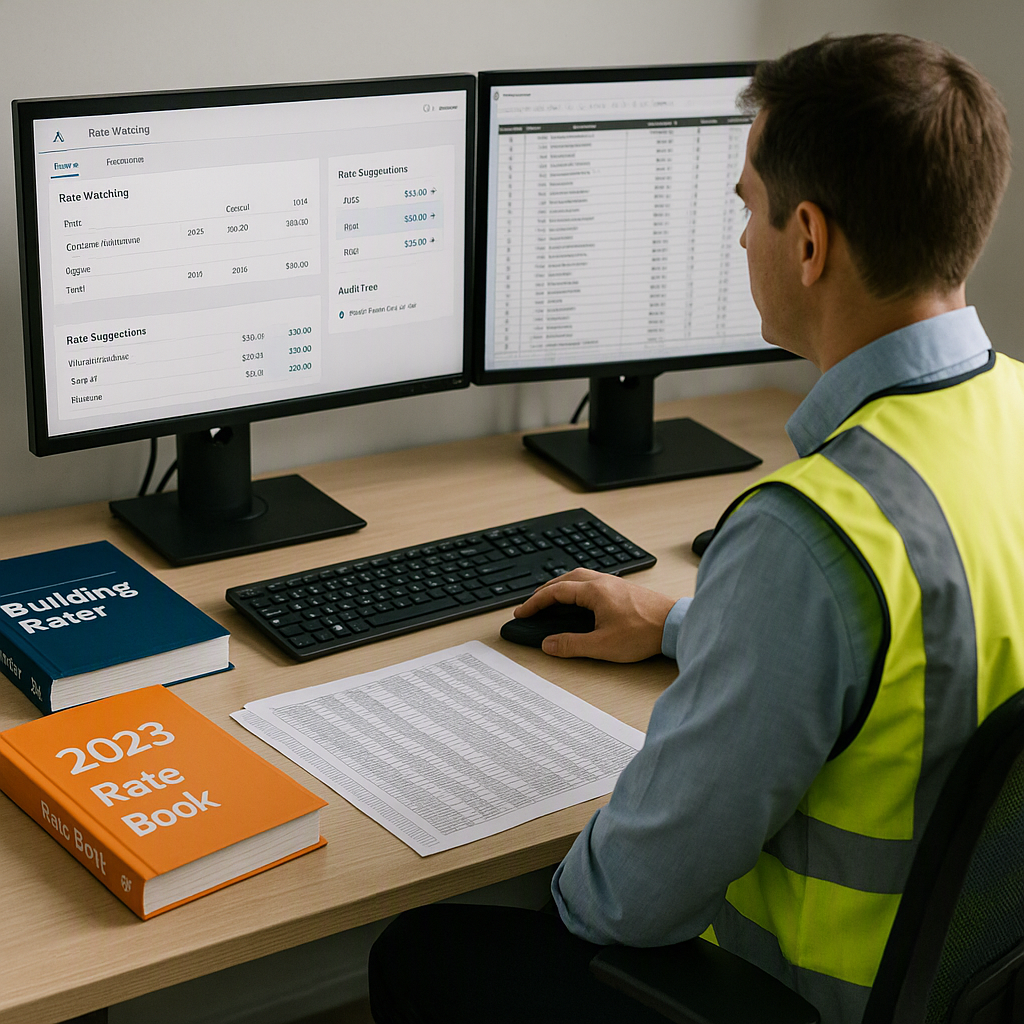
Here’s what I used to believe: spreadsheets, rate books, and a solid team were enough. Michels’ projects are massive, sure, but "manual precision" could handle it. Enter the 2,000-page rate book. The hours of takeoffs in Bluebeam. And the inevitable last-minute scramble when the client asks, “What happens if we swap X material for Y?” What changed my mind wasn’t a fancy AI sales pitch—it was the realization that these methods couldn’t keep up with the complexity of modern projects.
Why the Old Methods Lasted So Long
Let’s be fair—manual methods do have their merits. First, they force you to get intimate with the numbers. You see every assumption, every rate, and every markup. That’s valuable. Second, spreadsheets offer flexibility. You can tweak anything without being locked into rigid software rules. Finally, most estimators trust themselves more than any tool. I get it. I’ve been there.
But here’s the problem: complexity scales faster than your ability to keep up. Michels’ projects aren’t cookie-cutter. They involve multiple trades, regulatory hurdles, and specialized materials. When you’re estimating for a large-scale pipeline or a wind farm, the old methods break down. They’re just too slow, too error-prone, and too rigid for what modern infrastructure demands.
What Works (and What Doesn’t) for Michels Projects
Let’s get into the practical stuff. Whether you’re a general contractor (GC) or a subcontractor, here are the methods that work best—and where they fall short.
1. Collaborative Estimation Software
Tools like Procore, Bluebeam, and Assemble Systems are staples in the industry. They’re excellent for document sharing, version control, and takeoffs. Bluebeam, for instance, excels in handling linear takeoffs for quantities like pipe lengths or trench dimensions. Procore integrates project management with cost estimating, making it easier to track progress and budgets simultaneously.
Where it falls short: None of these tools handle rate matching or cost analysis seamlessly. For example, using Bluebeam for takeoffs and then manually transferring quantities into Excel to apply rates can be time-consuming and prone to errors. To mitigate this, teams often pair software like Bluebeam with specialized cost estimation tools such as CostX or Sage Estimating. These tools integrate rate books and automate rate applications.
Actionable Tip: If you’re already using Bluebeam, explore integrations or plugins that can streamline the transition from takeoffs to cost analysis. Tools like Revu eXtreme offer enhanced features for automating repetitive tasks.
2. Rate Books (RSMeans, CPWD, etc.)
Rate books like RSMeans are the gold standard for estimating labor, material, and equipment costs in the U.S., while CPWD DSR is widely used in India. These books provide consistent data across projects, ensuring a baseline for comparison and cost validation.
Where it falls short: Rate books are static and can’t adapt to rapid market changes. For instance, steel prices might spike due to supply chain disruptions, but rate books won’t reflect this until their next update. Searching through thousands of pages for specific rates is also a time sink.
Actionable Tip: Use digital versions of rate books, combined with advanced search capabilities and real-time market data feeds. Tools like B2W Estimate or STACK can integrate rate books and allow users to quickly search, update, and apply cost data.
3. Scenario Analysis
What-if scenarios are crucial for Michels projects. Clients often ask for comparisons: trenchless versus open-cut methods, or steel pipe versus HDPE. In traditional workflows, this involves creating multiple Excel sheets for each scenario and manually propagating changes across interconnected cells.
Where it falls short: Manual scenario analysis is slow and error-prone. One overlooked formula can derail an entire estimate. Modern estimation platforms include scenario modeling features that allow you to adjust variables and instantly see the impact on costs.
Actionable Tip: Evaluate tools like HCSS HeavyBid or WinEst that offer scenario modeling. These tools streamline comparisons and reduce the risk of errors in manual calculations.
4. Subcontractor Bid Leveling
Michels often works with a network of subcontractors, especially for specialized tasks like horizontal boring or casing installations. Comparing subcontractor bids manually is tedious, as quotes often contain scope discrepancies and hidden exclusions.
Where it falls short: Manual bid leveling can lead to misinterpretation of scope differences, increasing the risk of selecting a less optimal bid. Digital tools like ProEst or BuildingConnected can automate bid comparison by normalizing scope differences and identifying cost competitiveness.
Actionable Tip: Leverage bid management software that allows you to create custom templates for leveling subcontractor quotes. This ensures consistency and transparency in selection.
5. Automated Takeoffs
Drawing takeoffs are another bottleneck. Tools like Bluebeam are great for manual measurements, but for large-scale projects, they can be slow. Automated takeoff tools like PlanSwift or STACK can extract quantities directly from PDF drawings or CAD files in a fraction of the time.
Actionable Tip: Invest in software that supports OCR (Optical Character Recognition) and AI-driven takeoff capabilities. These features can identify trench lengths, pipe diameters, and excavation volumes automatically, reducing human error and freeing up time.
What I Do Differently Now
After adopting more advanced tools and methods, my workflow has changed significantly. Here’s what I focus on:
- Automating Repetitive Tasks: Rate matching, takeoffs, and subcontractor bid leveling are now handled by specialized tools. This frees me up to focus on higher-value tasks like scope validation and risk analysis.
- Real-Time Scenario Modeling: Instead of building multiple Excel models, I use tools that allow me to explore what-if scenarios instantly. This has been a game-changer for client presentations.
- Data-Driven Decisions: Structured insights help guide bid/no-bid decisions. Instead of relying on gut feel, I now use a consistent set of criteria to evaluate opportunities.
Lessons Learned
Manual methods, while reliable in simpler times, are no longer sufficient for the complexity of modern construction projects. The key takeaway is that speed and accuracy matter as much as the quality of the estimate itself. Clients value responsiveness and the ability to adapt to changing project requirements.
Decision Framework: When to Upgrade Your Estimation Tools
| Criteria | Stick with Manual Methods | Invest in Digital Tools |
|---|---|---|
| Project Complexity | Low to moderate | High, multi-trade, or specialized |
| Team Size | Small | Medium to large |
| Budget Constraints | Tight | Flexible |
| Need for Scenario Modeling | Rare | Frequent |
| Accuracy Requirements | Moderate | High |
If your projects consistently fall into the "Invest in Digital Tools" column, it’s time to upgrade your estimation process. While manual methods are reliable for simpler projects, they can’t keep up with the demands of large-scale, multifaceted builds.