The Takeoff Problem Nobody Talks About
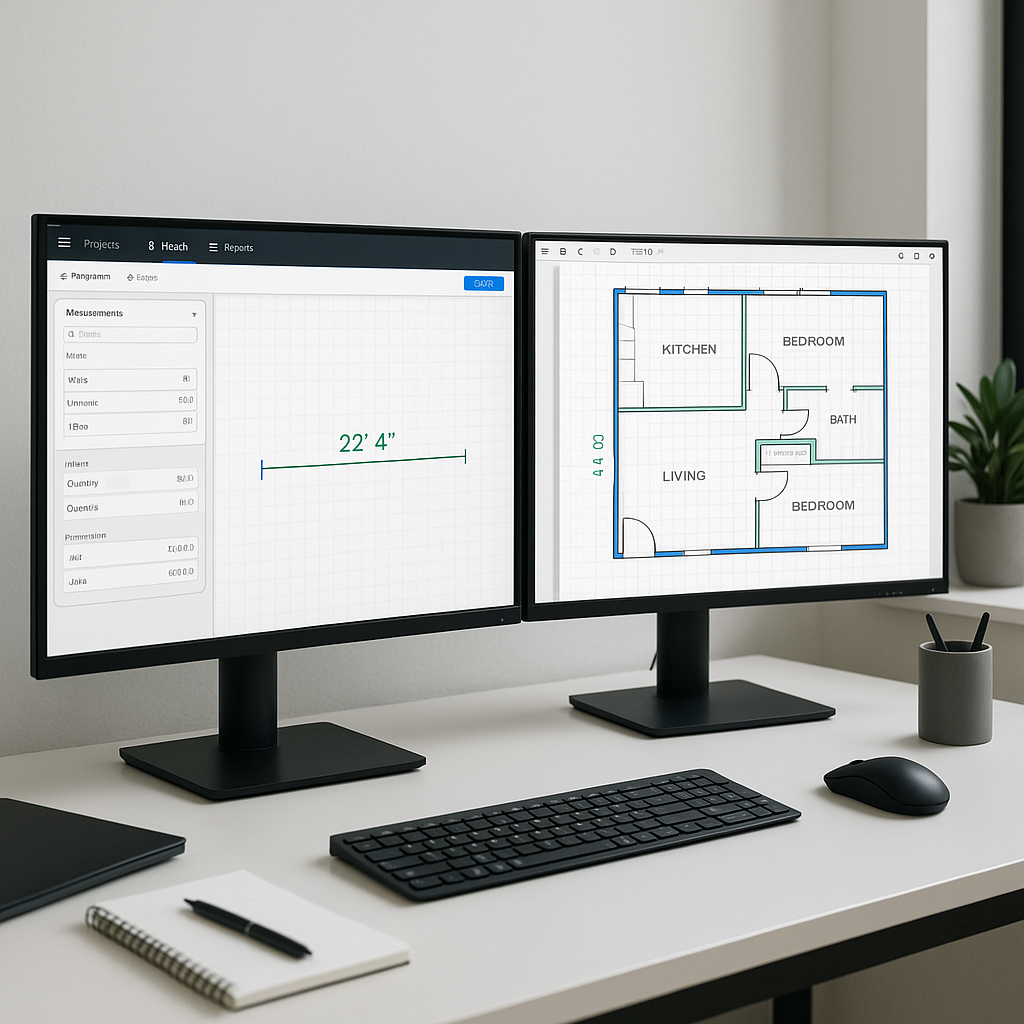
If you've ever spent hours in front of a screen tracing walls, counting windows, and double-checking measurements against architectural PDFs, you know how tedious manual takeoffs are. It’s a time sink. For a mid-sized project, manual takeoffs can take significant time and effort, especially if revisions come in mid-process.
The worst part? The margin for error is high. A single missed measurement can derail an estimate, leading to blown budgets or underbidding your competitors. It’s not just about time—it’s about trust in your numbers.
Enter AI-Powered Takeoffs
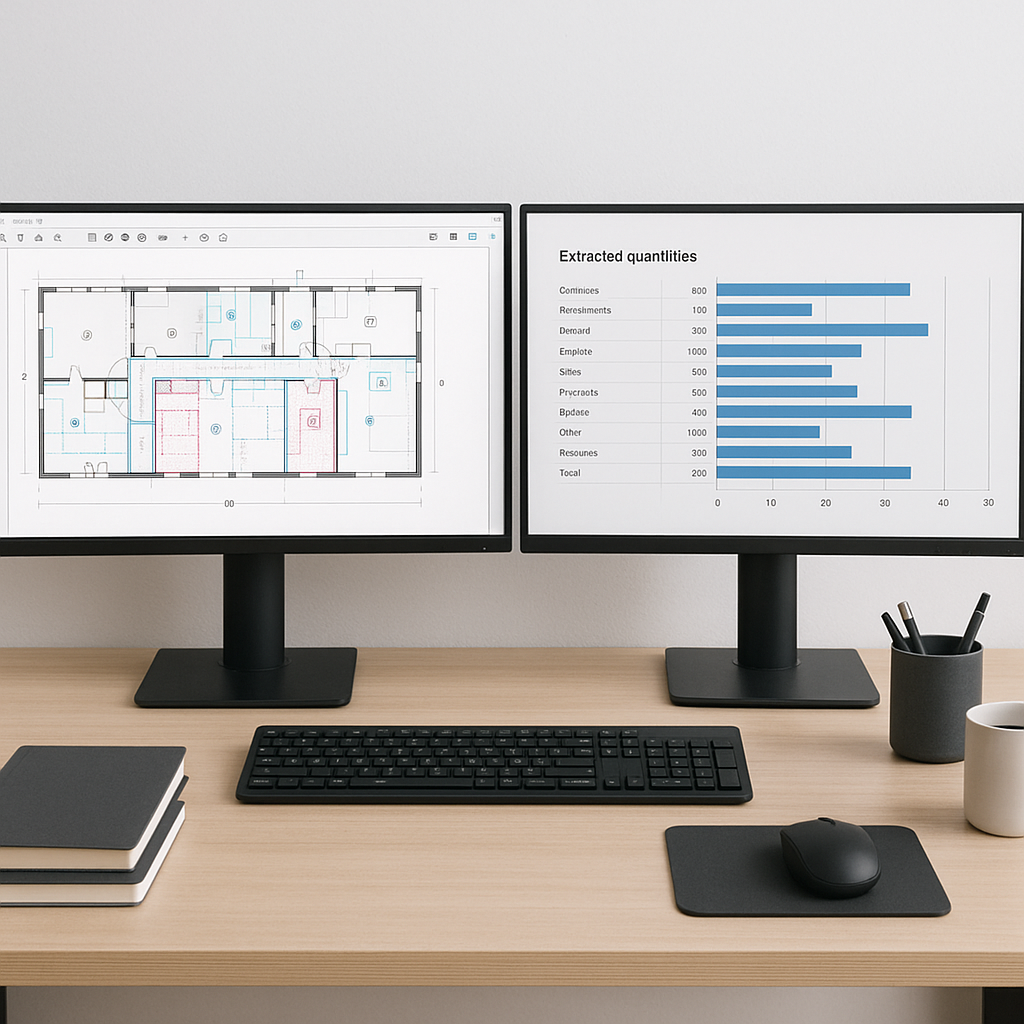
This is where AI tools step in. Instead of sitting with a PDF and ruler in Bluebeam or AutoCAD, you upload your drawing set into the platform. The AI parses the drawings and extracts quantities in minutes. Walls, windows, doors, slab areas—it’s all there, organized and ready for review.
Here’s how it works:
- Upload Your PDFs: Drag-and-drop simplicity. The AI scans for room areas, wall lengths, and even counts repetitive items like fixtures.
- Review Flagged Items: The software highlights areas that may need manual verification, acting as a second set of eyes.
- Export and Integrate: Once verified, export the quantities into your BOQ or existing software like Procore or Excel.
The result? Tasks that once took hours can now be completed in a fraction of the time.
Why Manual Takeoffs Are Unsustainable
In the construction industry, outdated workflows like manual takeoffs aren’t just slow—they’re resource-intensive. Estimators often spend a significant portion of their time on these tasks, which could be better allocated to higher-value activities. AI-powered tools streamline this process, reducing the time spent on repetitive tasks and allowing teams to focus on strategic decision-making.
The Obvious Objection: “AI Can’t Replace Human Judgment”
You’re right. AI doesn’t replace expertise—it amplifies it. The software gets the grunt work out of the way so you can focus on value-add tasks, like refining the bid strategy or negotiating with subs. And because you’re not bogged down in takeoffs, you can take on more bids without burning out your team.
Common Mistakes When Using AI for Takeoffs
- Blind Trust in AI: Always review flagged quantities. AI is accurate, but it’s not infallible.
- Ignoring Training: Spend time understanding how the tool works. A quick training session can save hours later.
- Not Using Revisions Properly: Many tools let you upload revised drawings and compare changes. If you skip this step, you’re back to manual cross-checking.
FAQ
Q: Is AI accurate for complex projects?
A: Yes, but accuracy depends on clean input data. Many tools also provide flagged items to guide manual review.
Q: Does it work with smaller projects?
A: Absolutely. Whether it’s a small renovation or a large infrastructure project, AI scales to fit.
Q: How long does it take to learn?
A: Most users report being comfortable within a short period. The interface is often designed for ease of use.
The Bottom Line
Manual takeoffs are a relic of the past. AI-powered tools don’t just save time—they change how you think about preconstruction workflows. By automating repetitive tasks, these tools free up estimators to focus on strategic, high-value activities. If you’re still tracing PDFs by hand, you’re missing an opportunity to modernize your workflow and improve efficiency.