The Problem with Manual Takeoffs
Manual takeoffs can be a significant drain on time and resources. Estimators often spend hours flipping between drawings, spreadsheets, and sometimes even hand-drawn notes. Errors such as miscalibrated scales or duplicate counts can lead to inaccurate estimates, which in turn result in bad bids or blown budgets.
How AI Takeoffs Work
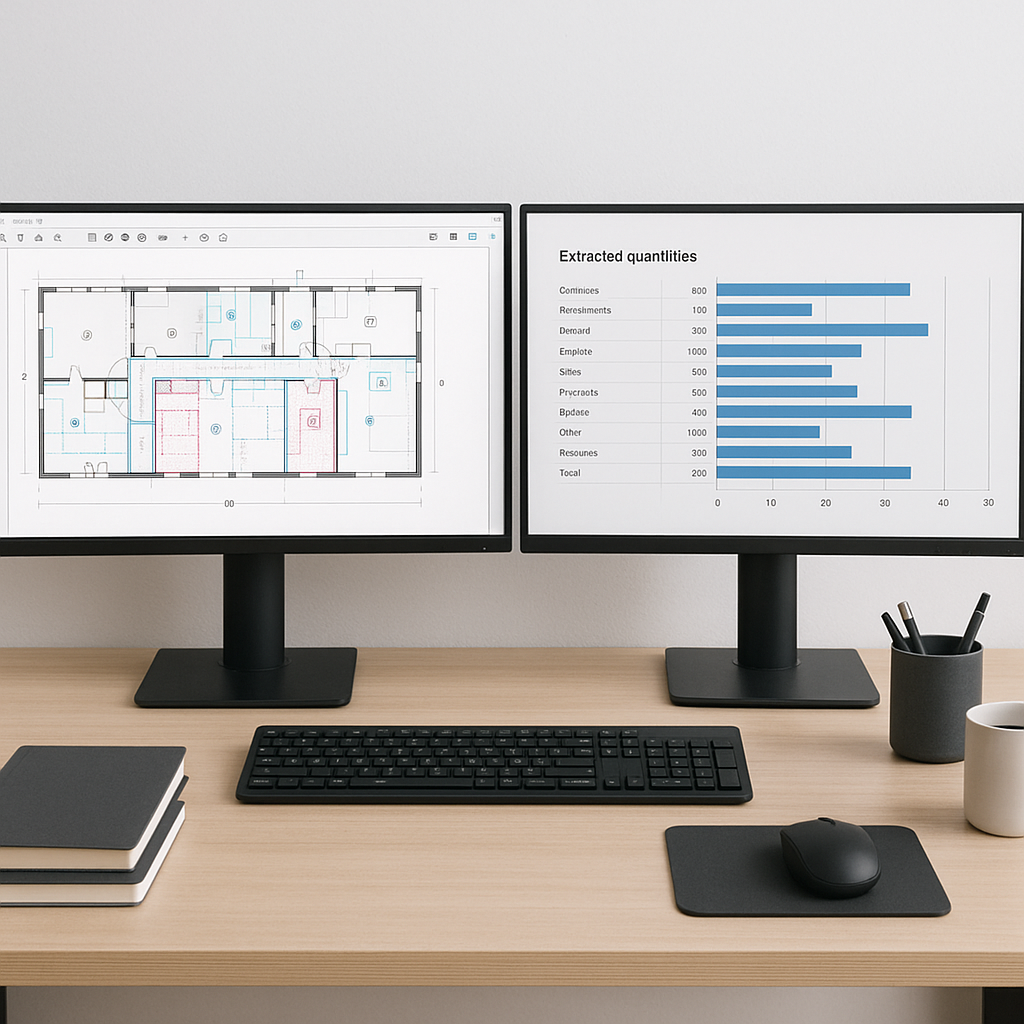
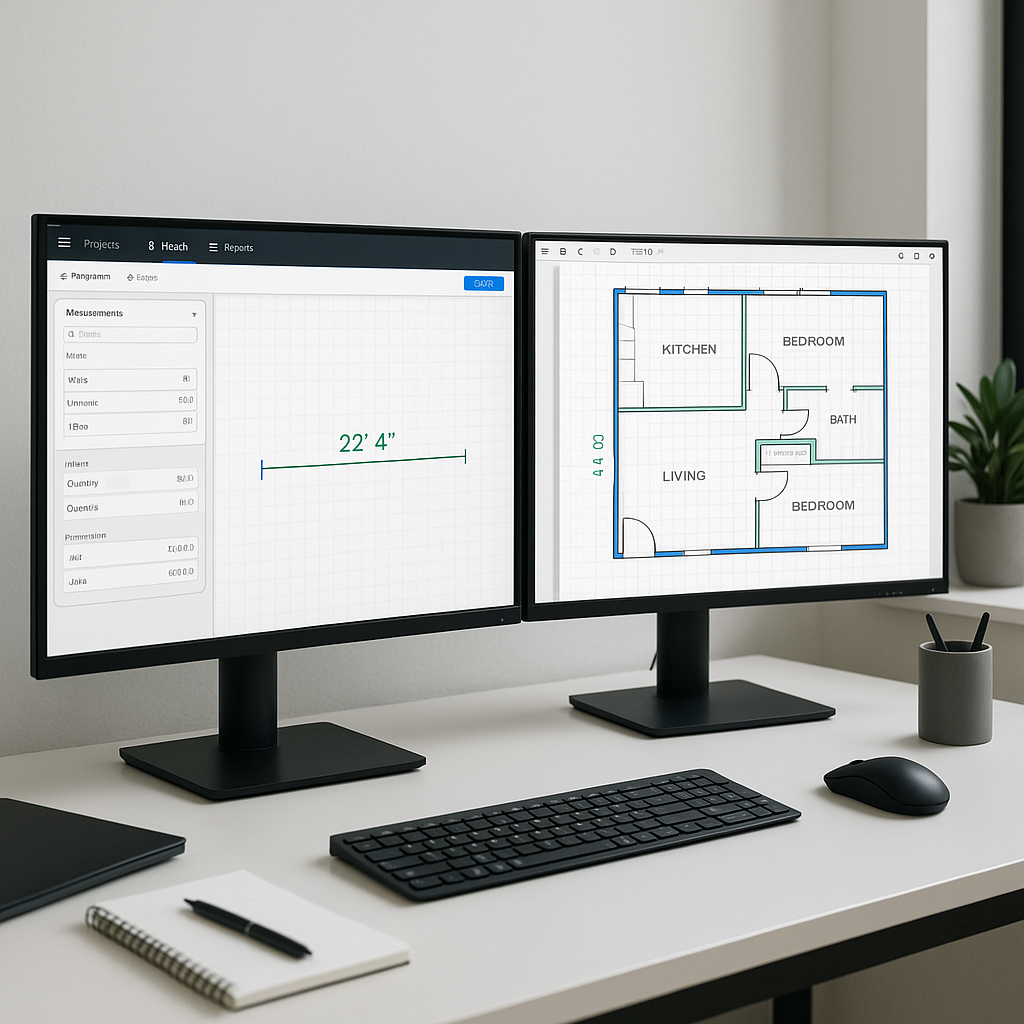
AI takeoff tools simplify the process by automating quantity extraction from uploaded PDF drawings or plans. These tools can identify room areas, wall lengths, door counts, and other key quantities, significantly reducing the manual effort involved.
Illustrative example — Imagine a contractor working on a mid-sized project. Using an AI-powered tool, they could reduce the time spent on takeoffs from several days to just a fraction of that time. The AI handles the repetitive tasks, allowing the team to focus on validating the outputs and refining their estimates.
AI takeoffs are scalable, making them suitable for projects of varying sizes, from small office renovations to large infrastructure developments.
What You Need to Watch Out For
AI tools are powerful but not infallible. To get the most out of them, consider the following tips:
- Clean Drawings: Ensure that the uploaded PDFs are legible and of high quality. Poor-quality scans can lead to errors.
- Review Outputs: Always double-check areas flagged by the AI as uncertain or low-confidence.
- Stay Involved: AI tools are designed to assist, not replace, human expertise. Use your knowledge to validate results and handle unique cases.
The ROI of AI-Powered Takeoffs
Illustrative example — If manual takeoffs for a project take dozens of hours at a typical estimator rate, the cost can add up quickly. By using AI tools, the time required can be drastically reduced, leading to significant cost savings. Additionally, faster takeoffs allow for more bids to be submitted, increasing the chances of winning projects.
FAQ
Q: How accurate are AI-powered takeoffs?
A: AI-powered takeoffs are generally very accurate but still require human review for flagged outputs or edge cases.
Q: Can I integrate AI tools with my existing software?
A: Yes, many AI takeoff platforms integrate with popular tools like Bluebeam, Procore, and Excel, allowing for seamless workflows.
Q: Is AI worth it for smaller contractors?
A: Yes, AI tools are scalable and can provide value even for smaller projects by saving time and reducing manual effort.
If you’re looking to streamline your preconstruction estimation process, consider exploring AI-powered takeoff tools.