The Rate Matching Problem in Preconstruction
If you’ve ever spent hours flipping through a massive rate book, you know how tedious and error-prone rate matching can be. It’s a critical task that ensures every rate aligns with the scope and reflects current market conditions. However, doing it manually is both time-consuming and inefficient.
Why Manual Rate Matching Can Be Inefficient
Here are some common challenges with traditional rate matching:
-
Time-Consuming: Manual rate lookups can take hours, especially for large projects with extensive scope and multiple line items.
-
Prone to Human Error: Mistyping a rate or overlooking a catalog update can lead to costly mistakes.
-
Outdated Rates: Market prices for materials, labor, and equipment change frequently. Relying on static rate books can result in inaccurate estimates.
How AI-Powered Rate Matching Works
AI-powered tools are designed to address these inefficiencies by automating the rate matching process. Here’s how they typically work:
-
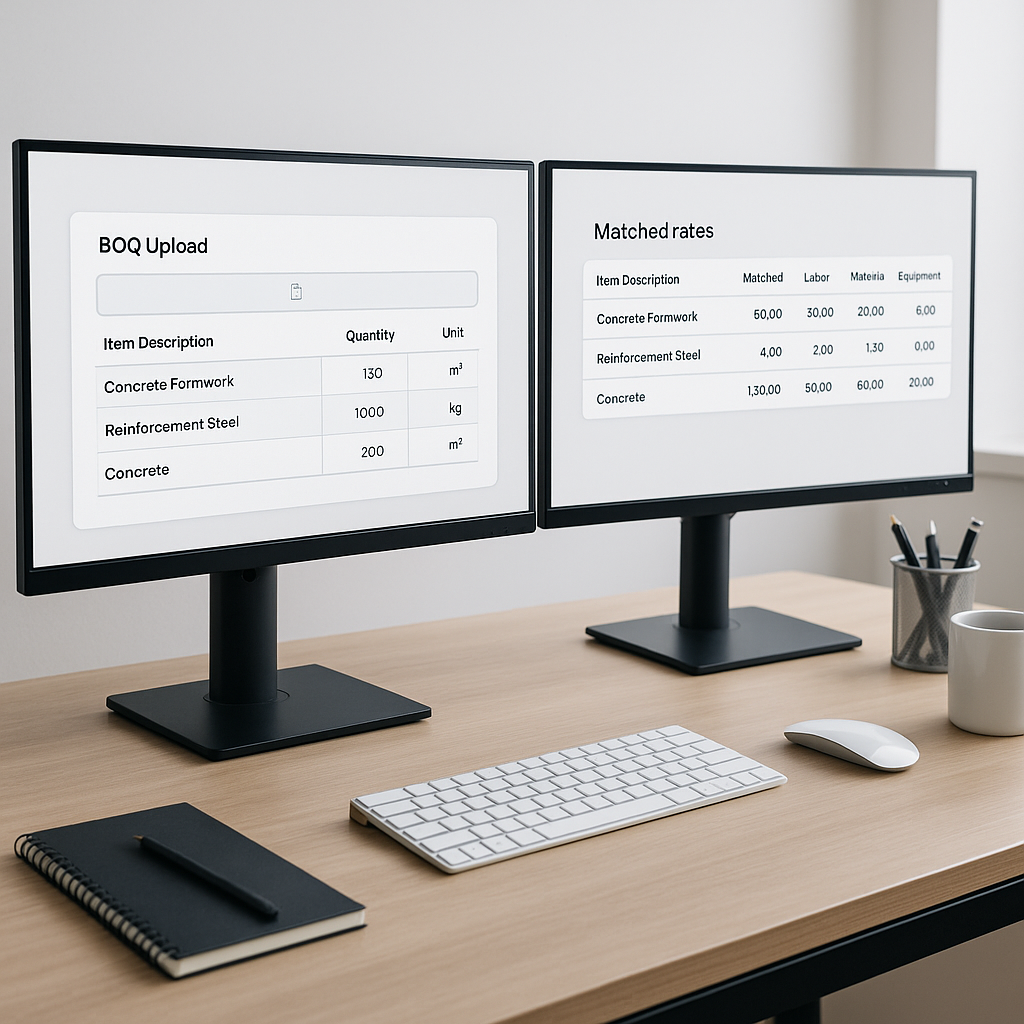
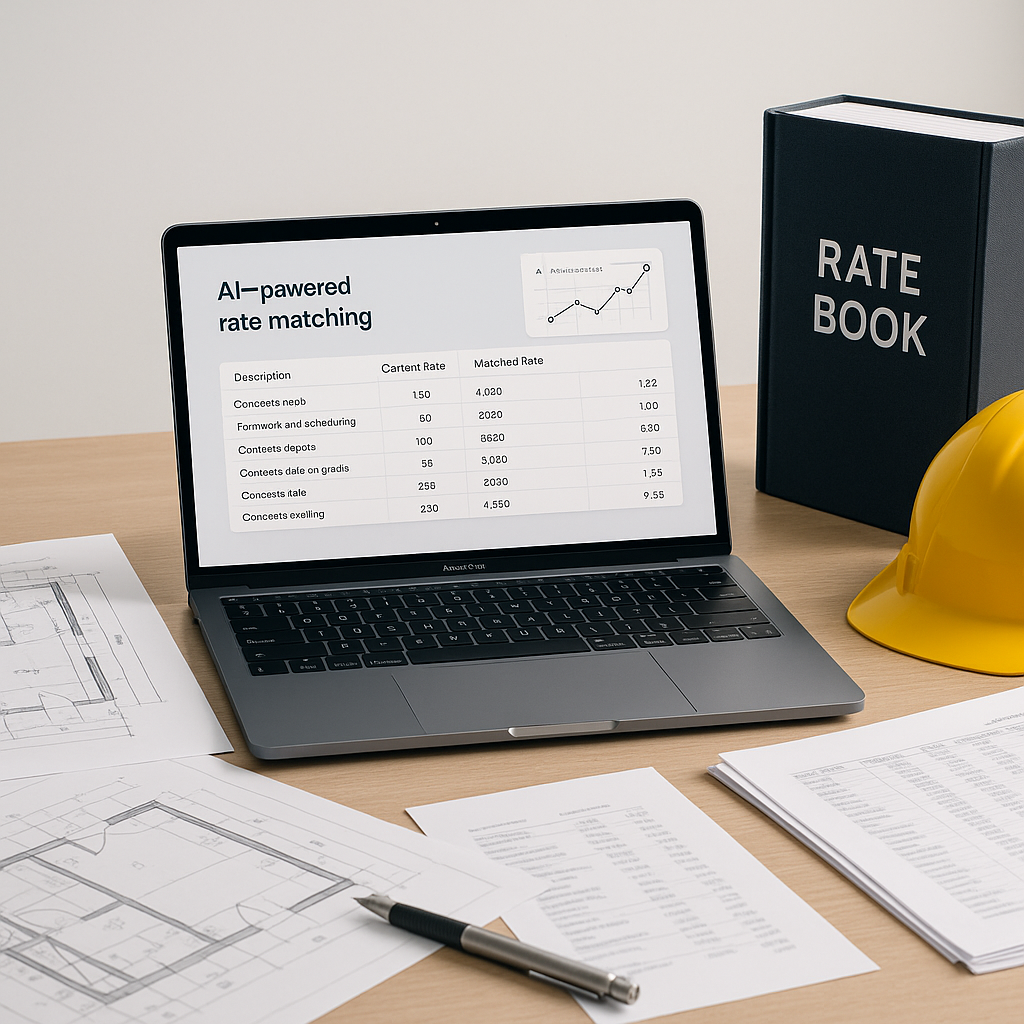
Semantic Search Across Catalogs: Instead of manually searching through pages or spreadsheets, you input a query (e.g., "pre-stressed concrete girders"), and the AI searches across multiple catalogs to find the most relevant rates.
-
Customizable Rates: Users can upload custom rate data specific to their projects. This data is integrated into the system for future use, making the tool more tailored over time.
-
Audit Trail: Every rate pulled or adjusted is logged, providing a clear record for review and accountability during bid evaluations.
Benefits of AI-Powered Rate Matching
- Time Savings: Automating rate lookups allows estimators to focus on higher-value tasks like refining scope or negotiating with subcontractors.
- Reduced Errors: By minimizing manual input, the risk of errors is significantly lowered.
- Up-to-Date Rates: AI tools often integrate with live data sources, ensuring that rates reflect current market conditions.
Addressing Concerns About AI in Estimation
AI tools are not a replacement for human expertise but a complement to it. They handle repetitive tasks like rate lookups and matching, allowing estimators to focus on decision-making and strategic planning. While AI may not fully understand project nuances, its ability to streamline foundational tasks can significantly enhance productivity.
How to Get Started with AI Tools
If you’re new to AI-powered estimation tools, start with a mid-sized project where you already have a baseline estimate. Compare the AI-generated results to your manual process. Over time, as the system learns from your inputs and feedback, its accuracy and efficiency improve.
Common Questions About AI Rate Matching
Q: Can I use my custom rate catalogs?
A: Yes, most AI tools allow you to upload custom rates or materials, which are then integrated into the system for future use.
Q: Does AI work for small projects?
A: Yes, AI tools are scalable and can be used for projects of varying sizes.
Q: Is it hard to learn?
A: Most platforms are designed to be user-friendly, with minimal training required to get started.
Common Mistakes to Avoid
- Skipping the Audit Trail: Always review flagged items to ensure accuracy.
- Not Customizing Rates: Uploading specific rates or materials ensures the tool is tailored to your needs.
- Scaling Too Quickly: Start with one project to test the tool before applying it to larger scopes.
Final Thoughts
Rate matching is a critical but often time-consuming part of preconstruction estimation. AI-powered tools can streamline this process, saving time, reducing errors, and allowing estimators to focus on building competitive bids. By starting small and gradually scaling, you can integrate these tools into your workflow effectively.