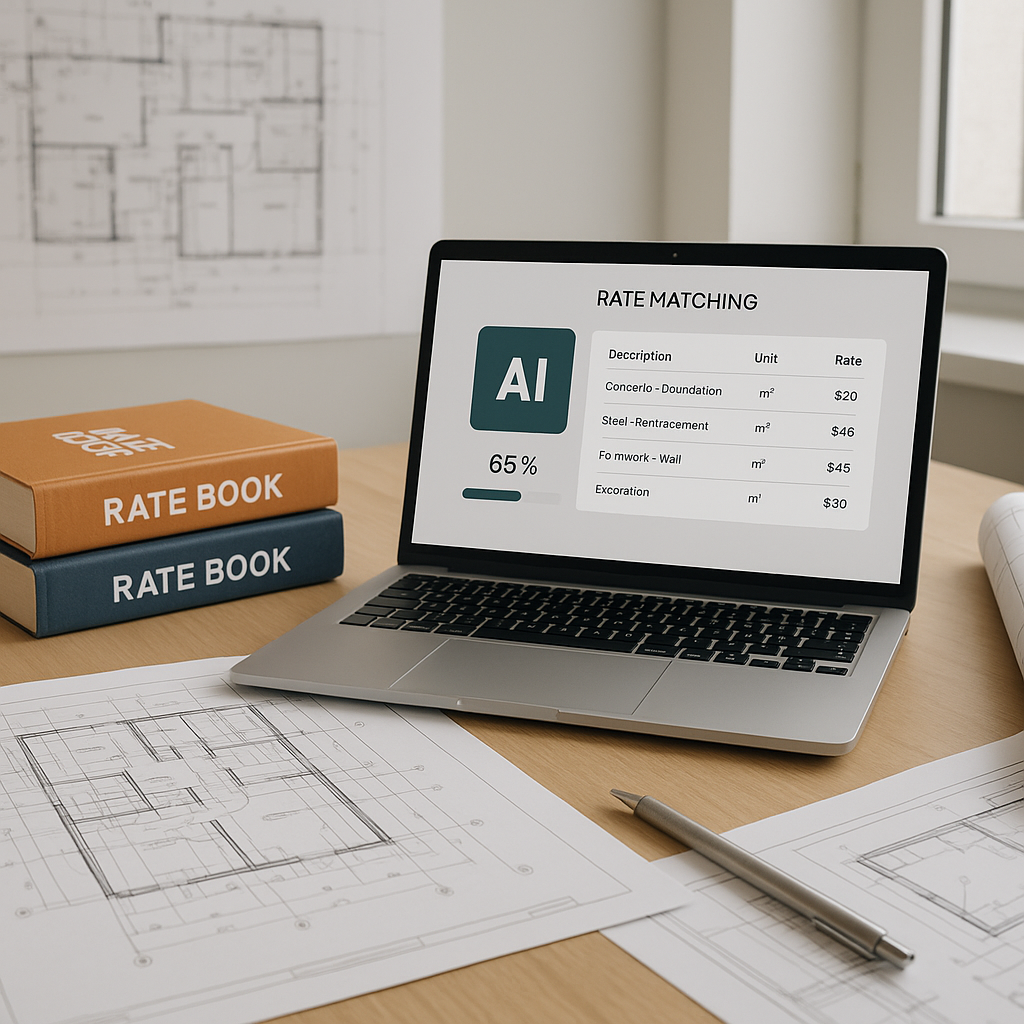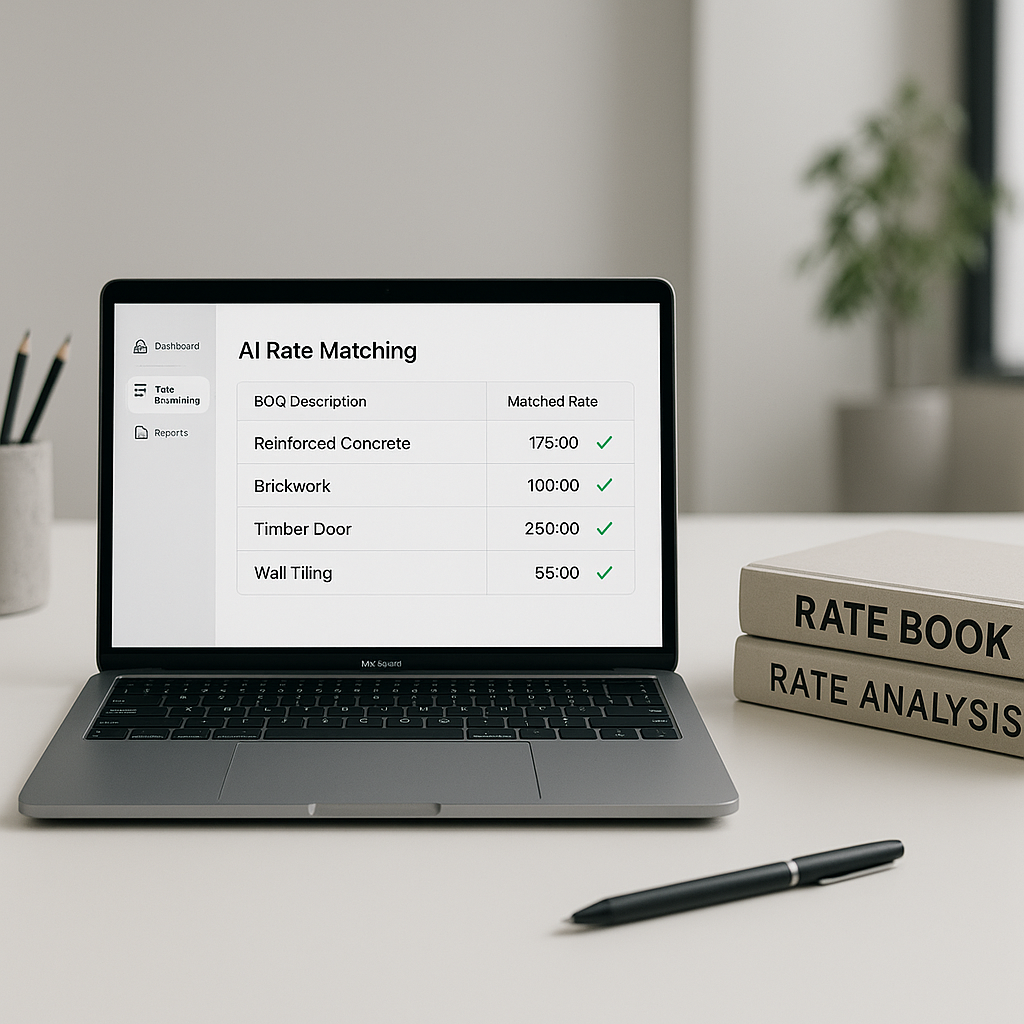
Rate Matching: A Key Challenge in Preconstruction
Rate lookup is a critical yet time-consuming part of preconstruction. Manually searching through extensive rate catalogs or spreadsheets can take significant time and effort, and errors in this process can lead to uncompetitive or unprofitable bids.
This is where AI-powered rate matching can provide significant benefits by automating the process and improving accuracy. Let’s explore how it works.
The Problem with Manual Rate Lookup
In a typical workflow, estimators match line items from a BOQ (Bill of Quantities) to corresponding rates in catalogs such as RSMeans, CPWD DSR, or custom rate sheets. Challenges include:
- Ambiguous descriptions: Similar terms may refer to different items, leading to confusion.
- Human error: Repeated manual lookups increase the likelihood of mistakes.
- Time drain: The process can take hours, diverting time from other critical tasks like refining bid strategies or negotiating with subcontractors.
How AI-Powered Rate Matching Works
AI-powered tools streamline rate matching by leveraging advanced technologies. Here’s how they address common challenges:
- Semantic Search: AI understands the context of descriptions, enabling it to find relevant rates even if the exact keywords don’t match.
- Catalog Integration: AI can pull data from multiple sources simultaneously, such as RSMeans, CPWD DSR, or custom rate sheets, eliminating the need to switch between platforms.
- Self-Learning: The system improves over time by learning from user feedback, becoming more accurate with each project.
- Audit Trail: AI tools provide transparency by logging suggested matches and allowing users to review and override them as needed.
Illustrative Example — AI in Action
Consider a scenario where a contractor is estimating costs for a large-scale infrastructure project. Traditionally, matching rates for hundreds of BOQ line items could take an entire day. With AI-powered rate matching, this process can be completed in a fraction of the time, allowing the team to focus on higher-value tasks. Additionally, the AI might flag discrepancies, such as outdated material prices, helping avoid costly errors.
Common Questions About AI Rate Matching
Q: Can AI handle custom rates?
Yes. Users can upload custom rate catalogs, and the AI integrates them seamlessly. Adjustments for inflation or location-specific factors can also be accommodated.
Q: What if the AI matches the wrong rate?
Human oversight remains essential. Most tools allow manual overrides and provide transparency in their suggestions, ensuring users retain control.
Q: How long does it take for the AI to improve?
AI systems typically show noticeable improvements after being used on a few projects, as they learn from user feedback.
Best Practices for Using AI in Rate Matching
While AI can significantly enhance rate matching, it’s important to follow best practices:
- Ensure data quality: Clear and detailed BOQ descriptions improve AI performance.
- Review critical items: Always double-check high-impact line items to ensure accuracy.
- Check integration compatibility: Ensure the AI tool integrates with your existing software stack, such as project management or estimation platforms.
Why AI Matters in Preconstruction
Rate matching is a foundational task in preconstruction. By automating this process, AI allows estimators to focus on strategic decisions, improving both efficiency and accuracy. While AI doesn’t replace human expertise, it amplifies it, making the estimation process faster and more reliable.
If you’re looking to streamline your preconstruction workflow, consider exploring AI-powered rate matching tools to save time and reduce errors.