The Problem: Manual Rate Lookups Are a Bottleneck
If you're in preconstruction, you've been here: flipping through a 2,000-page RSMeans or CPWD DSR rate book, hunting for the exact unit rate that fits your BOQ. Or worse, scrolling through numerous tabs of an Excel sheet with outdated rates, trying to make sense of which one applies to a specific line item. It's slow, frustrating, and prone to errors. And every missed rate or wrong assumption can snowball into blown budgets and lost bids.
Manual efforts rely on human memory and judgment, which means inconsistencies can creep in—especially when you're under pressure to hit tight deadlines.
The AI Solution: Smarter Rate Matching
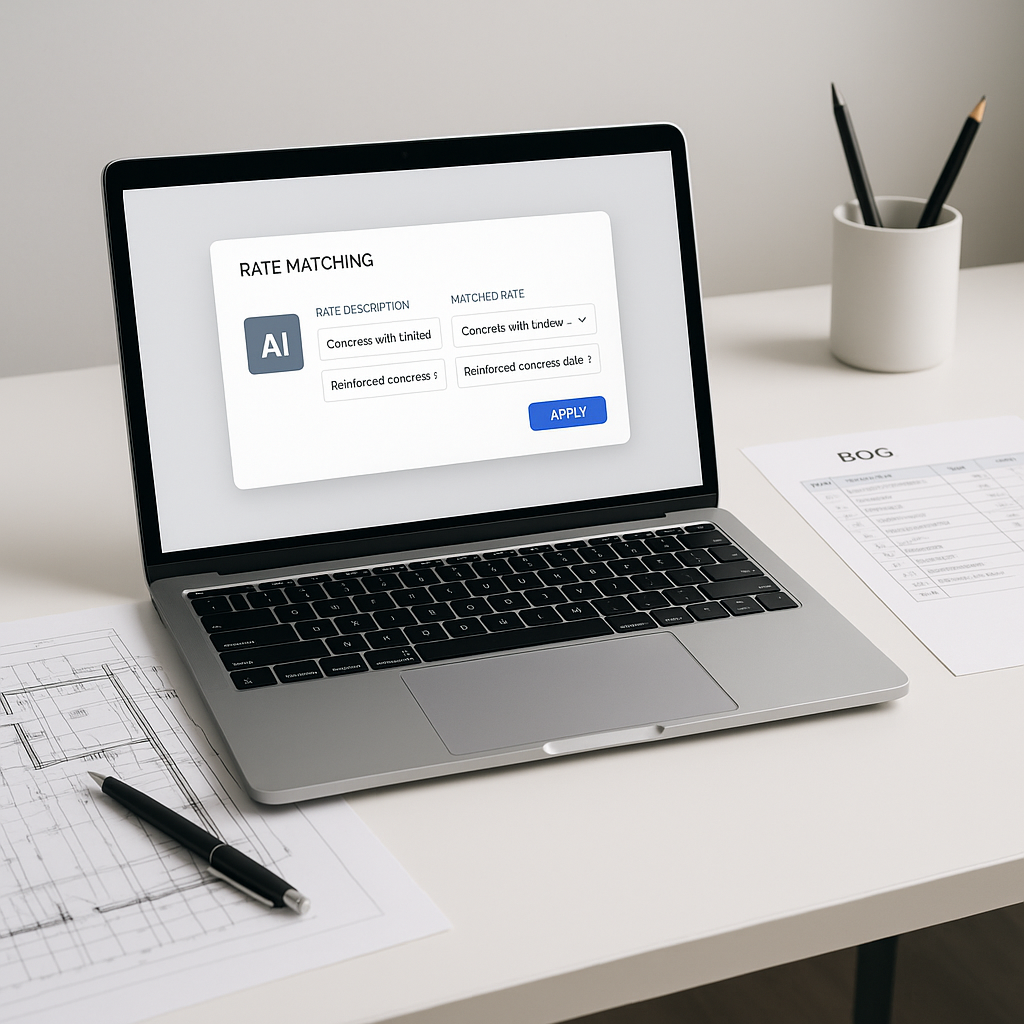
AI-powered rate matching changes the game. Tools using semantic search can instantly match BOQ line items to the right rates from a database of Schedule of Rates (SOR) items. No more page-flipping or guesswork. You type in a description—"25mm thick cement plaster" or "reinforced concrete in beams"—and the AI suggests the most relevant rates in seconds.
Let’s break down how this works:
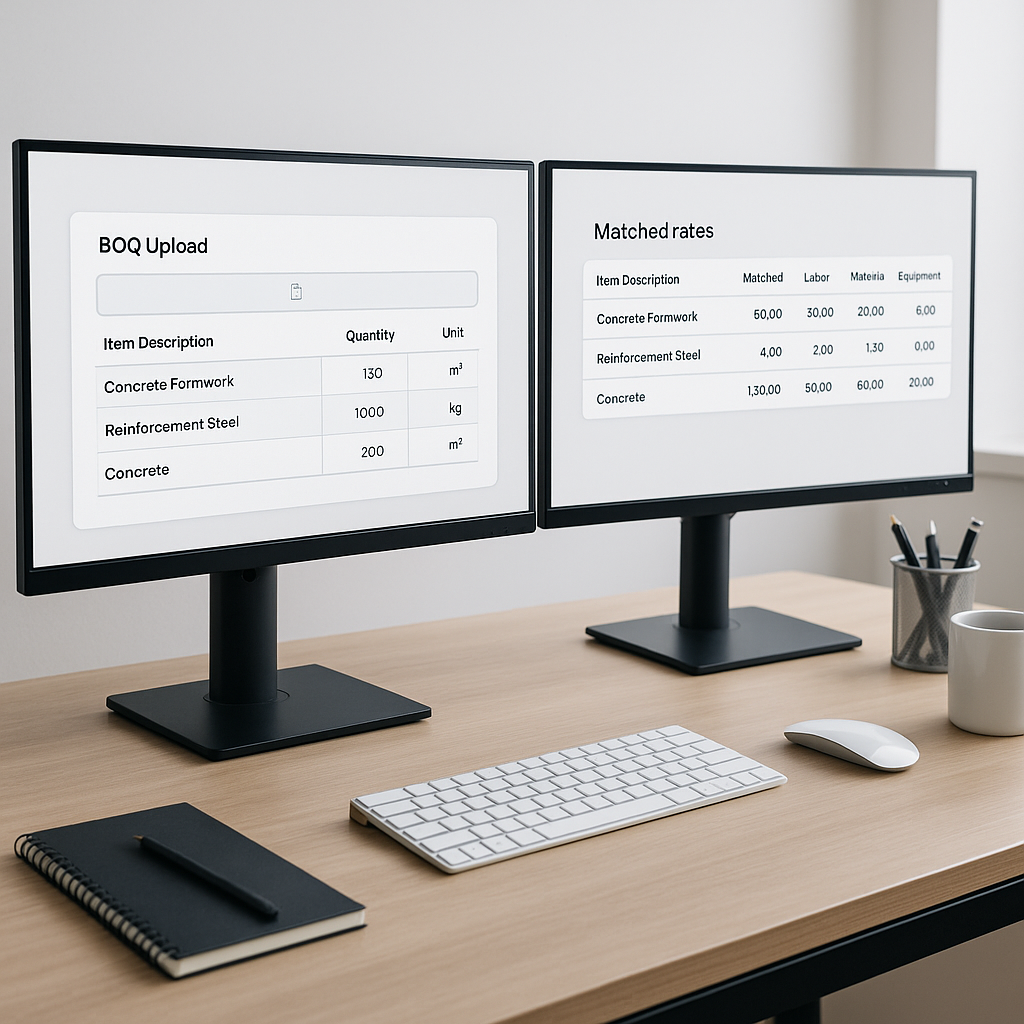
- BOQ Parsing: The system reads your uploaded BOQ (Excel, CSV, even messy formats with merged cells) and identifies line items needing rates.
- Catalog Matching: It searches across preloaded catalogs—RSMeans, CPWD, state SORs—plus any custom rates you’ve added.
- Contextual Understanding: AI doesn’t just match keywords. It understands descriptions in context. For example, "brickwork in cement mortar with 1:4 mix" is recognized even if phrased differently.
- Learning Over Time: The system gets smarter as you use it. Approve or reject matches, and it adjusts future suggestions accordingly.
Why This Matters
Speed is the obvious win here. Rate lookup that used to take hours can now be completed in minutes. But the real value lies deeper:
- Consistency: AI eliminates human bias. Whether it’s your senior estimator or a junior on their first project, the rates applied are consistent every time.
- Accuracy: By pulling rates directly from approved catalogs, you reduce the risk of using outdated or incorrect numbers.
- Scalability: Whether it’s a small office fit-out or a large infrastructure project with thousands of line items, the system scales to meet your needs.
Common Objection: “But What About Custom Rates?”
You might be thinking, “This sounds great for standard rates, but my projects use custom materials or finishes. How does AI handle that?”
AI-powered tools allow you to upload your own custom rate catalogs. Once uploaded, these rates are seamlessly integrated into the matching process. Over time, as the system learns your preferences, even your unique or project-specific rates become part of its database.
For example, if you frequently use a specific type of imported tile, the system will prioritize that rate over generic ones for similar items. It’s like having a digital estimator who remembers all your preferences.
What to Watch For: Common Rate Matching Pitfalls
Even with AI, there are a few things to keep an eye on:
- Garbage In, Garbage Out: If your BOQ descriptions are vague or inconsistent, the AI will struggle to find accurate matches. Clean input is critical.
- Over-Reliance: AI is a tool, not a replacement for human judgment. Always review high-impact or high-cost items manually.
- Catalog Updates: Ensure your rate catalogs are up-to-date. Using outdated rates defeats the purpose of automation.
FAQ: What Practitioners Ask
Q: How accurate is AI rate matching compared to manual efforts?
A: AI is designed to improve accuracy by reducing human error. However, human oversight is still essential for edge cases.
Q: Can I use AI rate matching for international projects?
A: Yes. Many platforms support multi-market rate catalogs, including CPWD (India), RSMeans (US), and others.
Q: What if the AI suggests the wrong rate?
A: You can manually override any suggestion. Most systems include an audit trail, so overrides are logged for future learning.
Closing Thoughts
Manual rate lookups are a thing of the past. AI rate matching not only saves time but also reduces errors and builds trust in your estimates. Whether you’re pricing a small renovation or a large infrastructure bid, the benefits are clear.
If your team spends hours flipping through rate books, it’s time to consider AI.