The Challenge of Manual Rate Lookup
Every estimator knows the drill. You’re in the middle of pricing out a project, and suddenly, you’re flipping through extensive rate books or digging into old PDFs to find the right unit rate for items like rebar installation or MEP fittings. It’s not just tedious—it’s a productivity bottleneck. For large bids, this process can take significant time and effort.
And let’s be honest: mistakes happen. You might misread a rate or miss a relevant one entirely. This can lead to inaccurate bids, potentially causing you to lose projects or eat into your margins.
This is where AI-powered rate matching can make a difference. It’s not just about speed; it’s about improving accuracy and consistency. Let’s break it down.
How AI Rate Matching Works
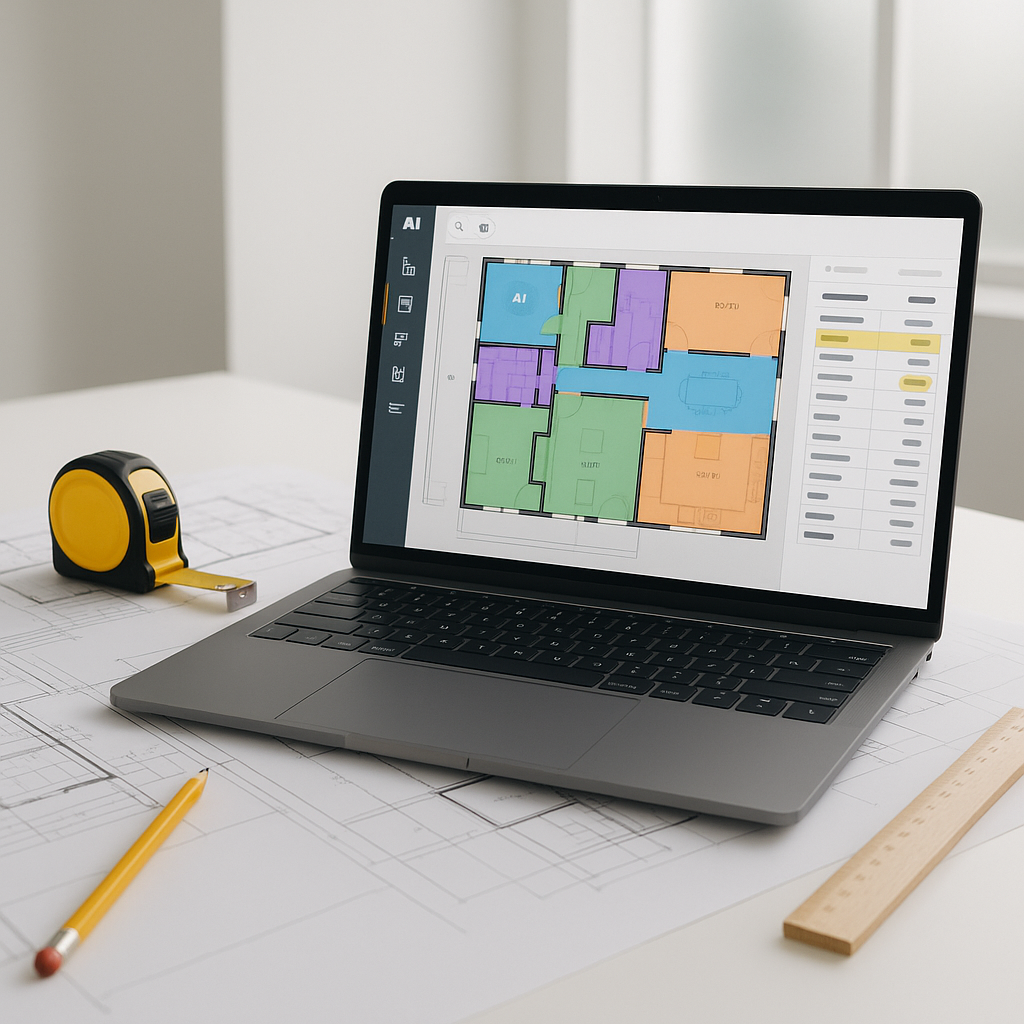
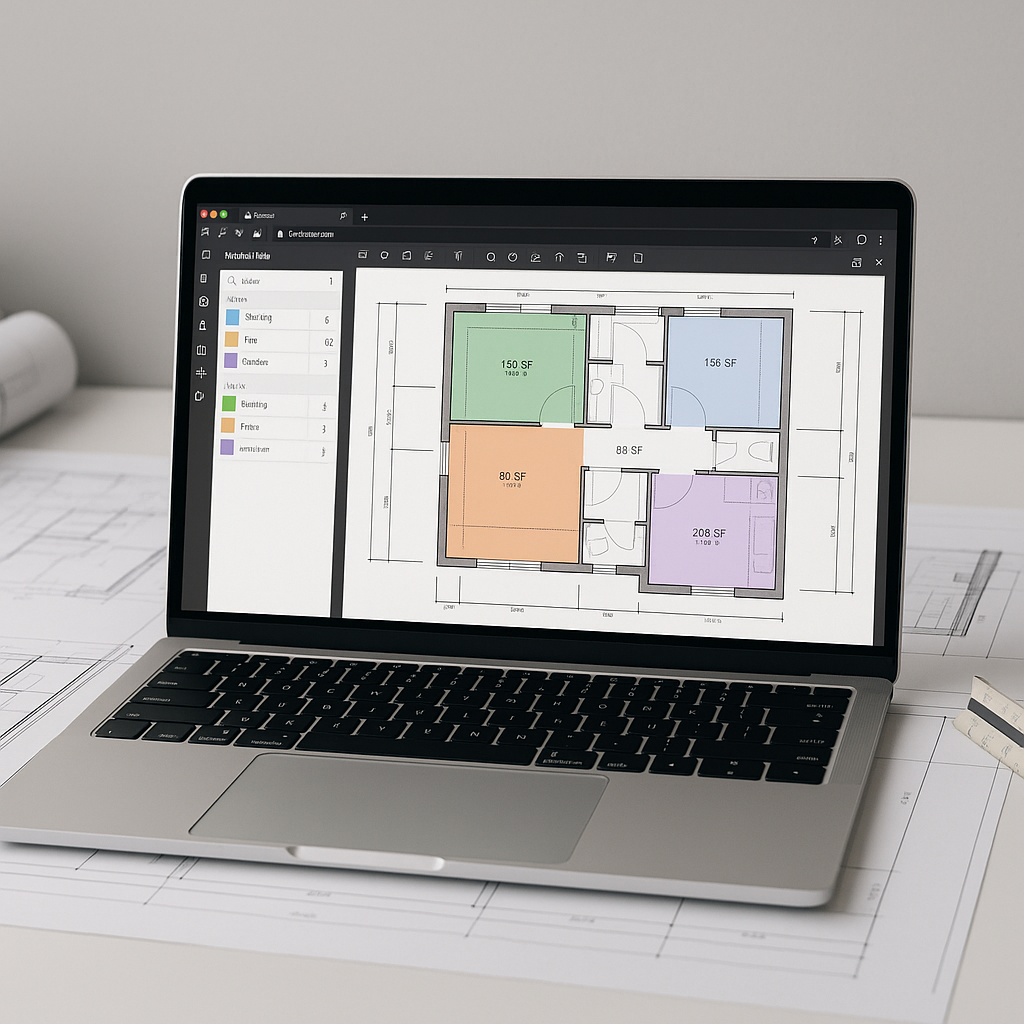
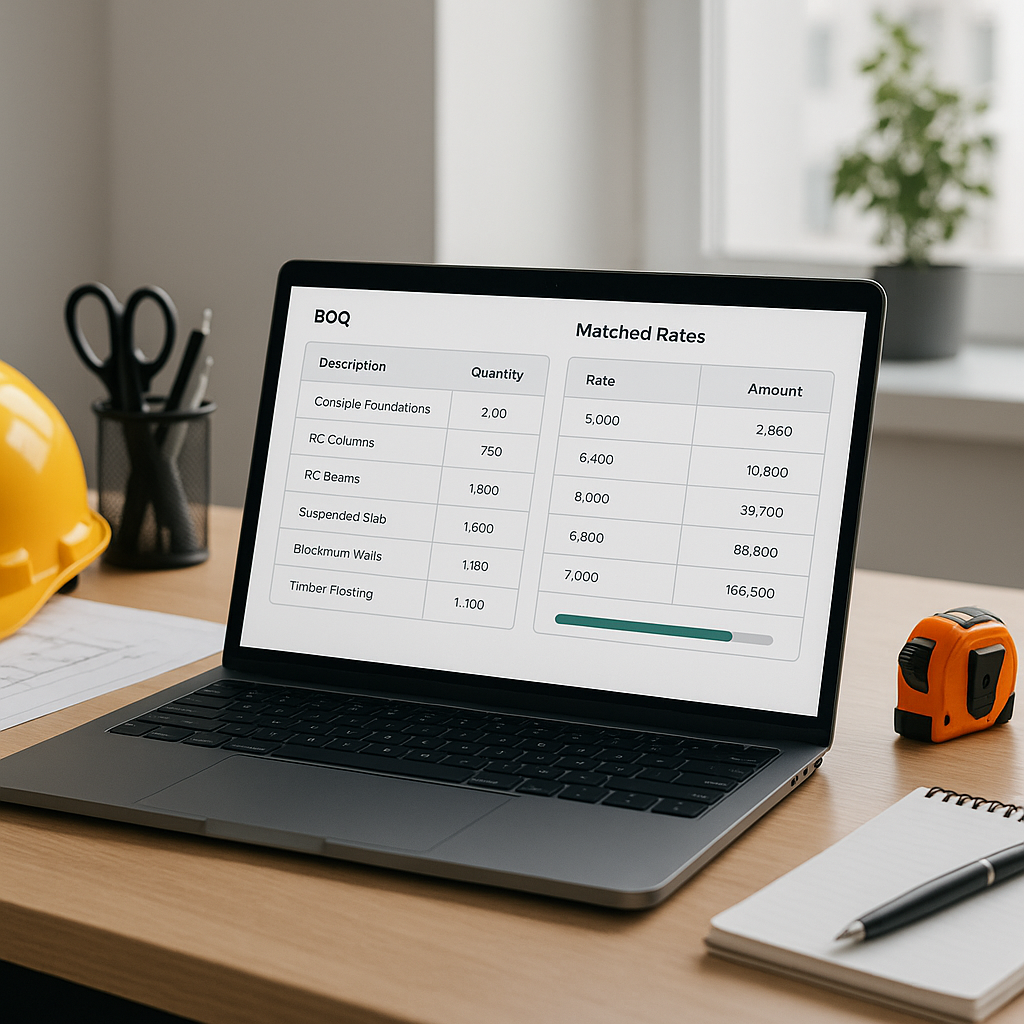
AI tools designed for preconstruction estimation can scan your BOQ (Bill of Quantities) and automatically match each line item to the most relevant unit rates from a database. Here’s how the process typically works:
-
Semantic Search Across Rate Libraries: Instead of manually looking up rates, the AI uses semantic search. For example, if you type “10mm rebar cutting and bending,” it finds the closest match—even if the catalog description uses slightly different terms like “steel rod fabrication.”
-
Custom Catalogs and Historical Rates: If you have your own rate library, the AI can integrate it seamlessly. Additionally, it learns from your inputs. If you’ve adjusted rates for previous projects, those adjustments can inform future matches.
-
Fallback Mechanisms for Edge Cases: When the AI doesn’t find an exact match, it widens the search based on related terms or suggests the closest alternatives. You retain control to accept or override these suggestions.
Illustrative example — Imagine pricing out a commercial office project with a BOQ containing 300 line items. Instead of spending hours manually matching rates, the AI can complete the task in a fraction of the time, allowing you to focus on refining the bid or other strategic tasks.
Common Questions About AI Rate Matching
Q: Is it accurate?
The accuracy of AI rate matching depends on the quality of your input data. If your BOQ is clean and your rate catalogs are up-to-date, the AI can deliver highly accurate results. For unusual or custom items, manual adjustments may still be necessary, but the bulk of the work is automated.
Q: Can it handle custom rates?
Yes. You can upload your own rate libraries or adjust built-in rates to reflect your actual costs. Once updated, the AI remembers these changes for future estimates.
Q: Does it work with regional catalogs?
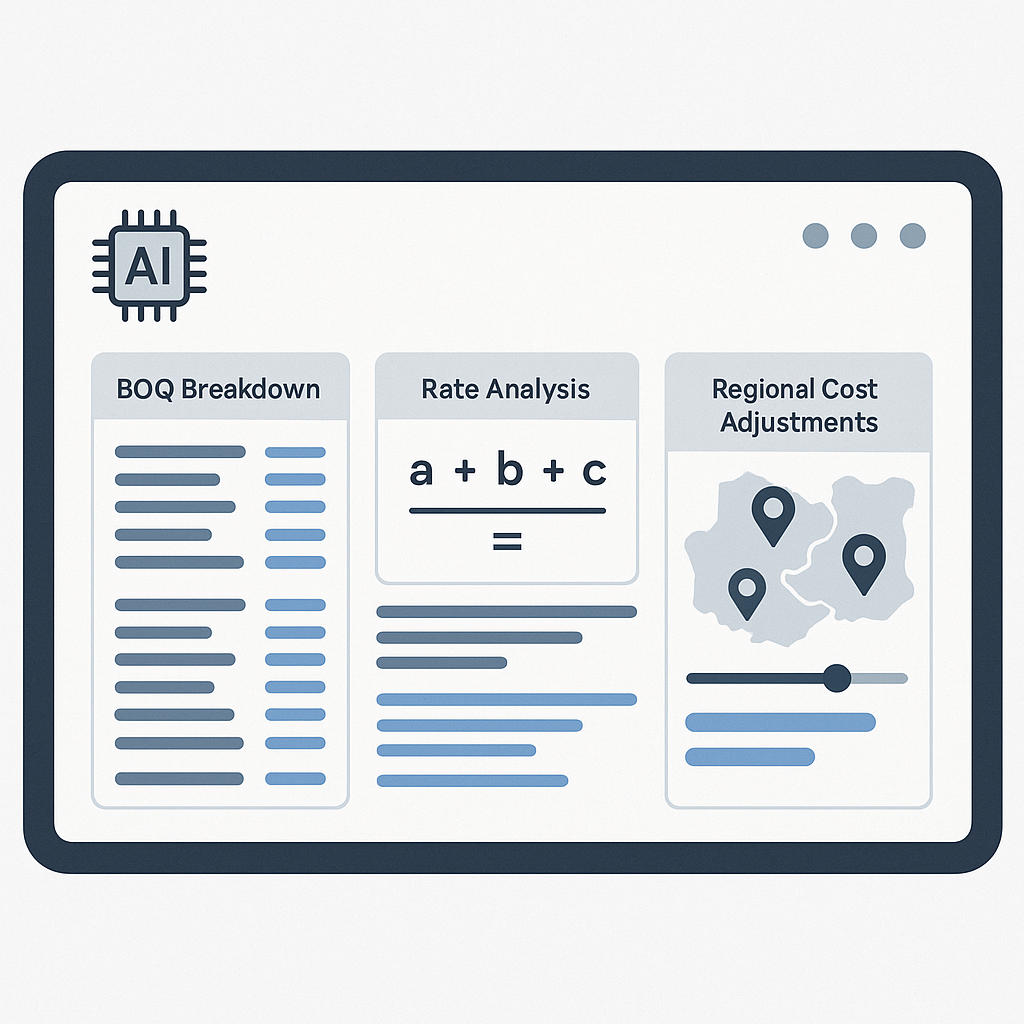
Yes. Many platforms come preloaded with regional rate libraries, such as CPWD DSR for India, RSMeans for the US, or AECOM for the GCC. You can also toggle between catalogs for multi-country bids.
What If You Don’t Use AI?
Without AI, you’re stuck with manual methods. Manual rate lookup is not only time-consuming but also prone to errors. Missing rates or using outdated ones can make your estimates less competitive. Additionally, manual processes don’t scale well. As your team’s bidding volume grows, so do the bottlenecks.
What to Watch For
While AI-powered rate matching offers significant advantages, there are a few considerations to keep in mind:
- Input Quality Matters: Ensure your BOQ is clear and consistent. The cleaner your input, the better the AI performs.
- Regional Adjustments: Configure the AI for your specific market. For example, labor costs in one region may differ significantly from another.
- Training Your Team: While most AI tools are intuitive, some initial training may be required to maximize their benefits.
The ROI of AI-Powered Rate Matching
By automating the rate lookup process, AI tools free up valuable time for estimators. This allows teams to focus on higher-value tasks, such as analyzing bids, refining margins, or pursuing additional projects. Additionally, improved accuracy can lead to more competitive and profitable bids.
Final Thoughts
AI-powered rate matching isn’t about replacing estimators—it’s about enhancing their capabilities. By automating repetitive tasks, estimators can focus on delivering accurate, competitive bids that win projects.
If you’re looking to streamline your estimation process, consider exploring AI tools that specialize in rate matching. They can help you save time, reduce errors, and improve overall efficiency.