Why Manual Takeoffs Are a Bottleneck
If you've ever spent days hunched over drawings with a scale ruler or clicking your way through PDF markups, you know the pain. Manual takeoffs are slow, repetitive, and prone to errors. Two estimators can measure the same set of drawings and still end up with discrepancies. Why? It’s not about skill—it’s about how much manual effort leaves room for human error.
Take a typical high-rise bid. You’re dealing with hundreds of pages of structural, MEP, and architectural drawings. You need room areas, wall lengths, fixture counts, and more. Even with tools like Bluebeam, this can take a significant amount of time. And if revisions roll in? Start over.
This isn't just a time problem. It’s a cost problem. Estimators’ time is valuable, and inefficiencies in the takeoff process can eat into margins on competitive bids.
How AI Changes the Game
AI-powered tools streamline the takeoff process by automating repetitive tasks:
-
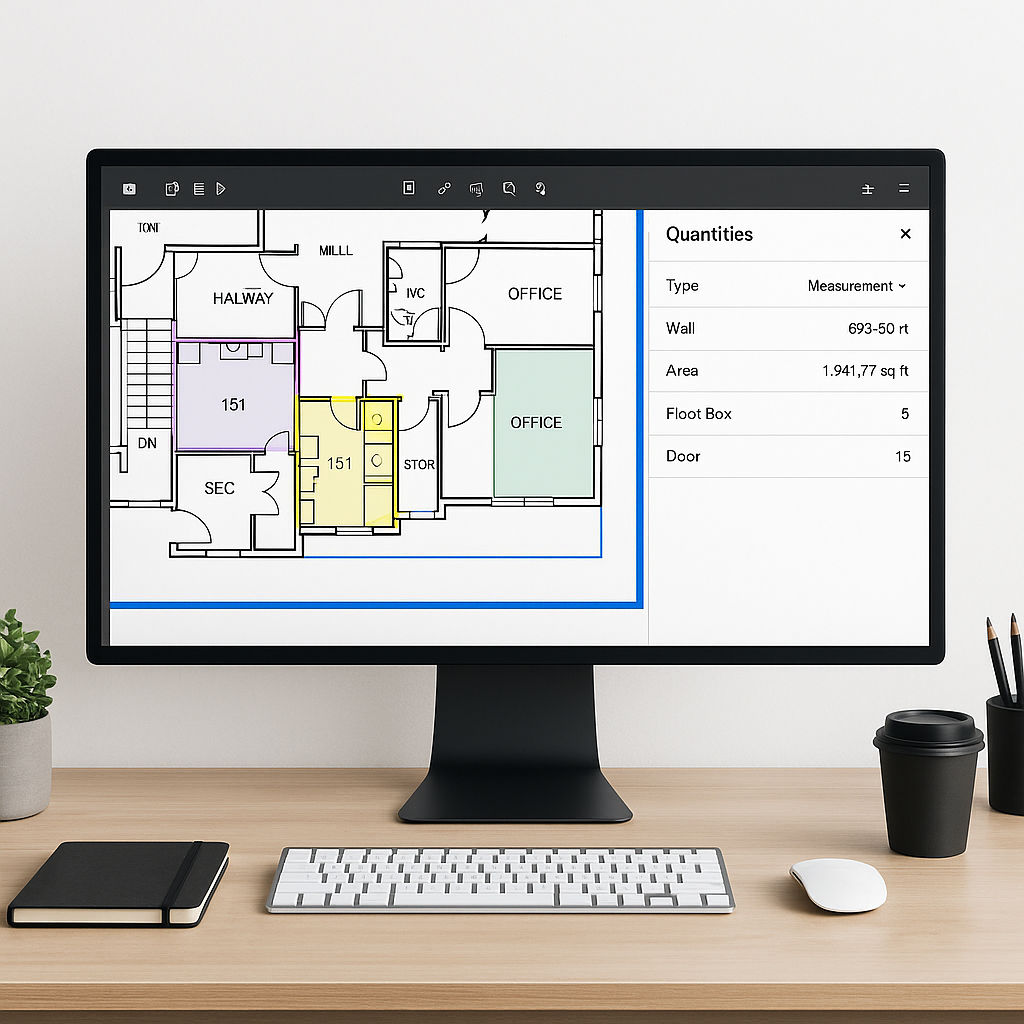
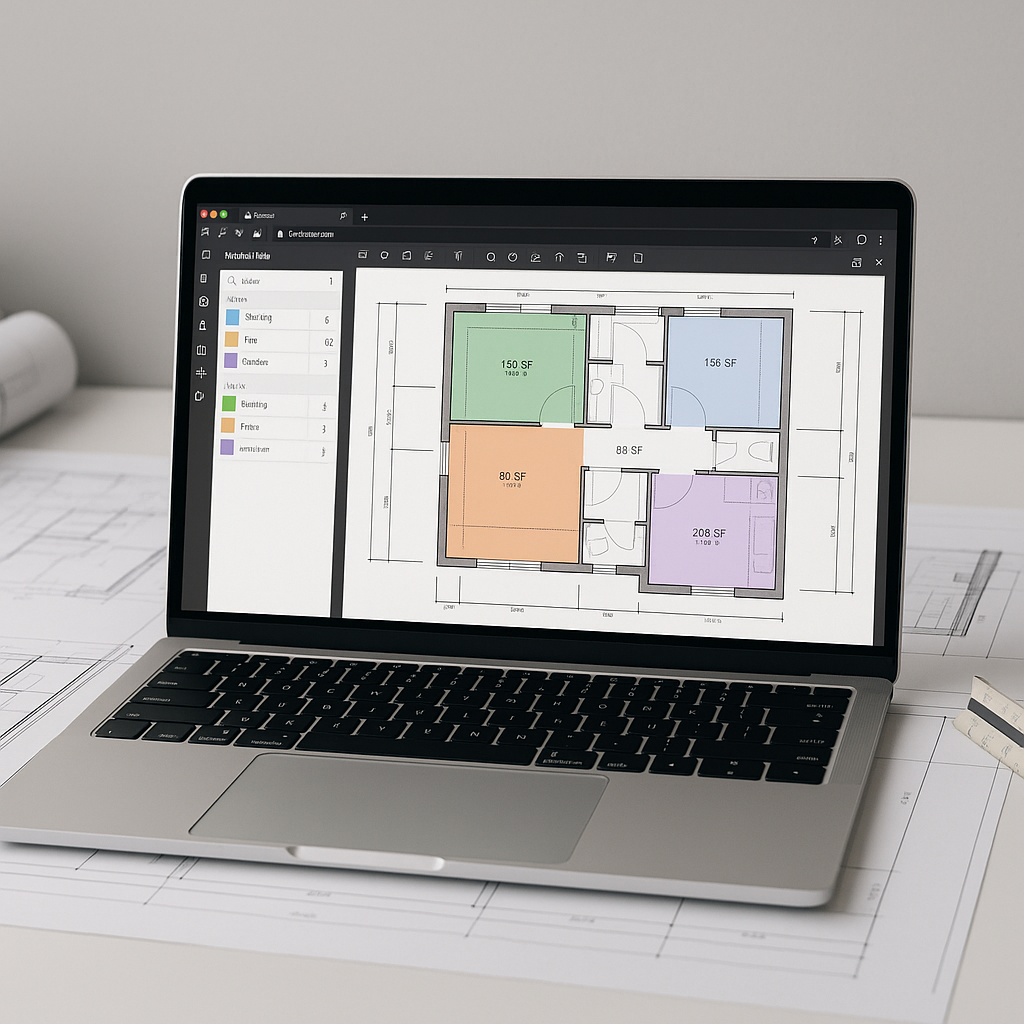
Vision AI Extraction: Upload your PDF drawings, and the AI extracts quantities automatically—room areas, wall lengths, door/window counts, and more. No manual tracing.
-
Confidence Scoring: The system flags low-confidence lines for review, so you know exactly where to double-check. You’re still in control, but now you're focusing only on the tricky bits.
-
Revision Management: Upload a new drawing set, and the AI highlights what’s changed. No need to remeasure everything.
Illustrative example — A contractor working on a large-scale project could reduce the time spent on takeoffs significantly by using AI tools, allowing the team to focus more on rate analysis and bid strategy.
The ROI of AI Takeoffs
Illustrative example — If a team pursues multiple bids annually and reduces the time spent on takeoffs by a significant margin per project, the cumulative time savings could translate into substantial cost savings. Additionally, faster takeoffs mean the ability to bid on more projects, potentially increasing the chances of winning contracts.
Common Questions About AI Takeoffs
Q: Are AI takeoffs accurate?
Yes, but the output is only as good as the input. High-quality PDFs and clear drawings yield the best results. That said, AI tools often include confidence scoring and manual override options, so you can review and adjust as needed.
Q: Does AI replace estimators?
No. It replaces the repetitive, time-consuming parts of their job. Estimators still make judgment calls, negotiate with subs, and fine-tune bids. AI just gets them to that point faster.
Q: How hard is it to learn AI tools?
Most platforms are designed for ease of use. Training typically takes a short amount of time, and because the AI gets smarter with each project, the system becomes more efficient over time.
What to Watch For
-
Low-Quality Drawings: Scanned PDFs or poorly formatted drawings can trip up AI. Always upload the cleanest files you have.
-
Over-Reliance on Automation: AI is a tool, not a substitute for expertise. Always review flagged items and cross-check critical quantities.
-
Custom Needs: If you’re working with niche materials or methods, ensure your AI tool supports custom catalogs or rate uploads.
Call to Action
If you’re tired of spending excessive time on manual takeoffs, it’s time to explore AI-powered tools. These solutions can extract quantities from drawings quickly, freeing up your team to focus on winning bids.