The Pain of Manual Rate Lookup
If you’ve worked in construction estimation, you know the drill: endless flipping through rate books, digital PDFs, or spreadsheets. Need the labor rate for a specific task? Better hope it’s indexed properly. Need material costs in a different region? That’s another rabbit hole. It’s not just slow—it’s risky. Get one rate wrong, and your bid could sink before the project even starts.
Manual rate lookup can be time-consuming and prone to errors. When time is tight and pressure is high, mistakes happen. A missed inflation adjustment, a region-specific uplift, or an outdated figure can cost you the job—or worse, your profit margins.
So what’s the fix? AI-powered rate matching. It’s not a buzzword. It’s a practical tool that eliminates the grunt work while keeping human expertise in control.
What Is AI Rate Matching?
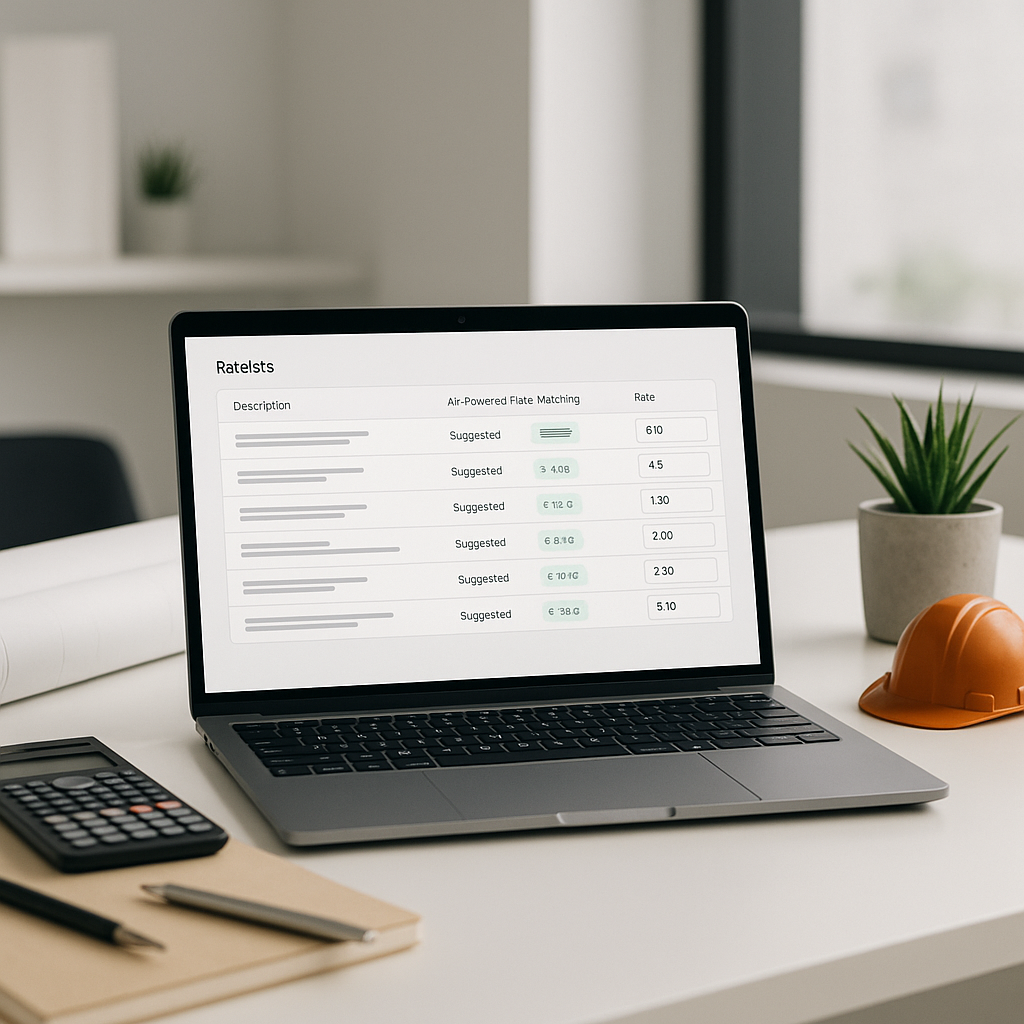
AI rate matching automates the process of finding, comparing, and applying the correct rates to your bill of quantities (BOQ). Instead of manually searching through extensive PDFs or static spreadsheets, you upload your BOQ, and the AI does the heavy lifting. It scans through massive rate catalogs—like RSMeans, CPWD DSR, or your own custom rate books—and identifies relevant matches.
Here’s how it works in AI-powered tools:
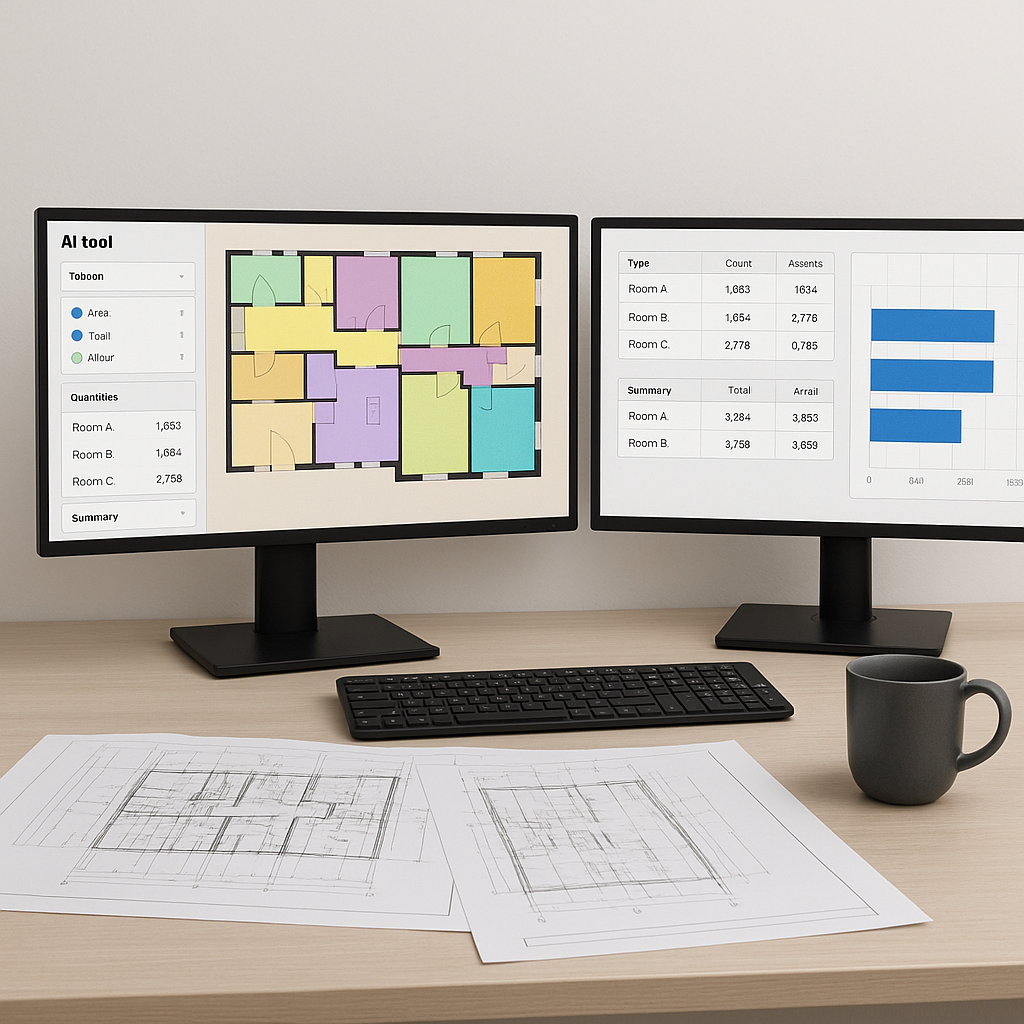
- BOQ Upload: Start by uploading your BOQ in Excel, CSV, or even a poorly formatted PDF. The AI parses it, identifying line items, section headers, and descriptions.
- Smart Matching: The AI cross-references your BOQ items with rate catalogs. It considers factors like region, catalog year, and inflation.
- Custom Rates: Got unique materials or labor costs? Add them to the system, and the AI learns to prioritize them in future estimates.
- Audit Trail: Every match comes with a breakdown—material cost, labor, equipment, and any adjustments—so you can review and tweak as needed.
The result? You get accurate rates faster, with full transparency.
Why It Matters
AI rate matching can significantly reduce the time spent on rate lookup and improve accuracy. For example, estimating a large-scale project with hundreds of line items often requires adjustments for inflation, regional variations, and catalog updates. AI tools streamline this process, allowing estimators to focus on refining bids, negotiating with subcontractors, or analyzing risks.
The Human Factor
Here’s the obvious objection: “AI doesn’t understand the nuances of my estimates.” True, but that’s not the point. AI isn’t here to replace your expertise—it’s here to amplify it.
Think of AI as your junior estimator. It handles the repetitive tasks (rate lookup, inflation adjustments, catalog cross-referencing) so you can focus on strategy. You’re still the one deciding markup percentages, negotiating with subcontractors, and presenting the final bid. The AI just gets you there faster—and with fewer mistakes.
Common Questions About AI Rate Matching
Q: What if my rates are highly customized? AI tools let you upload custom rate catalogs or add adjustments for specific projects. Over time, the system learns your preferences and prioritizes your rates.
Q: How accurate are AI-generated matches? Accuracy depends on the quality of your input data. Most tools allow for manual overrides and provide an audit trail, so you can trust but verify.
Q: Can AI handle multiple regions? Yes. Advanced platforms support multi-market complexity, applying region-specific rates, currencies, and tax rules automatically.
Q: Does AI make mistakes? Occasionally, but much less often than humans. And when it does, you can adjust the matches and improve the system’s accuracy for next time.
What to Watch For
- Garbage In, Garbage Out: If your BOQ is full of typos or inconsistencies, even the best AI will struggle. Clean data matters.
- Over-Reliance: AI isn’t magic. Always review critical rates and cross-check high-cost items.
- Learning Curve: AI tools aren’t plug-and-play. Invest time in training your team and setting up custom rate catalogs.
The Bottom Line
AI rate matching isn’t just a time-saver—it’s a competitive edge. It frees up your team to focus on what really matters: crafting smarter bids, responding to more projects, and winning more work. If you’re still stuck in the manual grind, it’s time to rethink your approach.