The Takeoff Time Sink
If you've ever spent days manually measuring drawings, you know the pain. Linear feet of walls, square footage of flooring, fixture counts—every line needs to be traced. It's tedious, repetitive, and prone to errors. Even with software like Bluebeam, you're still clicking your way through every measurement.
For most general contractors (GCs), this isn't just a hassle—it's a bottleneck. On a typical bid, takeoff alone can consume significant time and resources. And if a drawing revision comes in mid-bid? The process often needs to start over.
This is where AI-powered tools like EstimateNext make a real difference. Instead of slogging through manual takeoffs, you upload a PDF, and the AI extracts quantities in a fraction of the time. It's not magic—it’s machine learning trained on thousands of similar projects—but it sure feels like it when you see the results.
How Vision AI Shrinks the Workload
So, how does it actually work? EstimateNext's Vision AI reads your PDF drawings like a supercharged intern. Here's what happens step by step:
- Upload Your PDF: Drag-and-drop your drawing set. No formatting gymnastics, no file type headaches.
- AI Calibration: The tool asks for scale verification—think "1 inch = 10 feet." You confirm or adjust, and the AI locks it in.
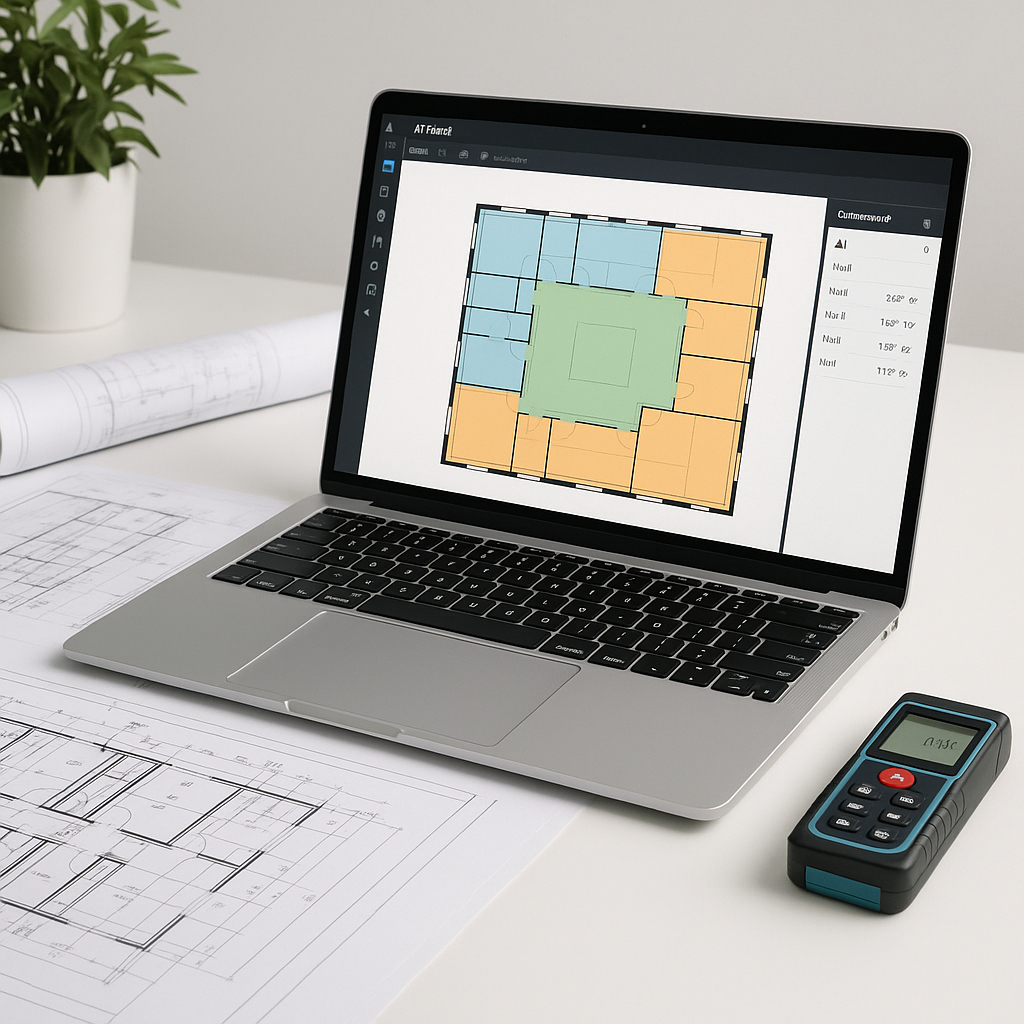
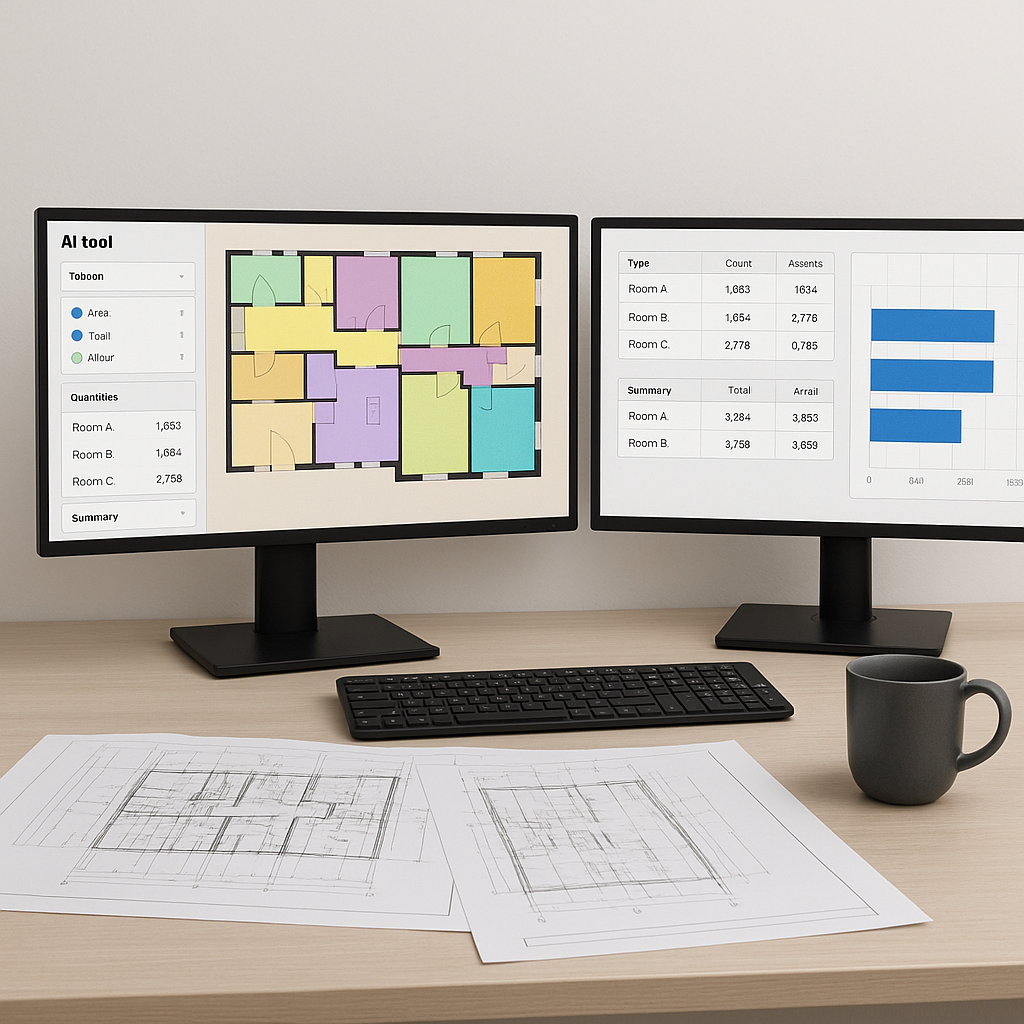
- Automated Quantity Extraction: It identifies walls, rooms, doors, windows, and more. Need linear footage, surface area, or counts? It's all there.
- Confidence Scoring: The AI flags any low-confidence measurements. For example, if a wall line is faint or unclear, it highlights it for your review.
- Manual Adjustments: You can tweak anything the AI gets wrong, with all changes logged for an audit trail.
Illustrative example — For a mid-sized GC pricing a high-rise bid, this can save significant time per project. That’s not just time saved—it’s time you can reinvest in analyzing bids, negotiating with subs, or refining your pricing strategy.
The Pushback: "AI Can't Think Like an Estimator"
You might be skeptical. "Sure, AI is fast, but it doesn't understand construction." And you're right—AI doesn't know the difference between a load-bearing wall and a partition. But that's not the point.
AI doesn't replace your expertise; it frees you to use it where it matters most. Think of the AI as your junior estimator. It handles the grunt work—measuring, counting, and flagging issues—so you can focus on validating the critical details.
In my view, the combination of human judgment and AI precision is unbeatable. You’re still in control, but you’re not buried under low-value tasks.
Real-World ROI
Let’s talk about potential benefits. According to a McKinsey report, early adopters of AI in construction see cost savings of 10-20% per project. While the exact savings will vary by company and project size, the ability to reduce time spent on manual tasks and improve accuracy can lead to measurable efficiency gains.
Additionally, tools like EstimateNext are priced competitively, making them accessible even for smaller firms. The ROI comes not just from time saved but also from the ability to produce faster, more accurate bids, which can improve competitiveness.
Common Mistakes to Avoid
Even with AI, there are pitfalls. Here’s what to watch for:
-
Garbage In, Garbage Out: AI relies on the quality of your input. Upload messy, incomplete, or poorly scanned drawings, and you’ll get messy outputs. Always verify your files before uploading.
-
Skipping the Review Step: AI tools like EstimateNext are highly accurate, but not perfect. Always review flagged items and double-check critical measurements.
-
Ignoring Training: While tools like EstimateNext are user-friendly, there’s still a learning curve. Skimp on training, and you’re setting your team up for frustration.
FAQ
Q: Can AI handle complex projects like hospitals or airports?
A: Absolutely. AI scales to any project size. Whether it’s a small office fit-out or a large infrastructure project, the same principles apply. Just make sure your drawings are clean and complete.
Q: What if my drawings are revised mid-bid?
A: No problem. With tools like EstimateNext, you can upload revisions, and the AI will compare the new set against the old one, highlighting changes automatically.
Q: Is AI secure for sensitive projects?
A: Yes. Reputable platforms like EstimateNext use enterprise-grade encryption and comply with industry standards for data security.
Q: Can AI integrate with my current tools?
A: Most AI tools, including EstimateNext, integrate with software like Bluebeam, Procore, and Excel. This means you can export data directly into your existing workflows.
The Bottom Line
AI-powered takeoffs aren’t a luxury—they’re the new baseline for competitive construction estimation. If you’re still spending days on manual measurements, you’re leaving efficiency gains on the table. Tools like EstimateNext can help your team work faster, bid smarter, and win more.