The Hidden Time Sink in Preconstruction Estimation
Let’s face it: rate lookup is a tedious process. You’re flipping through massive PDFs, scouring spreadsheets, or piecing together vendor quotes. All this just to figure out whether your estimate holds water. It’s not glamorous work, and it’s definitely not fast.
The real cost isn’t just time. It’s accuracy. When you’re manually matching rates, errors can creep in. Maybe you pull the wrong unit rate from a catalog or miss a cost escalation clause buried in vendor terms. Those mistakes don’t show up until it’s too late—when you’re already locked into a bid or, worse, dealing with blown margins on a live project.
How AI Rate Matching Works
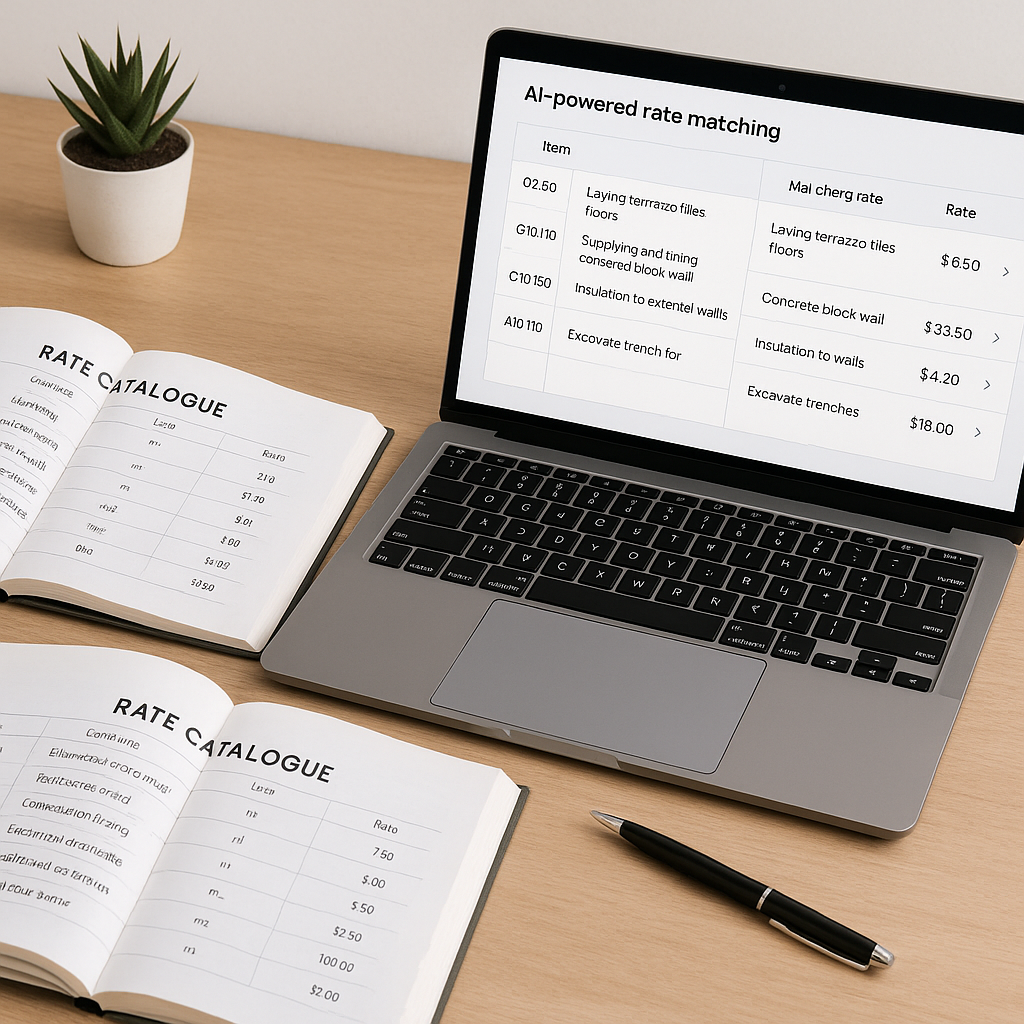
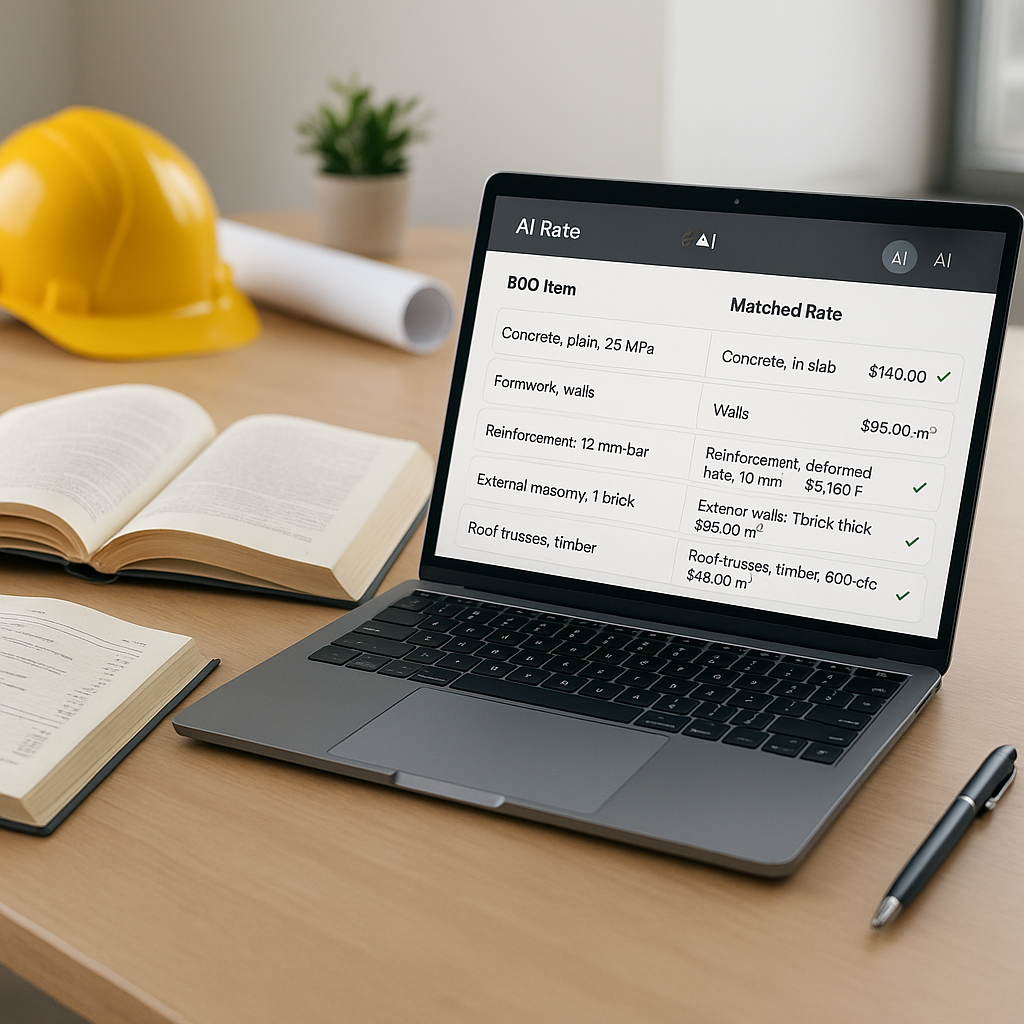
This is where AI-powered rate matching tools step in. Tools like EstimateNext use semantic search to scan thousands of rate items across multiple catalogs in seconds. Type in "concrete slab per m³," and the AI doesn’t just fetch a list—it filters results based on your catalog preferences, project location, and historical rates.
Illustrative example — Let’s say you’re pricing a high-rise project in a major city. Instead of flipping through RSMeans or city DOT schedules manually, you upload your BOQ into the system. The AI matches each line item with rates from relevant catalogs, factoring in regional adjustments and inflation. You get a fully matched, auditable rate breakdown in a fraction of the time it would take manually.
What’s the catch? Well, AI isn’t perfect out of the box. It needs good inputs to deliver good outputs. That’s why platforms like EstimateNext include feedback loops. By confirming or rejecting AI-suggested rates, you train the system to get smarter with every project.
Common Pushbacks (and Why They Don’t Hold Up)
“But AI can’t think like an estimator.”
True, AI doesn’t have your experience. It won’t know that Vendor A always underbids labor or that Vendor B’s material costs are borderline predatory. But it’s not supposed to replace your judgment. It’s supposed to handle the grunt work—so you can focus on decisions that require human expertise.
“What if my rates are custom?”
No problem. Most AI tools let you upload custom rate catalogs or define project-specific adjustments. For example, if your firm uses a proprietary rate for post-tensioned slabs, you can plug that into the system. The AI integrates it seamlessly for future use.
“Isn’t this just for big firms?”
Nope. AI rate matching scales to any project size. Whether you’re pricing a small renovation or a large infrastructure project, the principles are the same. In fact, smaller teams often see the biggest ROI because they’re working with leaner resources.
Common Mistakes to Avoid
- Skipping the Audit Trail: Always check the AI’s output. Good tools like EstimateNext include override options for a reason.
- Ignoring Regional Adjustments: Rates vary by location. Make sure your tool factors in regional cost indices or local vendor data.
- Underusing Feedback Loops: The more you train the AI with real-world data, the better it gets. Don’t skip this step.
FAQ
Q: How accurate are AI-matched rates?
A: AI tools are highly accurate when trained properly. However, human oversight is still crucial for edge cases.
Q: What if my project uses non-standard materials?
A: You can upload custom rate catalogs or manually adjust rates within the tool. Once added, the AI remembers these for future projects.
Q: Can AI handle multi-market complexity?
A: Yes. Platforms like EstimateNext support multiple measurement standards (CSI, NRM2, CPWD, etc.) and regional cost indices.
Why This Matters
Manual rate lookup isn’t just inefficient; it’s risky. AI-powered rate matching tools like EstimateNext change the game. By reducing manual effort and minimizing errors, they give you a competitive edge. Want to spend less time flipping through rate books and more time refining your bids? It might be time to make the leap.
If you're tired of wasting time on manual rate lookup, EstimateNext can help. Get started free →