The Takeoff Time Sink: A Common Estimator’s Headache
If you’ve worked in preconstruction, you already know this pain. A bid package drops into your lap on a Thursday afternoon. Drawings, specs, and a BOQ are handed over, and the clock starts ticking. You’ve got until Monday to submit a competitive, fully priced estimate. Sound familiar?
But here’s the catch: manual takeoffs are slow. Even experienced estimators spend significant time extracting quantities from drawings. That’s hours of tracing beams, counting fixtures, and measuring wall lengths. By the time you're done, you’re scrambling to finalize rates, normalize subcontractor quotes, and slap together a report.
This isn’t just frustrating—it’s inefficient. And it’s where AI-powered tools come in. Let’s dive into how AI is transforming takeoff processes.
How AI-Powered Takeoffs Work
At its core, an AI-powered takeoff tool does one thing exceptionally well: it automates the grunt work. Here’s how:
-
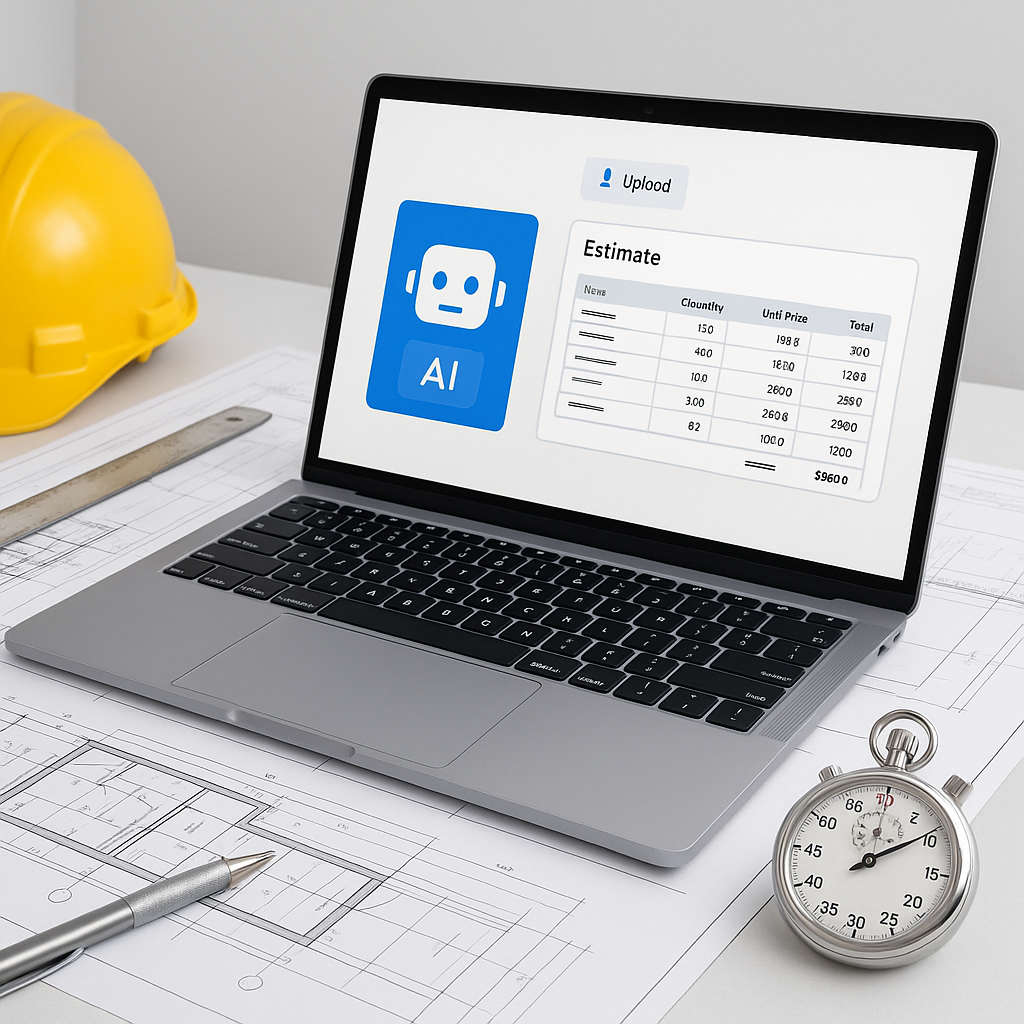
Upload Your Drawings
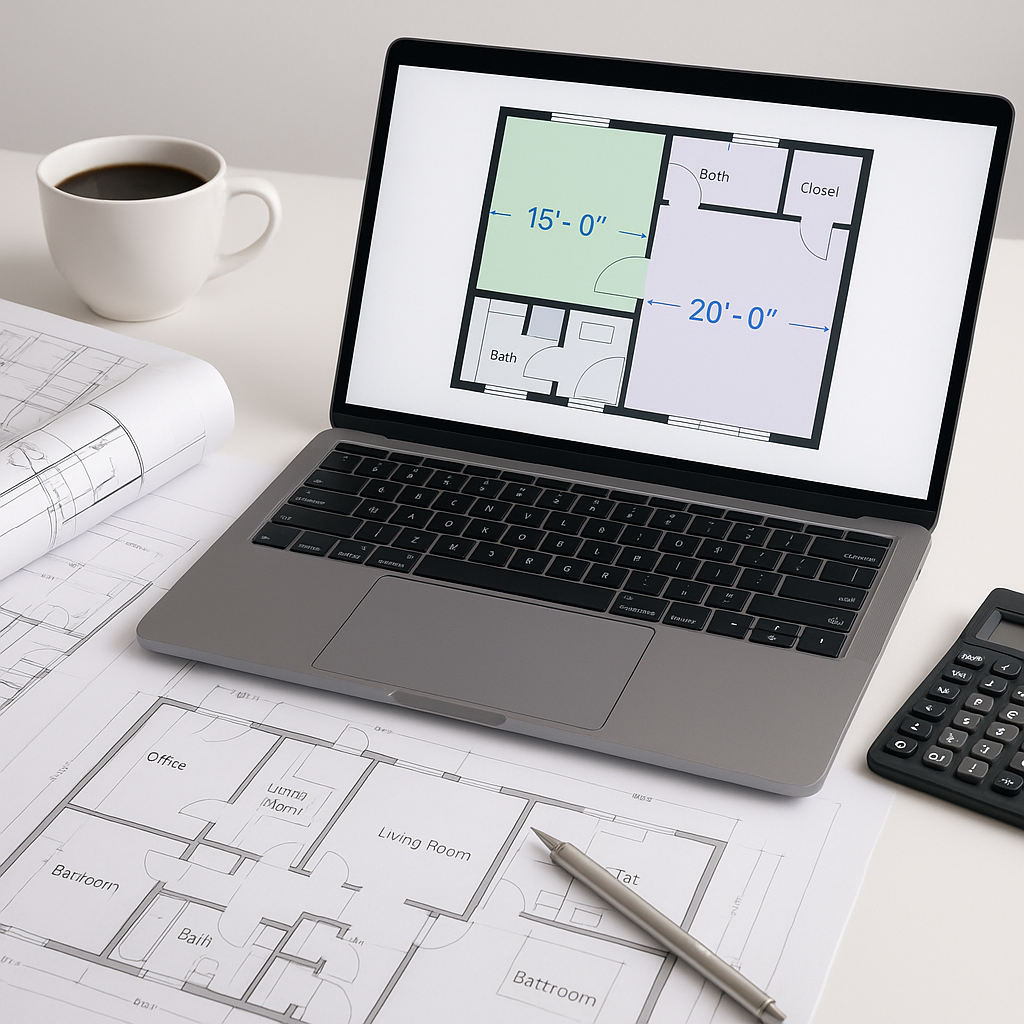
Whether it’s a PDF, CAD file, or scanned document, modern tools can handle it. These tools process drawing sets of various formats, automatically detecting key elements like room areas, wall lengths, and even door and window counts. -
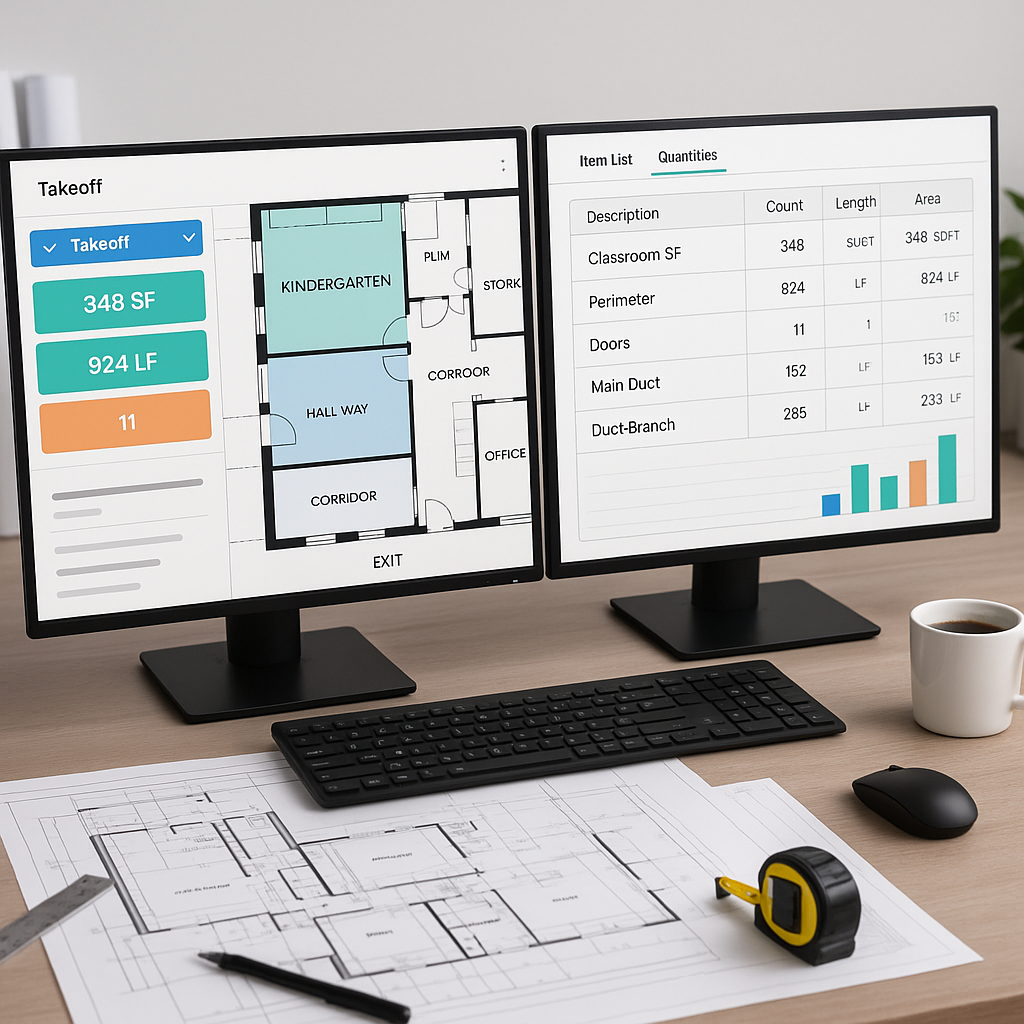
Automated Quantity Extraction
Instead of meticulously tracing lines or eyeballing measurements, the AI reads and processes the drawings. It identifies and extracts quantities for concrete, steel, drywall, and more. This automation significantly reduces the time spent on manual takeoffs. -
Confidence Scoring
No system is perfect, and AI doesn’t pretend to be. Many tools include confidence scoring, highlighting areas where the AI isn’t certain. You can review and override those areas, ensuring accuracy without slowing down the process. -
Integration with Your Workflow
Once the quantities are extracted, they can be exported directly into your existing software—whether it’s Excel, Bluebeam, or Procore. This means no more double data entry or format headaches.
The ROI of Faster Takeoffs
Why does it matter if takeoffs are faster? Let’s break it down:
-
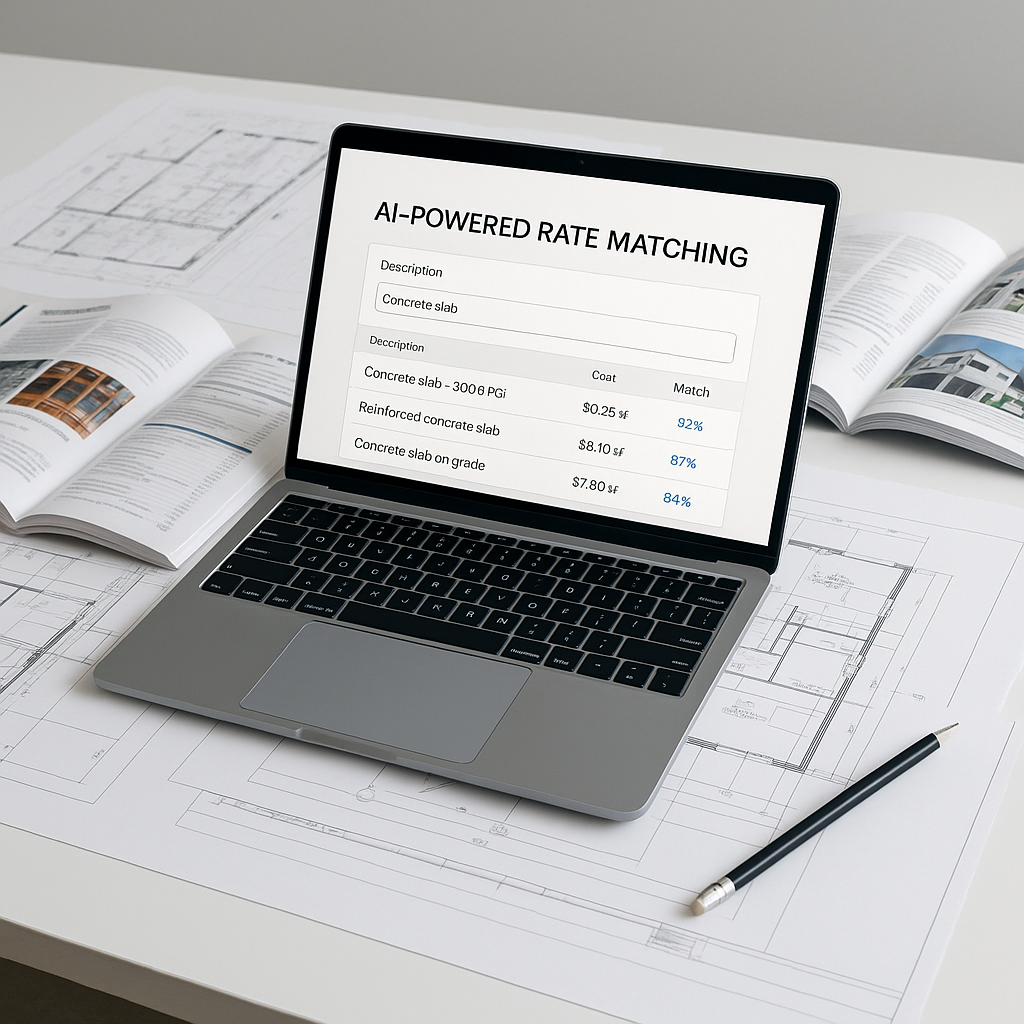
More Bids, More Revenue: If your team can process estimates faster, you can respond to more bids. This increases your chances of winning projects.
-
Reduced Labor Costs: Every hour saved on takeoffs is an hour you’re not paying for. Faster takeoffs free up your team to focus on higher-value tasks.
-
Fewer Errors: Manual takeoffs are prone to mistakes. Overlook a beam or miscount windows, and your bid could be wildly off. AI reduces these errors by automating repetitive tasks and flagging uncertainties for review.
Common Objections to AI Takeoffs
You might be skeptical. That’s fair—AI in construction is still a relatively new concept. Let’s tackle some common concerns:
“AI can’t think like an estimator.”
True, but it doesn’t need to. AI doesn’t replace your expertise; it amplifies it. You still decide on contingencies, markups, and scope adjustments. The AI just handles the tedious stuff.
“What if the AI gets it wrong?”
That’s why confidence scoring exists. You can review low-confidence areas manually, ensuring the final takeoff is accurate. Think of it as an extra set of (very fast) eyes, not an infallible oracle.
“Will it work with my current tools?”
Most AI platforms integrate seamlessly with popular construction software. You’re not replacing your stack; you’re enhancing it.
What to Watch For
Not all AI tools are created equal. Here’s what to look for when evaluating options:
- Input Flexibility: Can it handle different file types and formats?
- Accuracy: Does it offer confidence scoring and manual override options?
- Integration: Will it play nicely with your existing tools?
- Learning Curve: How long will it take your team to get up to speed?
FAQ
Q: How accurate are AI-powered takeoffs?
A: Most tools claim high accuracy with clean input data. However, human oversight is still important for edge cases.
Q: Can AI handle complex projects like high-rises or infrastructure?
A: Yes. AI tools scale to any project size, from small renovations to large infrastructure projects.
Q: Is AI worth the investment for smaller firms?
A: Absolutely. Even small firms save significant time and resources, making the ROI compelling.
The Bottom Line
AI-powered takeoff tools aren’t just a luxury—they’re becoming a necessity. With deadlines tightening and competition increasing, the ability to complete takeoffs in minutes instead of days can be the difference between winning a bid and losing it.
If you’re tired of wasting hours on manual takeoffs, consider exploring AI-powered solutions to streamline your preconstruction workflows.