The Hidden Bottleneck: Manual Rate Lookup
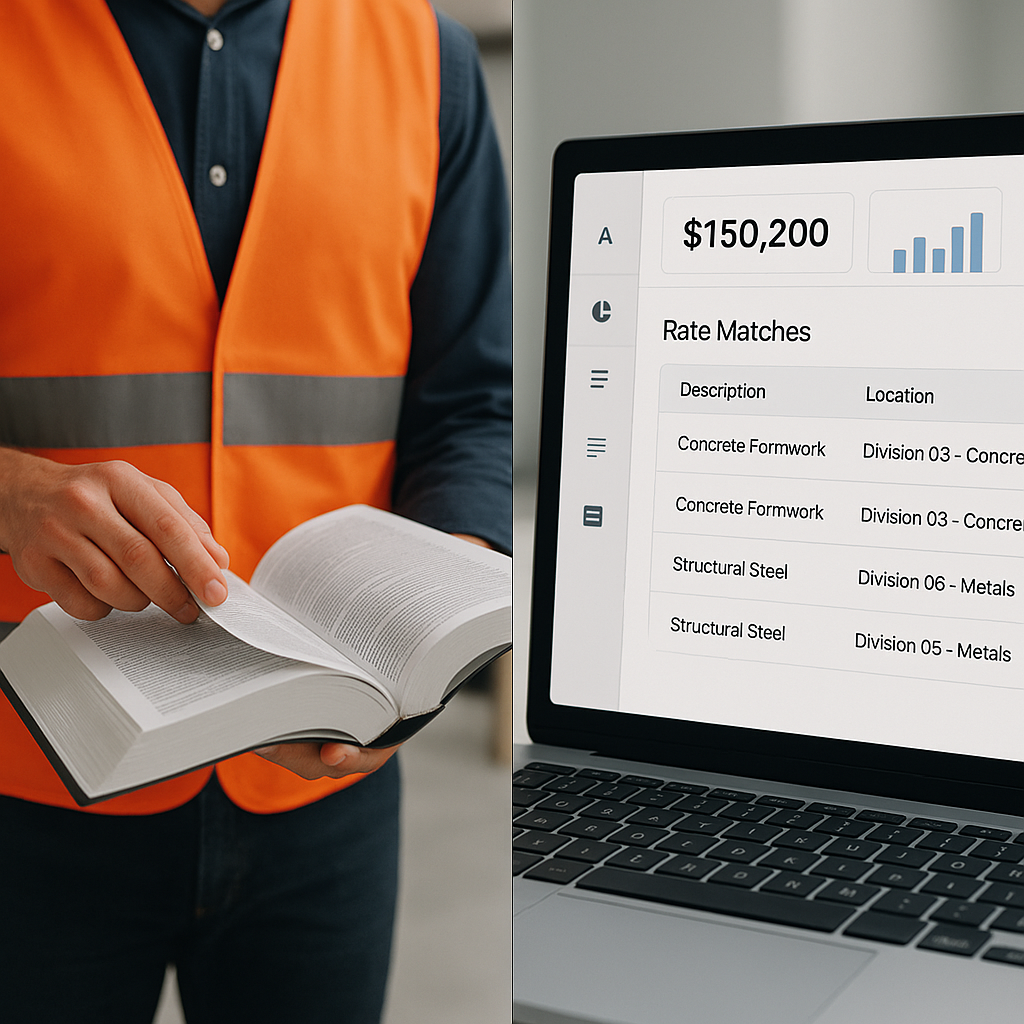
Every estimator knows the pain. You’re flipping through a 2,000-page rate book or scrolling endlessly in PDFs, trying to find the exact match for a material, labor rate, or equipment cost. It’s not just slow—it’s error-prone. Miss one line item, and you could underbid or overspend.
Manual lookup depends on human effort, which means typos, misreads, or outdated rates can easily slip in. This hidden bottleneck costs time, risks errors, and makes your bids less competitive.
AI-Powered Rate Matching: How It Works
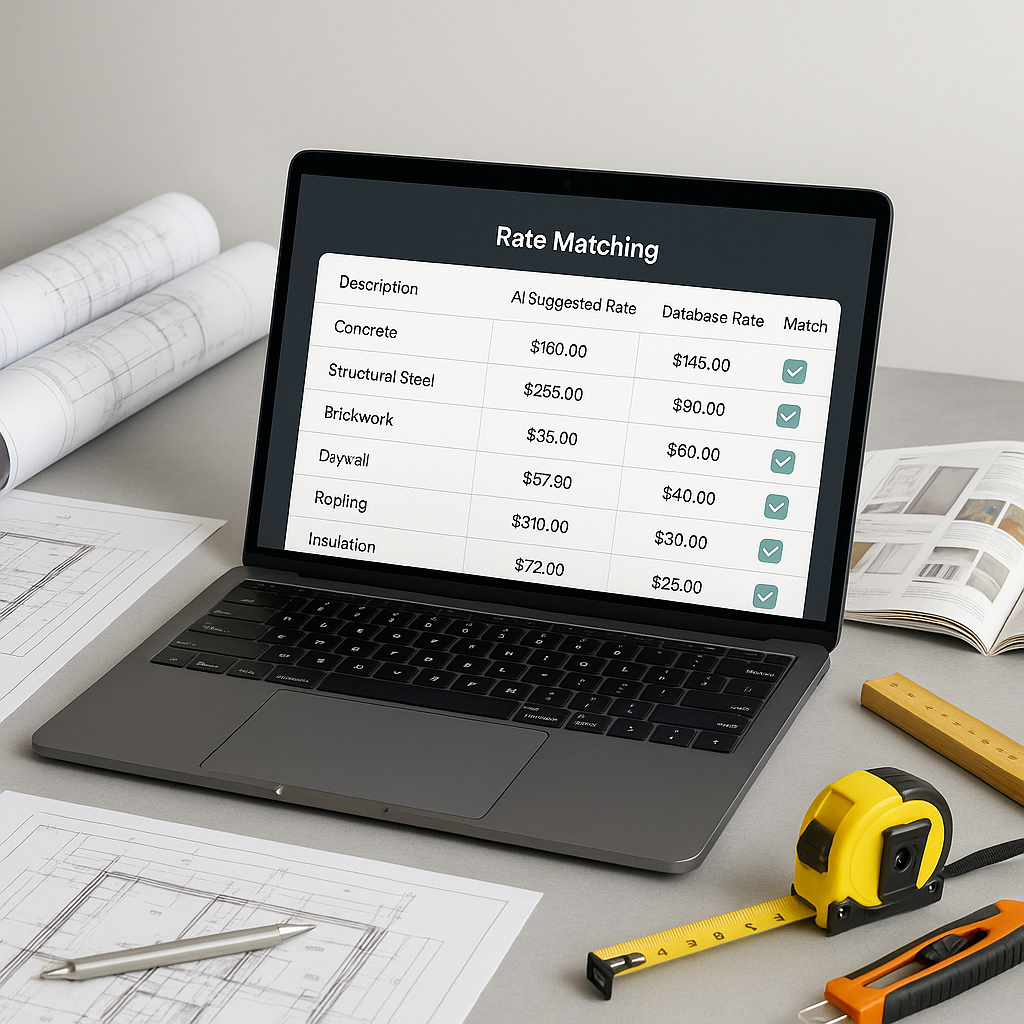
AI-powered tools like EstimateNext are changing the game. Instead of flipping through PDFs or Excel spreadsheets, you can upload your BOQ, and the system matches each line item to rates from a database of standard schedule of rates (SOR) items.
Here’s what happens step by step:
- Upload the BOQ: Drag and drop your Excel file into the platform. The AI parses merged cells, hierarchies, and section headers automatically.
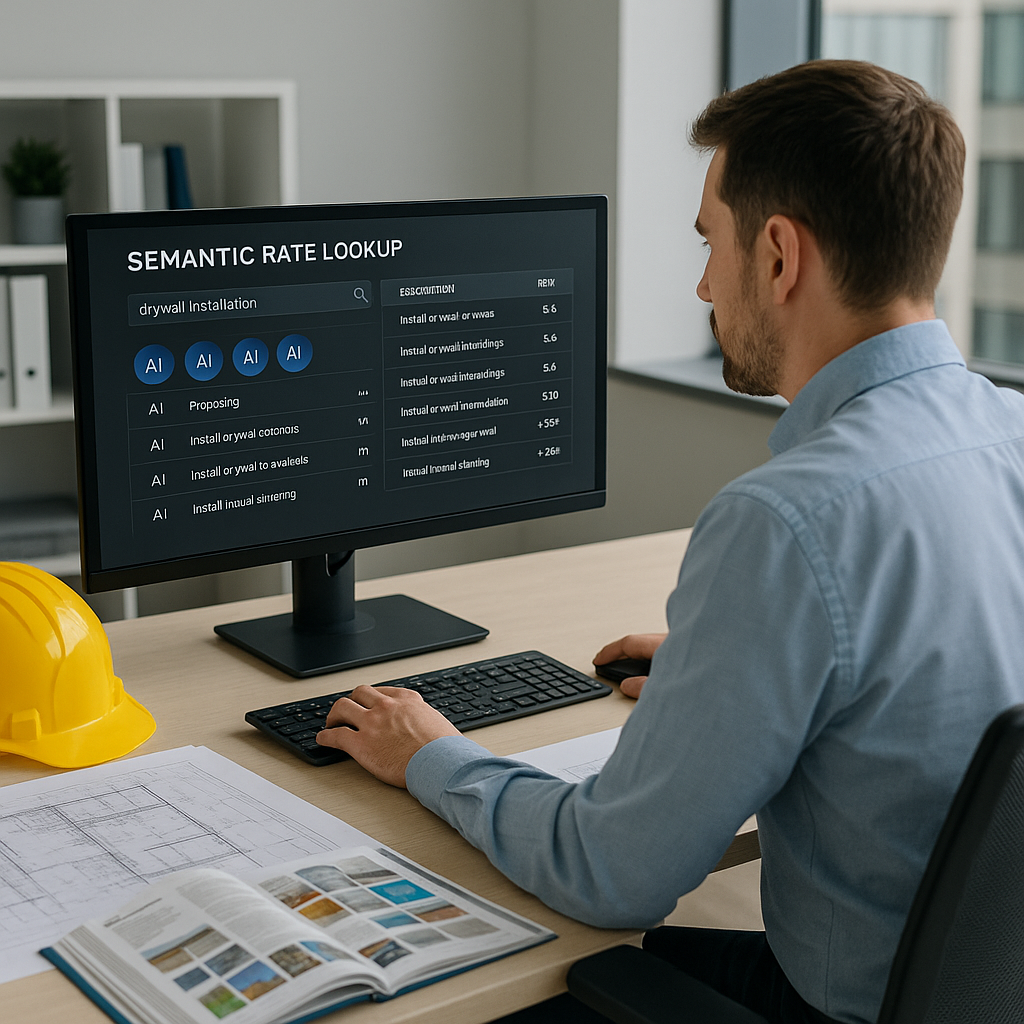
- Semantic Search: The system uses context-based search to find the best rate matches. For example, if your BOQ mentions "plywood 12mm," the AI understands the context and pulls rates for that exact spec.
- Custom Catalogs: Got your own rates? No problem. You can upload custom catalogs, and the AI integrates them seamlessly. For instance, if your firm uses a specific labor rate for skilled welders, the system prioritizes that over generic options.
- AI Fallback: If no exact match exists, the AI widens its search to similar items and flags them for your review. This ensures you’re not stuck with a blank line.
- Real-Time Updates: Rates are updated in real-time, whether it’s inflation adjustments or project-specific factors.
The result? Rate lookup that takes significantly less time. And because the AI learns from your feedback, it gets smarter with every project.
Real Impact on Projects
AI-powered rate matching eliminates the inefficiencies of manual rate lookup, allowing teams to focus on higher-value tasks. By automating repetitive processes, estimators can reduce errors and improve confidence in their bids.
This isn’t just about speed. It’s about confidence. When you know your rates are accurate and up-to-date, you can defend your numbers in negotiations. And that’s a big deal when margins are tight.
Common Objections
“But AI doesn’t understand the nuances of my projects.”
True, AI isn’t perfect. It’s not going to replace your expertise. But it doesn’t have to. Think of it as a second pair of hands for the grunt work. You still make the judgment calls—AI just ensures the basic tasks are done faster and more accurately.
“What if my rates are custom or project-specific?”
No problem. Most AI tools, including EstimateNext, let you upload custom catalogs. Your unique rates are prioritized, so the system reflects your actual costs—not generic averages.
“Will this integrate with my existing tools?”
Yes. AI platforms like EstimateNext can export estimates directly into tools like Procore or Bluebeam. This means you’re not overhauling your workflow—just optimizing the parts that slow you down.
FAQ: AI Rate Matching in Construction
Q1: How accurate are AI-powered rate matches?
AI tools like EstimateNext are highly accurate, but human oversight is still essential. Most users see major accuracy improvements by their third project as the system learns from feedback.
Q2: Can AI handle multiple catalogs (e.g., CPWD DSR and RSMeans)?
Yes. AI-powered platforms can manage multiple catalogs and even apply inflation adjustments or currency conversions.
Q3: Is AI rate matching suitable for small projects?
Absolutely. Whether it’s a small renovation or a large infrastructure project, AI scales to fit your needs.
What’s Next?
If rate lookup is eating into your team’s time and slowing down bids, it’s time to consider AI-powered solutions. Tools like EstimateNext can reduce hours of work to minutes while improving accuracy and confidence.