Streamline Rate Lookup in Preconstruction Estimation
If you've ever flipped through a massive rate book like CPWD DSR or RSMeans, you know the frustration. Need the labor rate for installing pre-stressed concrete? Or the cost of a particular HVAC unit? You’re scrolling, searching, or flipping for hours. It’s tedious and prone to error.
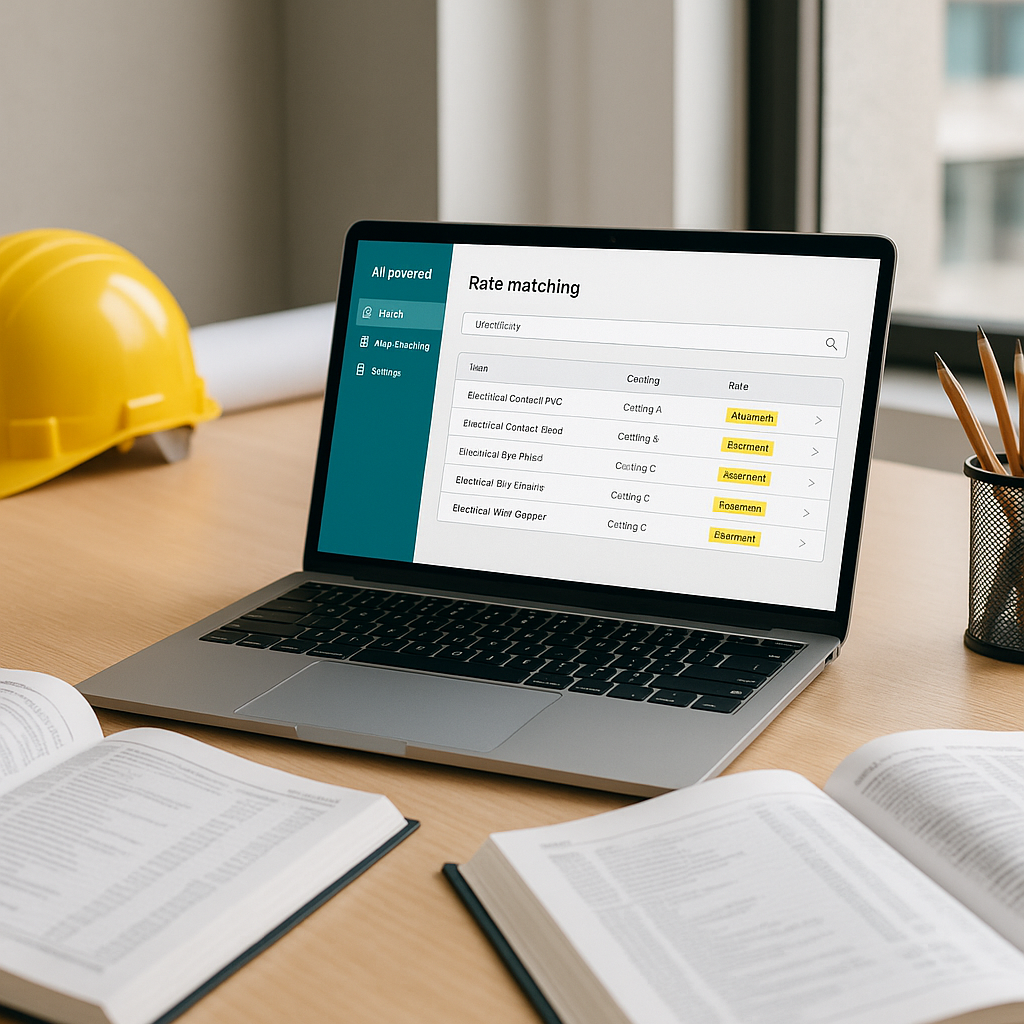
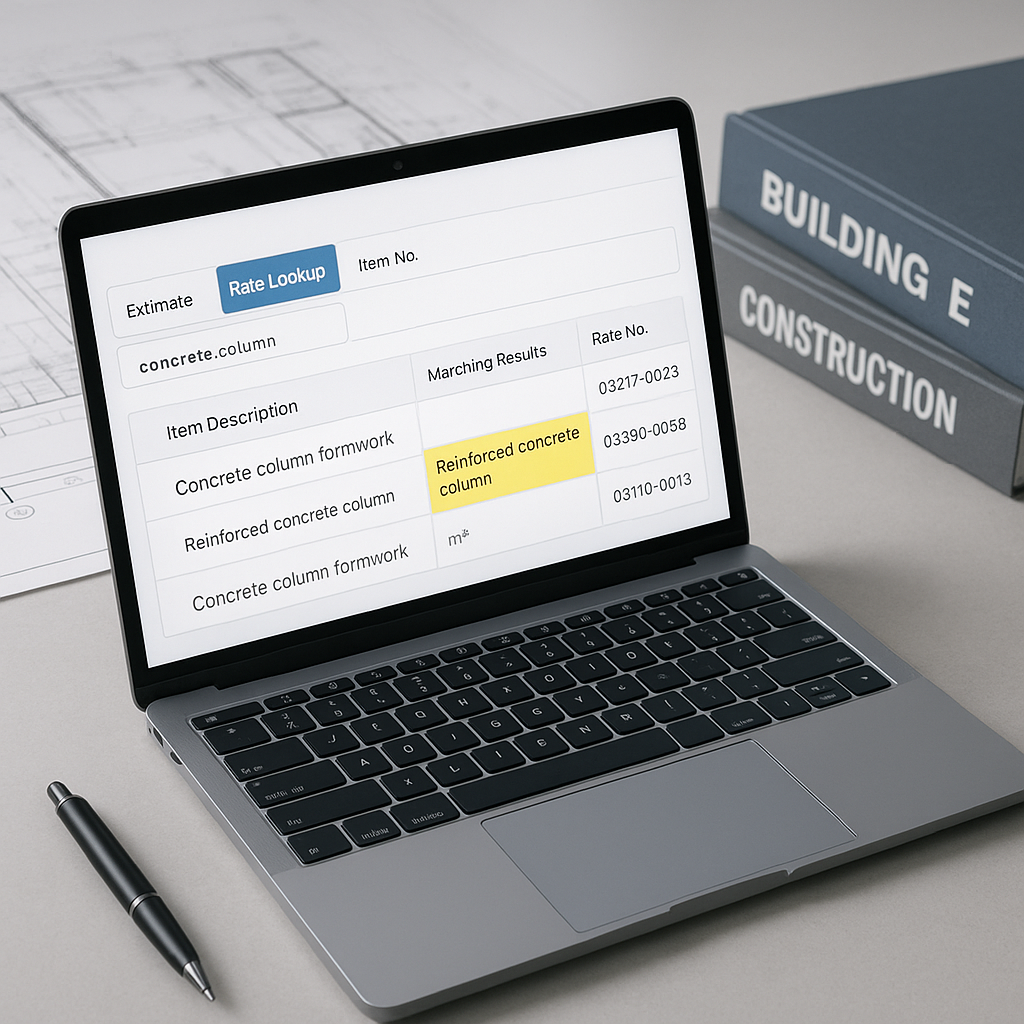
That’s where AI-powered rate matching steps in. Instead of thumbing through PDFs or cross-referencing outdated spreadsheets, you can type a query, and in seconds, you’ve got a match. It’s like having the world’s fastest estimator assisting you.
How It Works
AI-powered rate matching tools use semantic search. What does that mean in plain language? The AI understands what you’re asking for—not just the exact words you type.
For example, say you’re pricing a rail bridge project and need the labor rate for welding structural steel. Instead of searching for "welding" in a massive document, the AI understands related terms like "steel fabrication" or "ironworker labor." It pulls up rates instantly, even if they’re buried under layers of technical jargon or alternate phrasing.
Here’s another advantage: the system gets smarter over time. By the third or fourth project, it learns from your adjustments. If you always select a specific rate for "concrete formwork," it remembers that for next time. No more re-teaching the tool every bid cycle.
Benefits: Time Saved, Accuracy Improved
Illustrative example — A typical manual rate lookup can take significant time per estimate, depending on its scope. AI reduces this to seconds. Imagine what you could do with that time back:
- Tackle additional bids in the same timeframe.
- Spend time negotiating better subcontractor quotes.
- Focus on higher-value tasks instead of repetitive lookups.
And it’s not just about speed. Manual lookups come with human error. Did you accidentally pull last year’s rate? Did you misread the table? AI minimizes such mistakes by pulling the most current data from your uploaded catalogs or integrated sources.
Addressing Concerns: “AI Doesn’t Think Like an Estimator”
You might be thinking, "Sure, AI is fast, but it doesn’t understand the nuances of construction." And you’re right—to a point.
AI doesn’t replace your expertise. It amplifies it. You’re still the one making judgment calls, reviewing unusual rates, and deciding on markups. The AI just handles the grunt work—finding rates, matching line items, and flagging discrepancies. It’s a tool, not a replacement.
Think of it this way: You wouldn’t lay out a 30-story building with just a tape measure. You’d use a laser level. AI tools are the laser level for preconstruction estimation. They make your work faster, more accurate, and less frustrating.
Common Questions About AI Rate Matching
Q: What if my rates are custom or project-specific?
No problem. AI tools let you upload your own rate catalogs or adjust default rates. Once entered, those rates become part of the system’s searchable database for future projects.
Q: How does the AI handle outdated or regional rate variations?
Good AI platforms allow you to upload updated catalogs or apply inflation factors and regional cost adjustments directly. This ensures the rates you’re using are relevant to your project’s location and timeline.
Q: Is this only useful for large-scale projects?
Not at all. The time savings and accuracy improvements apply to projects of any size. Whether you’re pricing a small office fit-out or a large infrastructure project, the benefits scale accordingly.
What to Watch For
AI isn’t perfect. Garbage in, garbage out. If your input data—like the BOQ or rate catalogs—is messy or outdated, even the best AI will struggle. Always start with clean, accurate data. And don’t skip the review step. The system can flag low-confidence matches, but it’s on you to verify them.
Another watch-out: over-reliance. These tools are helpers, not decision-makers. Always apply your own expertise to finalize the numbers.
The Bottom Line
AI-powered rate matching is becoming an essential tool in preconstruction estimation. By reducing manual effort and improving accuracy, it allows you to focus on higher-value tasks—whether that’s refining bids, negotiating better terms, or simply delivering better projects.
If you’re tired of wasting time flipping through rate books, consider exploring AI tools that can streamline your workflow and help you stay competitive in today’s fast-paced construction industry.