Why Manual Takeoffs Are Challenging
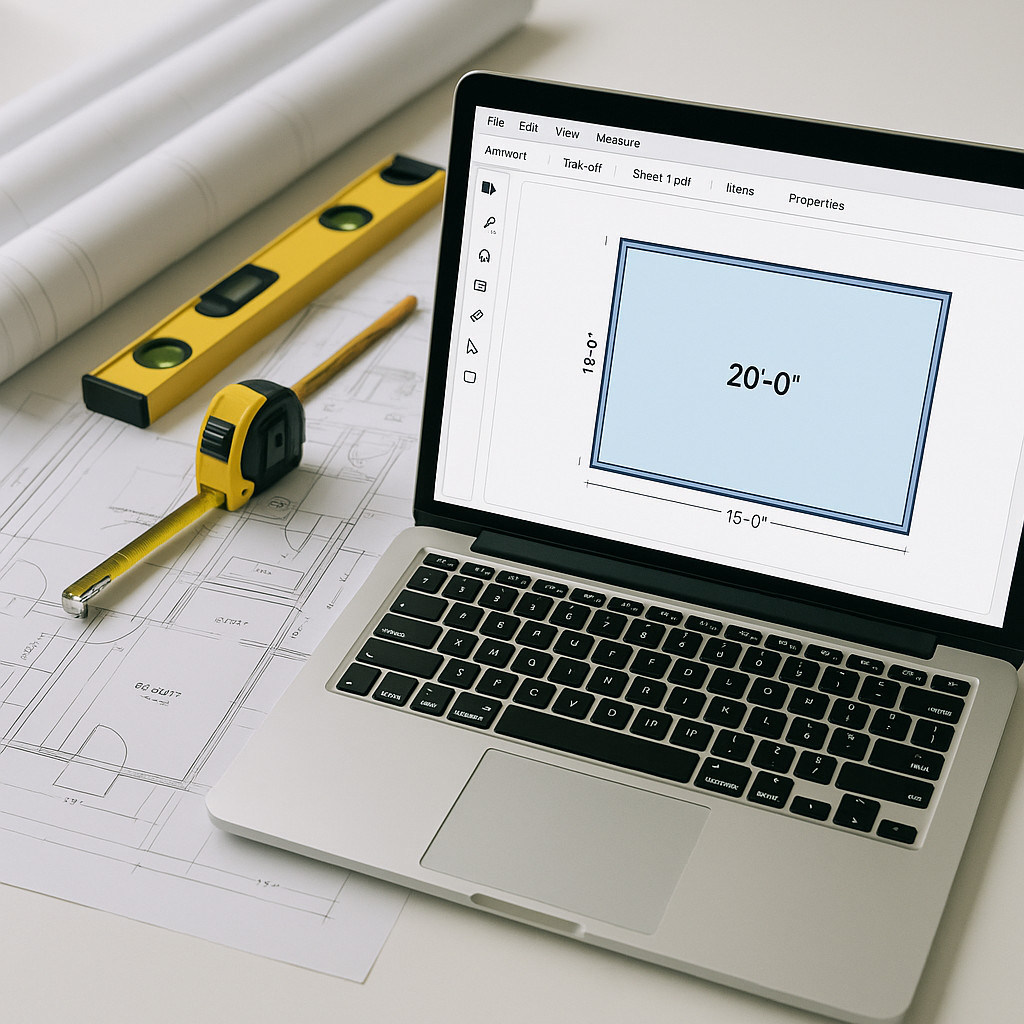
Manual takeoffs can be a significant drain on time and resources. Measuring wall lengths or counting fixtures on large PDF sets is tedious, error-prone, and time-consuming. As construction projects grow in size and complexity, preconstruction teams are often expected to handle more work without proportional increases in resources. This creates a need for more efficient solutions.
One such solution is AI-powered takeoff tools, which leverage advanced technology to automate repetitive tasks and improve efficiency.
The AI Advantage in Takeoffs
AI-powered tools analyze PDFs or CAD files programmatically, extracting quantities such as wall areas, beam lengths, or door counts in a fraction of the time it would take manually. This is achieved through machine learning models trained on extensive datasets of construction projects.
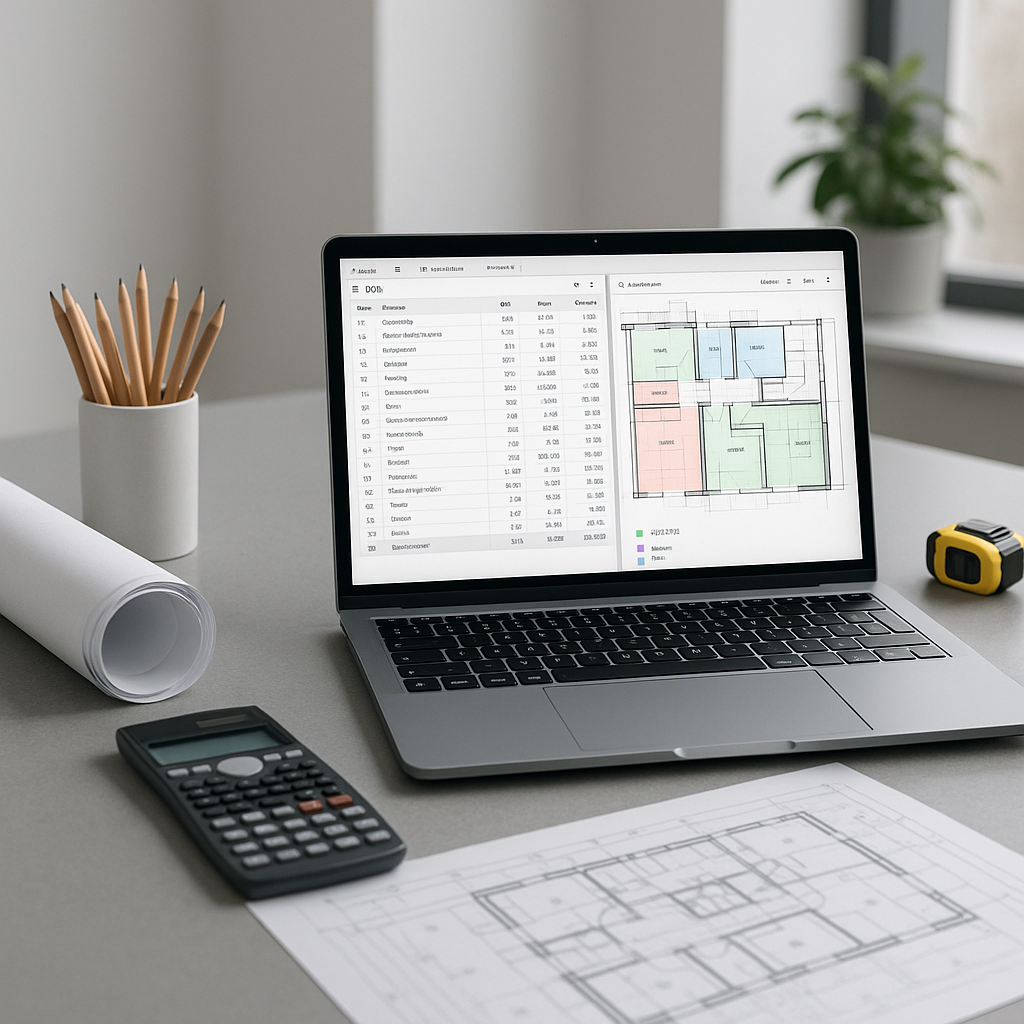
Illustrative example — Consider a mid-sized general contractor bidding on a large office building project. The estimator uploads the project drawings into an AI-powered tool. The tool scans the drawings and identifies key quantities like linear feet of walls, square footage of flooring, and the number of door openings. This process, which might take days manually, is completed in a much shorter time, allowing the team to focus on refining bids or exploring cost-saving strategies.
Accuracy: The Other Half of the Equation
Speed is only part of the benefit. Accuracy is equally critical in preconstruction estimation. AI tools often include features that flag uncertain quantities for review, ensuring that estimators can verify and adjust as needed. This collaborative approach between human expertise and AI reduces the likelihood of errors.
For example, if the AI encounters ambiguous elements in a drawing, such as faint lines that could represent different features, it highlights these areas for manual review. This process helps minimize errors, leading to fewer RFIs, fewer change orders, and smoother project execution.
Common Challenges (and How to Address Them)
1. Dealing with messy drawings
Many estimators work with PDFs that are uncalibrated, unlabeled, or cluttered with revisions. AI tools often include features that allow users to manually remeasure flagged areas, providing an audit trail for transparency.
2. Handling custom specifications
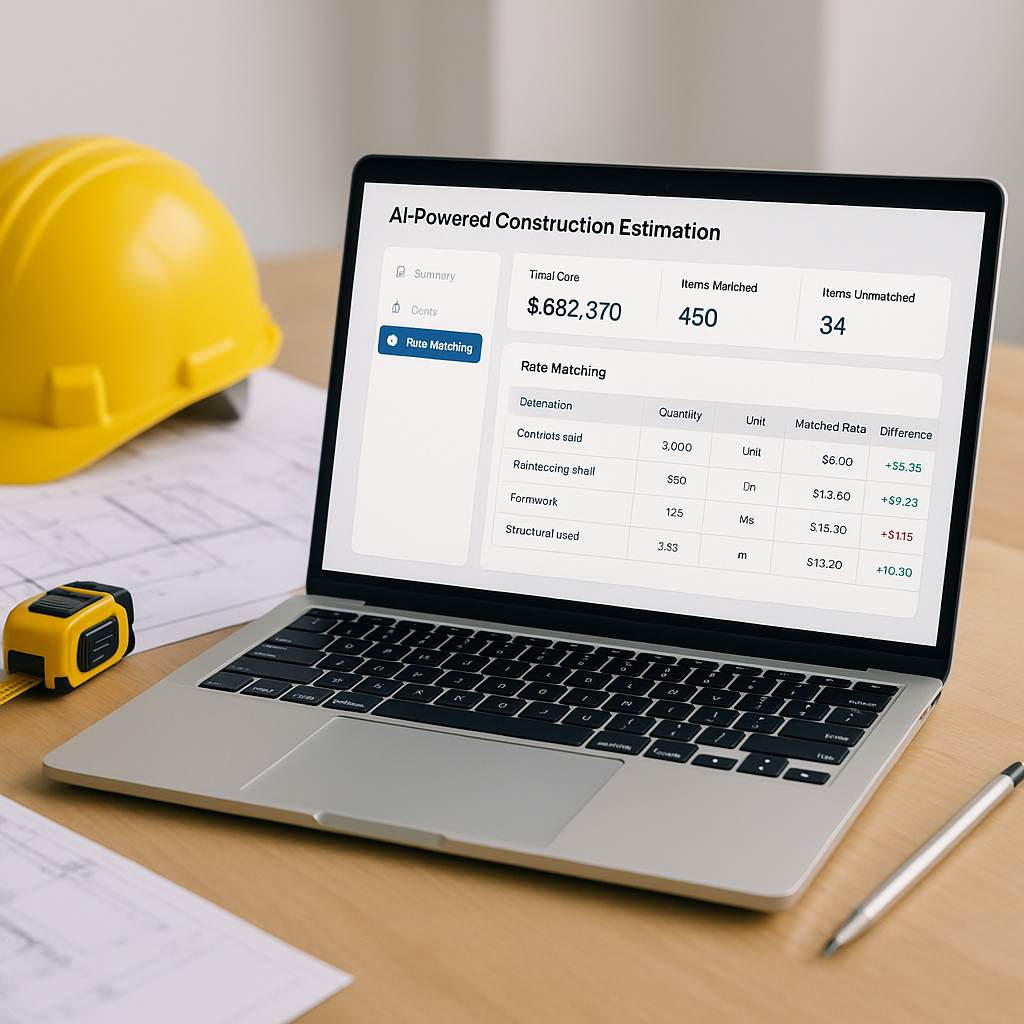
Projects with unique specifications can be accommodated by uploading custom rate catalogs or adjusting quantities directly in the bill of quantities (BOQ). Over time, the AI can learn from these inputs to improve its future performance.
3. Trusting software over experience
AI tools are designed to complement, not replace, human expertise. By automating repetitive tasks, they free up estimators to focus on strategic decisions, such as bid optimization and cost analysis.
FAQ
Q: Can AI tools handle multi-discipline projects?
Yes. Many AI-powered tools include modules tailored to specific trades, such as HVAC, electrical, and plumbing, providing discipline-specific insights.
Q: How do AI tools integrate with existing workflows?
Most AI tools are designed to integrate seamlessly with popular platforms like Bluebeam, Procore, and Excel. This allows users to export takeoffs, rates, or entire BOQs directly into their existing workflows.
Q: What is the learning curve for using AI tools?
AI tools are typically user-friendly, with intuitive interfaces and built-in guides. Most teams can become proficient within a short period of time.
Conclusion
AI-powered takeoff tools offer significant advantages in terms of efficiency and accuracy, enabling preconstruction teams to handle larger workloads and focus on higher-value tasks. By adopting these tools, construction professionals can stay competitive in an industry that demands precision and speed.
If you’re looking to streamline your preconstruction process, consider exploring AI-powered solutions to enhance your workflow.