Why Manual Rate Matching is a Bottleneck
If you’ve ever spent hours flipping through a rate book or digging through outdated Excel files to find the right cost for a labor or material item, you already know how painful manual rate matching can be. It’s slow, tedious, and prone to mistakes. Miss one line item, and you’re either underpricing your bid or padding it unnecessarily—neither is great.
Rate lookup doesn’t just waste your time. It also limits your team’s ability to respond quickly to bid requests, especially when deadlines are tight. A slow turnaround can mean losing a project to a competitor who submits their estimate faster.
Fortunately, AI tools have stepped in to take the grunt work out of rate matching, offering faster and more accurate results than manual methods. Let’s break down how.
How AI-Powered Rate Matching Works
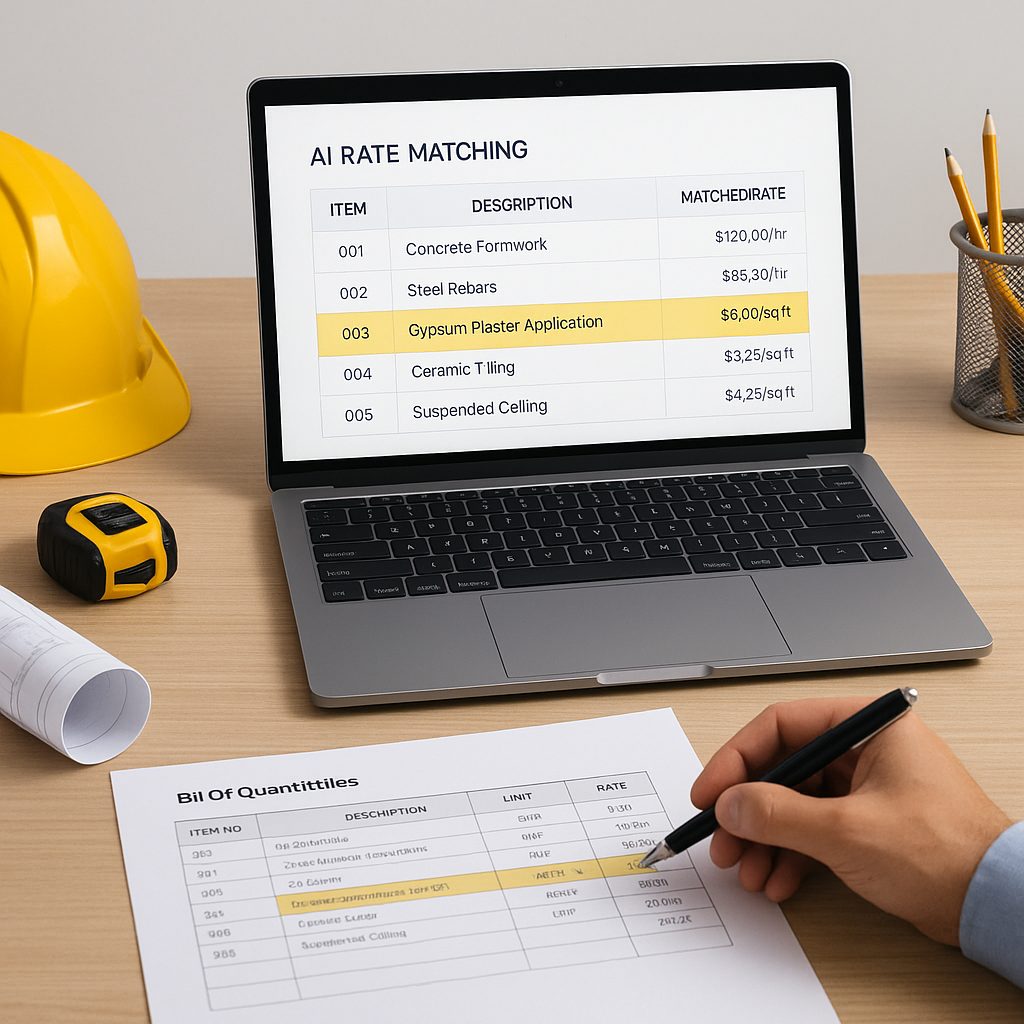
At its core, AI rate matching is about turning a headache into a streamlined task. These platforms use semantic search algorithms to match your Bill of Quantities (BOQ) line items to standardized rates in a fraction of the time it takes to do manually. Here’s the step-by-step process:
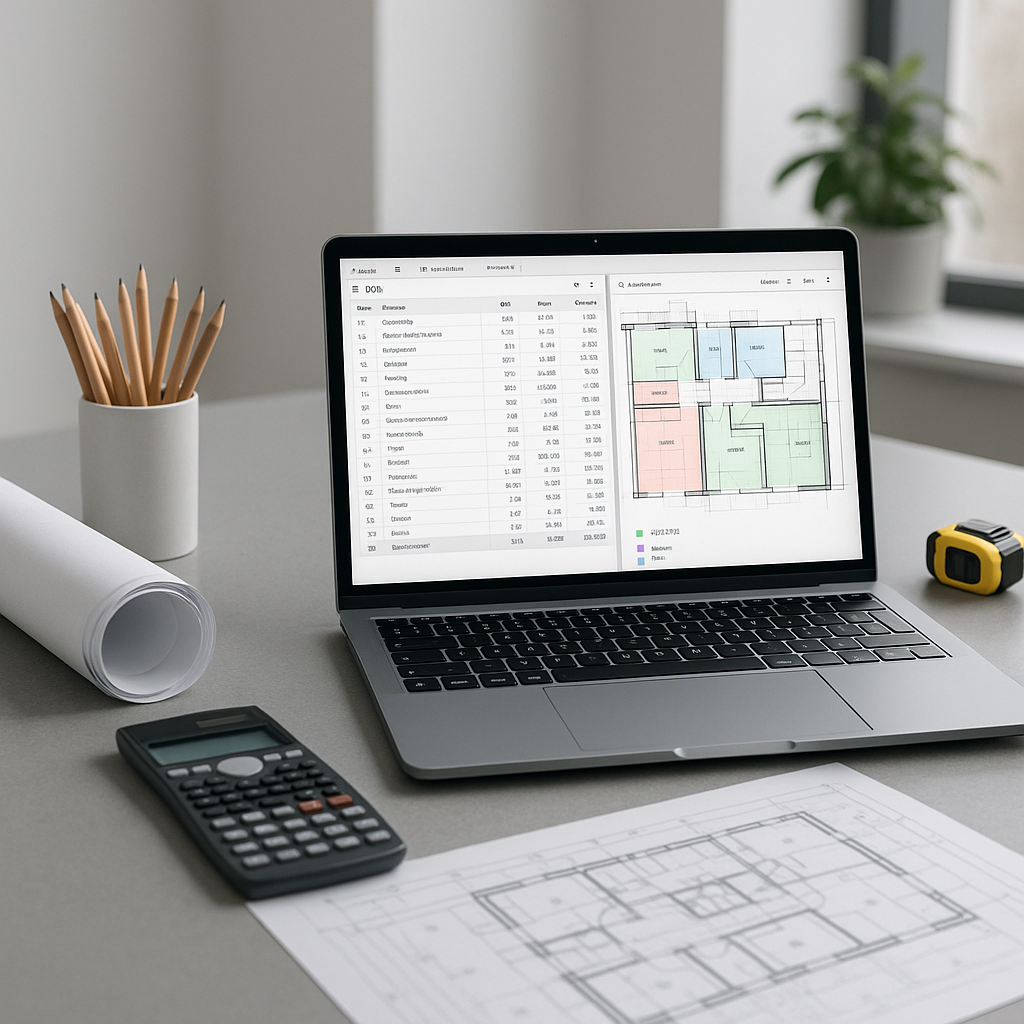
- Upload Your BOQ: Start by uploading your Excel, CSV, or even a scanned PDF. The system parses it automatically, identifying merged cells, blank spaces, and headers.
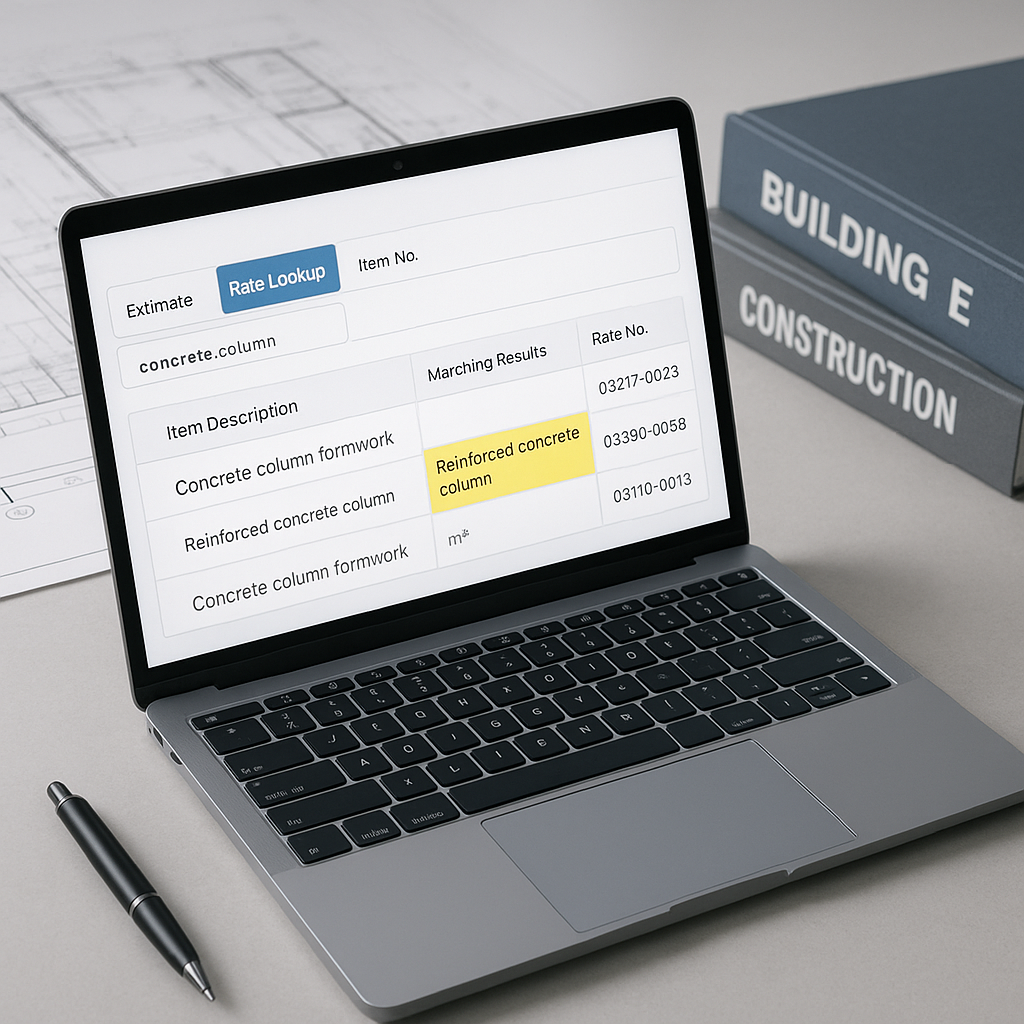
- Semantic Search: Instead of exact keyword matching (which fails if your terms don’t align perfectly), semantic search understands the context behind your line items. For example, if your BOQ says “plastering work,” the AI will match it to relevant rates in standardized catalogs.
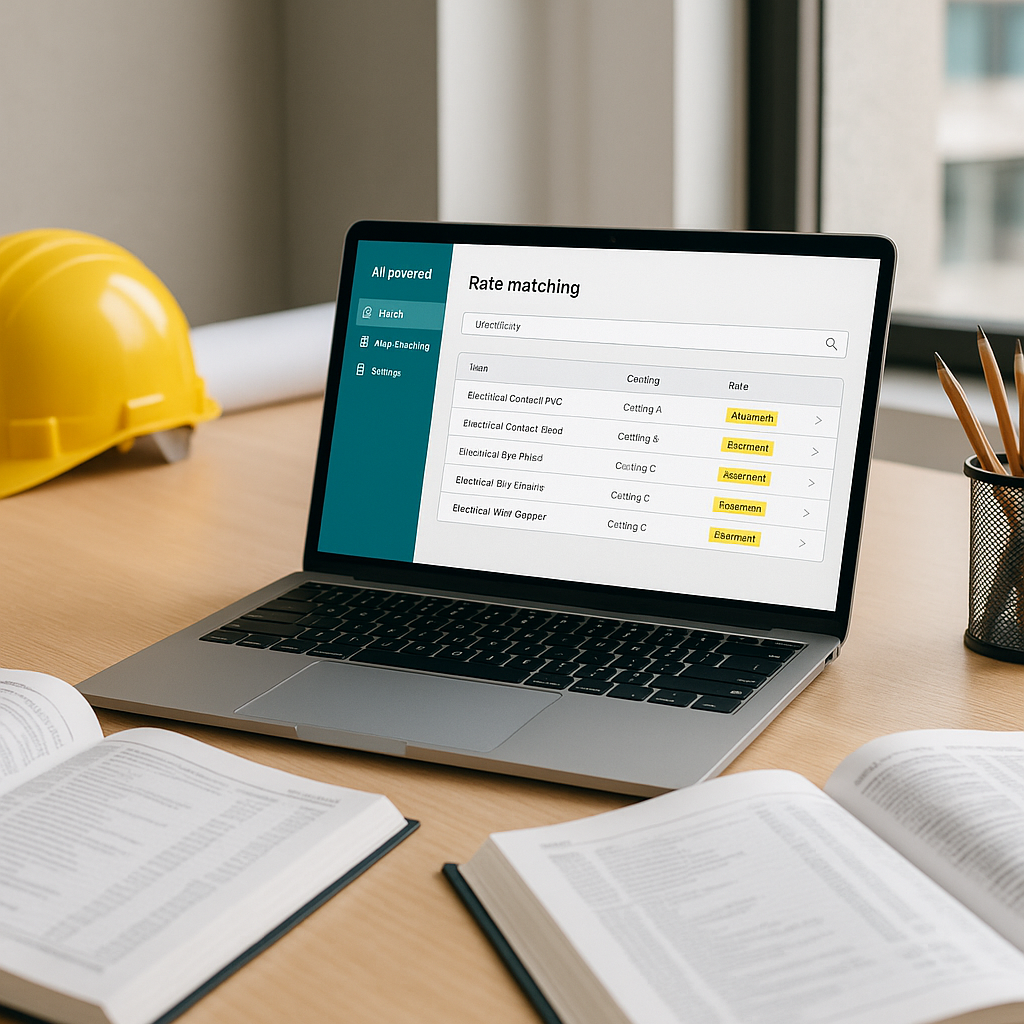
- Catalog Matching: The platform pulls rates from various catalogs and databases. You can also integrate your custom rate database for project-specific pricing.
- Ranked Suggestions: AI doesn’t just provide one rate—it shows you multiple options ranked by relevance. You get to decide which one fits your project best.
- Audit Trail: Every matched rate comes with a full breakdown—material, labor, equipment, and overhead—so you can justify your estimate to clients or internal teams.
The result? Hours of manual effort reduced to minutes.
Illustrative Example — A Practical Use Case
Imagine you’re pricing a mid-rise office building. Your BOQ includes hundreds of line items, from concrete slabs to HVAC ductwork. Traditionally, you’d spend significant time flipping through catalogs or databases to find, copy, and paste rates into your estimate.
With AI, that same process can be completed in a fraction of the time. The system matches most of your BOQ line items automatically, leaving only a small portion for manual adjustments. This efficiency allows you to focus on refining your bid rather than getting bogged down in repetitive tasks.
The Biggest Objection: “Can AI Handle My Custom Rates?”
This is a common concern. Many contractors worry that AI tools only work with preloaded catalogs and can’t handle custom materials, labor rates, or project-specific markups.
Good AI tools address this by letting you upload your own rate catalogs. For example, if you’ve negotiated a special rate for reinforced concrete with a supplier, you can input that rate, and the system will prioritize it in future matches. The more you use the tool, the smarter it gets—it learns from your adjustments and improves matching accuracy over time.
Common Mistakes to Watch Out For
- Over-Reliance on Defaults: AI is fast, but it’s not infallible. Always review suggested rates, especially for high-cost items.
- Ignoring Feedback Loops: The system gets smarter with use, but only if you correct mismatches. Don’t skip this step.
- Failing to Customize: Upload your own rate catalogs. AI works best when it’s tailored to your specific needs.
FAQ:
Q: How accurate is AI-powered rate matching compared to manual methods?
A: AI tools can achieve high accuracy when paired with user feedback. Manual methods are only as accurate as the person doing the work—and we all make mistakes.
Q: Can AI handle international projects?
A: Yes. Many platforms support multiple currencies, catalog formats, and tax regimes, making them adaptable for global use.
Q: Is it hard to train my team to use AI tools?
A: Not at all. Most users find the interfaces intuitive and can become productive after minimal training.
Q: What happens if a rate isn’t in the system?
A: You can manually input missing rates and save them for future use. The system learns from these inputs and reduces gaps over time.
Why This Matters
The real value of AI isn’t just speed—it’s confidence. When your rates are accurate and your takeoffs are fast, you bid smarter and win more. That’s what keeps your team competitive, especially in a market where every hour and every decision counts.
If you’re ready to streamline your rate matching process, consider exploring AI-powered tools to transform your workflow.