The Estimation Bottleneck Nobody Talks About
Ask any estimator what takes the most time in preconstruction, and they'll probably say 'takeoffs.' But here's the thing: takeoffs aren't the only time sink. Rate lookups—finding, verifying, and applying the right rates—are just as bad, if not worse.
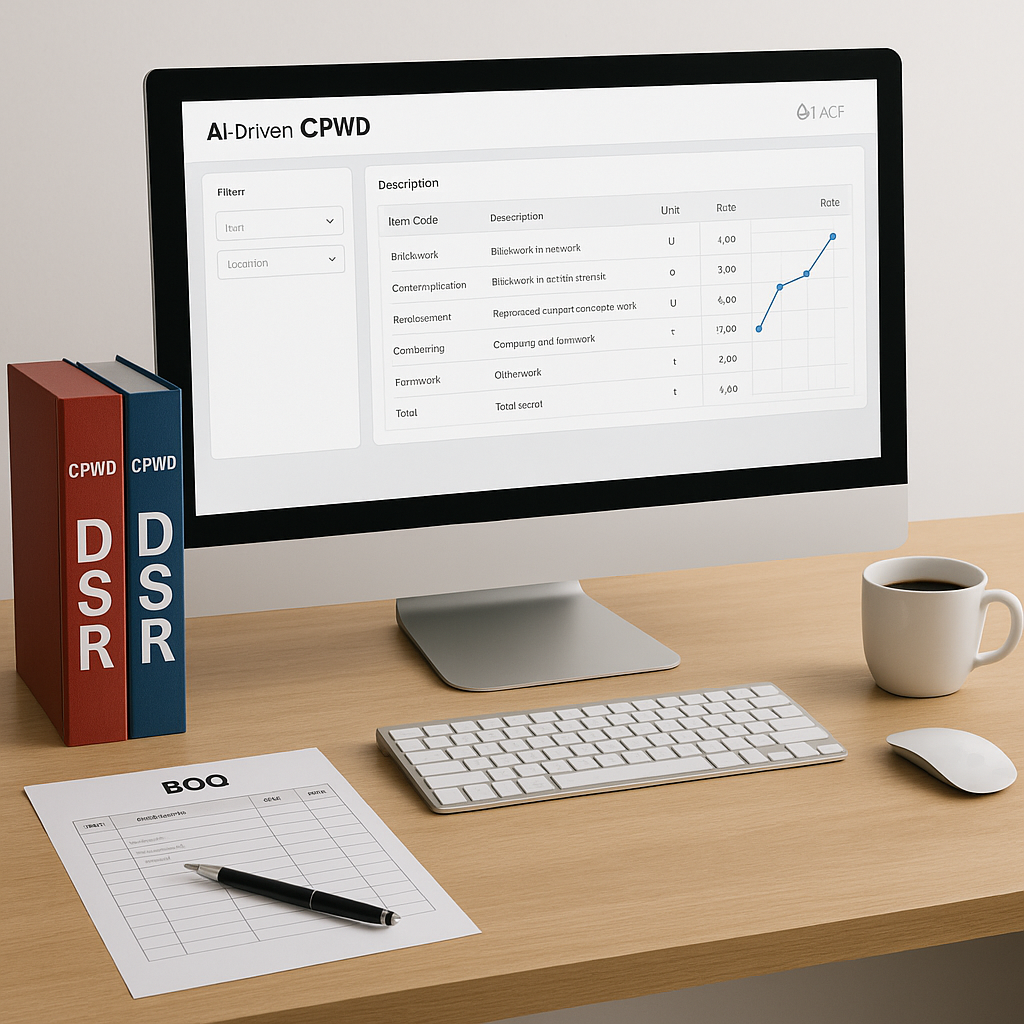
Imagine flipping through a massive rate catalog like CPWD DSR or RSMeans, trying to find the labor rate for a specific task. Or reconciling rates from multiple sources—your own historical data, vendor quotes, and reference catalogs. It's tedious, error-prone, and eats up valuable time.
Why does it matter? Because rate errors directly hit your margins. Overestimate, and your bid won’t be competitive. Underestimate, and you’ll face cost overruns during execution.
This is where AI-powered rate matching can make a significant difference. Instead of spending hours, it can streamline the process in seconds, improving both speed and accuracy.
How AI Rate Matching Works
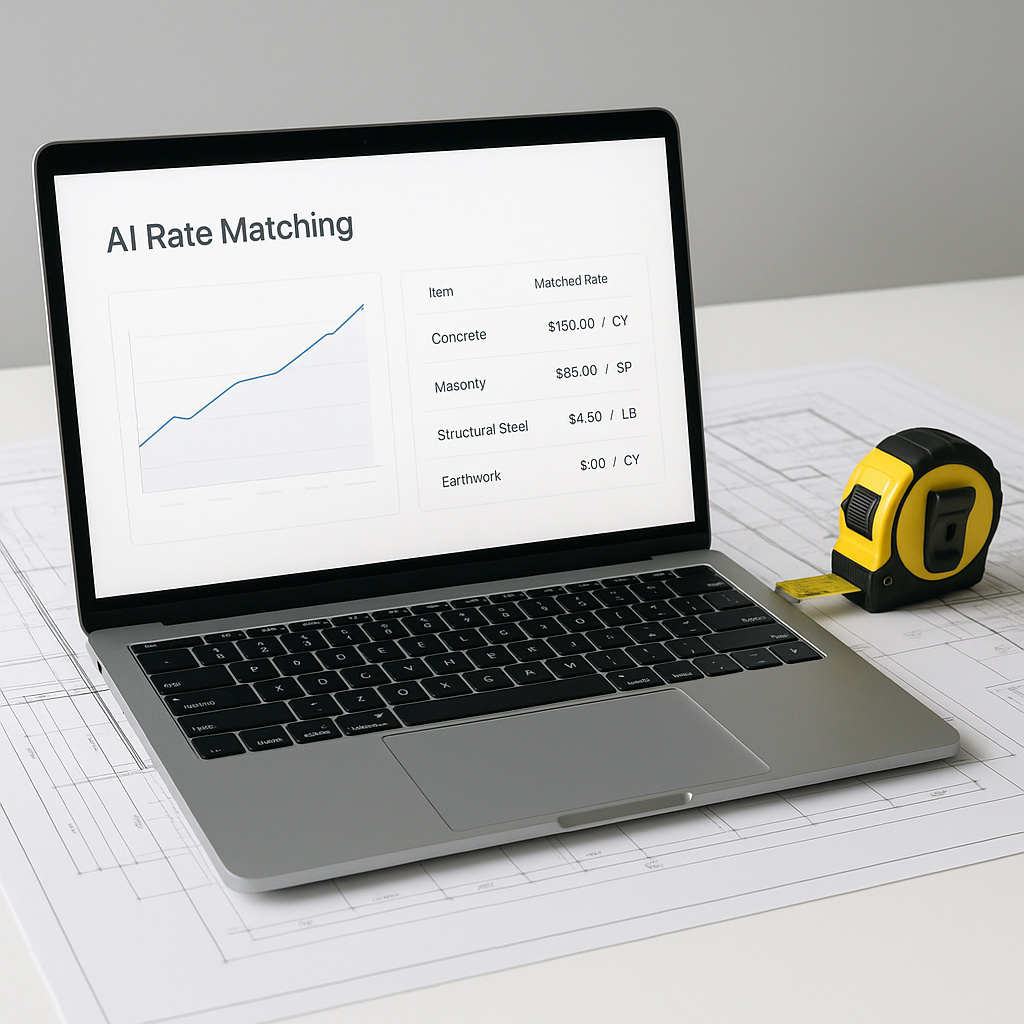
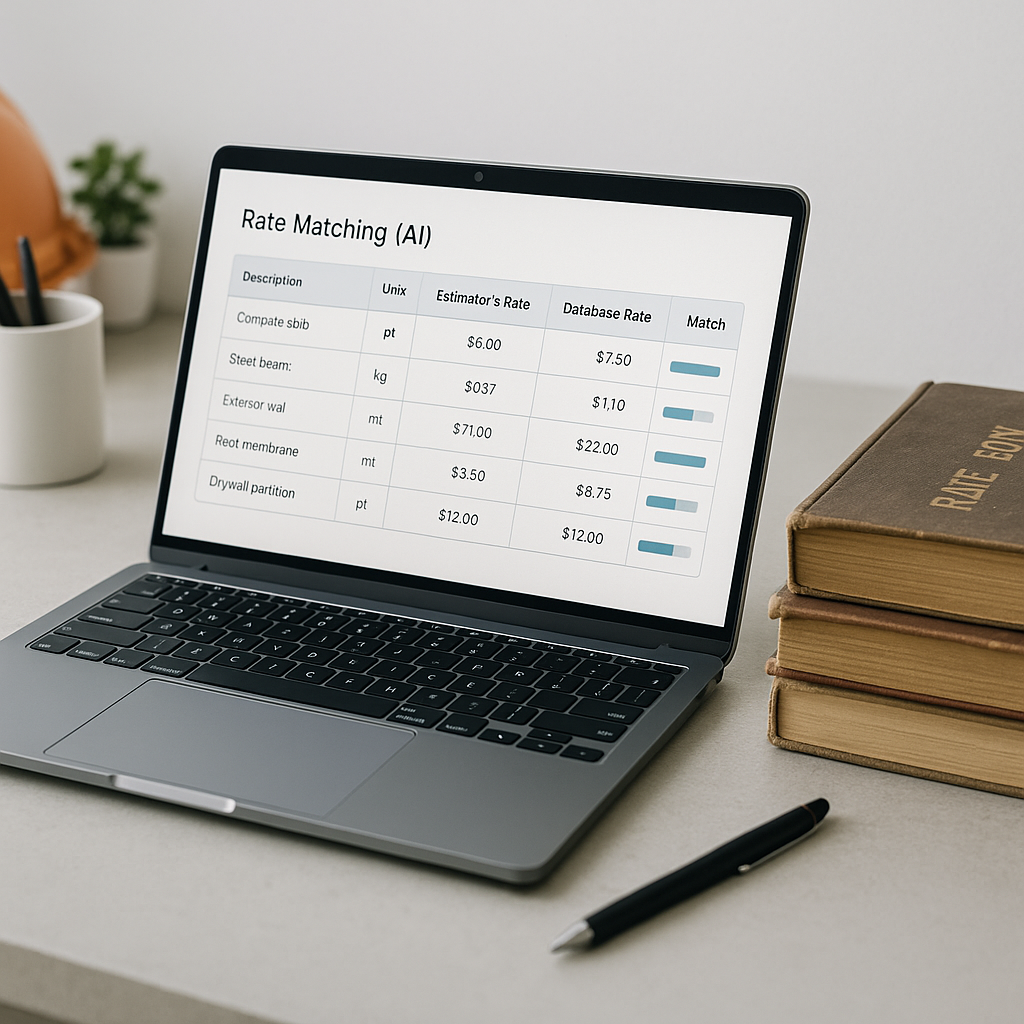
At its core, AI-powered rate matching is about speed and accuracy. Tools using semantic search can crawl through massive rate catalogs and return the most relevant matches instantly.
Illustrative example — Suppose you need the labor rate for installing pre-stressed concrete girders. In traditional workflows, you’d:
- Open your rate book (or Excel file).
- Manually search through endless pages or tabs.
- Cross-check with vendor quotes to ensure compliance.
- Apply adjustments like inflation or location factors.
This process could take hours. With AI, you type in a description—"pre-stressed concrete girder installation"—and the system matches it to the closest available rates, considering factors like location, project type, and historical data.
Even better, the system learns from feedback. If you reject a suggested rate or add custom rates, it integrates those changes for future searches.
Why This Solves More Than Just Time Wastage
Sure, saving time is great. But AI rate matching solves deeper problems that plague estimation teams:
1. Error Reduction
Manual lookups are prone to mistakes. Typos, missed adjustments, or outdated rates can lead to cost overruns. AI automates the process and flags potential discrepancies, reducing the risk of errors.
2. Consistency Across Teams
In larger firms, different estimators often use different rate sources or methodologies. This creates inconsistencies that confuse clients and complicate internal reviews. AI enforces a single source of truth, ensuring every team member works off the same, verified data.
3. Faster What-If Scenarios
Need to adjust rates for inflation? Or test the impact of a higher labor cost on your bid? With traditional methods, you’d rebuild your spreadsheet from scratch. AI updates everything in real time, with an audit trail to track changes.
Common Questions About AI Rate Matching
Q: How accurate are AI-matched rates?
AI tools can deliver highly accurate results when provided with clean, up-to-date data. The system improves with use, learning from your feedback to refine its suggestions.
Q: What if my project has custom or region-specific rates?
You can upload custom rate catalogs or manually adjust suggestions. The AI will integrate these into its database for future projects.
Q: Does it replace estimators?
Not at all. AI handles repetitive, low-value tasks so estimators can focus on strategy, scope reviews, and client negotiations. It’s a tool, not a replacement.
What to Watch For
- Garbage In, Garbage Out: AI is only as good as the data you give it. Outdated or incomplete catalogs will lead to bad matches.
- Over-Reliance: Always validate critical rates, especially for high-stakes projects. AI is a co-pilot, not an autopilot.
- Learning Curve: While AI tools are user-friendly, there’s still a setup phase. Invest time in training your team—it’ll pay off.
Conclusion: The Case for AI Rate Matching
Rate matching is one of the most impactful areas where AI can help in preconstruction estimation. It doesn’t just save time—it reduces errors, ensures consistency, and frees up your team to focus on strategic tasks.
If you’re tired of wasting hours on manual lookups or losing bids due to rate errors, it’s time to consider AI-powered tools. They’re no longer a luxury—they’re becoming a necessity.