Why Manual Takeoffs Are Challenging for Estimators
Manual quantity takeoffs can be a tedious and time-consuming process for estimators. Flipping through stacks of drawings, manually measuring walls, doors, and windows—it’s a repetitive task prone to human error. This process often consumes significant time that could otherwise be spent on higher-value activities like analyzing rates or preparing bids.
Additionally, manual takeoffs can become even more burdensome when dealing with multiple projects or when design changes require rework. This inefficiency highlights the need for tools that can streamline the process.
The AI Takeoff Revolution
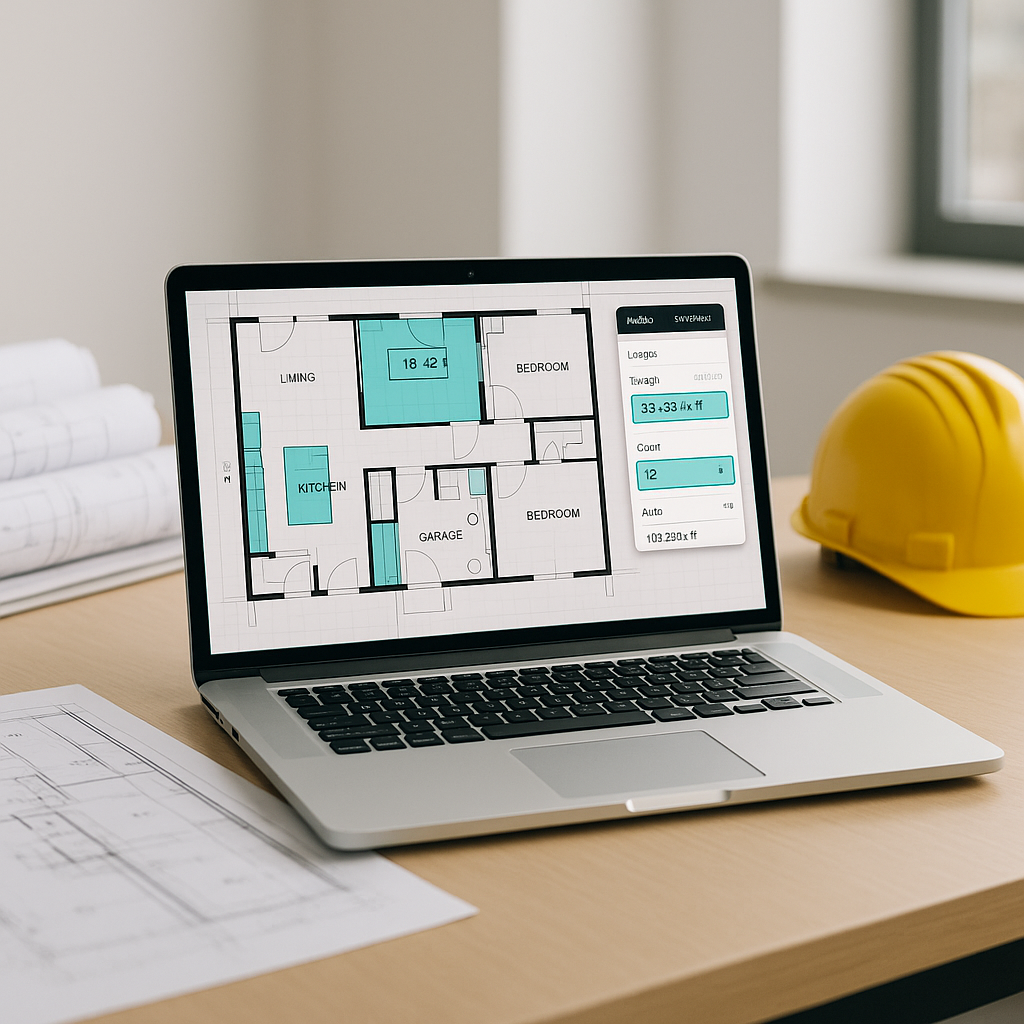
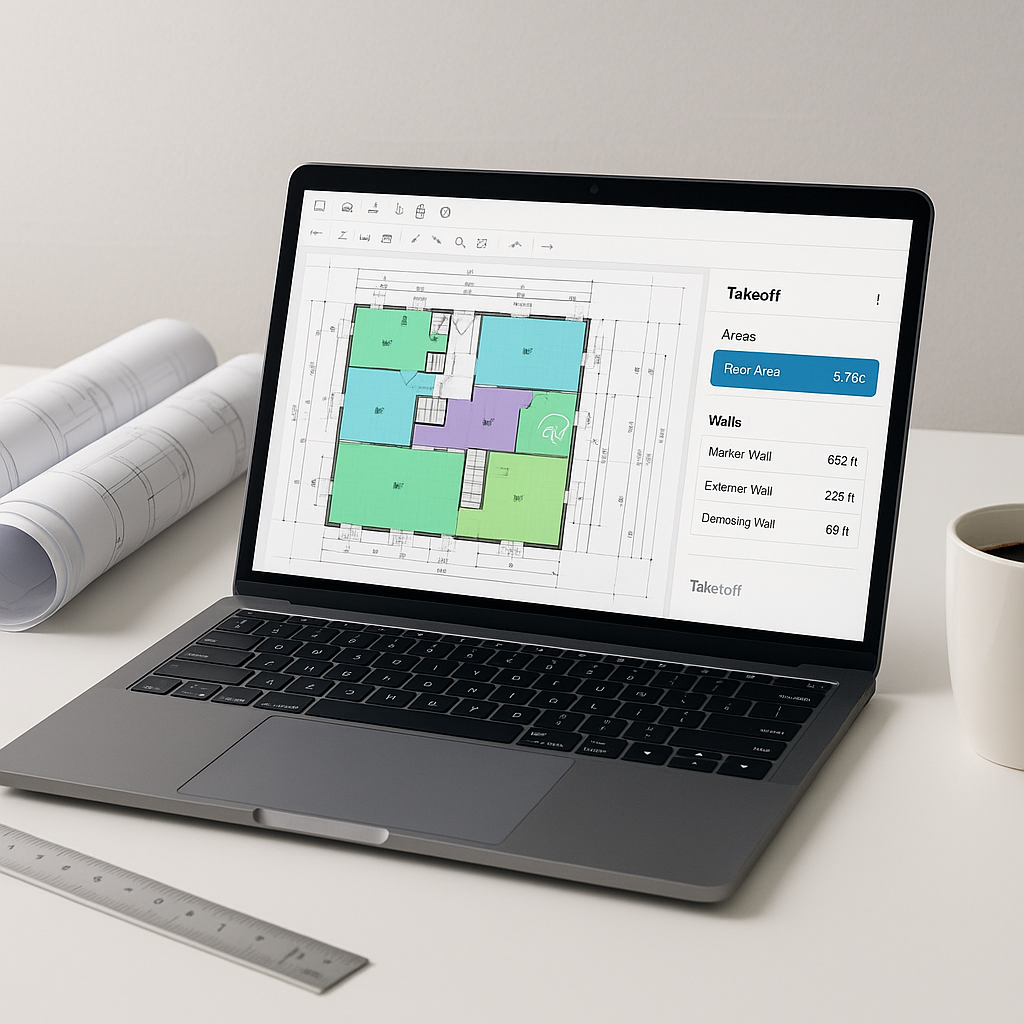
AI-powered takeoff tools are transforming the way estimators approach preconstruction tasks. Using advanced Vision AI, these tools scan PDF drawings and automatically extract quantities such as wall lengths, door counts, and room areas. This automation not only speeds up the process but also reduces the likelihood of human error, which can lead to costly mistakes.
Illustrative example — A contractor using an AI-powered tool could potentially complete a takeoff in minutes compared to the hours it might take manually. This allows more time to focus on refining rates, negotiating with subcontractors, or preparing for additional bids.
How It Works
- Upload Your Drawing Set: Drag and drop your PDFs into the tool. AI systems are designed to handle real-world input, even if the files are not perfectly organized.
- AI Extraction: The system identifies and measures key quantities like linear lengths, areas, and counts based on project specifications.
- Review and Adjust: The tool flags areas where it is uncertain, allowing you to manually review and adjust as needed to ensure accuracy.
- Export: Once satisfied, export the takeoff data to your preferred format, such as Excel or other estimating software.
The ROI of AI-Powered Takeoffs
AI-powered tools can significantly reduce the time spent on repetitive tasks, allowing estimators to focus on more strategic aspects of their work. Faster takeoffs enable teams to bid on more projects, increasing their chances of winning contracts. Additionally, improved accuracy minimizes the risk of costly errors.
Common Concerns About AI Takeoffs
You might wonder whether AI tools can truly understand the complexities of your project. The reality is that AI doesn’t replace your expertise; it complements it. These tools handle the repetitive tasks, while you retain control over the final review and adjustments.
Accuracy is another common concern. While no tool is perfect, many AI platforms include safeguards such as confidence scoring and manual override options to help you catch potential errors.
Common Mistakes and How to Avoid Them
- Blind Trust in AI: Always review flagged items and conduct spot checks on key quantities to ensure accuracy.
- Poor Input Data: Ensure your drawings are legible and complete to get the best results.
- Skipping Training: While AI tools are often intuitive, a quick training session can help you avoid common pitfalls. Many platforms offer free onboarding for new users.
FAQ
Q: Can AI tools handle complex projects?
Yes, AI tools are scalable and can handle a wide range of project types, from small renovations to large infrastructure developments.
Q: Are these tools hard to learn?
No, most AI tools are designed to be user-friendly, and many users can become proficient within a short period.
Q: Will AI replace estimators?
No, AI is a tool that assists estimators by automating repetitive tasks, allowing them to focus on higher-value activities like strategy and decision-making.
Q: What if my rates are custom?
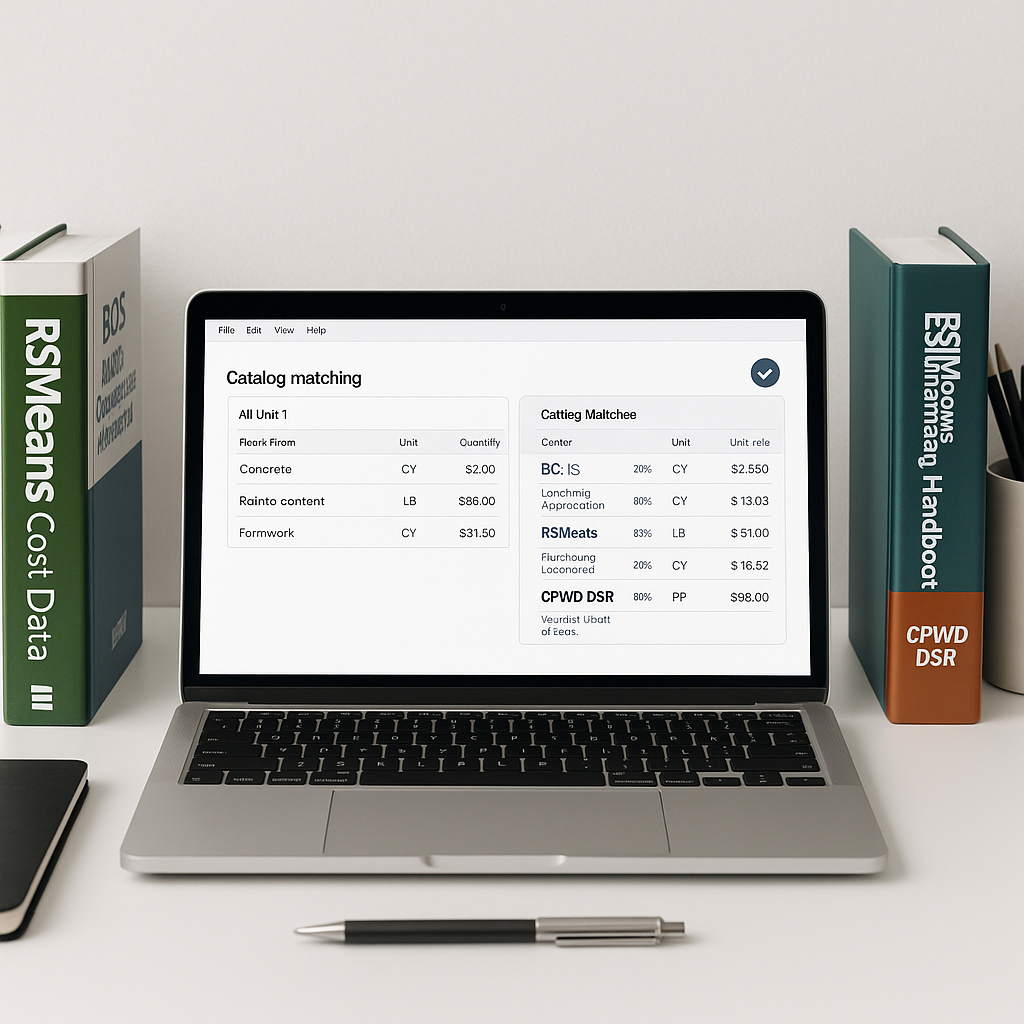
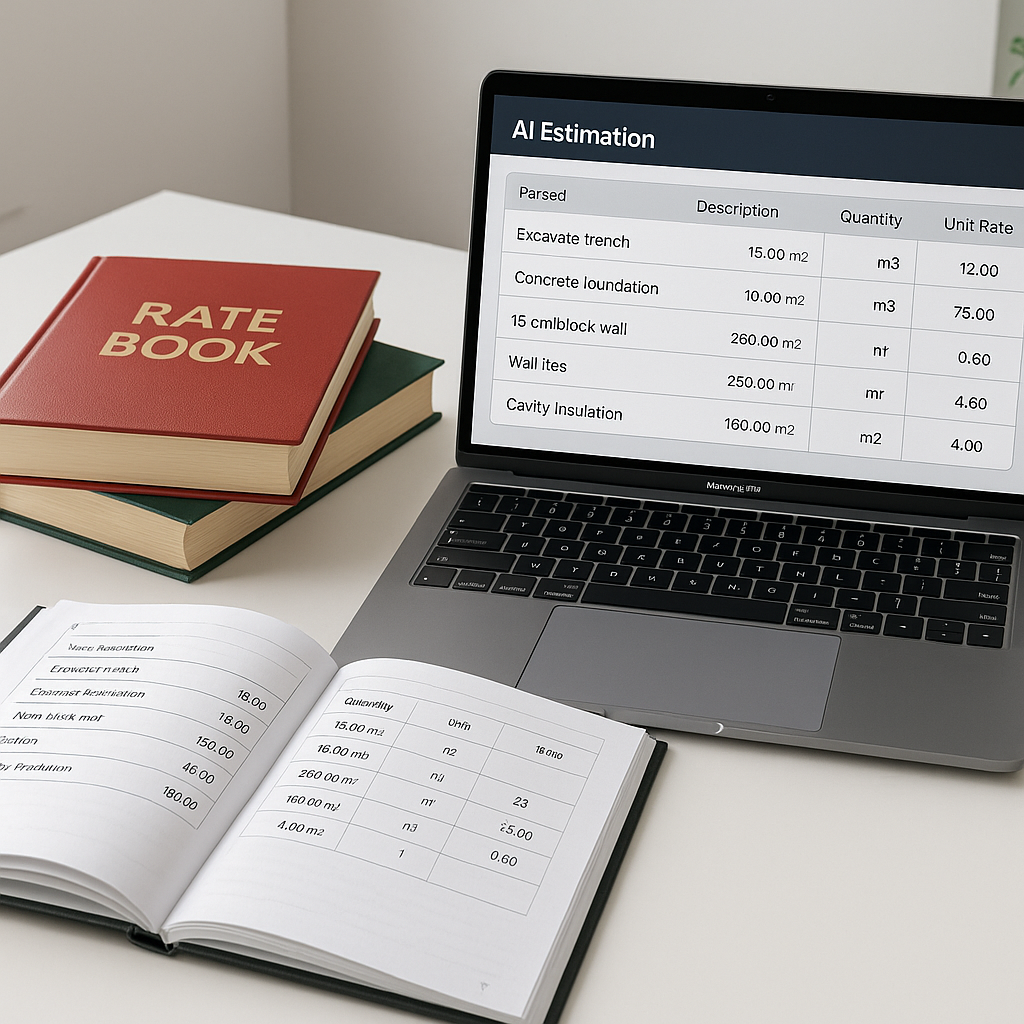
Many AI tools allow you to upload your own rate catalogs, ensuring that your estimates align with your specific costs.
The Bottom Line
Manual takeoffs can be a bottleneck in the preconstruction process. AI-powered tools not only save time but also improve accuracy, enabling your team to focus on what truly matters—winning more bids and delivering successful projects.