Why Manual Takeoffs Are a Bottleneck
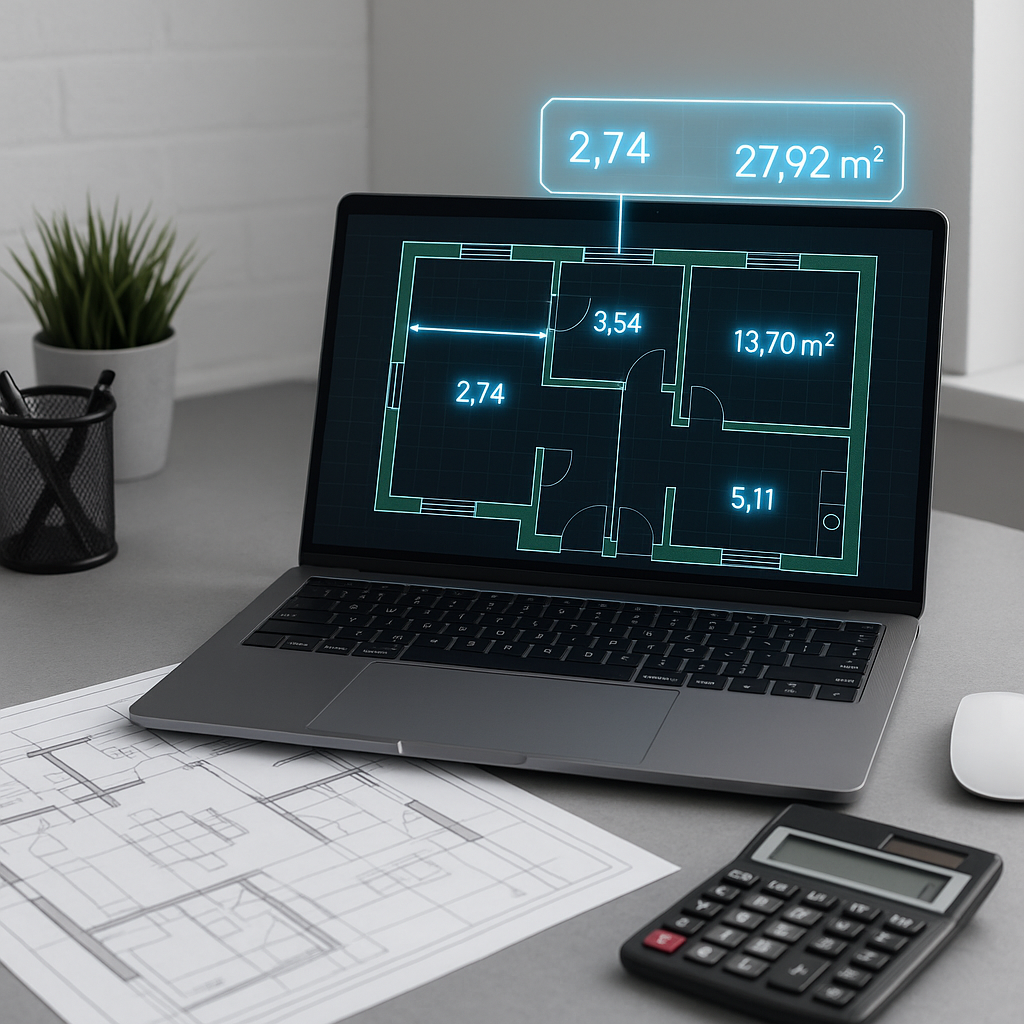
Manual takeoffs can be time-consuming and error-prone. Estimators often spend significant time extracting quantities from drawings, tracing beams, counting fixtures, and ensuring accuracy in spreadsheets. Errors in manual takeoffs, such as miscounts or overlooked revisions, can lead to bids that are either overpriced or underpriced, impacting competitiveness and profitability. As project deadlines shrink and competition increases, these inefficiencies become more problematic.
The AI Solution: Automating Takeoffs
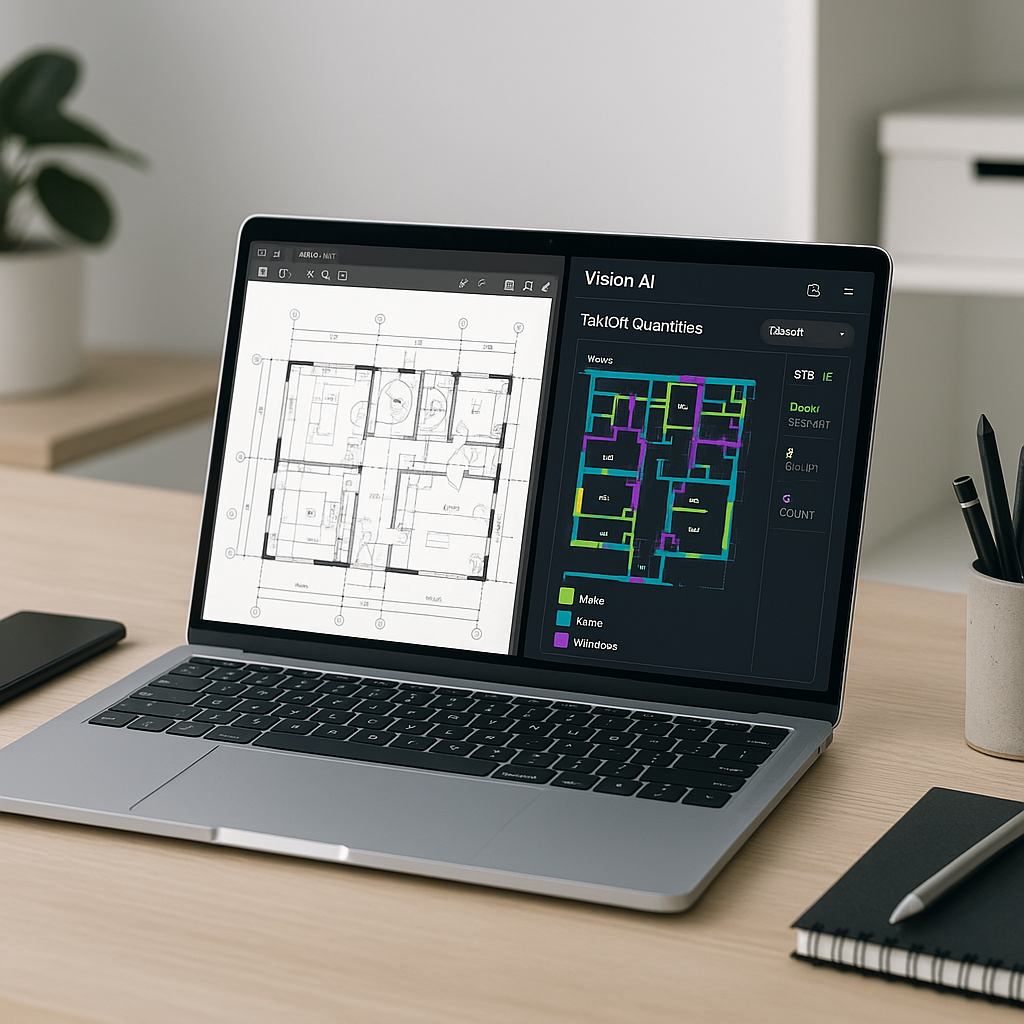
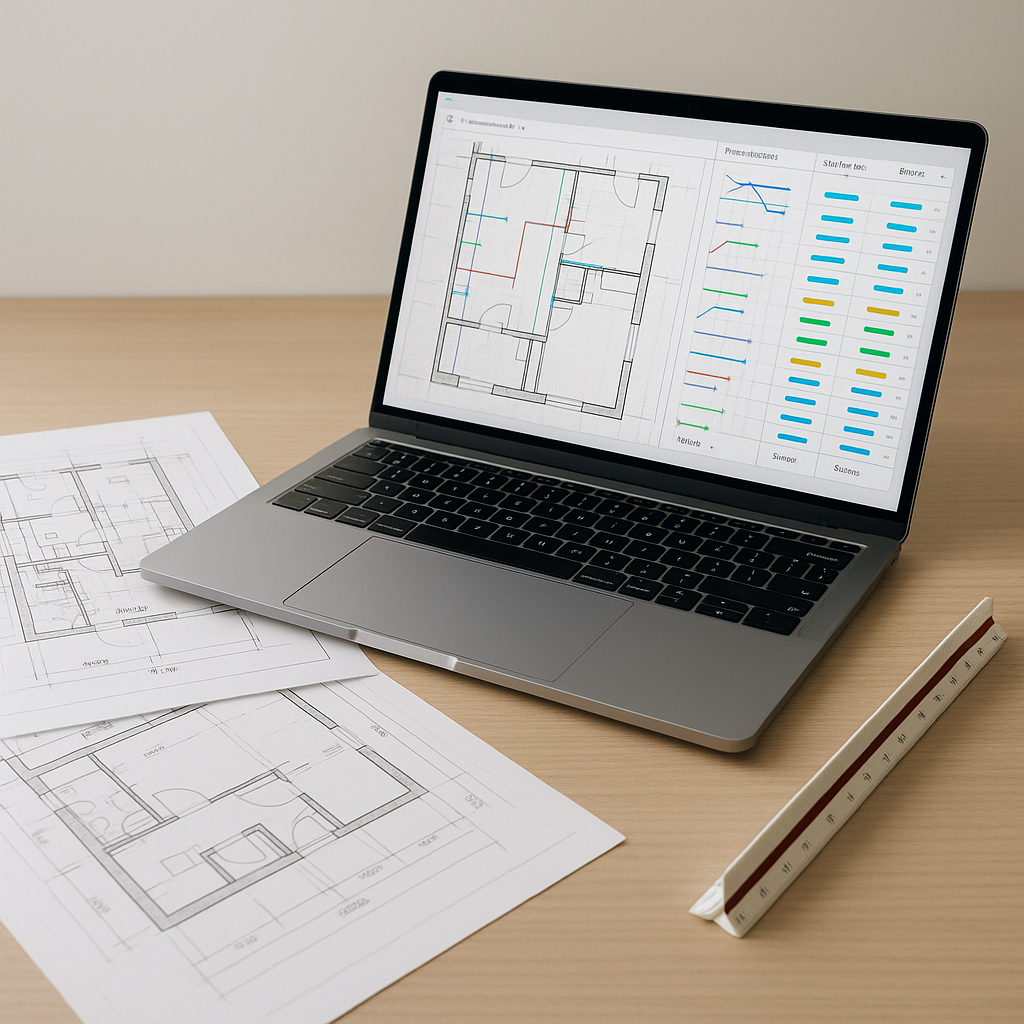
AI-powered tools are transforming the takeoff process by automating quantity extraction from drawings. These tools can identify elements such as walls, beams, fixtures, and more, while also measuring lengths, areas, and angles. Items with low confidence are flagged for manual review, ensuring that human expertise remains a critical part of the process.
Illustrative example — Consider a scenario where an estimator uploads a set of drawings into an AI-powered tool. The software processes the drawings, extracts quantities, and flags any uncertain items for review. This automation significantly reduces the time spent on repetitive tasks.
Benefits of Time Savings
The time saved through AI-powered takeoffs can be reallocated to more strategic activities, such as:
- Responding to more bids: Increasing the number of opportunities pursued without additional staffing.
- Improving accuracy: Refining rates and analyzing market conditions with greater focus.
- Streamlining sub negotiations: Spending more time on leveling subcontractor bids and addressing scope mismatches.
Addressing Common Concerns
“But AI Can’t Think Like an Estimator”
This is a valid concern. AI tools are not designed to replace human expertise but to complement it. They handle repetitive tasks, allowing estimators to focus on strategic decisions such as markups, subcontractor negotiations, and risk analysis. AI acts as a support tool, not a substitute.
How to Get Started With AI Takeoffs
For those new to AI-powered tools, starting with a straightforward project—such as a residential build or a single trade package—can help ease the transition. Many tools integrate with existing platforms like Bluebeam and Procore, enabling seamless workflow integration. Training requirements are typically minimal, and most users can become proficient within a short period.
FAQ
Q: How accurate are AI-generated takeoffs?
AI tools aim to reduce discrepancies by automating repetitive tasks and flagging uncertain items for manual review. Accuracy depends on the quality of the input data and the estimator’s oversight.
Q: Can AI handle revisions?
Yes. Most platforms allow users to upload revised drawing sets and automatically compare changes, saving time on manual review.
Q: What if my drawing set is messy?
AI tools are designed to handle imperfect inputs, such as merged cells or inconsistent hierarchies. Items requiring manual attention are flagged for review.
Q: Is AI expensive?
Costs vary, but AI tools are generally more affordable than hiring additional estimators, making them a cost-effective solution for many firms.
Key Considerations
- Input Quality: Ensure that drawings are complete and well-labeled to maximize the effectiveness of AI tools.
- Training Time: Allocate time for your team to learn the software and integrate it into existing workflows.
- Manual Review: Pay attention to flagged items requiring human judgment to maintain accuracy.
The Bottom Line
AI-powered takeoff tools enhance the efficiency of preconstruction estimation by automating repetitive tasks and allowing estimators to focus on strategic activities. These tools do not replace human expertise but amplify it, enabling teams to improve accuracy, pursue more bids, and streamline processes. By adopting AI, firms can stay competitive in an increasingly fast-paced industry.