How AI-Powered Tools Improve Preconstruction Estimation
Every estimator knows the grind of manual takeoffs. You’ve got a stack of drawings, a highlighter, and hours of your life you’ll never get back. By the end of it, you’ve measured every wall, counted every window, and prayed you didn’t miss anything. But what if you did? A missed line item or an inaccurate quantity can mean the difference between winning a bid and losing profitability.
Here’s the reality: manual takeoffs are slow, error-prone, and expensive. And they’re holding your team back. AI-powered tools are changing the game, cutting takeoff time significantly while reducing costly mistakes. Let’s break down why this matters and how it actually works.
The Manual Takeoff Problem: Death by a Thousand Clicks
Manual takeoffs are tedious for a reason. To get accurate quantities, you need to:
- Open the PDF drawings and calibrate your scale.
- Trace every wall, door, and window with precision.
- Double-check your work to avoid missed measurements.
- Export the quantities into your estimating spreadsheet.
This process can take a significant amount of time for an average project. But it’s rarely smooth. Drawings get revised halfway through. Someone skips a section by mistake. Or worse, your measurements don’t align with the subcontractor’s scope, leading to change orders down the line.
The Cost of Errors
Errors in manual takeoffs compound fast. A 2023 McKinsey report noted that construction projects already face significant cost overruns due to misestimation. Missing the square footage on a high-rise lobby or undercounting concrete for foundations can lead to substantial financial consequences.
How AI Takeoffs Work (And Why They’re Better)
AI-powered takeoff tools don’t need coffee breaks or overtime pay. They process drawings with precision, extracting quantities quickly. Here’s the step-by-step:
- Upload Your Drawings: Drop your PDFs into the platform. AI automatically detects scales, layers, and revisions.
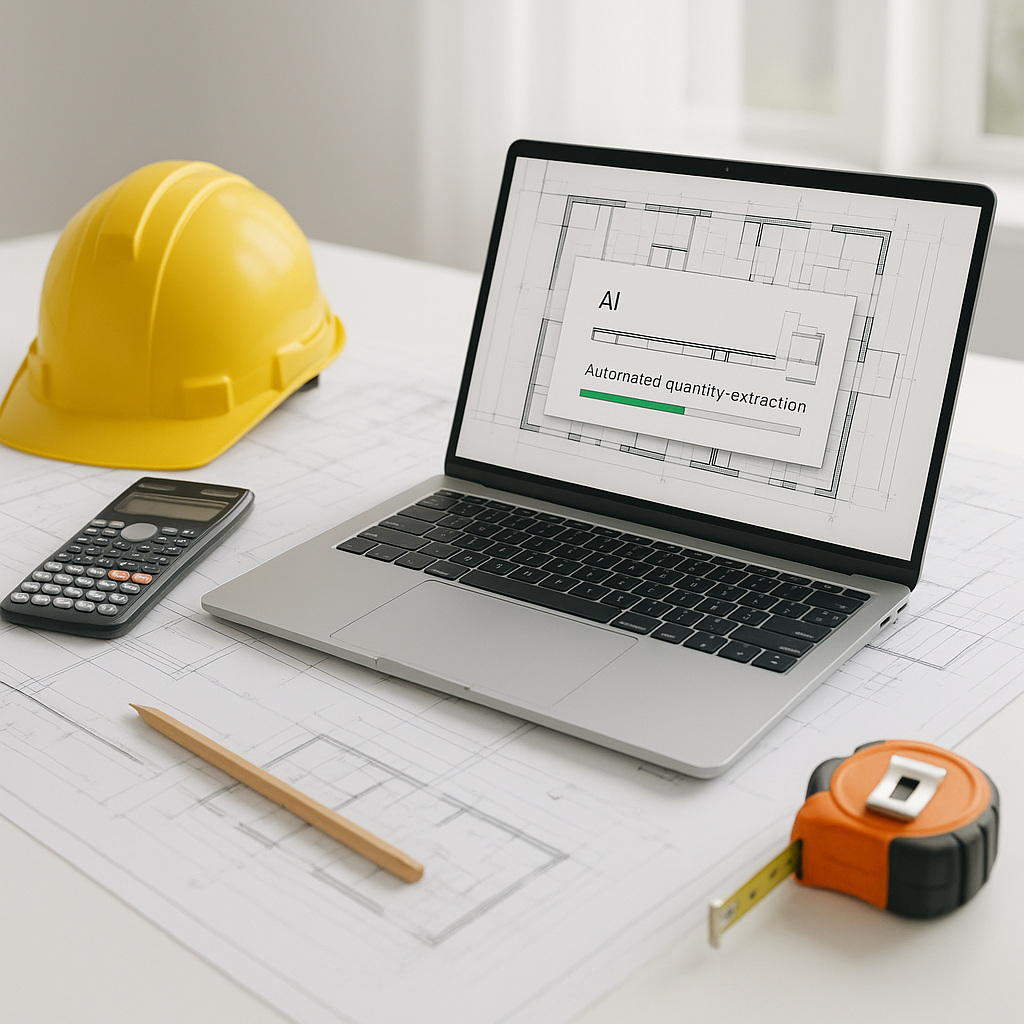
- Automated Quantity Extraction: The system scans for walls, doors, windows, and other elements based on predefined parameters.
- Flagging for Review: Low-confidence areas (like blurry drawings) are flagged for manual review.
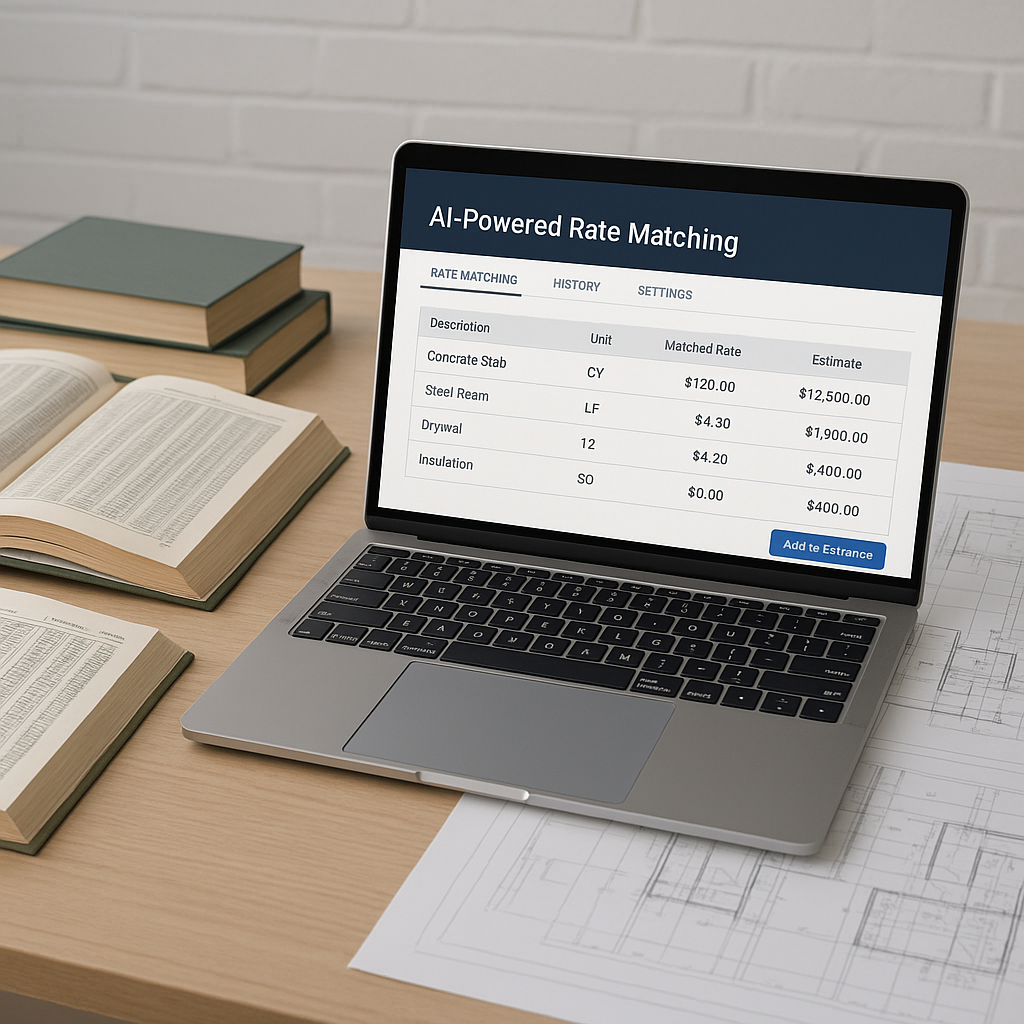
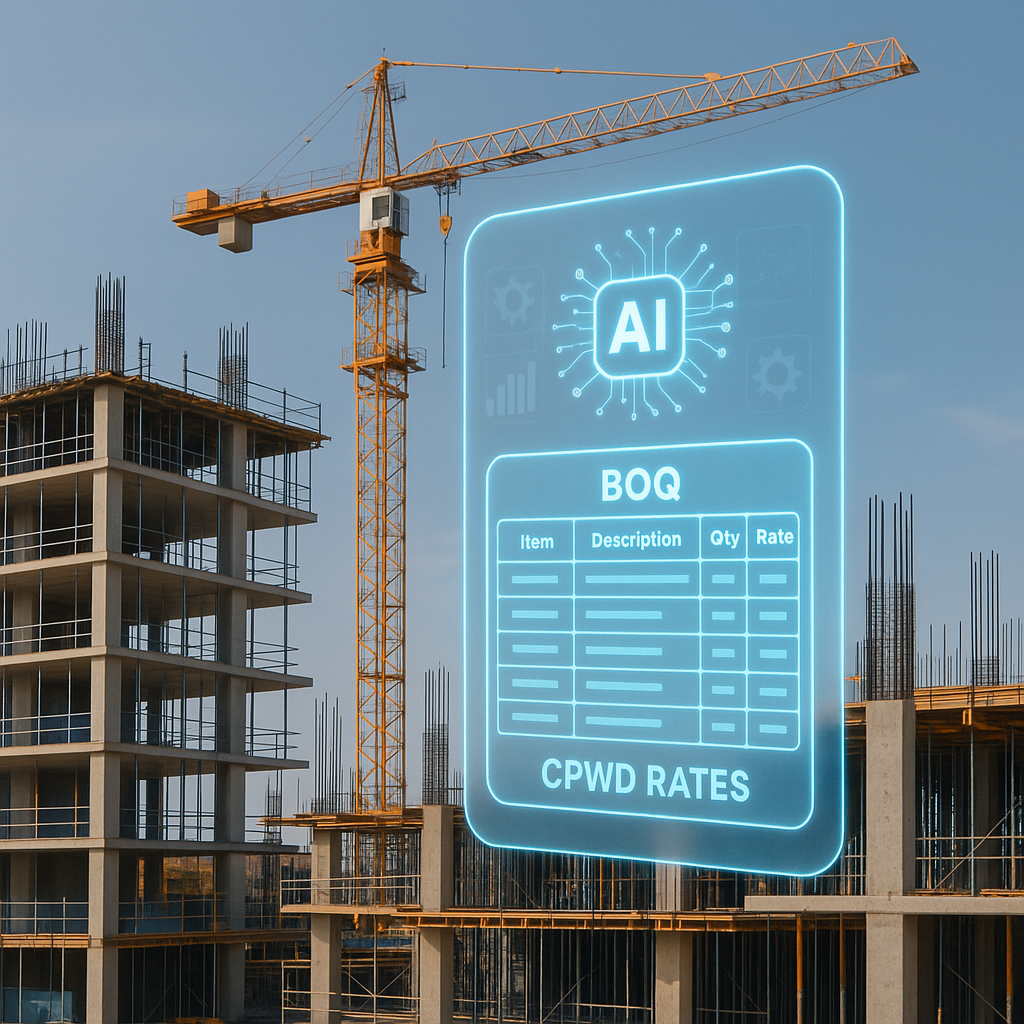
- Export to BOQ: Quantities are pushed directly into your bill of quantities (BOQ), ready for rate matching.
This isn’t just a time-saver. It’s a sanity-saver. By automating repetitive tasks, AI tools free up estimators to focus on higher-value activities like strategy and risk assessment.
Common Objections to AI Takeoffs
You might be thinking, “Sure, AI is fast, but it doesn’t understand the nuances of construction.” Fair point. AI isn’t perfect, and it’s not a replacement for expertise. But it doesn’t need to be. Think of it as an assistant that handles the grunt work so you can focus on the high-value decisions.
The Human Touch
AI excels at repetitive, rules-based tasks like takeoffs. But it still needs human oversight for judgment calls:
- Scope Gaps: AI can’t always tell if a drawing is missing details. You’ll still need to verify completeness.
- Custom Assemblies: Unique materials or construction methods might require manual input.
- Final Checks: A senior estimator should always review AI outputs before submitting bids.
Pairing junior estimators with AI tools can be a game-changer. It frees up senior staff for strategy while giving less experienced team members a productivity boost.
The ROI of AI Takeoffs
Illustrative example — AI takeoffs can significantly reduce labor time. For instance, what might take dozens of hours manually could be completed in a fraction of that time with AI. This enables teams to bid on more projects or allocate resources to other critical tasks. Additionally, fewer errors in takeoffs can lead to reduced change orders and better cost control, improving overall project profitability.
What to Watch For When Using AI
Not all AI tools are created equal. Here’s what to keep in mind:
- Input Quality Matters: Garbage in, garbage out. Upload clear, accurate drawings to get the best results.
- Calibration Is Key: Make sure the system is calibrated to your project’s scale and units.
- Review Low-Confidence Areas: Always double-check flagged sections before finalizing quantities.
- Integration with Existing Workflows: Choose a tool that exports data seamlessly into your estimating software.
FAQ: AI Takeoffs
Q: Are AI takeoffs accurate?
Yes, but accuracy depends on the quality of your input data. Most tools include features to flag discrepancies for manual review.
Q: Can AI handle complex projects?
Absolutely. From residential builds to large infrastructure projects, AI scales to any complexity. Just ensure your team reviews the outputs for edge cases.
Q: How long does it take to learn AI tools?
Most platforms are designed for ease of use. Expect a learning curve of a few weeks with basic training.
Q: What if my project has custom materials?
AI tools often allow you to upload custom catalogs or define unique items, ensuring estimates reflect actual costs.
Ready to Streamline Your Estimation Process?
Manual takeoffs are a bottleneck you can’t afford. With AI-powered tools, you’ll save time, reduce errors, and free up your team for higher-value tasks. Explore how these tools can transform your preconstruction process today.