Why Takeoffs Are a Bottleneck
Manual takeoffs can be a time-consuming and error-prone process. Estimators often spend significant time flipping between PDFs, tracing room dimensions, counting fixtures, and entering data into spreadsheets. This process is not only tedious but also limits the time available for refining bid strategies or negotiating with subcontractors. For contractors working on large-scale projects, these inefficiencies can quickly add up.
Automation, particularly through AI-powered tools, offers a way to streamline this process and improve efficiency.
How AI Takeoffs Work
AI takeoff tools are designed to assist, not replace, the expertise of estimators. Here’s a general overview of how they work:
-
PDF Upload: Users upload their drawing sets into the platform, where the software processes the files.
-
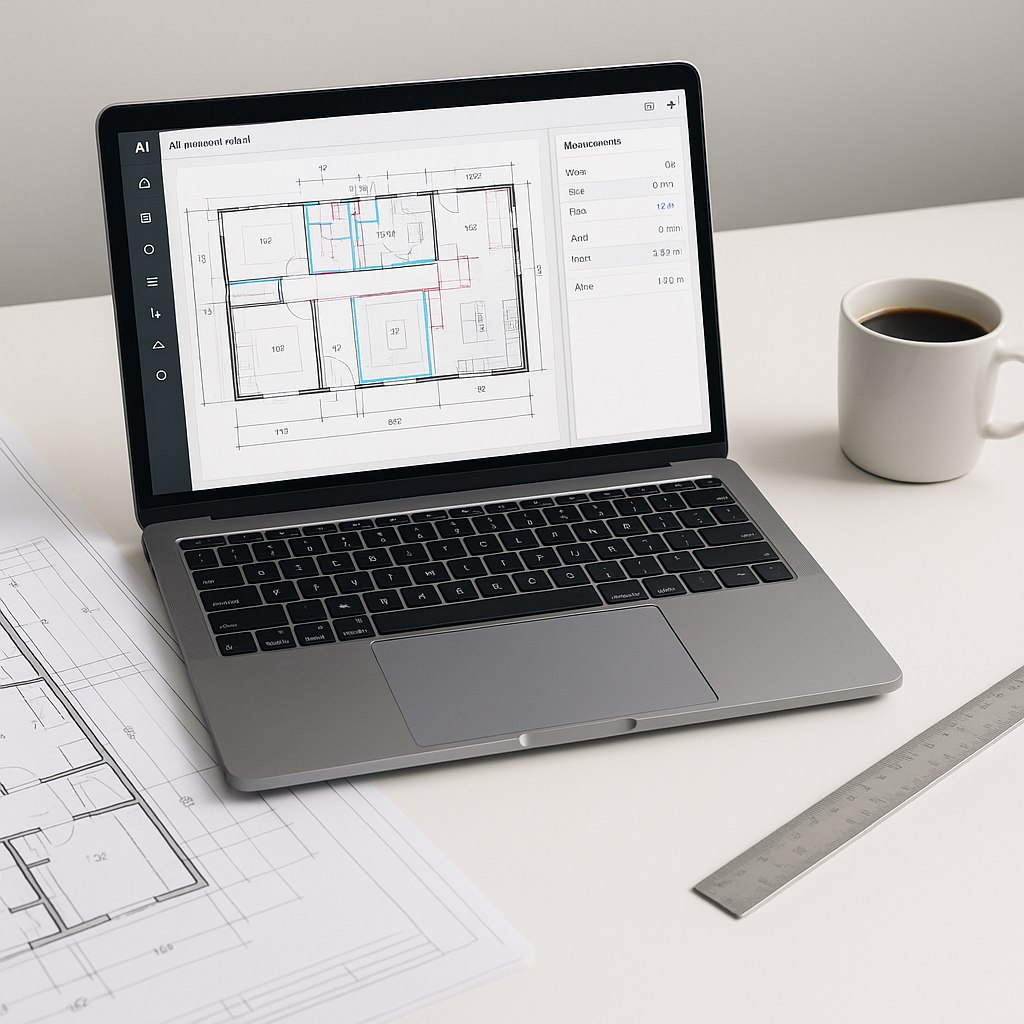
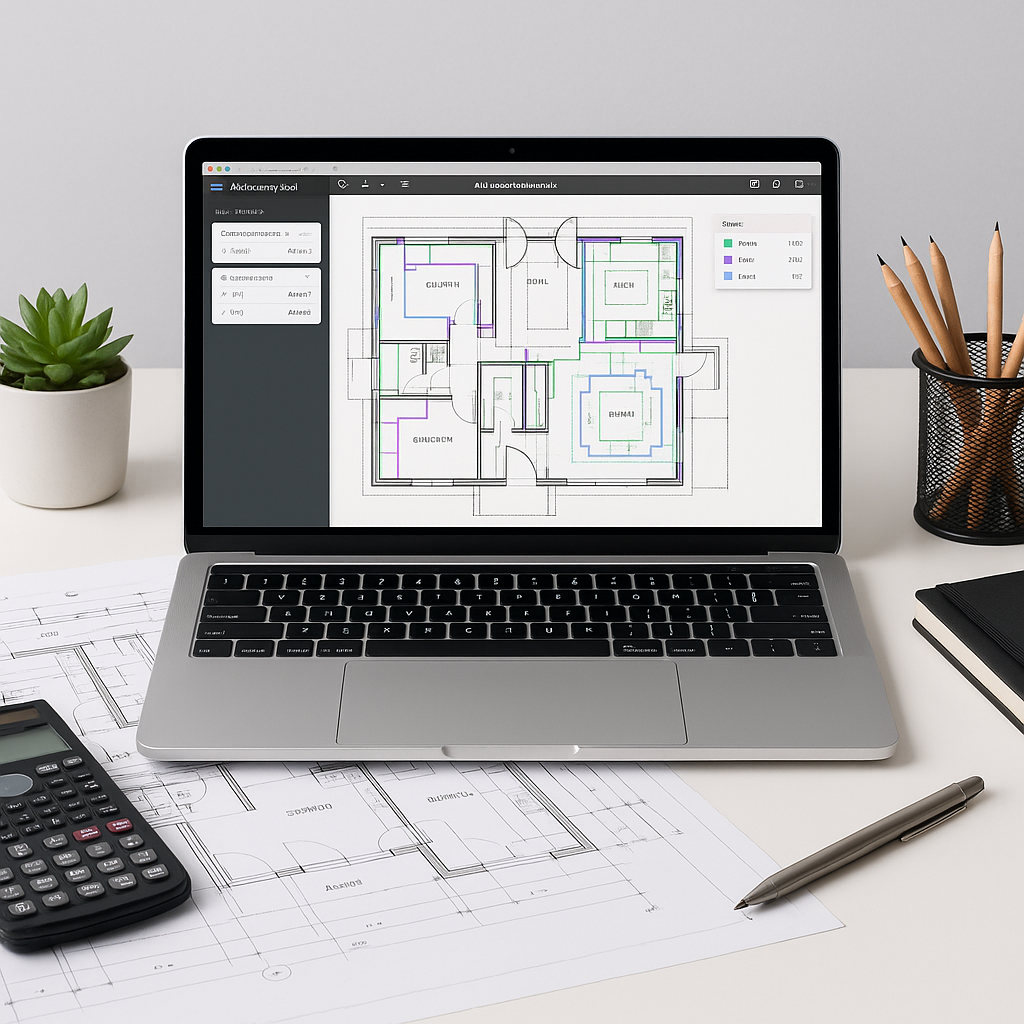
Quantity Extraction: The software identifies elements such as room areas, wall lengths, and counts for doors or windows. This process helps estimators quickly gather quantities for materials like concrete, flooring, or ductwork.
-
Manual Adjustments: If discrepancies are found, users can manually adjust measurements directly within the platform. These adjustments are tracked for transparency.
By automating repetitive tasks, these tools allow estimators to focus on higher-value activities.
Benefits of AI in Preconstruction Estimation
AI-powered tools can bring several advantages to the preconstruction process:
- Time Savings: Automating takeoffs reduces the time spent on manual measurements, allowing teams to focus on other critical tasks.
- Improved Accuracy: By minimizing human error, these tools can enhance the reliability of quantity estimates.
- Scalability: Automation enables teams to handle larger or more complex projects without proportionally increasing labor.
Common Mistakes to Watch For
Even with AI tools, careful oversight is essential. Here are some common pitfalls to avoid:
- Poor Input Data: Ensure that PDF drawings are complete and include necessary dimensions and annotations. Missing information can limit the effectiveness of the software.
- Overreliance on Default Settings: Customize measurement standards to align with specific project requirements.
- Skipping Manual Reviews: While automation reduces errors, critical quantities should always be double-checked before finalizing a bid.
FAQ
Q: Are AI-powered takeoffs accurate?
AI tools can significantly improve accuracy by reducing manual errors. However, manual review remains essential for critical items.
Q: Can AI handle revisions?
Yes. Many platforms allow users to upload revised drawings and compare changes side-by-side to update quantities efficiently.
Q: How does AI save time?
By automating repetitive tasks like quantity extraction, AI tools free up estimators to focus on strategic aspects of the bidding process.
Conclusion
AI-powered tools offer a practical way to streamline preconstruction estimation. By automating repetitive tasks, they save time, improve accuracy, and allow teams to focus on higher-value activities. If manual takeoffs are slowing you down, exploring AI solutions could be a valuable step forward.